
Replacing a legacy outboard’s VRO assembly with a non-oiling fuel pump is also a change to how the engine receives lubrication. It is appropriate only when the exact engine and conversion kit support that arrangement. Do not install a generic automotive pump or disconnect oil supply lines based on a universal online procedure.
This article concerns evaluating a documented conversion on a compatible legacy marine engine. It is not an installation specification for every Johnson or Evinrude, and it is not permission to convert a direct-injection or E-TEC oiling system to premix.

Credit: www.amazon.com
Identify the engine beyond its horsepower
Record the full model and serial number, year where known, engine family and existing pump identification. The cowling decal or stated horsepower alone is not enough to choose a conversion. Previous repairs may also have changed the installed equipment.
Use the BRP operator-guide library to identify the applicable operating instructions and obtain the matching service information. If the engine’s identity or lubrication arrangement is uncertain, resolve that before purchasing or removing parts.
Confirm what the replacement pump actually does
A fuel-only replacement does not automatically preserve the oil-metering function of the removed assembly. The installer must establish how the engine will receive the correct oil from the first start after conversion and during every subsequent refueling.
The legacy EMP 7359 installation guide explicitly describes its replacement as non-oiling. That document illustrates the nature of the conversion, not a universal fuel/oil recipe. Use the current instructions supplied for the exact kit and engine rather than copying a ratio from a different application or older document.
Fitment is more specific than a hose connection
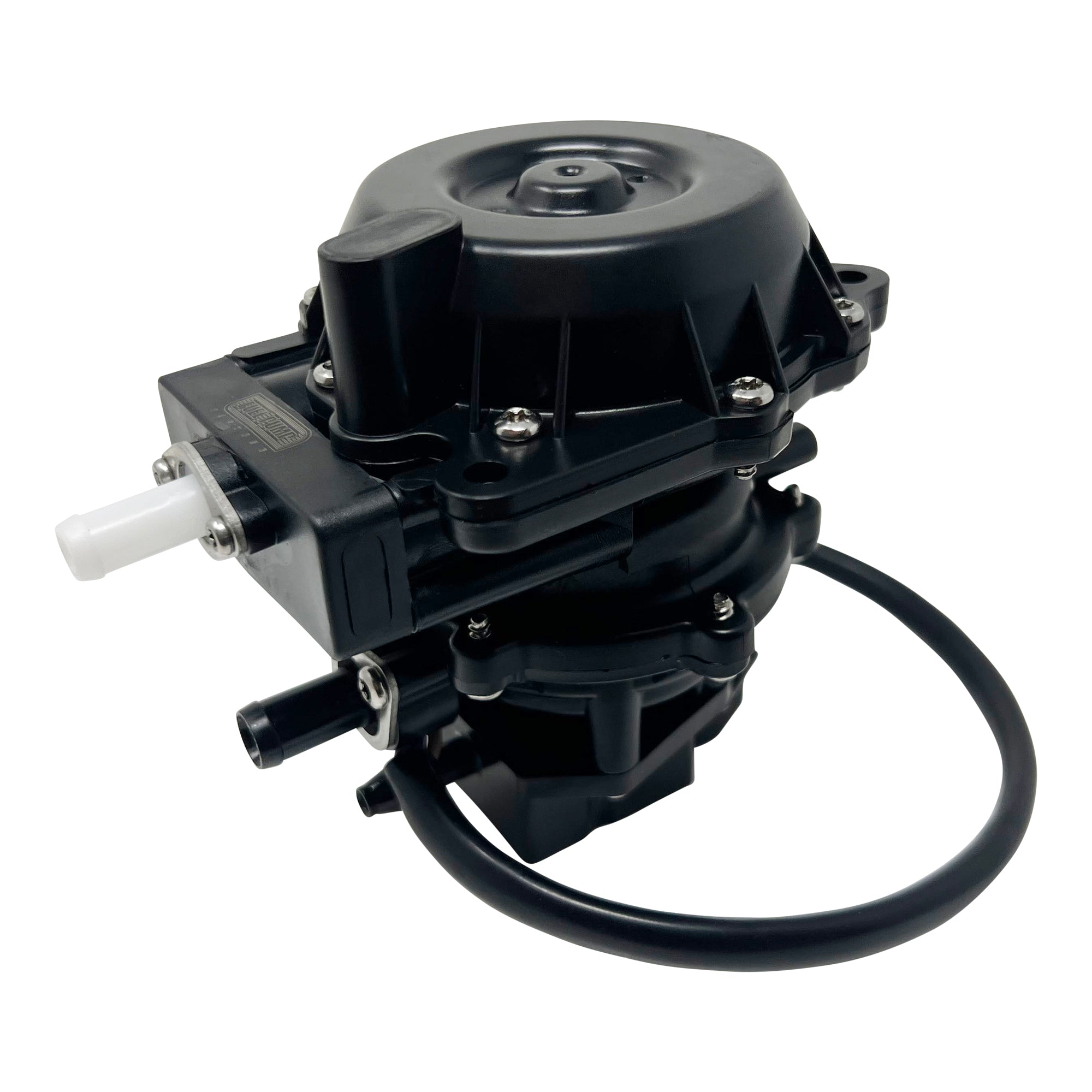
A pump needs the correct delivery characteristics, drive or pulse arrangement, mounting and hose routing. An outlet that accepts the existing hose is not proof of suitability. Under-cowling clearance and the way the pump is secured matter as well.
Credit: www.fuelpumpfactory.com
Engineered Marine Products’ fitment FAQ distinguishes its 7359 applications by engine family and states that certain 60-degree models are excluded. This is a useful example of why a broad “fits V4/V6” listing is insufficient; verify the actual kit against the complete engine identification.
Decide whether conversion is the right repair
Establish whether the original complaint is fuel delivery, oil delivery, an alarm, a hose fault or another engine problem. Replacing the combined assembly with a different system can leave the original fault unresolved if it was elsewhere in the installation.
Compare restoration of the original system with an approved conversion, including ongoing operating responsibilities and any applicable warranty, emissions or marine requirements. Obtain qualified advice for the particular engine rather than assuming that eliminating an oiling component makes the engine inherently more reliable.
Plan the lubrication transition before installation
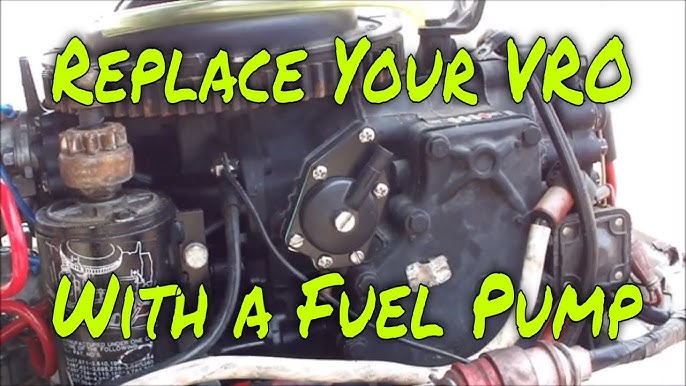
The plan must cover the fuel already in the tank, fuel remaining in hoses and components, and the verified lubrication method for initial operation. Adding an estimated amount of oil to an unknown fuel quantity is not a controlled transition. Do not start the engine until the installer has established the correct arrangement.
Credit: www.youtube.com
Document the required oil specification and mixing procedure for the approved conversion, where premix is specified. This guide intentionally supplies no generic ratio: the wrong assumption can affect engine lubrication, and different engine systems cannot be treated as interchangeable.
Preserve and verify warning functions
A conversion can change which components and alarms are present. That does not justify disconnecting every warning wire or silencing a horn. The installer needs the wiring information and kit instructions to distinguish any altered oil-system monitoring from warnings that must remain functional.
Ask specifically how remaining overheat and other applicable warnings will be tested after the work. If the proposed solution to an unexplained alarm is simply to cut or disconnect wiring, stop and identify the cause and required system configuration first.
Installation and commissioning need the exact instructions
Mounting changes, pulse connections, hose materials, clamps and routing must follow the current application instructions. Do not cut a bracket or reroute a hose because an older guide for a different kit shows that step. Fuel work on a boat also needs appropriate fire precautions and ventilation.
Commissioning should verify leak integrity, fuel delivery and the documented lubrication arrangement under the prescribed checks. An engine that idles briefly has not necessarily demonstrated adequate delivery under load. A qualified marine technician should define and perform the relevant operating verification.
Make the new operating requirement unmistakable
If the completed, approved conversion requires premixed fuel, label and document that requirement for every operator. Keep the exact kit identification and instructions with the boat’s service records. Someone accustomed to adding straight gasoline must not be left to infer that the oiling system has changed.
Treat an unknown existing conversion the same way: establish what is installed before operating it. The successful result is a compatible, documented fuel-and-lubrication system with its required warnings verified—not merely a replacement pump that fits under the cover.


Automotive reference information. Confirm specifications in the manual for your exact vehicle. Original replacement guides link to their research sources. About us


