
Identify the parking-brake mechanism before moving the piston
A caliper with an integrated parking brake cannot safely be treated as a plain hydraulic piston until its design and service procedure are identified. Some mechanical designs need a wind-back tool, some have a separate adjustment arrangement, and electronic parking-brake systems may require a defined maintenance state before mechanical retraction. There is no universal clockwise-turn instruction or switch sequence that covers all of them. If the piston resists the specified method, stop and establish why instead of increasing force. The phrase integrated parking brake means the parking-brake function operates through the caliper assembly.
That function is separate from the hydraulic pressure used for normal service braking, even when both act on the same pads. The internal mechanism can therefore affect how the piston is returned for new pads. Simply taking pressure off the brake pedal does not necessarily prepare that mechanism for retraction. Understanding the arrangement comes before choosing a clamp. Do not assume every rear disc brake uses the same configuration.
Some vehicles have parking-brake shoes inside the rear rotor, while others use a cable or motor acting through the caliper. A cabin switch may control a motor at each caliper or another system architecture. Look up the vehicle by its exact model, year and relevant brake specification. Physical inspection should confirm the documented equipment, not replace the lookup with a guess.
HELLA illustrates several integrated-handbrake adjustment arrangements, including designs with different adjustment locations and thread directions. That source is useful precisely because it shows why one retraction method cannot be applied indiscriminately. The illustration matching your vehicle still needs the actual workshop procedure for setup, direction, limits and completion. Do not identify a mechanism solely from the shape of the piston face.
A mechanical wind-back design generally combines controlled rotation with the intended axial movement. The correct direction and adapter depend on the assembly, and left and right should not be assumed identical without documentation. An electronic system introduces a further question: what the service command moves internally and what remains for the technician to do mechanically. Maintenance mode is not necessarily a command that physically retracts the piston all the way into the bore.
For an electronic system, releasing the parking brake for driving is not the same as entering its pad-replacement state. Automatic application logic or a control-unit command can still matter during work. The car must be secured independently according to the service instructions while the parking brake is unavailable. A suitable support and wheel restraint plan is essential; never rely on the mechanism being serviced to keep the vehicle stationary.
This guide is a decision aid for selecting the correct procedure, not a replacement for vehicle-specific brake service information. If you cannot obtain that information or the required equipment, arrange professional service before dismantling the brake. For the electronic branch specifically, see electronic parking-brake piston retraction. The central question is what your exact assembly requires, not which internet method uses the fewest tools.
Choose tools from the procedure, not from piston resistance
Begin with the service instructions, the correct replacement pads and any required new hardware. Confirm whether a diagnostic tool, a documented manual maintenance procedure or a mechanical adjustment tool is specified. A generic code reader may read engine faults without having parking-brake service functions. Check vehicle and function coverage explicitly before relying on a scanner. The existence of an EPB menu is not proof that it supports the fitted system.
| TRW Easycheck documentation describes supported electronic parking-brake service functions. It is equipment guidance for covered applications rather than a universal button sequence. Use it to understand the need for system-specific control, then follow the current vehicle procedure and the tool's coverage information. Do not copy a sequence from another model because both dashboards show a parking-brake symbol. For a mechanical wind-back operation, the adapter must engage the piston correctly and the reaction arrangement must be suitable for that caliper. |
An adapter balanced on the edge of a recess can slip, damage the face or twist the protective boot. Adjustable pliers are not a substitute for the specified tool. A tool that generates more force does not solve uncertainty about thread direction or internal adjustment. For an arrangement that permits a straight press after the prescribed preparation, apply the correct tool in line with the piston and monitor movement. Do not infer that straight pressing is allowed simply because the motor has become quiet.
- The service operation and the mechanical operation are distinct steps. TRW brake instructions distinguish piston-retraction methods for different brake designs; the relevant distinction must be resolved before pressure is applied. Prepare to monitor the brake-fluid reservoir as pads and pistons are repositioned. Retraction moves fluid, and an overfilled reservoir can spill.
- The exact fluid-handling procedure belongs to the vehicle instructions, including whether a particular service method requires a bleed connection. Do not open a hydraulic fitting merely to make a stubborn piston easier to move without planning the required hydraulic restoration. Unexpected resistance needs a diagnosis rather than an improvised escape route. Keep the work area clean and support the caliper independently of its hose or electrical wiring.
- Arrange the tool so that it does not load a connector, lever or hose fitting. Check that the piston boot is visible enough to monitor during movement. A boot that begins to twist, trap or tear is a reason to stop. Finish orientation also matters where the pad's locating feature must engage the piston face.
- Do not directly power an EPB motor from a loose battery as a general alternative to maintenance mode. That bypasses the documented control process and can move the mechanism unexpectedly or beyond its intended service state. Likewise, removing a motor or turning an exposed mechanism is not an interchangeable shortcut unless the exact repair instructions call for it. The availability of an online demonstration does not establish applicability to your caliper.
- Plan the finishing procedure before starting. It may include leaving maintenance mode, initializing or adjusting the mechanism, checking faults and confirming application and release. A job can appear mechanically complete while its electronic or adjustment requirements remain unfinished. If your tools cannot complete those steps, the correct decision is to arrange the necessary service rather than disassemble first and hope a warning clears afterward.
A safe sequence and the points where work must stop
Confirm the vehicle and brake specification in the workshop information. Record the caliper identification and compare the replacement parts with the installed arrangement.
Check whether the manual describes a cable-operated mechanism, a motor on the caliper or a different parking-brake design. Do not proceed on the assumption that all calipers within the same model range are identical.
Read the entire service sequence, including warnings about automatic activation and any power-supply requirements. Secure the vehicle using the specified lifting points, rated supports and restraints.
- Make sure the parking brake can be made unavailable without allowing the vehicle to move. A jack alone is not adequate support for working at a wheel.
Enter the prescribed service state if the system requires one. Confirm the result in the way the instructions specify, rather than relying only on a dashboard lamp or motor sound.
If the tool reports a fault or the system does not enter the expected state, resolve that condition before moving the piston. Repeatedly pressing the switch is not a substitute for understanding the failure.
Remove or reposition components only as instructed and keep the hydraulic hose supported. Inspect the piston, dust protection, guide hardware and pad supports before applying the retraction tool.
A torn boot, visible leakage, heavy corrosion or damaged mechanism changes the job from routine pad replacement to a repair assessment. New pads should not be used to conceal a defective caliper.
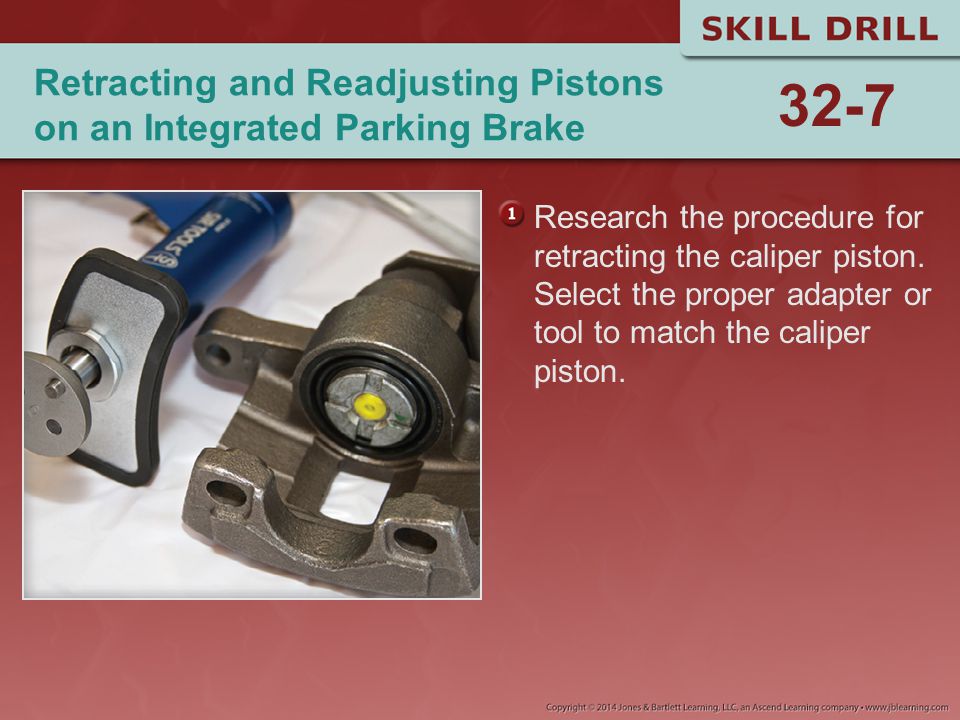
Fit the specified adapter squarely and verify the prescribed movement direction. Begin with controlled movement while watching the piston and boot.
The amount of force required should be interpreted through the service information and component condition. There is no universal torque value for forcing a piston inward, and a longer handle is not a diagnostic tool.
Stop if the piston cocks, the tool slips, the boot twists or the movement does not correspond to the documented method. Check whether an adjustment step was missed and whether the tool is correct.
Do not alternate random clockwise and counterclockwise turns in the hope that one will eventually work. That can obscure the original problem and damage a mechanism that needed a specific preparation step.
Monitor the reservoir and handle any fluid movement using the specified method. Keep dirt and incompatible liquids out of the system.
Do not return contaminated fluid to the reservoir. If the hydraulic circuit has been opened, include the required bleeding and leak checks before considering the brake complete.
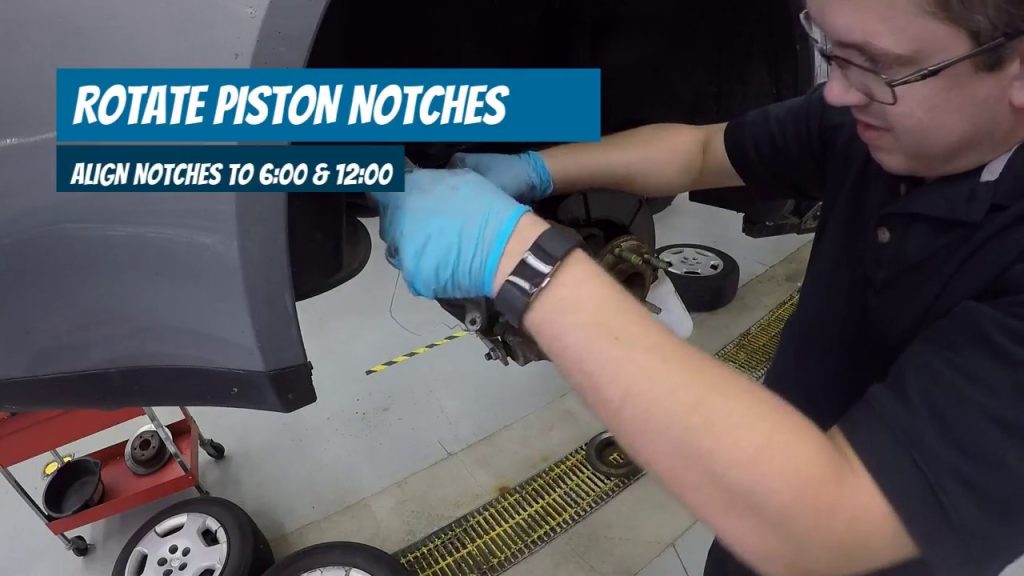
Set the final piston orientation exactly where the pad design and manual require it. Confirm that the pad locating features sit correctly rather than being trapped against the wrong part of the piston face.
Install the specified hardware and tighten it to the correct values. Generic bolt sizes or a torque remembered from another vehicle are not reliable substitutes.
Complete the required parking-brake adjustment or electronic exit procedure. Where a calibration or initialization is specified, perform it and verify its result.
Check that no hose, cable or wiring has been twisted or trapped during reassembly. The brake must release properly as well as apply.
Restore normal pedal response by following the prescribed stationary checks before attempting movement.
Verify fluid level, inspect for leakage and assess warning messages.
Do not road-test a vehicle with an uncertain pedal, an unresolved brake fault or a parking brake that will not release.
Recovery is preferable to trying to clear a fault through driving.
Once the stationary checks pass, complete the controlled functional verification required by the repair procedure.
If new friction parts require bedding, follow their instructions without using public-road emergency stops as an improvised test.
Credit: slideplayer.com
Record the parts, procedure and any fault findings.
A successfully retracted piston is only one stage of the job; a safe completed repair includes correct assembly, hydraulic integrity and verified service- and parking-brake operation.


Automotive reference information. Confirm specifications in the manual for your exact vehicle. Original replacement guides link to their research sources. About us