
Start with the correct reference, then check the application
A K&N oil filter cross-reference search connects another manufacturer’s part number to a K&N catalogue result. Use the official search, copy the starting reference accurately and open the proposed product. Then verify the actual vehicle and engine application before purchasing. A number appearing in a cross-reference is useful evidence, but it does not establish that an unidentified vehicle needs that filter. The starting part could be wrong, the engine could have been changed or a relevant application condition could be missing. Treat the result as something to verify rather than permission to substitute any filter with a similar thread or canister size.
Use the manufacturer index for number-based searches
K&N’s official cross-reference index covers several filter categories and organizes references by manufacturer. Choose the maker of the number you have, then confirm that the selected entry is an oil filter. Do not assume the vehicle badge and filter manufacturer are always the same: an installed aftermarket filter may carry its own brand’s reference. Preserve the original number in your notes even when the site removes spaces or punctuation. A search result for a fuel, air or cabin filter does not become relevant merely because some digits match. If the expected number is absent, verify your transcription and ask for help instead of choosing the nearest-looking entry.
A current example: Honda 15400PLMA02 returns SO-1010
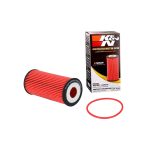
The reviewed K&N cross-reference page for Honda 15400PLMA02 returns SO-1010, described as a spin-on oil filter. This is a specific observation from K&N’s current public record. It is not a statement that every Honda uses SO-1010, that every similarly numbered K&N filter is identical, or that Honda has approved this aftermarket product. Someone researching a different original reference must check that reference separately. Save the starting number and destination product together so another person can reproduce the lookup. A screenshot containing only a K&N product photograph loses the link that explains why the item was considered.
Do not turn one cross-reference into an unlimited interchange chain
A manufacturer may list its product against several original or aftermarket references. That does not establish a universal, two-way relationship among every other item in the list. Each manufacturer can define its own application coverage and product details. If you later decide to buy a different brand, verify that brand’s proposed part for the actual engine rather than using the K&N page as a bridge through several numbers. The filter-interchangeability guide explains why a shared physical connection is insufficient. Keep the claim narrow: this source identifies this candidate from this input, and the chosen replacement still needs an appropriate application check. For a supplier inquiry, explain the direction of your request: you have a confirmed original reference and want to buy the proposed K&N item for a named engine. If you instead want to replace a K&N item with another brand, state that separately. The distinction prevents the recipient from answering a different substitution question while appearing to agree with yours.
Run the vehicle check separately from the number search
K&N also provides an oil-filter search organized by vehicle manufacturer. Use the actual model, year and engine information requested by the lookup to see whether the candidate is supported. Include a relevant motorcycle, marine or other application category rather than forcing equipment into a passenger-car entry. If the vehicle-led result conflicts with the number-led result, preserve both and ask K&N to resolve the discrepancy. Do not overwrite the selected vehicle simply to make the desired product appear compatible. For modified engines or remote filter arrangements, explain the modification; an ordinary vehicle listing cannot be assumed to describe a later custom installation.
Four fields to check on the destination product page
- Full product identity. Keep the complete prefix, digits and suffix from the destination page. Do not shorten SO-1010 to “1010” on the shopping list. A similar numeric portion does not prove that another series has the same construction, dimensions, accessories or application. If the seller substitutes a reference, ask for its separate support.
- Filter construction. Establish whether the item is a complete spin-on filter or a replaceable element. Confirm which component is intended for the service job. A picture of a housing, package or related accessory is not sufficient to identify what arrives in the order. Read the actual item description and supplied contents.
- Application and qualifications. Read the vehicle information associated with that product, including engine distinctions and any relevant notes. A broad reference to a vehicle make does not cover every engine sold under it. Save the specific result that supports your choice rather than relying on a generic product-category landing page.
- Dimensions and service details. Use labelled product measurements to investigate a mismatch, while keeping package dimensions separate. Resolve unexplained differences before fitting. A dimension search can narrow candidates, but height or thread data by itself does not determine the complete fitment decision or authorize changes to the original filter arrangement.
Read the SO-1010 example without expanding its claim
| Evidence reviewed | What it establishes |
|---|---|
| Honda 15400PLMA02 cross-reference page | The displayed K&N candidate is SO-1010; confirm the actual application separately. |
| SO-1010 product description | A spin-on product with its own specifications; a shared number ending does not identify another K&N series. |
| SO-1010 labelled measurements | The page lists 85 mm filter height and 89 mm product-box height. These measure different objects, so compare like with like. |
Features and fitment are different questions
The SO-1010 product page identifies its filter height separately from packaging height and lists no removal nut. Those details describe this product; they should not be copied onto every K&N oil filter. Likewise, a high-flow description is not an independent test proving a power gain on your engine, and an advertised product capability is not a new service schedule. Decide fitment first, then consider the verified features of the supported options. If you need a specific handling feature, confirm it on the exact item being ordered rather than relying on a generic brand photograph. A catalogue number match does not guarantee that all products sharing part of that number offer the same convenience features.
Credit: jetskiparts.com
A practical cross-reference verification sequence
- Establish the starting evidence. Identify the engine and the source of the existing filter number: current parts information, a service receipt or the installed item. If the starting number is uncertain, resolve that uncertainty first. A precise cross-reference of an incorrect starting part only produces a precisely traced mistake.
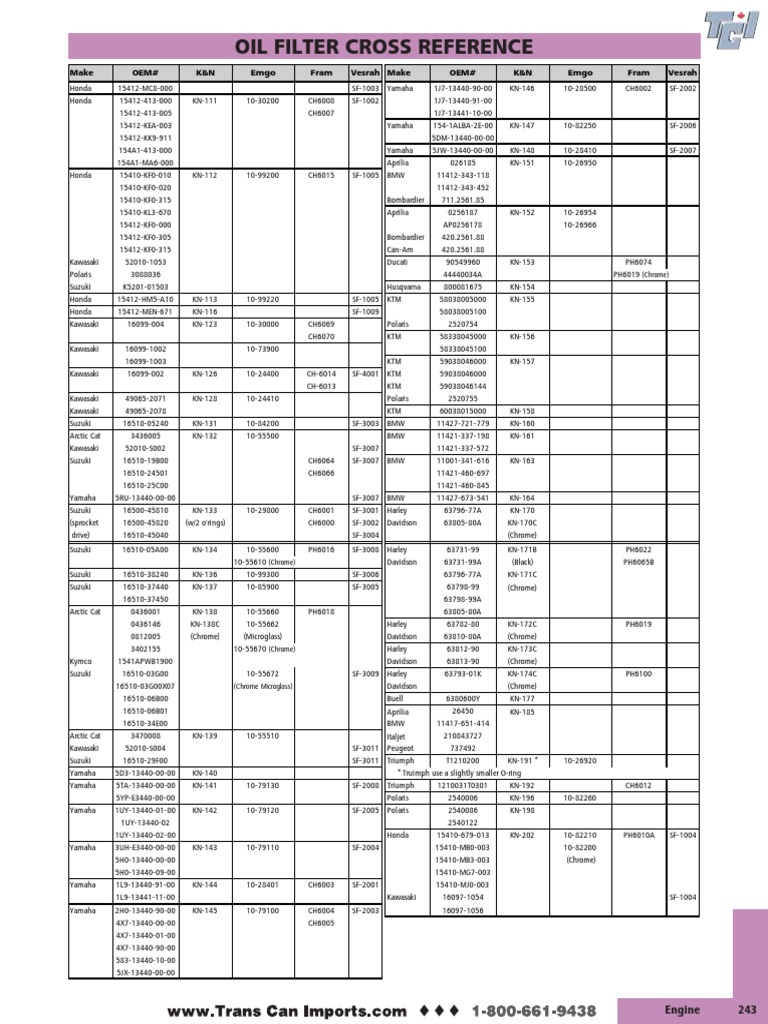
- Open the exact manufacturer entry. Check the brand heading, complete reference and oil-filter category. Keep any punctuation changes visible in your notes. Do not confuse a search-engine preview with the current page, and do not treat a marketplace title containing many numbers as equivalent to the manufacturer’s own record.
- Read the destination record. Note the full K&N reference, style, supplied items and any relevant specification. Keep the product URL and date checked. Avoid recording only a price, because pricing and stock information do not preserve the reason the product was selected.
- Compare against the vehicle-led result. Confirm the actual engine and application, not just the nameplate. Where the tool requests an unknown detail, obtain it instead of selecting the first answer. A conflict between searches should remain unresolved until the manufacturer or an appropriate supplier explains it.
- Resolve differences with support. K&N’s contact page includes fields for part references and, for a recently purchased product, box date-code and order-label information. Supply the relevant details through that channel. Describe the specific issue, such as conflicting fitment results or a delivered reference different from the order.
- Check the delivered item before installation. Compare the marked product, packaging and invoice with the confirmed selection. Keep seals or included components accounted for. If the shipment is damaged or the identity remains unexplained, arrange clarification or replacement before using it. Correct paperwork does not make visibly compromised stock suitable.
Credit: www.knfilters.com
A cross-reference does not supply installation or mileage rules
Follow the vehicle and filter instructions after the part has been confirmed. K&N’s oil-filter FAQ expressly warns that a Wrench-Off removal nut must not be used to tighten the filter during installation; doing so can damage the filter. That warning matters when switching from a product without such a feature, but it does not prescribe a universal tightening amount for every application. The same FAQ directs replacement timing back to the vehicle manufacturer’s recommendations. Do not confuse K&N’s reusable air-filter care instructions with an oil-filter maintenance procedure. Our oil-filter replacement-timing guide separates service requirements from assumptions based on branding or oil type.
Keep the evidence attached to the final choice
A completed cross-reference should leave you with the original reference, the exact proposed K&N product and a supported application for the engine being serviced. Keep any clarification about conflicting results with the purchase and maintenance records. If no current match can be established, do not invent a substitute from dimensions or an old comparison chart. The examples here come from public K&N catalogue and support pages reviewed for this article. They do not claim a private vehicle lookup, a physical comparison test or measured performance. This approach makes the evidence useful without expanding one catalogue relationship into a promise that unrelated filters will work everywhere.


Automotive reference information. Confirm specifications in the manual for your exact vehicle. Original replacement guides link to their research sources. About us