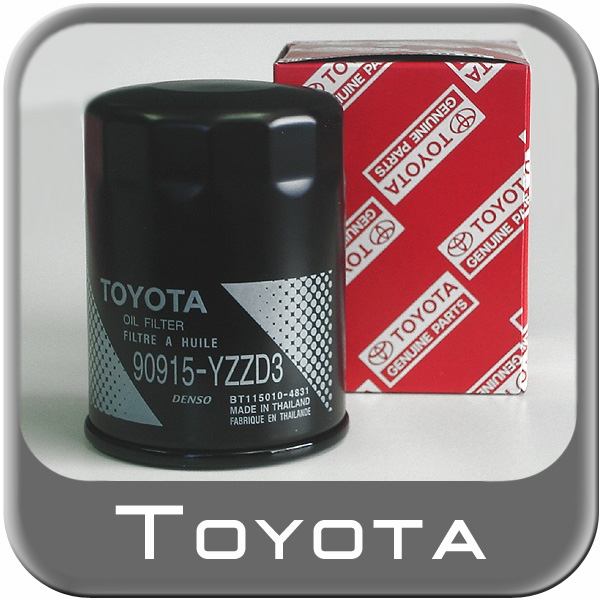

There is no single Toyota oil filter part number for every vehicle. The right reference depends on the engine and the filter arrangement, and a service replacement may use a different number from an older invoice. Copy the complete identifier, establish what item it describes and confirm its current application before ordering. A familiar prefix, matching box colour or remembered recommendation for another Toyota is not enough to approve the part.
This guide helps interpret a number you already have, using concrete entries from Toyota’s U.S. parts information. It is not a vehicle-specific fitment certificate. If you are starting with the car rather than a candidate number, use our Toyota oil-filter lookup workflow to identify the relevant vehicle and engine first.
Identify the product before interpreting its code
Toyota’s catalogue includes both complete canister filters and replaceable filter elements. For example, its official 90915-YZZN1 product record describes a canister oil filter, while 04152-YZZA1 is described as an element oil filter. Those two entries illustrate different service items. They do not establish that every number beginning with the same digits fits the same housing or engine.
Use the product description, application and supplied contents together. A replaceable element normally belongs inside a retained housing; a canister is a different replacement assembly. Catalogues and sellers sometimes use cartridge terminology inconsistently. If a listing’s words and picture appear to disagree, obtain clarification using the full number instead of assuming that one generic label settles the construction.
Keep every character in the Toyota part number
The complete reference is the useful identity. Retain leading zeroes, letters and the final characters when you record it. A search may accept a hyphenated or unhyphenated version, but removing punctuation is different from dropping characters. In a spreadsheet, save the value as text so software does not discard an initial zero. Keep the exact manufacturer reference separate from any seller stock code.
Do not try to decode a universal size, quality level or mileage limit from the last letter or digit. Toyota’s 90915-YZZN3 entry identifies 90915-10010 as a previous version. The relationship is useful because Toyota states it explicitly, not because a buyer can calculate it from the characters. A numerically larger ending is not independent evidence that one filter is an upgrade for another application.

Credit: www.amazon.com
Understand previous versions without inventing an interchange
A current product page can explain why two documents show different numbers. Read the field as a documented relationship for that product, then retain the vehicle check. The following examples were visible in Toyota’s official U.S. product records at research time:
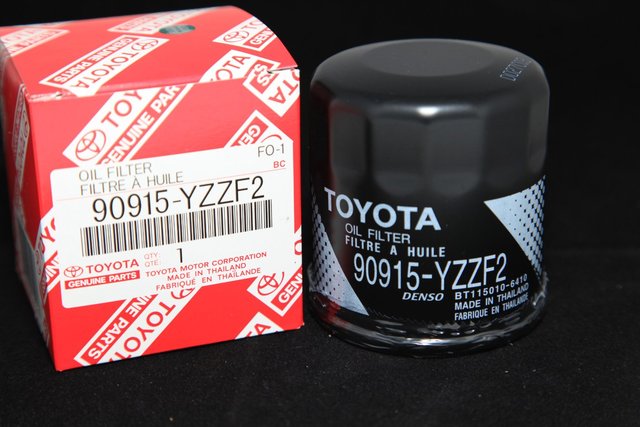
- 90915-YZZN1: Toyota lists 90915-YZZF2 under previous versions. That helps connect an older service reference with the current product page. It does not establish that any other YZZF or YZZN number is equivalent.
- 04152-YZZA1: its previous-version field includes 04152-31090 and 04152-31110. Preserve both the old reference you actually found and the current reference supplied for your vehicle; do not silently replace every similar element number with YZZA1.
- 04152-WAA04: the Toyota element-kit listing names 04152-WAA03 as a previous version. It is a separate documented example. The shared 04152 beginning does not turn this kit and 04152-YZZA1 into interchangeable elements.
A previous-version listing does not explain every engineering change or approve substitution in both directions. If you have old stock, ask whether that exact older item remains appropriate for the specific vehicle and service. If a seller supplies a third number that the page does not explain, request the current application or replacement record rather than accepting “Toyota changed it” without supporting detail.
Keep filter numbers separate from nearby service parts
The Toyota 2025–2026 oil-filter chart includes separate columns for the filter, oil filler cap and drain plug. Reading across the wrong column can produce a genuine Toyota number for the wrong item. The chart says it is based on 2024 Toyota FMPC Update 2, so retain that source context and confirm the current order.
- Read the column heading: in the chart’s 2010–2012 4Runner V6 1GRFE row, the oil filter is 04152-YZZA5. The adjacent 12180-F4010 reference belongs to the filler-cap column. The row illustrates column reading, not a substitute for a present vehicle check.
- Distinguish the kit from its contents: an element-kit number identifies the listed kit. It does not automatically identify a replacement housing, cap, separate seal or drain-plug washer. Ask which consumables are actually included before adding separate items to the order.
- Keep quantities distinct: a retailer may bundle several individually numbered filters. Confirm whether the advertised quantity is one filter, one kit or a multipack. A seller’s bundle suffix is not necessarily part of Toyota’s own product number.
When a workshop estimate includes several oil-service items, ask for each description beside its number. This makes a quotation easier to verify and prevents an oil filler cap from being mistaken for an oil-filter housing cap. Similar words in an abbreviated invoice can conceal very different components.
A correct number does not set the maintenance interval
Part identification answers what to buy. The service schedule answers when the vehicle needs the work. Toyota’s 2023 Tacoma maintenance guide describes replacing the engine oil and filter at the specified intervals and directs oil-grade and viscosity decisions to the owner’s manual. That is a particular model-year document, not one interval for all Toyota engines.
Do not read a universal distance into the filter code or assume that synthetic oil makes the same number suitable indefinitely. Keep the vehicle’s engine, operating conditions, time limits and applicable maintenance schedule together. An old receipt is evidence of a previous purchase; its date or mileage does not establish that the next service is due at the same distance.
For an unused filter left on a shelf, age and condition require a separate decision. An unexplained manufacturing code is not automatically an expiry date. Our guide to oil-filter date and use decisions explains how to seek manufacturer-specific evidence instead of guessing from a label.
Build a useful part-number record before ordering
A short evidence record makes a discrepancy easier to resolve. You do not need to dismantle the vehicle merely to create one. Gather the information already available, mark uncertain fields clearly and ask a parts specialist to complete the application check before service begins.
- Record the full vehicle identity and relevant engine information. Keep the market of original sale visible, especially for an imported vehicle. A model badge alone may describe several engines over several years.
- Photograph or transcribe the candidate part number from its actual source: an invoice, package or readable filter marking. Record which of those supplied the number. Do not treat a handwritten guess as a verified factory reference.
- Search the exact reference in the official Toyota parts store. Its search accepts part numbers as well as vehicle information. Opening a product result identifies the item; the vehicle fit check is still a separate requirement.
- Save the current product description and any previous-version field that explains a difference. Record the date checked. If the page lists no relationship, leave it unresolved instead of importing one from an unrelated seller’s title.
- Ask the supplying dealer to confirm the reference against the vehicle and to identify needed seals or other service items. If a changed engine or filter housing is fitted, disclose it; a lookup based on the original vehicle may not describe modified hardware.
- Confirm what the seller will deliver, including quantity and contents. Keep the application confirmation with the order. A quote for an element alone should not be compared as though it includes an entire housing assembly.
- Check the delivered markings before the oil is drained or the old filter is removed. If the box, product and order disagree, resolve that mismatch while the car is still assembled rather than improvising a fit during the service.
This process produces a reference with a reason behind it. For example, a note that says “supplier confirmed current number for this VIN on this date; older invoice number retained below” is stronger than a saved screenshot with no vehicle context. Keep private identifiers in your own records or the legitimate supplier’s channel, not a public comment.
Three shortcuts that cause avoidable number mistakes
A plausible-looking reference can still lead to the wrong purchase. These errors concern how information is interpreted, so they can occur even when every number involved is genuine and every seller is acting in good faith.
- Copying a forum answer without its vehicle: a correct number for one owner may belong to a different engine, market or filter arrangement. Preserve the application and source date when using an online discussion as a lead.
- Trusting only the removed part: previous work may have used an incorrect filter. Its number is useful evidence to investigate, but repeating it does not independently confirm the original selection was right.
- Extending a known replacement relationship: a documented change from one old reference to one current reference does not authorize the next similar-looking number. Verify each proposed substitution separately.
The Toyota application-chart directory states that its information applies to U.S. vehicles. A useful U.S. example should not become an unsupported global fitment claim. For another market, use the applicable Toyota catalogue or dealer rather than altering a suffix until a local shop recognizes it.
Credit: parts.toyotaofnashua.com
Questions about Toyota oil-filter references
Is 90915-YZZN1 the number for every Toyota?
No. It is a real Toyota canister-filter reference with its own applications. Toyota also lists other canisters and replaceable elements. A popular item is not a universal part, and the beginning of its code does not identify every engine it can serve.
Can an older invoice and a new box both be correct?
Yes, when a documented replacement relationship and the vehicle application explain the difference. The previous-version examples above show why different numbers can appear. Verify the actual pair of numbers; do not assume that every mismatch is merely a harmless catalogue update.
Does the same part number prove the delivered filter is genuine?
A printed number identifies what the item claims to be. It does not by itself authenticate the supply chain or prove the contents match the package. Use a traceable seller, retain the purchase record and refer unexplained markings or construction differences to Toyota or the supplier.
Should I buy a housing when the element number changes?
Not solely because the element reference changed. A number change is not evidence of a required housing conversion. Ask for the actual application or repair instruction before adding a housing, cap or other assembly. The service scope should follow documented requirements.
Keep the number attached to the evidence
The useful answer is a complete Toyota reference linked to the correct vehicle, current product description and any documented replacement history. Keep those facts together. That avoids both rejecting a legitimate updated number and accepting an unsupported substitution just because it looks familiar.
After service, record the number actually installed rather than only the one originally ordered. Include any supplier explanation of a revision and the service date. This turns the next parts enquiry into a check of known information instead of a fresh search through conflicting memories.
A verified number makes purchasing more precise; it does not replace the vehicle’s installation instructions. Use the specified service procedure, required consumables and correct tools once the application has been established.


Automotive reference information. Confirm specifications in the manual for your exact vehicle. Original replacement guides link to their research sources. About us