“Spread fingers” is not a sufficiently precise brake-caliper description to identify a component or diagnose a fault. The phrase may be informal wording for part of a caliper casting, pad-retaining hardware or a tool used during service. Its meaning must be established from the actual vehicle, component diagram and context. Do not assume it names a standard failure in which metal fingers are supposed to rub the brake disc.
If someone has used the phrase on an estimate or in a discussion, ask them to point to the part and provide its correct description. This guide explains how to separate the possibilities and what evidence is needed before repair. It does not recommend bending brake hardware or altering a caliper based on an uncertain name.
Identify what the speaker is referring to
Start with the context. Was the term used while discussing a noise, removing pads, retracting a piston or selecting replacement parts? A service tool and a permanent caliper component can be described with similar everyday language, but they have different purposes. Record the make, model, year, axle and relevant brake option. A photograph of the whole assembly, taken safely, can be more useful than an extreme close-up of an unidentified metal edge. The caliper body is the structural housing around the pad and piston arrangement. A floating caliper may have an outer portion that transfers force to the opposite pad as the assembly moves on its guides. That structural feature is not a removable spring simply because it resembles fingers.
Brembo’s operation guide distinguishes fixed and floating designs. Use the correct diagram to identify the feature rather than assigning it a function from appearance alone. Pad springs, anti-rattle hardware and retaining pins are separate possibilities. Their shape and placement vary. A visible wire or formed metal piece may control pad position or movement, but its exact role must be confirmed for the application. A caliper with pad-retaining pins is not automatically serviced like one with another retaining arrangement. Brembo’s fitting instructions show several distinct retaining designs, illustrating why the actual assembly matters. A piston spreader or retraction tool is another possible source of the wording.
It is used during service and is not a part intended to remain against the disc during driving. Its suitability depends on the caliper and required procedure. A tool name should not be confused with a replacement component on a parts order. If the phrase came from a tool listing, obtain the manufacturer’s actual product description and application limits. Guide pins also need to be distinguished from pad-retaining pins. Guides allow the intended movement of a floating assembly; retaining hardware secures other components according to the design. They are not interchangeable merely because both may be called pins. A correct parts diagram and part number resolve that ambiguity more reliably than comparing shapes in unrelated photographs.
Do not turn an unclear term into a diagnosis
An uncertain name does not establish why a brake is noisy, dragging or wearing unevenly. The symptom needs its own investigation. A spring fitted incorrectly, a binding guide, poor pad fit and a damaged component can produce different problems requiring different repairs. The description should name what was found and where. Avoid accepting a statement that the fingers have spread without an explanation of the actual defect. Ask whether the concern is deformation, incorrect installation, missing hardware, corrosion or normal geometry. Those are separate findings. If a structural part is suspected of being bent or cracked, do not attempt to reshape it at home.
If a spring is thought to be out of position, the correct installation information and condition must be checked. A component may need replacement rather than adjustment, and some hardware has specific renewal requirements. Do not bend clips until the noise stops or grind material away to make a pad fit. Such changes can alter clearance, retention or movement. The reason the component does not fit must be identified. An incorrect pad, wrong hardware kit or corroded mounting surface can require a different correction. Modifying the nearest visible piece may hide the symptom while leaving the cause unresolved. HELLA’s floating-caliper guide information explains why guide condition matters to proper operation.
That provides a real component-specific path for a suspected guide problem. It does not validate a separate diagnosis called spread fingers. Use established component names when comparing the technician’s finding with service information and replacement parts. The same caution applies to photographs. An image can help identify location and obvious missing or damaged parts, but it may not show the back of the assembly, movement, torque or the correct application. A gap that looks unusual may be normal for that design. A part that looks seated may still be incorrectly installed. A photograph is useful evidence, not a complete brake inspection.
A practical parts-identification and repair checklist
Identify the vehicle and axle. Confirm the brake option or installed caliper. Locate the feature in a matching diagram. Obtain the component’s correct name. Separate permanent hardware from a service tool. Describe the actual symptom. Ask for the observed defect.
Match the proposed repair to that defect. If the term appears on an estimate, request a plain-language clarification before comparing prices. Ask whether the quote is for a complete caliper, a bracket, a hardware kit or labor to correct installation. Those are very different scopes. A low price for a clip cannot be compared meaningfully with a complete assembly replacement. The estimate should make the distinction visible without requiring the owner to guess from workshop shorthand. If a parts seller uses the phrase, request the manufacturer part number and the vehicle application.
Check what is included in the package. A hardware kit may contain several small components but not the caliper or bracket. A complete caliper may arrive with some associated parts and omit others. Product photographs can be representative rather than an exact inventory, so use the documented contents when planning the job. If the concern arose during a pad replacement, review the parts and their orientation against the procedure. Some designs use distinct inner and outer pads, directional features or specific spring positions.
Do not generalize a rule from a different vehicle. Keep removed parts organized for comparison, but do not assume their old installation was correct. Previous work can contain the same error now being repeated. If the concern is piston retraction, identify the mechanism before selecting a spreader. A plain hydraulic piston, a mechanical integrated parking brake and an electronic parking-brake arrangement can require different preparation. Applying more force is not a way to identify which one you have.
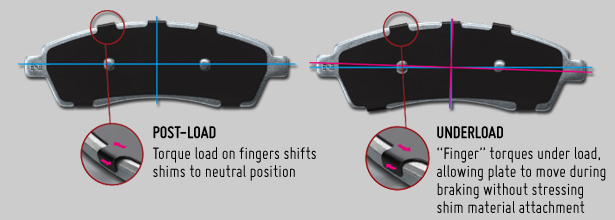
Credit: nucap.com
See the electronic parking-brake preparation guide for that particular situation. The correct vehicle procedure remains essential. If the wheel is locking, smoking, pulling severely or braking abnormally, stop safely and arrange assessment. Do not continue driving to gather a clearer description of the unidentified part. Do not touch a hot brake or pour water onto it. A serious braking symptom needs attention regardless of whether the owner knows the component’s name.
Clear observations are enough to start a professional inspection. After a repair, the record should state the actual component and work performed. It should also describe relevant verification, including correct assembly and operation under the vehicle procedure. A note saying fingers adjusted is insufficient if it does not identify what was changed. Request clarification while the job is fresh. That record helps another technician understand the repair later.
Consider two illustrative conversations. A driver points to a shaped section of the caliper body and asks whether it should be spread; the first task is to identify the casting and determine whether any defect exists, not to bend it. Another driver means a removable pad spring that came loose during service; the task is to verify the correct spring, condition and fitting method. The same informal word can lead to entirely different actions. A third example involves a tool advertisement describing spreading arms. Those arms belong to the tool, not to the brake assembly after the work is complete.
Instructions for operating that tool cannot be treated as a specification for the caliper itself. Distinguishing the object from the action avoids ordering the wrong part or applying the wrong method. The safest answer to the original phrase is therefore a request for identification, followed by application-specific inspection. There is no sound basis here for claiming a universal spread-finger defect or prescribing a bend-back repair. Use the caliper component overview to establish the basic terminology, then match the actual feature to its service information. Precise naming is useful because it makes the repair evidence clear—not because an owner needs specialist vocabulary before asking for help. If the explanation remains unclear, request a marked diagram showing the component and its part number. That provides a concrete reference for another qualified technician or parts supplier. It is more reliable than repeating an informal phrase across several conversations and receiving different guesses each time. The identification should come before deciding whether a replacement, adjustment or no repair is appropriate.


Automotive reference information. Confirm specifications in the manual for your exact vehicle. Original replacement guides link to their research sources. About us