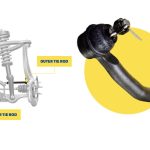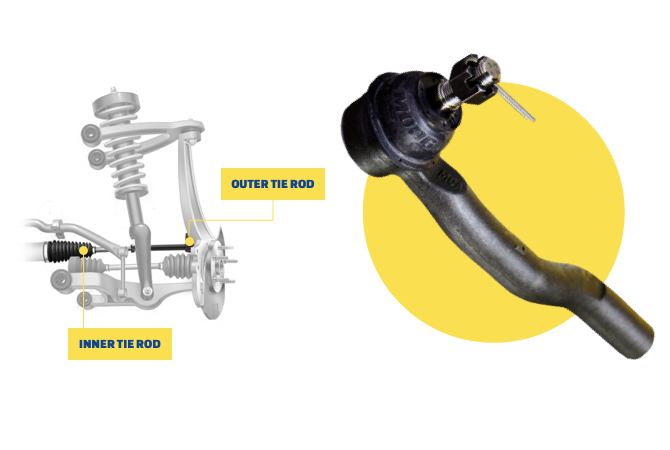

Worn tie rod ends can allow unwanted movement in the steering linkage, but loose steering, vibration and tire wear also have other causes. A defensible diagnosis identifies movement at a specific inner or outer joint rather than labeling the entire front end “loose.”
The immediate priority is steering control. If a wheel is visibly out of position, steering changes abruptly or the vehicle cannot be controlled normally, stop and arrange recovery. A badly damaged steering connection is not something to verify with a high-speed test.
Use the observations below to describe the complaint and understand a workshop's findings. This page focuses on what symptoms mean; it does not replace the vehicle-specific lifting and joint-inspection procedure.
What tie rods do in the steering system
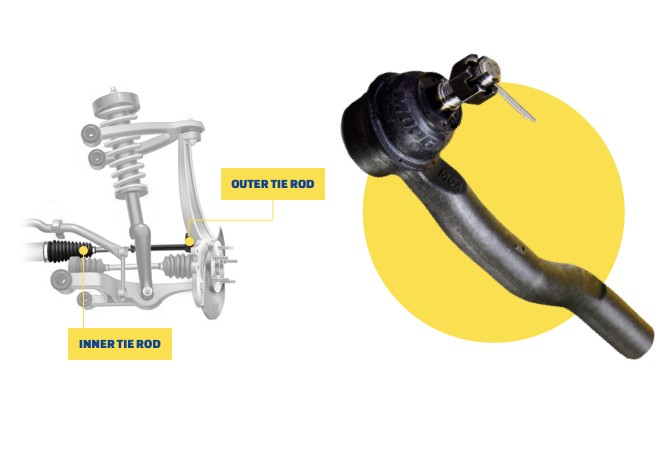
Tie rods transmit steering movement toward the wheel knuckles. Many systems have distinct inner and outer joints, so “the tie rod is bad” is incomplete without identifying the location. MOOG: symptoms of bad tie rods outlines common warning signs. A repair estimate should name the side and joint, plus the evidence supporting its replacement.
Vibration: record when it happens
A shaking steering wheel can come from tires, wheels, brakes or steering and suspension components. Note the road speed and whether braking changes it. Vibration alone cannot tell you which joint is worn, and its disappearance at another speed does not establish that the vehicle is safe.
Tire wear: a reason to inspect, not a verdict
Photograph the affected tread before replacing tires. Uneven wear can accompany incorrect wheel geometry, but geometry can change for several reasons. Ask for linkage inspection before relying on an alignment to solve wear; adjusting alignment does not repair looseness in a joint.
Loose steering: distinguish input from wheel response
Describe whether the steering wheel moves before the vehicle responds, whether corrections feel inconsistent, or whether the complaint occurs only on rutted roads. A technician should localize play through the linkage and consider rack mounting and other connections. A general feeling of slack is not enough to select the outer end instead of the inner joint.
Clunks during turns or direction changes
A knock as steering load changes is useful information, especially if it can be localized to one side. It may also involve other suspension or steering parts. Report whether it happens while stationary, on bumps or only while moving; those are different diagnostic conditions.
Do not repeatedly force the steering against its stops to reproduce a noise. A recording made during ordinary safe use can help, but it should not delay inspection if steering has become unpredictable.

Credit: www.youtube.com
Pulling and an off-center steering wheel
A pull is not unique to tie rod wear. Tire condition, road slope and braking can influence direction. Distinguish a constant drift from a pull that appears only with brake application. The latter also warrants brake-drag assessment.
An off-center steering wheel after repair is worth reporting, but it does not by itself prove a new tie rod is defective. Ask whether the alignment and steering-center checks were completed and whether any remaining play was documented.
What inspection must establish
Boot damage can expose a joint to contamination, yet external appearance alone does not quantify wear. The technician should assess the joint against the applicable procedure and distinguish movement within the joint from movement of surrounding parts.
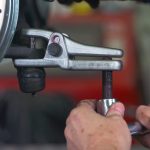
A wheel-shake test can reveal movement somewhere in the assembly. It is not a universal pass/fail test for a tie rod end. Ask the technician to show the actual joint moving and explain the acceptance criterion, rather than relying on a large movement at the tire with its origin hidden.

Credit: www.theengineeringchoice.com
Repair planning after the cause is confirmed
Request an itemized estimate naming the inner or outer component and the side. It should explain associated boots, retaining hardware and alignment work required for the application. Marking or counting turns during removal does not establish final toe alignment; the completed steering system needs the appropriate checks.
Credit: www.moogparts.com
A useful handover record
Give the workshop the symptom, its conditions, any recent curb strike or pothole impact, and the history of tire or steering work. Ask for measured findings, required repair scope and final verification. Keep the alignment record with the invoice when one is performed.
The aim is to trace the complaint to a specific connection. A new part should address that confirmed defect, not merely match a list of possible symptoms. If the original complaint remains, return with the same observation record for a broader investigation.


Automotive reference information. Confirm specifications in the manual for your exact vehicle. Original replacement guides link to their research sources. About us