
An outer tie rod end puller separates the tapered stud from the steering arm or knuckle by applying controlled force across the connection. It is not the tool that unscrews an inner tie rod from the rack. Correct fit, stable jaw engagement and a centered forcing screw matter more than brute force.
Use the vehicle procedure and instructions for your exact puller. If the tool cannot seat properly or starts slipping, unload it and stop; a nearly fitting puller is not a safe substitute.
Confirm the connection and tool
The OTC 7315A remover is one screw-type outer-end tool. OTC describes its swiveling center tip as a way to align force with the stud. This does not make it universal: compare the opening, reach and access with the actual connection.
A fork separator uses a different method and can compromise a boot. An inner tie rod tool works elsewhere. For rack-side removal, use the inner tie rod guide rather than forcing an outer-end puller around the rack.
Prepare before loading
Support the vehicle as its service instructions require and never work beneath a jack alone. Wear eye protection. Keep hands, hoses, wiring and the CV boot clear of where the tool or joint could move when the taper releases.

Credit: eclassics.com
Remove the locking device and handle the stud nut according to the vehicle and tool instructions. Some procedures retain a loosened nut as a catch; other designs need different access. Do not assume the nut position from another puller is suitable for yours.
Seat and center the puller
Place load-bearing jaws on the intended solid surfaces, fully engaged and clear of rubber or thin shields. Align the forcing screw with the stud. Check from multiple angles before tightening; apparent alignment from above can hide a tilted jaw.
Use the drive method and screw lubrication specified by the tool maker. Increase load gradually while watching contact points. Do not add an impact wrench, extension pipe or hammer blow unless the exact tool instructions explicitly allow it. Stored force can release suddenly.
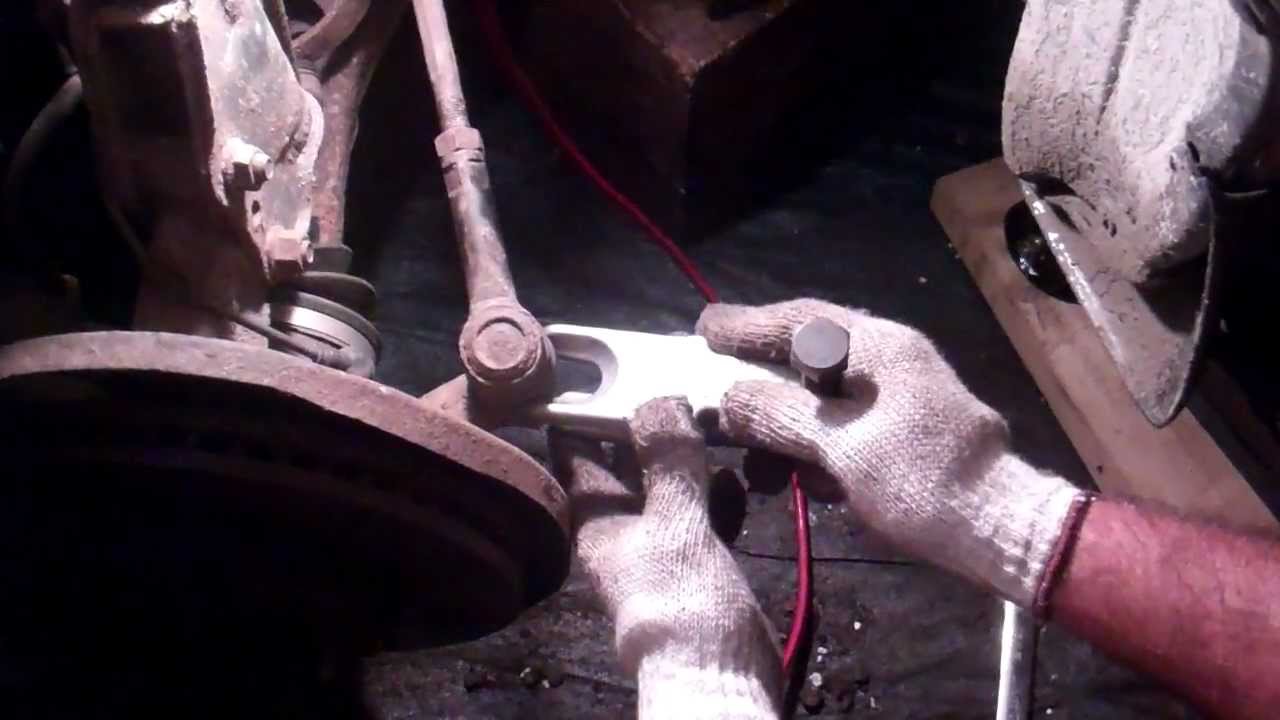
Credit: www.youtube.com
Stop when the setup changes
If a jaw walks sideways, the screw bends off line, threads bind or the tool deforms, release the load safely and reassess. There is no universal number of turns or force value that makes an unsuitable setup acceptable. Severe corrosion may require professional equipment and inspection.
After separation, unload and remove the tool. Inspect stud threads, boot and mating connection before deciding whether the end is reusable. Successful separation does not prove nothing was damaged.

Credit: www.amazon.com
Finish the steering repair
Reassembly needs the specified fasteners, locking method and torque for that vehicle. A puller is not a substitute for seating and tightening instructions. If adjustment or replacement changes tie rod length, complete the required alignment checks.
See tie rod replacement planning for the wider job. A seized end calls for another approved method or workshop help, not escalating force until something yields.


Automotive reference information. Confirm specifications in the manual for your exact vehicle. Original replacement guides link to their research sources. About us


