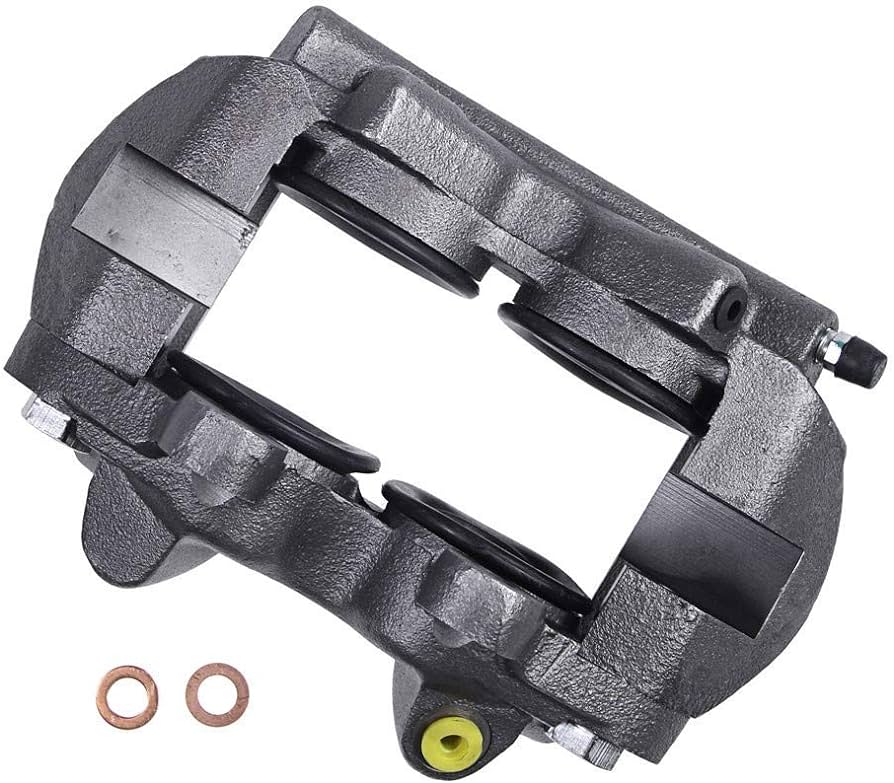

A semi-loaded brake caliper is a replacement assembly sold with some supporting components already supplied or assembled, but the exact contents depend on the manufacturer and part number. Do not assume that the term guarantees brake pads, a mounting bracket, every fastener or an electronic parking-brake motor. Read the itemized product description and confirm the actual package.
The label describes how a supplier sells the part; it is not a universal technical specification that overrides a vehicle’s requirements. For example, BEPCO’s published caliper catalog identifies hardware kits and bolts as included with the semi-loaded and loaded packages it describes. That medium- and heavy-duty catalog illustrates a supplier’s package definition, not a universal passenger-car specification or a promise of current stock.
It does not establish that every product carrying the same phrase includes an identical set of parts. The most useful purchasing question is which required components come with this exact unit and which must be ordered separately.
This guide helps you compare packages and avoid a repair that stops halfway because a needed seal, pad set or fastener is missing. It does not establish compatibility from the packaging description alone.
Treat semi-loaded as a starting point for comparison
Retail listings may use bare, unloaded, semi-loaded, loaded or complete to distinguish package options. The words can be helpful within one supplier’s range, but they are less reliable when comparing different brands or sellers. A listing may emphasize a bracket while another emphasizes installed guide hardware. A product image may show components that are illustrative rather than included. The written contents and the manufacturer’s part information deserve priority over a generic photograph.
If those disagree, resolve the discrepancy before ordering. Build a short comparison using the exact part number, new or remanufactured status, side, axle, bracket inclusion and pad inclusion. Add any parking-brake actuator or electrical connector requirements for the vehicle. Note whether mounting bolts, hose sealing washers and other service items are supplied or separately required.
Do not treat a sealed bag of miscellaneous hardware as confirmation that all necessary single-use parts are present. The repair instructions determine what must be renewed. This simple comparison prevents a lower advertised price from hiding an incomplete repair package. Also check what the supplier means by assembled.
Installed guides do not eliminate the need to inspect the received component for shipping damage and application suitability. Likewise, a unit without pads is not necessarily inferior; it may allow the correct axle pad set to be selected separately. Package convenience and component quality are different questions. Compare the manufacturer’s specifications and warranty rather than assuming that more items in the box automatically produce a better brake repair.
Identify the caliper, bracket, pads and service hardware
The caliper houses the hydraulic piston or pistons that help apply the brake pads. A floating design uses a supporting arrangement that permits movement, while other designs use a fixed body. The bracket, where separate, locates parts of that assembly relative to the rotor. These distinctions matter because a replacement description may refer to the caliper body alone or to a larger assembly. Confirm whether the bracket on the vehicle is intended for reuse and whether its condition has been assessed. Buying a bracket-inclusive package can be useful when the existing bracket is unsuitable, but it must still be the correct bracket for the brake package.
Pads are friction components with their own fitment and replacement requirements. If they are excluded, select the correct pad set and associated hardware under the vehicle and pad maker’s instructions. Do not assume that old pads are reusable merely because the new caliper accepts them. Wear, contamination and heat damage require assessment. If pads are included, confirm their exact specification rather than treating inclusion as proof of suitability for both sides of the axle. A mixed collection of parts should not be assembled simply because each one appears to fit individually.
Small service parts also deserve attention. Guide boots, abutment hardware, bleed-screw protection, sealing washers and fasteners have different roles and may have different renewal rules. List what the installation requires before opening the hydraulic circuit. Missing one low-cost item can delay the repair or tempt an unsafe substitution. Existing bolts are not automatically reusable, and a supplied bolt is not automatically correct for every installation shown in a broad seller listing.
Verify fitment before comparing price
Start with the vehicle identification details and the manufacturer’s catalog, then resolve any brake-option or production-break notes. Year and model alone may not identify every brake configuration. Axle, side, rotor dimensions, brake package and parking-brake design can affect the correct caliper selection. A seller’s compatibility claim should be checked against the actual vehicle and the replacement manufacturer’s data.
If the old assembly differs from the catalog expectation, investigate that difference rather than forcing a new part into place. The hose connection, bleeder position and mounting geometry must suit the application. A bolt pattern match alone does not validate a caliper. Do not modify a bracket, add improvised spacers or change hose routing to make an uncertain part work.
Our article on caliper compatibility explains why these assemblies are application-specific. If an electronic parking brake is involved, verify whether the motor is supplied, transferred or serviced separately and whether the instructions permit that action. A catalog photo cannot answer those installation questions reliably. Ask for the manufacturer’s current fitting instructions before purchase if the package description leaves an important detail unclear.
Brembo’s installation guidance explicitly treats application suitability as a prerequisite. Its instructions illustrate why a brake component needs a correct repair process as well as a correct part number. The label semi-loaded does not shorten that responsibility or certify a bolt-on conversion.
Plan the complete repair before disassembly
- A sensible workflow begins with a confirmed diagnosis and an inspection of related components. Determine whether the fault lies in the hydraulic caliper, its guides, the bracket, pad fit or another part of the system. Order the replacement and all required service items only after that distinction is clear. Compare the received assembly with the catalog and the vehicle before removing the old one beyond what is needed for inspection. Then follow the vehicle-specific instructions for safe support, parking-brake service mode where applicable, hydraulic work, tightening and verification. No package description supplies universal torque values or a universal bleeding sequence. If the work exceeds your equipment or experience, have a qualified brake technician complete it. Avoid opening the system first and trying to determine the missing steps afterward.
Budget for installation requirements, not just the box
| The total repair can include diagnosis, labor, fluid, sealing parts, hardware and any related friction-component work. A remanufactured unit may also carry a core charge with return conditions. Ask which amounts are refundable and whether the old assembly must be complete and in a particular condition. Compare written estimates using the same scope rather than choosing solely by the price of the caliper. The FTC’s repair-estimate guidance offers a useful framework for clarifying proposed work and authorization. For an electronic parking brake, ask whether the quote includes the required service procedure and final checks. For a bracket reuse plan, ask what condition assessment supports reuse. Clear questions before ordering are cheaper and more useful than discovering an omitted component when the vehicle is already dismantled. |
Maintenance still follows the vehicle and component design
- A semi-loaded package does not create a special maintenance interval. Follow the vehicle’s brake inspection and fluid requirements, and investigate changes in braking promptly. On floating-caliper designs, protection and movement of the guides remain important after replacement. HELLA’s guide-pin guidance discusses inspection of the pins and boots and the consequences of restricted movement.
- Do not add lubricant indiscriminately to a newly supplied assembly; use the installation instructions and the specified material for the intended contact. Some design details cannot be inferred from the fact that another caliper uses grease in a similar-looking place. Keep friction surfaces free from lubricants and protect hoses and wiring during service. After the repair, note the part numbers on the invoice so future maintenance can identify what was installed.
- If unusual heat, dragging or uneven wear returns, investigate the cause instead of assuming the new component cannot be involved. A replacement may be correct while another system fault remains, or the installation itself may need review. Package completeness does not rule out either possibility.
Questions to settle before accepting the repair
Ask whether the ordered unit includes pads, a bracket, guides, boots, sealing hardware and any parking-brake actuator. Ask which existing parts will be transferred and why they remain serviceable. Ask whether both axle sides were inspected and whether any additional replacement is required by the vehicle instructions.
These are separate questions; a full box does not answer them automatically. For the related decision about one or both calipers, see replacement in pairs. Once installed, the assembly needs the normal return-to-service checks: correct attachment and routing, no leakage, appropriate pedal behavior and proper application and release.

Credit: rcagarage.com
The technician should confirm the original complaint has been addressed before a controlled road verification. Keep a record of any unresolved issue rather than accepting it as normal because the part is new. If the package arrived with missing or damaged pieces, resolve that with the supplier instead of improvising a substitute.
The useful meaning of semi-loaded is therefore the documented contents of the specific package you are buying. Translate the sales label into an actual parts list, compare that list with the repair requirements and verify fitment independently. That approach makes quotations easier to understand and avoids paying twice for duplicate parts or overlooking necessary ones.
It also keeps the purchasing decision connected to the real goal: a correctly repaired braking system, not simply a caliper that looks complete in an online image. Confirm the seller’s return conditions before opening sealed components, especially when the catalog has unresolved option notes. Save the listing or quotation with its date so any later question about included hardware can be discussed using the information that accompanied the purchase.


Automotive reference information. Confirm specifications in the manual for your exact vehicle. Original replacement guides link to their research sources. About us