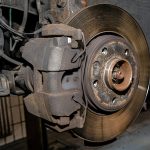

Brake calipers do not have one universal replacement rule that applies to every car. Whether to replace a single failed caliper or both on an axle depends on the vehicle’s instructions, the correct replacement specification and the condition of the opposite assembly. Do not transfer a rule about renewing brake pads as an axle set directly to caliper housings. These are different components with different failure mechanisms.
Equally, do not assume that replacing only the visibly troublesome side is sufficient without inspecting the other side. A sound decision identifies the defect, checks for related damage and documents why the proposed repair restores the system correctly. If braking is impaired, the pedal changes suddenly, a wheel overheats or fluid leaks, stop using the vehicle and arrange assessment. Pair replacement is a repair-planning question, not permission to continue driving on a failed brake.
This article helps you interpret a workshop recommendation and compare complete estimates. It cannot certify a caliper from its age or a photograph, and it does not override instructions requiring a particular replacement arrangement. The best answer for your vehicle should name the relevant condition or requirement, rather than relying on the phrase always replace both.
Why the opposite brake still needs inspection
The two brakes on an axle operate as parts of one vehicle, so a repair should consider their combined behavior. However, that does not mean every component necessarily reaches the end of its useful life at exactly the same moment. One caliper may have local damage, while another failure may reflect conditions affecting both sides. A torn boot on one side and extensive corrosion on both sides present different repair questions. The first calls for close inspection of the damaged assembly and a comparison with the other side. The second may make a broader repair sensible, depending on what the inspection actually finds. The shop should assess more than whether the opposite caliper currently leaks. Piston action, guide condition where fitted, dust protection, mounting integrity and parking-brake operation where integrated all matter.
Uneven pad wear can help direct those checks, but it does not identify a caliper defect by itself. Pads can bind in their support hardware, and a hydraulic restriction can interfere with release. Wagner’s brake inspection guidance is a useful reminder that a hose fault can complicate a diagnosis of brake drag. Installing two calipers without finding such a problem can leave the original cause unresolved. A correct replacement must match the application rather than merely bolt into place. Confirm the axle, side, brake package and relevant parking-brake configuration. Differences in hydraulic geometry or mounting are not acceptable substitutes for the specified part. The bleeder orientation and hose routing also need to suit the installation.
Brembo’s caliper installation instructions emphasize checking application suitability and using a skilled installer. That source does not establish a universal rule that all vehicles need two new calipers whenever one fails. The vehicle service information and the findings on both sides still determine the scope. For the owner, the useful inspection record is specific. It might identify a leaking piston seal on one side while recording that the other assembly passed the applicable movement, sealing and mounting checks. Alternatively, it might show deteriorated protection and restricted guides on the opposite side as well. Those records support different recommendations without contradiction. Ask the shop to distinguish a confirmed requirement from a preventive option so you can understand exactly what each price includes.
When a pair may be justified—and when one may be enough
Replacing both calipers may be appropriate if the manufacturer requires it, both have confirmed defects or the inspected condition of the other side supports replacement rather than continued service. It may also be offered as a preventive choice where the owner prefers to address an aging assembly while related work is already underway. That last explanation should remain a preventive recommendation, not be presented as proof that the second caliper has failed. A transparent estimate labels these reasons separately. It should also explain whether the quoted components are new or remanufactured and what warranty applies. Replacing one caliper can be a reasonable scope when the service instructions allow it, the opposite side is serviceable and the replacement is correctly specified. The repair must still include any necessary pads, rotor work, hardware, fluid handling and bleeding. A lower parts count is not a complete repair plan on its own. If overheating or leaking fluid has damaged friction components, those consequences must be assessed independently of the number of calipers purchased. A fresh caliper installed against compromised pads does not restore those pads.
Ask which parts are being reused and what inspection supports their reuse. Do not use age alone as a pass or fail test. Two calipers with the same years in service can have different exposure, protection and maintenance histories. Conversely, a caliper that was replaced recently can still fail because of installation damage or an unresolved upstream problem. An invoice from a previous repair helps establish history, but it does not replace the current inspection. If one caliper was changed last month and the other now has a problem, the technician should consider whether the events share a cause. The timing alone does not establish whether both failures share a cause or occurred independently. Cost comparisons also need the same boundaries. A one-caliper quote including diagnosis, hose assessment, fluid service and axle friction work may be more complete than a cheaper-looking two-caliper parts package. Compare labor, hardware, fluid, bleeding, any electronic parking-brake service and the verification procedure.
Core charges on remanufactured units may be refundable subject to the seller’s rules; they should be shown separately from the final repair cost. Ask whether the quoted second caliper is essential now or optional preventive work. The FTC’s auto-repair guidance supports obtaining clear estimates and understanding the proposed work. That is especially useful when two shops recommend different scopes without explaining their evidence. A practical discussion begins with four requests: show the failed component, explain how the fault was confirmed, describe the opposite-side findings and identify any manufacturer requirement. These requests do not demand that a shop prove a future failure date. They ask it to connect the recommendation to the present vehicle. If the answer is only that calipers always come in pairs, ask for the applicable instruction or condition behind that statement. If the answer is that the other side looks fine, ask which functional checks were performed beyond its appearance. Both oversimplifications leave important information missing.
Checks that make the replacement decision credible
Symptoms worth reporting include pulling during braking, a dragging wheel, abnormal pad wear, a changed pedal and visible fluid around the brake. Describe when the symptom occurs rather than naming the part you expect to replace. For example, a pull only during braking differs from a constant steering pull on a level road. A smell after a long descent differs from repeated overheating during ordinary use. These details help the technician reproduce the concern safely and rule out unrelated tire, suspension or road effects.
They do not justify a diagnostic drive if braking is already unsafe. Where floating calipers are fitted, the guides and their protection should be examined as part of the diagnosis. HELLA’s guide-pin information connects restricted movement with uneven wear and emphasizes inspecting the sliding components. A guide problem may have a different repair scope from a damaged hydraulic housing. The term caliper replacement sometimes includes a bracket and hardware, and sometimes it does not.
- Ask exactly which assembly is being supplied so that a worn bracket is not unintentionally reused under an apparently comprehensive description. Our guide to semi-loaded caliper packages explains why the box contents need checking. After a confirmed failure, the shop should also establish whether excess heat affected the rotor, pads, hose or nearby components. The answer is not automatically to replace everything, but neither is it safe to ignore secondary damage because a new caliper has been ordered. Inspection findings should support the retained parts.
- For a fluid leak, address contamination and correct the leak before evaluating normal braking. For a rear brake with integrated parking actuation, include the specified adjustment or electronic service procedure. Simply clearing a warning does not demonstrate mechanical completion. Return-to-service checks should confirm secure attachments, correct hose routing, no leaks, appropriate pedal behavior and proper application and release. The workshop can then perform the controlled verification required for that vehicle.
- Ask whether any remaining noise, pull or heat imbalance was observed. If the original symptom persists, the repair is not validated merely because both calipers are new. The diagnosis needs revisiting rather than adding more parts by assumption. Keep the final invoice with the part numbers and the reason for the chosen scope.
- A useful record explains whether the opposite caliper was replaced for a confirmed fault, a manufacturer requirement or a preventive choice. It also records any recommended follow-up and the condition of friction components. For related symptoms, read our sticking-caliper diagnostic guide. The decision about one caliper or a pair should follow that kind of evidence, with the vehicle instructions controlling the repair.

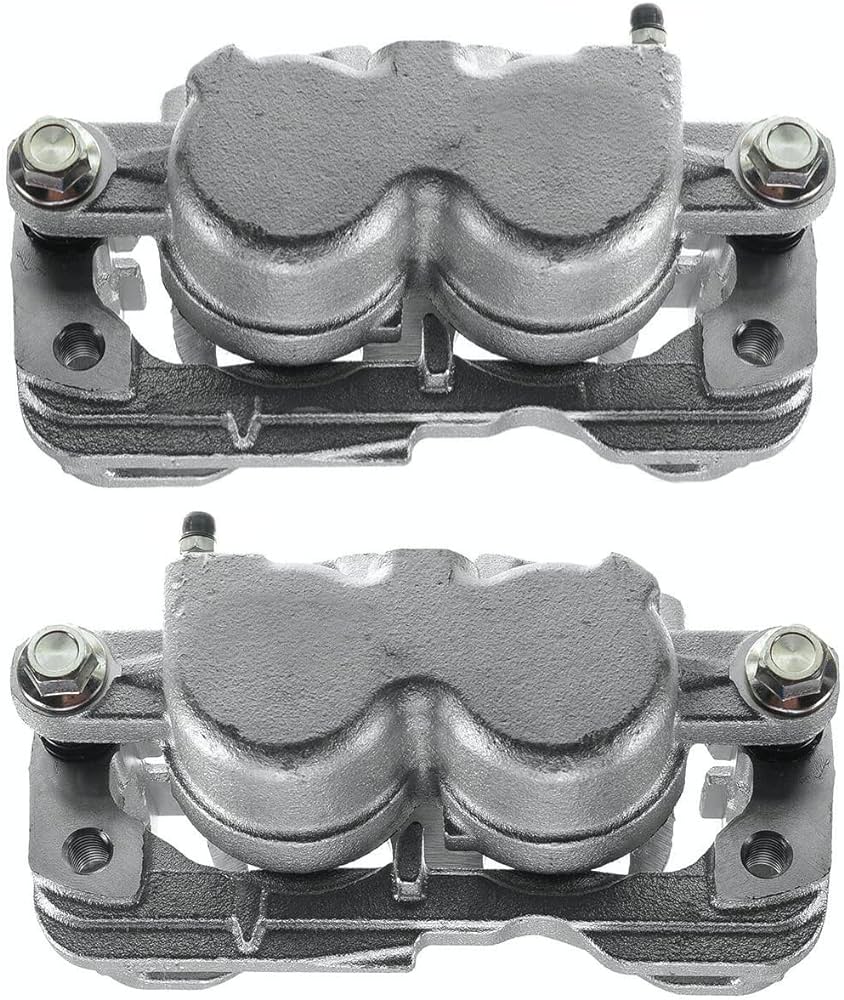
Credit: www.amazon.com


Automotive reference information. Confirm specifications in the manual for your exact vehicle. Original replacement guides link to their research sources. About us