
A high-pressure fuel pump raises fuel pressure to the level required by the engine’s injection system. In many gasoline direct-injection and common-rail diesel arrangements, it receives fuel from a lower-pressure supply circuit and feeds a high-pressure rail. It is a different component from the electric pump commonly fitted in the tank.
Not every engine uses this arrangement, and not every high-pressure pump works or is lubricated in the same way. Identify the exact engine before applying a pressure specification, repair procedure or replacement recommendation.
Why direct injection needs a different fuel supply
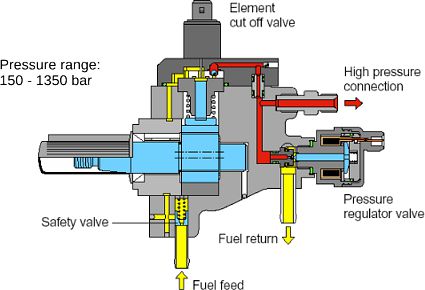
Credit: dieselnet.com
Injecting fuel directly into a combustion chamber requires the system to control delivery against the conditions inside that chamber. The pump, rail, injectors, sensors and control strategy work together; pressure is one part of the system rather than an isolated pump setting.
Bosch’s gasoline direct-injection overview shows a supply stage and high-pressure components as separate parts of the architecture. That distinction matters diagnostically: inadequate fuel reaching the high-pressure stage can affect rail pressure even if the high-pressure pump is not the original fault.

Credit: www.amazon.com
Tank pump versus high-pressure pump
The tank or supply pump brings fuel toward the engine in systems that use one. The high-pressure pump then provides the pressure required for injection. Many engine-driven high-pressure pumps use a mechanical drive, while control components regulate the delivered quantity or pressure according to the design.
Bosch’s gasoline high-pressure-pump description concerns its direct-injection products. Do not copy a product’s pressure capability into a test specification for an unrelated engine. The vehicle’s specified operating range and test conditions are the relevant comparison.
What the rail contributes
The rail connects the pressure-generation side to the injectors and provides a place for pressure monitoring in the relevant design. It is not simply a length of ordinary low-pressure fuel hose. Bosch’s direct-injection rail description explains its distribution role within the high-pressure circuit.
A scan tool may show requested and actual rail pressure. Comparing them can reveal that the system is not meeting its target, but the values depend on operating state and sensor interpretation. A mismatch is a diagnostic observation, not automatic proof that the pump needs replacement.
Gasoline and diesel pumps are not interchangeable concepts
GDI and diesel common-rail systems both use high pressure, but their pumps, injectors, control arrangements and service practices differ. Even within diesel systems there are important design differences. For example, Bosch describes its CP9 pump as oil-lubricated; that characteristic should not be generalized to every diesel pump.
Fuel type, lubrication requirements and contamination handling must therefore come from the engine and component documentation. Advice to add oil or a generic lubricant to the tank is not a substitute for that information and can be inappropriate for the vehicle.
What symptoms can and cannot tell you
A starting problem, reduced power or a rail-pressure fault can justify investigation of the fuel system. Those symptoms do not distinguish a weak supply stage, restricted feed, electrical issue, inaccurate pressure signal, control fault or high-pressure mechanical problem by themselves.
Record fault codes and operating conditions before clearing them. A technician should follow the engine-specific diagnostic tree, including supply-side checks where required, rather than move directly from a pressure-related code to the most expensive component in the circuit.
Why opening a line is not a diagnostic shortcut
High-pressure fuel can cause serious injury, and residual pressure may remain after shutdown. Do not loosen a rail pipe to see whether fuel comes out or use a hand to find a leak. Depressurization, testing equipment and replacement of any single-use lines or seals must follow the exact service procedure.
If there is a suspected leak, stop operating the vehicle and arrange qualified inspection. Ordinary low-pressure test kits and hose adapters must not be used on the high-pressure side. The safe test point is the one specified by the manufacturer, not whichever fitting is easiest to reach.
What a complete repair should establish

Credit: www.hitachi-automotive.us
Before authorizing replacement, ask what evidence identifies the pump rather than another part of the system. After repair, verification should address the original symptom, pressure control under the specified conditions and leak integrity. Any contamination finding needs a system-specific response, not an assumption that replacing one part removes all risk.
If you are comparing tests, distinguish the high-pressure circuit from low-pressure fuel delivery volume testing. The two can contribute to a diagnosis, but their equipment, limits and safety requirements are not interchangeable.


Automotive reference information. Confirm specifications in the manual for your exact vehicle. Original replacement guides link to their research sources. About us


