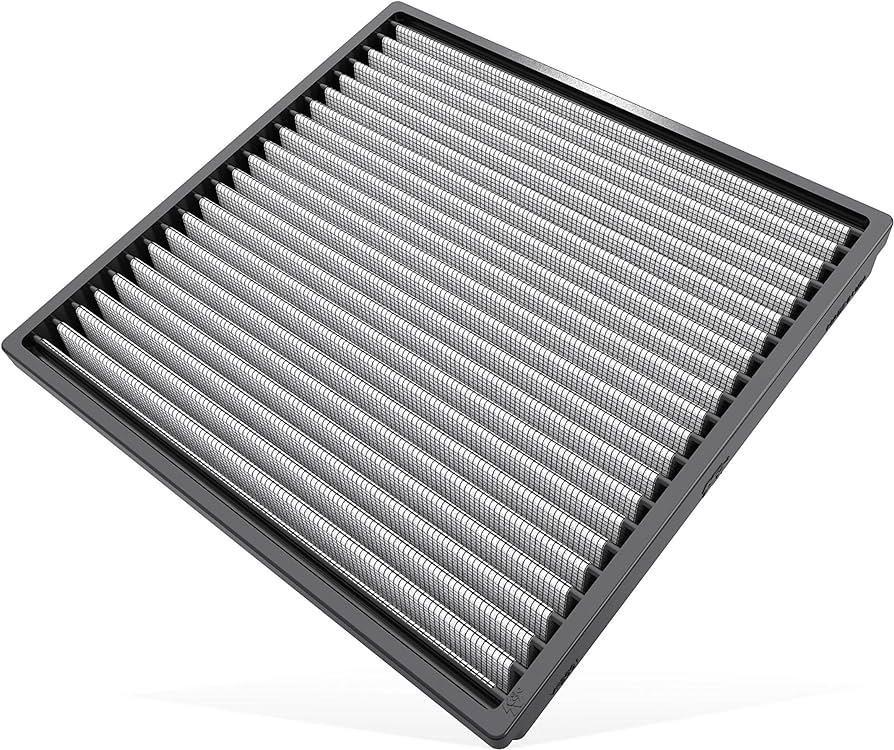

Cabin air filters were appearing in passenger cars by the late 1970s, rather than first arriving in the 1990s. Saab’s own historical timeline lists a cabin-filter milestone in 1978; filter manufacturer FILTRON dates the Saab 900 example to 1979. Those accounts support the period, but they should not be combined into a precise worldwide production-start claim without further contemporary evidence.
The larger story is gradual development. A filter that limits incoming dust and pollen, a later activated-carbon design and an automatic cabin-air-quality system are different milestones. Their introduction dates answer different questions. There was no single year in the sources reviewed here when every manufacturer, model and market adopted identical cabin filtration.
If you want to know whether your own older car has a filter, its model year is only a starting clue. Exact equipment, market specification and later repairs or retrofits can matter. The history below explains the dates; our separate cabin-filter identification guide explains how to establish the hardware on a particular vehicle.
This timeline uses manufacturer histories, a preserved manufacturer brochure and application documents. It distinguishes what each source actually establishes from what a modern reader might infer. It does not claim a patent search, an inspection of every early ventilation system or a statistical survey of adoption across the global car market.
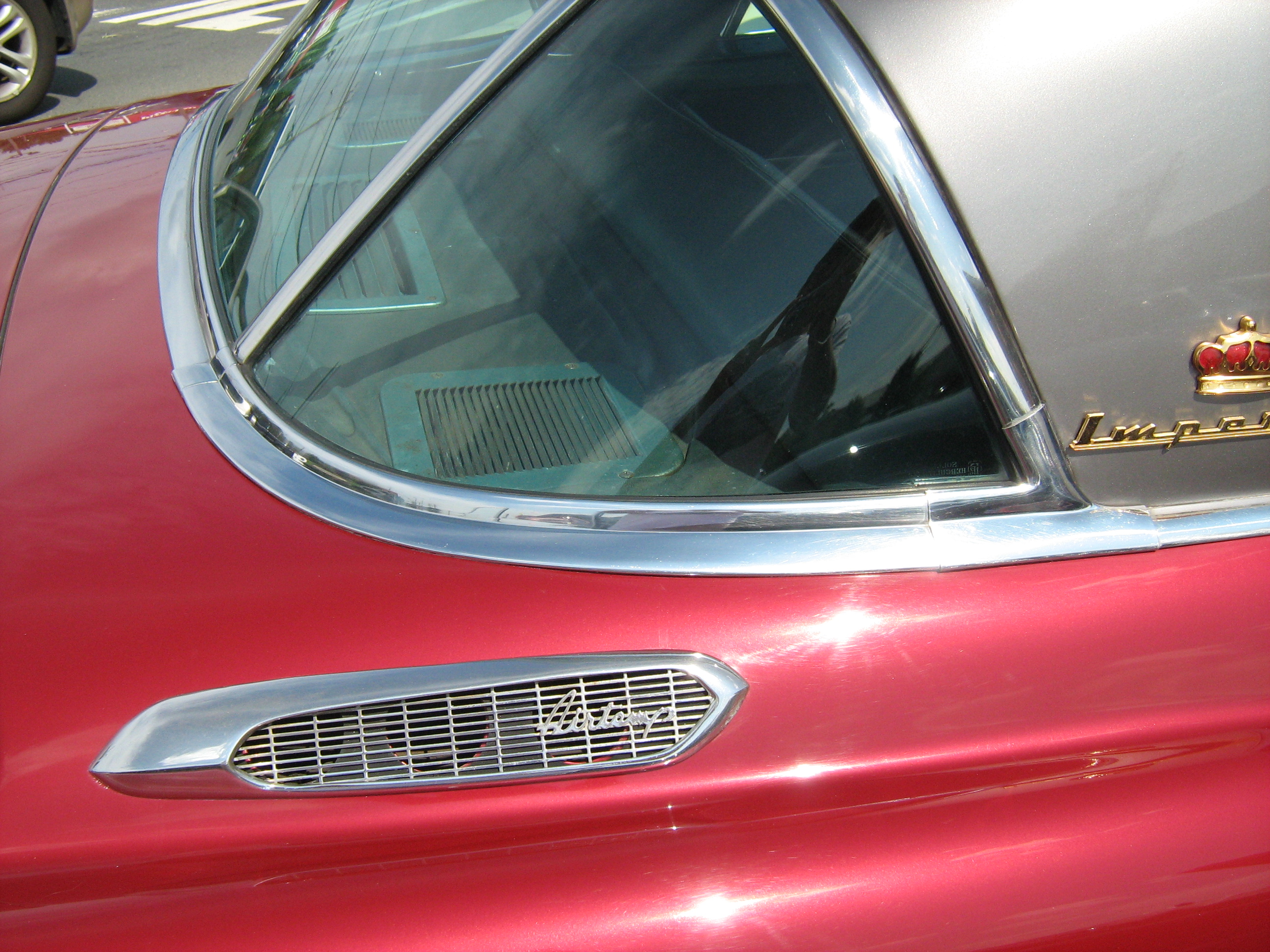
Credit: en.wikipedia.org
The late-1970s starting point needs a careful label
The 2011 Saab Brand and Range brochure preserved by XR793 places cabin air filtration at 1978 in its historical timeline. The same spread places the Saab 900 at 1979. This is a manufacturer-authored retrospective document, currently accessible through an independent brochure archive. It is useful primary evidence of Saab’s own account, while its retrospective nature should remain clear.
FILTRON’s history identifies the Saab 900 in 1979 as its early car example and describes an initial dust-and-pollen role. Its date is not identical to the Saab timeline’s cabin-filter entry. The defensible synthesis is late-1970s introduction, with the individual dates attributed, rather than silently choosing one and declaring every other account wrong.
Keep announcement year, calendar-year production and model-year labeling separate when investigating an old car feature. They can refer to different events. The two retrospective sources above do not, on their own, resolve the exact day a particular factory fitted its first element. A claim at that level would need more specific production or launch documentation.
What counts as a cabin-filter milestone?
A dedicated passenger-compartment filter is not the same item as an engine intake filter. Nor should every ventilation grille or coarse debris screen automatically be treated as equivalent to a modern replaceable cabin element. Before comparing historical claims, establish which component each author is describing and which airflow path it serves.
The terminology can also change. Pollen filter, passenger-compartment filter and cabin filter may describe closely related functions in different manufacturer documents. Search the original handbook or parts description rather than assuming that absence of today’s preferred wording proves absence of the equipment. Conversely, a generic reference to air filtration may concern the engine instead.
An invention claim, a patent, a prototype, optional equipment and a standard-production installation would represent different evidence. None should be substituted for another without explanation. A patent date alone would not show how many customers received the feature or whether the patented design matches the filter later sold for the vehicle.
A convincing patent-origin account would identify the document, filing date, inventor and claimed mechanism, then establish its relationship to a production vehicle. The sources reviewed for this timeline support named product and vehicle milestones. They do not identify one patent that explains the whole history, so the chronology does not assign an unsupported inventor or filing year.
The 1990s brought different filtration capabilities
FILTRON’s account identifies activated-carbon cabin filtration in the Mercedes-Benz S-Class in 1991 and a BMW 7 Series application in 1993. These are attributed examples of a later capability, not the first appearance of every type of cabin filter. They help explain why a history focused on odor control might start later than one focused on pollen filtration.
Particle collection and gas adsorption are different functions. A carbon-containing design does not merely rename the earlier pollen screen, and it should not be described as removing every pollutant. For historical comparison, note what the new feature was intended to address rather than converting the launch description into a present-day guarantee of protection.
Volvo’s environmental milestones records the introduction of its Interior Air Quality System, or IAQS, in 1999. That is a named system milestone in Volvo’s history. It is not evidence that cabin filters were invented that year or that every Volvo in every country immediately had the same specification. Volvo’s page explicitly warns that market equipment and options can differ.
These examples show a more useful sequence than a single first-year answer: an early passenger-air filtering element, later designs addressing additional pollutants and increasingly integrated cabin-air systems. The sequence describes development. It does not measure the proportion of cars equipped at each date, because the cited documents do not provide a consistent global adoption dataset.
Common does not mean universal
Avoid the shortcut that every car built after 2000 must contain a serviceable cabin filter. A November 2014 GM service bulletin preserved by NHTSA identifies specific applications without a passenger-compartment element, including listed 2003–2006 Chevrolet Tahoe models. Its purpose and model list are narrow; the example disproves a simple all-cars cutoff without establishing a rule for the rest of GM’s range.
Likewise, a part shown in today’s replacement catalog does not automatically prove that the car left the factory with it. The listing may cover particular equipment, a later service solution or a retrofit. Read application notes before using a present-day parts result as evidence about a vehicle’s original specification.
A claim that regulations made cabin filters mandatory everywhere would need a jurisdiction, vehicle category, date and actual legal requirement. The manufacturer histories cited here do not establish that claim. The availability of more sophisticated filtration should not be rewritten as a universal legal mandate simply because the two ideas sound related.
The practical historical question is therefore specific: what filtration did this model, in this market, with this equipment have at the relevant production date? A period brochure, handbook or manufacturer parts record can answer that more directly than a general article stating that filters became common in a particular decade.
Later developments expanded the product choices
MANN-FILTER’s May 2026 anniversary account dates its FreciousPlus biofunctional cabin filter to 2014 and says it was developed for the aftermarket. This is a brand-specific product milestone. It illustrates that filtration development also took place in replacement products, rather than only through the launch of a new vehicle model.
The aftermarket distinction matters when examining an older car today. Its installed replacement element may have a different media specification from the original part, even if it fits the intended housing. You cannot reliably date the vehicle’s original filtration technology merely by looking at a recently installed box or element.
MANN+HUMMEL’s current product categories separate particle, combination, biofunctional and HEPA-related solutions. Those categories describe differing approaches and capabilities; they are not a ranking that allows any newer element to fit any older vehicle. The useful historical point is the expansion of design choices, while application compatibility remains a separate question.
Tesla’s Hong Kong Model S HEPA upgrade listing illustrates another evidence trap. Although its product heading spans 2012–2020, its note restricts compatibility to vehicles with the updated front fascia built from April 2016 through January 2021. A product heading therefore cannot be read as proof that every vehicle in the heading’s years originally had the feature. This is a retrofit compatibility example, not a claimed worldwide HEPA introduction date.
How to verify a date for a particular car
Begin by writing down the exact claim you want to establish: first offered, standard equipment, a factory change during production, or fitted to one individual car. Then collect the model, market and build information relevant to that claim. A registration year can differ from production or model-year labeling, so keep those fields separate where the documents do.
Prefer a dated manufacturer brochure or equipment list for an availability claim, and application-specific service information for identifying components. Check footnotes, optional packages and production breaks. A line describing a feature in a model-family brochure may not mean every trim received it. Preserve the page and edition so someone else can verify the interpretation.
For a vehicle with a long ownership history, review repair records as well as original specifications. A later retrofit can make the current configuration different from the factory configuration. Record those as two separate facts instead of choosing whichever one supports a simpler historical story. This is especially relevant when comparing a restored car with an untouched example.
If two documents disagree, first check whether they cover the same market, production period and equipment. Then identify whether one is a later revision or describes an accessory. A disagreement that remains unresolved should stay visible in the notes. Guessing a precise year is less useful than stating the supported date range and the missing evidence.
When researching replacement parts, history should guide the question rather than dictate a purchase. Use the current application information for the actual installed system. A milestone such as the introduction of activated carbon in one model family does not tell you which element belongs in a different car three decades later.
For maintenance, consult the correct handbook and product instructions instead of an internet-wide interval attached to the history. This article has not established one replacement schedule for every generation of cabin filter. Nor does an early filter’s limited intended role tell you the measured performance of a current replacement.
A useful timeline keeps its evidence attached. Saab’s 1978 retrospective entry and FILTRON’s 1979 Saab 900 example support late-1970s origins. The named 1990s examples concern further capabilities and systems, while later aftermarket and retrofit products show continued development.
The date question is therefore best answered in two parts: cabin air filtration predates the 1990s, but adoption and equipment differed among vehicles. There is no universal model-year shortcut that settles whether your car has a filter, which type it uses or what should replace it. Those decisions require its own application information.
Keep the historical milestone separate from the individual vehicle’s specification. That distinction gives a clearer account of how the technology developed and avoids turning a memorable year into an unsupported maintenance or fitment rule. The cited evidence is a documented selection of milestones, not an exhaustive claim to have proved the first filtered automobile anywhere in the world.


Automotive reference information. Confirm specifications in the manual for your exact vehicle. Original replacement guides link to their research sources. About us