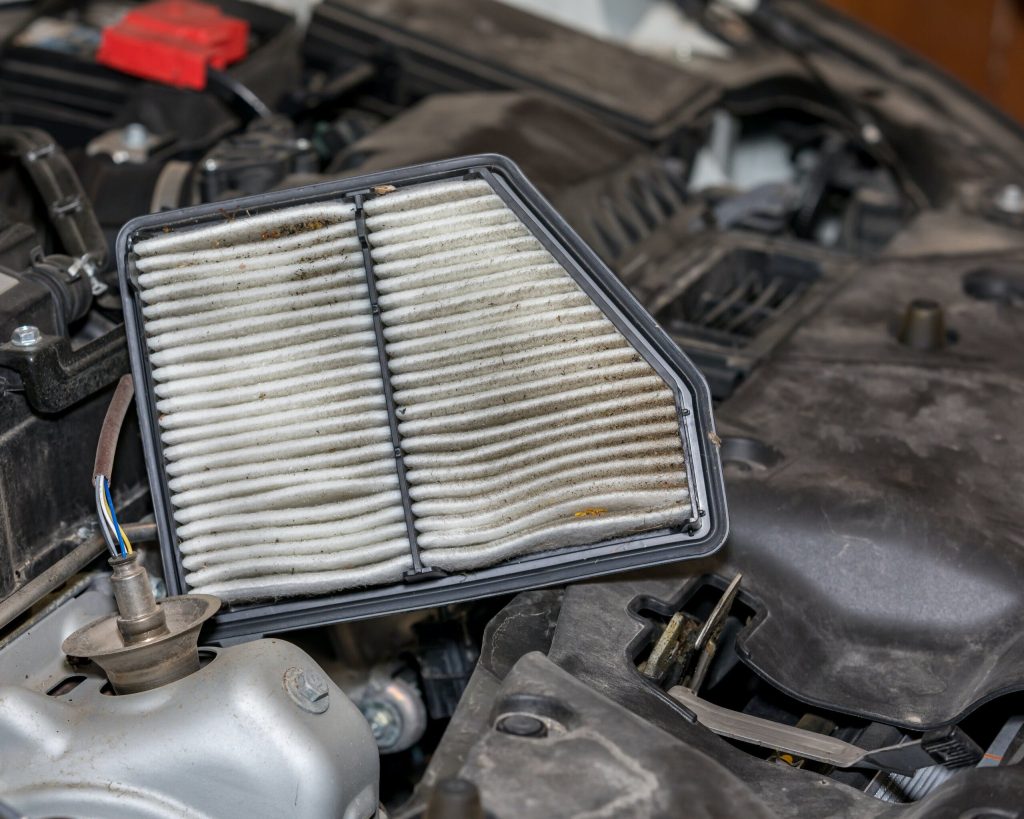

Change a car air filter when its applicable replacement schedule or vehicle message calls for it, or when inspection establishes a condition requiring replacement. There is no single mileage that covers every engine, cabin and cooling-air filter. The useful decision is whether your specific element needs replacement now, a permitted cleaning service, further inspection or routine monitoring.
Begin with the filter’s identity and service history. Record the vehicle’s model year and engine, which air system you mean, and when that element was last inspected, cleaned or replaced. An invoice for an oil filter does not document an engine air filter, and an engine air-filter change does not establish that the cabin filter was serviced. If an aftermarket intake is installed, identify its element as well as the vehicle. Otherwise you may compare the wrong maintenance instructions with the wrong component. When several people maintain the same car, check whether someone else already arranged the work. A receipt with the part reference is more informative than a remembered conversation about a “major service.” Clarify an ambiguous invoice with the provider.
Then establish why the question has arisen. Perhaps the car reached a documented service point, a dashboard message appeared, or a technician showed you physical damage. Those are stronger starting points than a universal online interval or a sales claim that every new filter improves fuel economy. This guide addresses the decision to act now. It does not provide a replacement procedure for every housing or a new schedule that overrides the vehicle manufacturer. Separate an appointment reminder from a manufacturer requirement: a workshop may send a marketing message based on its own contact schedule. Ask which actual maintenance item is due and why before treating that reminder as the vehicle’s instruction.
First distinguish a service message from a fault
Read the exact dashboard wording before resetting anything. In the 2022 Corvette manual, the air-filter life section distinguishes replacement at the next oil change, replacement soon, and a message to check the system. The last directs the owner to a dealer. This model-specific example shows why “there is an air-filter warning” is incomplete information. Record the wording and follow the response specified for your own vehicle; do not borrow another model’s reset sequence or delay allowance.
A general engine warning or a new running problem is not proof that an air filter is due. Give the workshop the symptoms, when they occur and any recent work. DOE’s maintenance guidance recommends inspection of an engine warning and distinguishes filter-related acceleration effects from fuel-economy effects. A fall in MPG alone is weak evidence for repeatedly buying filters. A proper inspection may find a service need, a different fault, or both. If the issue started immediately after an airbox was opened, include that timing in the report. It can guide an installation check without establishing blame. Keep any diagnostic results with the service record instead of replacing parts until a symptom disappears.
Unusual cooling-system messages can concern another filter entirely. The 2023 Sienna manual describes a traction-battery cooling-parts maintenance message and the corresponding air-intake vent/filter checks. Its instructions warn against continued operation with that message and describe follow-up inspection if it persists after the specified action. Do not substitute an engine-filter replacement for that procedure. Read the model-specific precautions before touching battery-cooling equipment, and obtain help when the work exceeds the documented owner maintenance.
| Evidence in front of you | Appropriate next decision |
|---|---|
| A specific service message | Follow that vehicle’s stated timing and procedure; record completion accurately. |
| A new symptom without a confirmed cause | Arrange diagnosis instead of assuming an air-filter change will solve it. |
Use three checks to decide whether replacement is due
First, check the documented schedule. Read the correct model-year and market information, including special operating conditions and footnotes. Some requirements use time, some use distance, and others involve a vehicle maintenance system. Apply the rule as written. For example, Tesla’s current maintenance guidance lists two-year cabin-filter replacement for Model 3 and Model Y while noting model, year and environmental variations and directing owners to current vehicle guidance. That is a named example, not a two-year rule for all cars. Keep the applicable schedule entry with your service records.
Second, assess condition using the instructions for the installed element. A damaged sealing edge or torn medium should not be ignored merely because an interval remains. Ford’s 2024 Bronco Sport instructions explain that an incorrectly seated edge can admit unfiltered air and warn against introducing foreign material during service. Resolve a damaged or unsecured assembly before normal operation. At the same time, avoid declaring a filter finished solely because it looks darker than a new one; the appropriate inspection method and rejection criteria depend on the product. Ask for a photograph of a reported defect if you cannot see the removed component yourself. It should identify the actual damage, not merely compare an old element with a bright new one under different lighting. A photograph supports the explanation; it is not a complete performance test.
Third, look for an abnormal event or unresolved cause. Unexpected water, oil, heavy debris or repeated contamination may warrant investigation beyond installing a fresh element. Replacing the affected part can be necessary without being the complete repair. Tell the workshop what happened, how recently it was last serviced and whether the same condition returned. For a car with missing history, arrange a suitable baseline inspection or service rather than assigning an invented age to the filter. Keep unknown history labelled unknown until evidence establishes otherwise. A return visit for the same contamination deserves a review of the cause and housing, not an automatic repeat purchase. Retaining the previous invoice and photographs makes that discussion more specific and helps distinguish recurrence from an unrelated new finding.
Choose replacement, approved cleaning or further inspection
A serviceable reusable filter may call for cleaning instead of disposal, but only under its own directions. K&N’s cleaning instructions separate product families and their required treatment. AEM’s DRYFLOW range illustrates that a washable element can be oil-free. These examples prevent two common mistakes: washing an unknown disposable element and adding oil to a filter that does not require it. If you cannot identify the fitted product, resolve its service category before choosing a cleaner. See the washability identification guide for that decision.
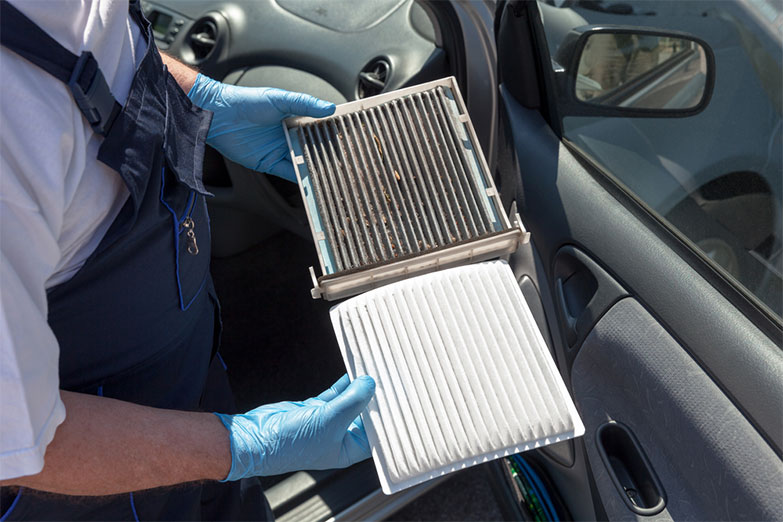
Plan the service around both the part and the vehicle. Confirm the replacement reference, number of elements and required supplies before disassembly. Some cars use separate upper and lower cabin elements, and some have additional filters for other functions. “Change the air filter” may therefore be an incomplete instruction on a work order. Ask the provider to identify each system being serviced, including any separate battery-cooling filter that the vehicle documentation lists. Do not assume that an attractive package price includes every element or that a filter sold singly constitutes the complete service set. For a reusable product, also allow the downtime specified for cleaning, drying and any finishing treatment. A vehicle needed immediately may require a suitable replacement element or a rescheduled service; shortening a required preparation step is not an equivalent maintenance option.
After the work, record the actual action and check any relevant maintenance display according to the manual. The cited Corvette manual requires its air-filter life system to be reset following replacement. That does not mean clearing a reminder is evidence that a part was changed, or that cleaning and replacement always authorize the same reset. If a warning remains, consult the prescribed follow-up rather than resetting it repeatedly. The replacement planning guide covers preparation and refitting checks without replacing the vehicle’s detailed procedure. Before accepting the car back, clarify the next documented inspection or service point and any unresolved issue. Keep a recommended follow-up diagnosis separate from the next routine filter interval so one does not disappear behind the other in your reminders.
| Situation | Reasonable action | Record to keep |
|---|---|---|
| Replacement criterion is met | Install the specified new element and restore the assembly correctly. | Part reference, date, odometer and reason for replacement. |
| Identified cleanable element is due service | Follow its complete approved cleaning and finishing method. | Cleaning date and method; do not label this as replacement. |
| Evidence remains uncertain | Obtain the correct inspection or diagnostic advice before guessing. | Observed condition, exact warning and the question requiring resolution. |
Credit: www.minit-tune.com
Make the timing decision from evidence
A practical final check is to ask three questions: what component is involved, what instruction or condition calls for action, and what work will address it? Consider two hypothetical cases. A sound element with a confirmed future service point and no unusual event may simply remain on its normal schedule. A recently installed element with a damaged seal needs attention now despite its low mileage. Neither decision comes from a universal number. If a shop recommends an early change, ask it to show the relevant condition or schedule exception. If someone recommends delaying, ask how that advice accounts for any damage or warning. Choose the appropriate service, retain a clear record and investigate any problem that the filter work does not resolve.


Automotive reference information. Confirm specifications in the manual for your exact vehicle. Original replacement guides link to their research sources. About us