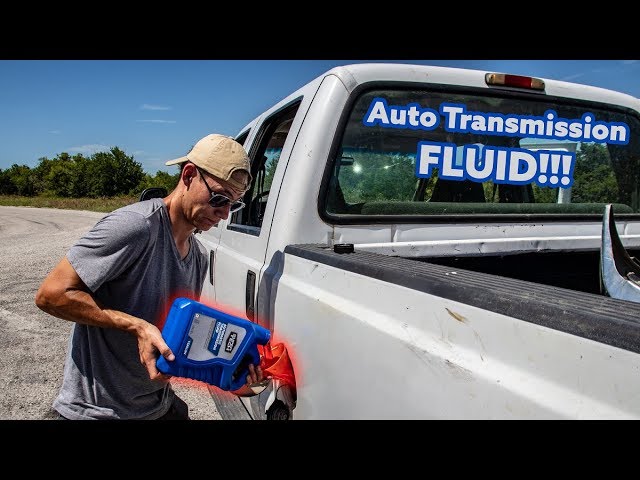

Do not put automatic transmission fluid in a diesel fuel tank to clean the injectors. ATF is not a substitute for the diesel fuel or fuel treatment specified for your engine. Claims that it contains detergents, adds lubrication or worked in an older truck do not establish a suitable cleaning method for your vehicle. There is no universal ATF-to-diesel mixing ratio to recommend.
Two questions often get mixed together: whether a fluid can dissolve some material and whether adding it to a fuel system is an approved, effective treatment. The first does not answer the second. A useful recommendation must address the particular fuel system, the fault being treated, the product and the operating instructions. A story about an engine sounding quieter afterward does not establish any of those things. A credible cleaning claim would identify the deposit, product formulation, concentration, engine application, test method and result. It would also address the vehicle’s restrictions. A photograph of dark liquid after flushing is not enough to show where the material came from, whether the injector returned to specification or whether the treatment was compatible with the rest of the system. Ask what evidence actually supports the proposed outcome before treating an appealing demonstration as a maintenance instruction.
A diesel injector complaint should first be identified as a diagnosis, not a shopping category. Hard starting, rough running or smoke does not prove deposits are the cause. If the problem is electrical, mechanical wear, water contamination or inadequate supply pressure, pouring another fluid into the tank does not establish a repair. Record the symptom and circumstances before adding anything, especially if the complaint began immediately after refueling.
If ATF has already been added, stop treating the situation as a cleaning experiment. Keep the bottle or a clear product photograph, estimate the quantity added and note how much fuel was present. Record whether the ignition was switched on or the engine ran afterward. Contact the vehicle manufacturer’s service channel or a diesel specialist with those facts before deciding how to proceed. Do not assume dilution makes the mixture acceptable. Give the repairer facts rather than a guessed percentage if you do not know the quantities accurately. “One partly used bottle, tank approximately half full, engine not started” is more informative than an invented precise concentration. Preserve any receipt or product identifier. Do not retrieve a sample yourself by opening a pressurized system. If a sample is needed, have it collected using suitable equipment and containers so the collection process does not add new contamination.
Why transmission-fluid detergent claims are not enough
Automatic transmission fluid is formulated for its intended transmission application. The presence of a detergent or other additive does not demonstrate that the finished fluid is suitable for combustion, a diesel injection system or its emissions equipment. Products bearing different ATF specifications are not one uniform chemical recipe. Without the vehicle manufacturer’s approval, an online instruction to add “some red fluid” leaves both the product and its compatibility undefined. Avoid reducing the issue to the color of the fluid. Color is not a compatibility standard or a reliable statement of chemical composition. The fact that a bottle is new, sealed or described as synthetic also does not make it an approved fuel treatment. Those details may help identify what entered the tank, but they cannot establish that the mixture now meets the engine’s fuel specification.
Use the engine’s fuel requirements as the reference. Ford’s diesel fuel-quality guidance specifies suitable diesel fuels and rejects several inappropriate oils and alternative mixtures for the applications covered. It does not establish an ATF injector-cleaning recipe. That distinction matters: a source that describes fuel selection should not be quoted as if it had validated a home-made additive treatment or a safe dose for every diesel.
The claim that older engines tolerated a mixture also needs careful interpretation. An engine continuing to run is not a measurement of injector cleanliness, emissions performance or long-term wear. Hardware and service requirements differ between generations. Even for an older vehicle, its own instructions remain a better starting point than another owner’s experience with an unspecified product and concentration. Age alone does not supply missing approval or test evidence. Reports of improvement also need a baseline. Refueling, warming the engine, changing the driving route or carrying out another repair can coincide with the experiment. Without controlled measurements, there is no reliable way to assign the change to injector cleaning. The same limitation applies to a report of no immediate problem: the absence of an obvious symptom is not a compatibility test. Neither observation justifies repeating the treatment on another vehicle.
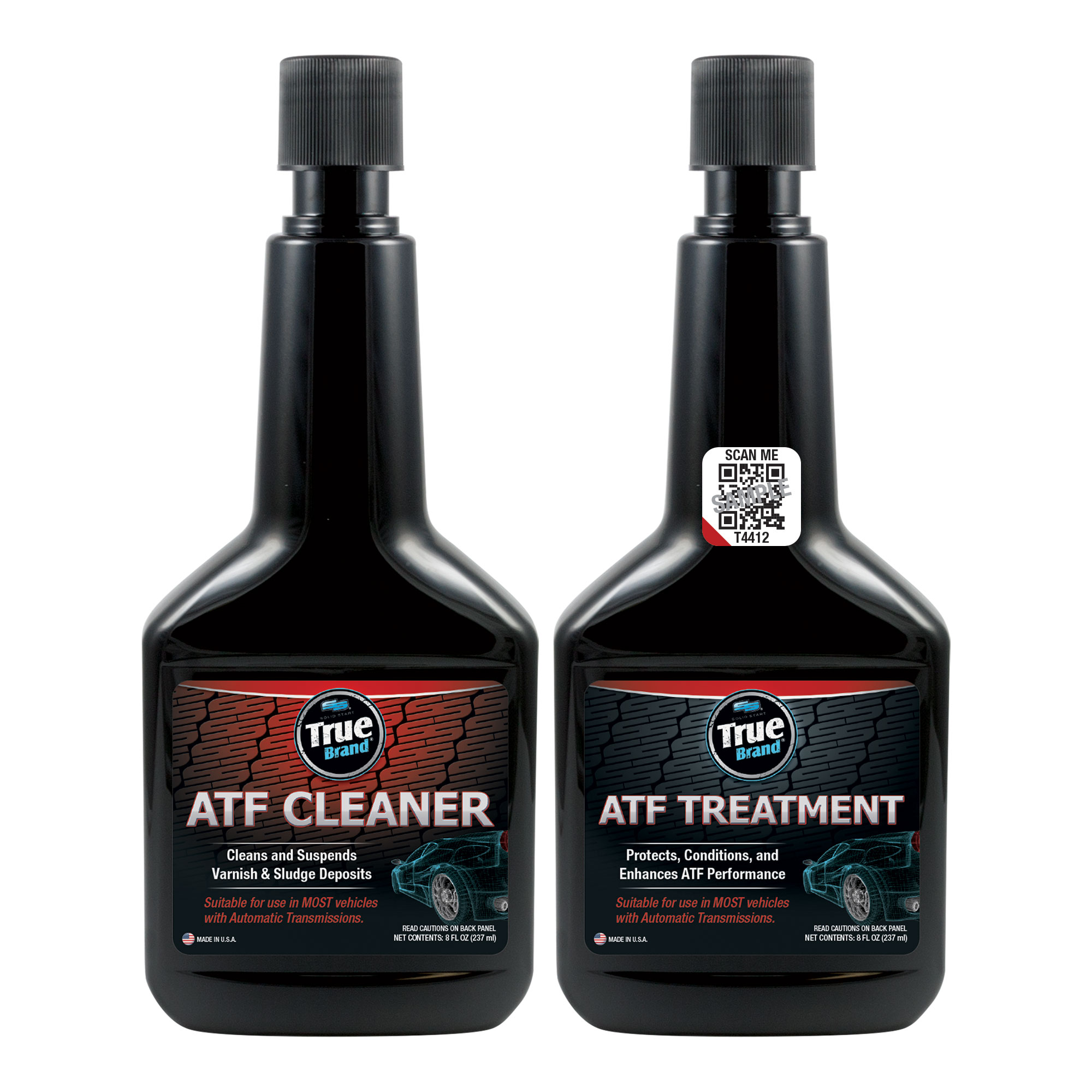
Credit: www.solidstart.com
Common questions about ATF and diesel injector cleaning
What should I do if ATF is already in the tank?
If you have not started the engine, leave it off and obtain application-specific advice before cycling the ignition or attempting to drive. Some vehicles circulate fuel before the engine runs. If it was already driven, park safely and report the distance, symptoms and estimated mixture to the repairer. Do not drive farther to “burn it off,” add a second chemical to cancel it out or drain fuel into an unsuitable container. A specialist can decide whether draining, sampling or further checks are appropriate. That decision depends on the actual contamination; this article cannot infer that damage has or has not occurred from a quantity alone.
What about diesel injector cleaner made for the fuel tank?
A dedicated diesel additive is a different product category from ATF, but its label still does not override the vehicle’s requirements. Check whether the manufacturer permits a treatment, whether it suits the fuel and aftertreatment system, and the exact dosing instructions. Do not combine products or use extra concentration as a shortcut. A permitted detergent treatment may address the deposits it is designed for; it cannot repair a broken electrical connection or establish that an injector’s internal mechanical condition is acceptable. Avoid selecting a product solely from claims of an immediate improvement in power, smoke or mileage. Be especially careful with a product described for a different task, such as storage, cold-weather treatment or another fuel type. Similar packaging and the word “diesel” do not make all treatments interchangeable. Read the specific purpose and restrictions. If the vehicle documentation and the product instructions appear to conflict, ask the manufacturer or a qualified service provider to resolve the conflict rather than choosing whichever allows the strongest dose.
How can a workshop tell contamination from another fault?
A useful assessment ties the complaint to evidence. Delphi’s common-rail service guidance distinguishes contamination and wear concerns from electrical and hydraulic checks. Ask what was found in any inspected fuel or filter sample, which pressure or injector tests were performed and what specification was used. Do not request a universal pass/fail return-flow quantity taken from a different engine. Delphi’s electrical assessment also illustrates why a flow complaint and an electrical test answer different questions. No tank additive makes those distinctions unnecessary. A useful test record states whether the engine was cranking, idling or running under another specified condition. It also identifies the equipment and comparison used. If a repairer says an injector is “dirty,” ask whether that describes visible contamination, a test result suggesting restricted delivery or merely a possible explanation for the symptom. Those are different levels of certainty and should lead to different confidence in a cleaning recommendation.
Choose the next step from the evidence
For a healthy engine, follow its fuel and filter maintenance instructions rather than adding an unapproved fluid in anticipation of a problem. For a newly developed running complaint, preserve the scan results, refueling history and service records, then establish the fault. For known contamination, seek advice before further circulation. These three situations need different decisions. A generic “injector cleaning” service should not be accepted without an explanation of which condition it addresses and how success will be checked. For example, a vehicle that developed hard starting immediately after an unknown fluid was added deserves a contamination assessment, not an assumption that it needs another cleaner. A vehicle with an identified wiring fault needs that electrical fault resolved. A vehicle with no complaint may simply need its scheduled filter service. Keeping these scenarios separate is more useful than searching for one additive that supposedly solves all three. If someone recommends ATF despite the vehicle’s instructions, request the applicable manufacturer authorization before allowing that mixture into the fuel system.
When discussing a quote, separate fuel-system decontamination, diagnostic testing and replacement parts. Ask whether the proposed work addresses the cause as well as the affected component, and request the relevant findings in writing. A new injector will not make an unidentified contamination source disappear. Equally, a report of contamination does not justify replacing every component without the application’s procedure and evidence. Our guide to injector repair quotes explains how to compare scope, while the fault-code guide explains why a scanner message is only part of the diagnosis. The practical answer remains: keep ATF out of the diesel tank and choose any cleaning or repair action from the manufacturer’s instructions and measured findings.


Automotive reference information. Confirm specifications in the manual for your exact vehicle. Original replacement guides link to their research sources. About us