
Toyota does recommend fuel-system cleaning products or services in some published guidance, but there is no single cleaner schedule that can be applied to every Toyota worldwide. The correct answer depends on the model, model year, engine and market. Check the applicable maintenance guide and product instructions before treating a dealer suggestion or an online interval as a requirement for your car.
It also matters what the word “cleaner” describes. A bottle added to the tank, a workshop combustion or EFI cleaning service and injector diagnosis are different activities. They have different procedures and purposes. A recommendation for one does not automatically authorize the others. Ask for the actual product or service name and the Toyota document behind the recommendation; this makes a maintenance discussion much more precise than asking whether “injector service” is generally worthwhile.
What Toyota’s own publications actually say
There are real examples of recommendations with limits. Toyota’s 2020 RAV4 Hybrid maintenance guide lists an EFI tank additive or equivalent in its maintenance log with an island-market restriction, including Hawaii, Puerto Rico, Saipan and American Samoa. That is a specific document and application—not an instruction for every Toyota in every location. Read the complete line and its conditions rather than copying the action while omitting the restriction. In that example guide, the maintenance log includes the additive at the 5,000-mile or six-month entry, but the geographic condition remains part of the instruction. Do not use that interval for a different model, year or market solely because it has the Toyota badge. A historical example is useful for disproving an absolute claim that Toyota never mentions cleaner; it is not a replacement for the current documents supplied for your own vehicle.
Toyota Canada gives a different example in its 2022 spring-maintenance article: it discusses a Complete Fuel System Cleaner and a separate Combustion and EFI System Cleaner Service. The article gives different intervals for the bottle and the workshop service. This is regional service guidance, not a worldwide warranty schedule. When comparing it with your car’s handbook, preserve the publication’s market, date and service distinction instead of blending the two recommendations into one. Specifically, the Canadian article describes a 10,000-kilometre or six-month interval for its Complete Fuel System Cleaner and 80,000 kilometres or performance issues for the separately described workshop service. Those figures belong to that publication. They are not converted here into a universal mileage schedule. If a current Toyota guide for your vehicle gives different instructions, have the service advisor identify the applicable guidance and explain the discrepancy before work starts.
Credit: support.newtowntoyota.parts
How to decide whether a cleaner recommendation applies
Where should I look for the correct maintenance requirement?
Find the warranty and maintenance guide for your model year and selling market, then read the service interval and any footnotes together. An owner’s manual fuel section and a maintenance log answer related but different questions. If the car is imported, identify which instructions apply in its current use and ask Toyota to clarify any conflict. Keep a copy of the document or the relevant page with your service records. An invoice description, a showroom menu and a social-media screenshot are not interchangeable with a vehicle-specific schedule. When someone shows you a schedule excerpt, check the heading as well as the checklist. Model year, powertrain and market information can sit outside a cropped image. Look for the footnote marker beside the item, not just a matching phrase. A recommendation may refer to certain operating conditions or locations. Save enough of the original document to preserve those qualifications, and ask for clarification if the excerpt omits them.
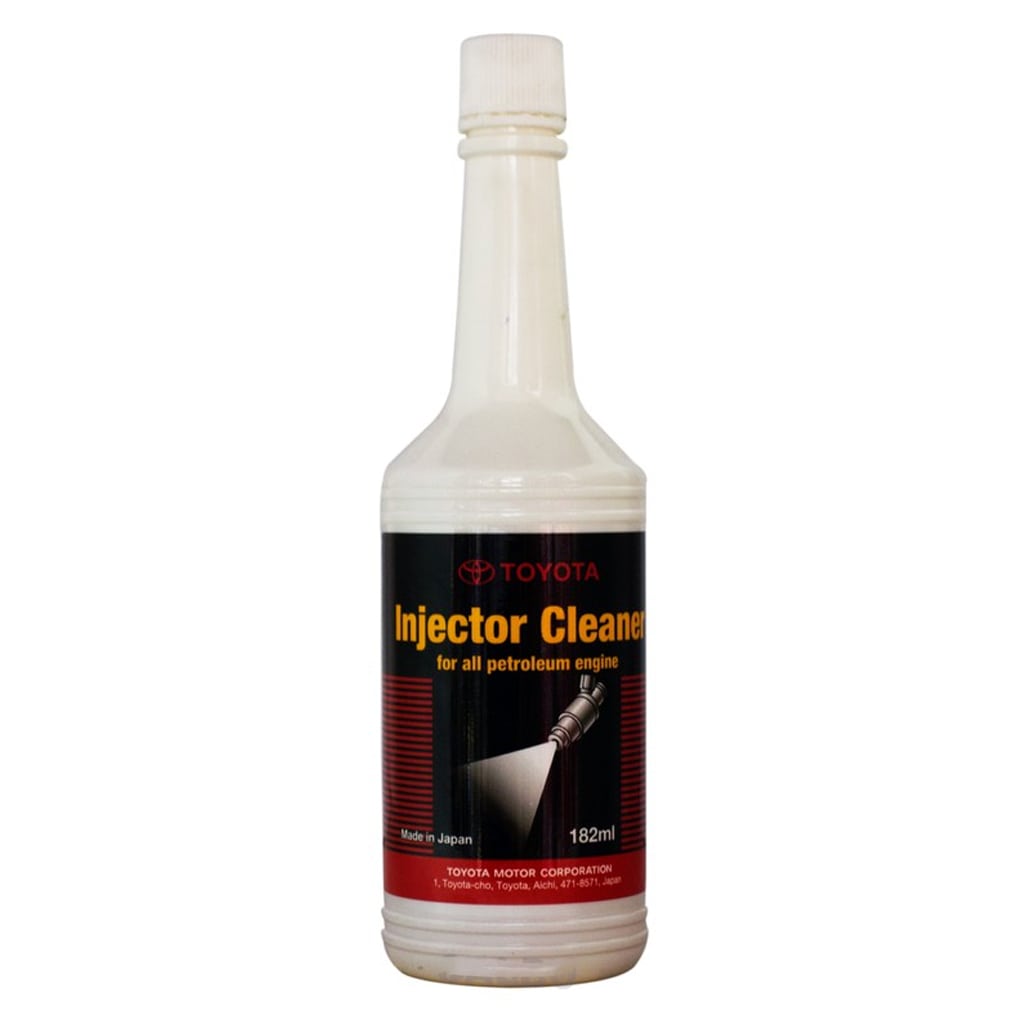
Does a Toyota-branded bottle mean every Toyota needs it?
No. A genuine product can be available for a supported use without being a mandatory recurring service on every vehicle. Conversely, the absence of a universal requirement does not mean every recommendation is automatically an improper upsell. Ask whether the proposal is a scheduled item, an optional preventive treatment or a response to a diagnosed condition. Those categories determine which evidence is useful. A scheduled item needs the applicable schedule; a repair proposal needs findings tied to the complaint; an optional product needs a clear explanation of its intended benefit and limits. Consider a dealer recommending a service to a vehicle that has no symptoms. The useful follow-up is whether it is listed for this vehicle or being offered as an optional preventive measure. Now consider a vehicle that misfires: the same service name needs a different explanation, because the workshop is proposing to address a fault. In that case, ask what supports deposits as the cause and whether other plausible causes have been considered.
Is a tank additive the same as a workshop injector service?
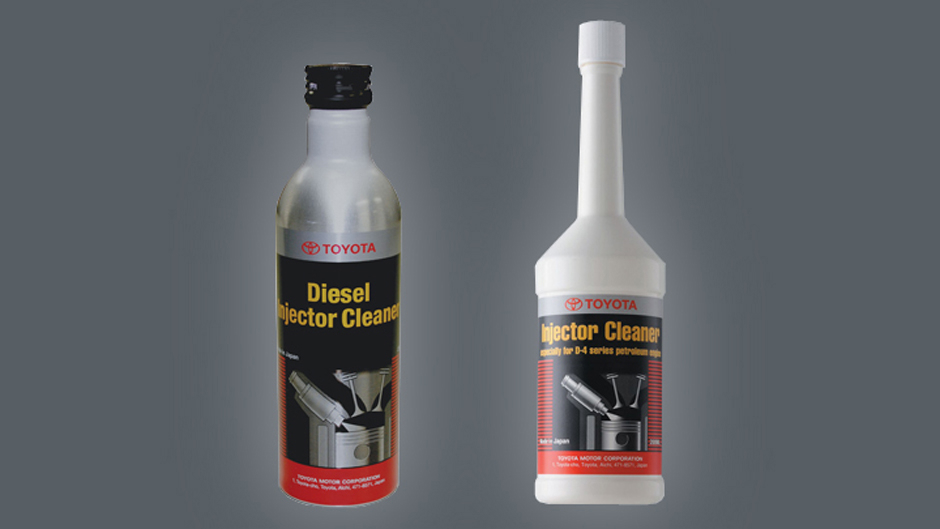
No. The same broad wording can conceal very different work. Ask whether the quoted service adds a product to the fuel tank, uses dedicated workshop equipment, cleans another part of the air or fuel system, or includes injector removal and testing. Request the scope before comparing prices. If you only want the scheduled tank treatment, a larger package should be explained separately. If the engine has a running fault, a bottle alone is not a substitute for documenting the cause. A completed service should identify what was done rather than simply recording “fuel clean.” Two estimates can therefore use similar language and still describe different purchases. One might include only a tank product, while another includes testing and a workshop procedure. Compare the itemized work, labor, products and verification instead of the package name. If the scope is unclear, have it rewritten before approving it. This protects both the owner and the workshop from assuming that a product recommendation includes a diagnosis or a guarantee of repair.
What can a tank cleaner reach on different engines?
Fuel follows the engine’s injection arrangement. Bosch’s explanation of port and direct injection helps explain why a fuel-tank treatment is not automatically equivalent to cleaning every intake surface: direct injection delivers fuel inside the combustion chamber, while port injection introduces it upstream. Some engines use both. Do not infer your Toyota’s exact arrangement from a badge or assume that a fuel-system product will treat every deposit location. Ask which system and deposit are being addressed, especially when a workshop uses “injector cleaning” and “intake cleaning” as though they meant the same procedure. Product compatibility should also be checked for the engine and fuel type. Do not assume advice about a gasoline product covers a Toyota diesel, or that instructions for another market’s product apply to a similar-looking local bottle. The exact product label and applicable vehicle guidance matter more than a forum nickname. A hybrid also still needs instructions matched to its particular engine; its hybrid badge alone does not establish a cleaner schedule.
Questions to ask before approving the service
Request the vehicle-specific document, product name, part reference where available, dose and treatment location. Ask whether the recommendation comes from Toyota’s maintenance schedule, regional service guidance, a technical procedure or the dealer’s own package. Have the repairer identify any supporting symptom or test result. Record what outcome is expected and how it will be evaluated. An improvement in one tank’s calculated fuel consumption is not a controlled test because route, weather, idling and filling differences can change the result. Avoid accepting a promised mileage increase or restored injector life without suitable evidence. Keep a simple service note: the reason for the recommendation, the document consulted, the product or procedure used, the date and mileage, and any follow-up findings. This makes the next service discussion easier and helps distinguish a recurring scheduled item from a one-time diagnostic treatment. Do not automatically repeat a service because a previous invoice contains it. First establish why it was performed and whether that reason still applies. If a guide allows an equivalent product, ask what establishes equivalence for the specified use. A retailer’s broad “all vehicles” label is not the same as confirmation against that instruction. Check the product’s treatment volume, compatible fuel and stated restrictions, and do not transfer a dose from a differently concentrated bottle. Keep the original packaging available until any questions are resolved. The same care applies when a workshop substitutes a product: the substitution should be identified on the work order, with the relevant compatibility explained. This turns a vague brand debate into a practical decision about the correct treatment for this particular vehicle.
If the car runs normally, follow the applicable schedule and use only a compatible product according to its instructions. If it runs poorly, save the fault codes and describe the symptoms before authorizing treatment; injector-related codes do not prove that deposits are the cause. If there is a fuel leak, strong fuel smell or severe misfire, stop safely and arrange diagnosis rather than adding cleaner and continuing to drive. For an existing repair quote, our injector cost and scope guide can help separate a treatment from testing or replacement. Toyota does publish cleaner recommendations, but the useful answer is the one that matches your vehicle, market and reason for the work.


Automotive reference information. Confirm specifications in the manual for your exact vehicle. Original replacement guides link to their research sources. About us