
There is no safe universal trick for starting a car with bad fuel injectors. An injector-related no-start needs the fault identified, and some conditions make another start attempt unsafe. Before blaming injectors, separate an engine that does not crank from one that turns normally but does not fire. That distinction changes the diagnostic path and can prevent unnecessary fuel-system work.
If you smell strong fuel, see wet fuel around the engine or notice smoke, stop attempting to start it. Switch the vehicle off when safe, keep ignition sources away and arrange professional assistance. If there is a fire, move away and contact emergency services. Do not search for a suspected high-pressure leak with a hand or loosen a fuel line as a roadside test.
What to do before another starting attempt
Use the sequence below to collect useful information without opening the fuel system. It does not authorize repeated cranking or bypassing a control. Start-attempt limits and recovery procedures vary between vehicles, so follow the owner’s manual. A vehicle that starts after an improvised intervention is not necessarily safe to drive, and the intervention may make the original fault harder to identify.
- Check immediate safety conditions. Look from a safe position for an obvious fuel spill or other danger. Do not lean into a running engine or touch suspected fuel-system leaks. If the vehicle is obstructing traffic, prioritize personal safety and professional recovery. A fuel-system concern is not a reason to keep the engine running merely to reach a more convenient repair appointment.
- Describe whether the engine cranks. Note silence, clicking, slow turning or normal-speed cranking. A jump-start is only relevant to an appropriate power-supply problem and must follow the vehicle’s procedure; it does not repair an injector. Do not improvise a jump-start on an unfamiliar hybrid or connect to unverified terminals. If the manual’s procedure is unclear, use roadside assistance.
- Save observations without dismantling. Read and retain any accessible scan report, warning message and symptom timeline. Avoid clearing the codes just to see whether the engine will start. Check the driver-level items described in the owner’s manual, such as the correct starting sequence and key recognition. Do not bridge injector wiring, relays or immobilizer controls to force a start.
- Reject starting-fluid and tapping shortcuts. Ford’s diesel starting instructions specifically warn against starting fluid such as ether in the intake. That is a documented warning, not a recipe to adapt for another engine. Do not strike an injector, spray a substitute fuel into the intake or energize an injector directly. None of those actions establishes a reliable repair.
- Arrange the appropriate next test or recovery. If the cause remains uncertain, give the repairer the information collected and follow recovery instructions for the vehicle. Do not tow-start an unfamiliar vehicle or assume it can be driven once it briefly fires. The workshop should decide which electrical, pressure or mechanical checks are appropriate before disturbing the fuel system.
Can an engine start with a faulty injector?
Sometimes it can, depending on the fault and injection system. That does not establish safe operation or rule out damage. One weak cylinder, excessive fuel delivery or a shared pressure problem can lead to different outcomes. Do not use the fact that the engine briefly catches as proof that all injectors work. Likewise, failure to start is not proof that every injector has failed. The diagnosis must explain the particular operating condition. Compare two situations. A vehicle whose starter only clicks has not yet demonstrated an injector-delivery failure, because the engine is not reaching a normal starting attempt. A vehicle that cranks normally after recent injector replacement needs a different investigation, including the work just performed. Buying the same set of injectors for both situations would ignore the most useful difference in the evidence. Describe the behavior before choosing a part.
How an injector fault can contribute to a no-start
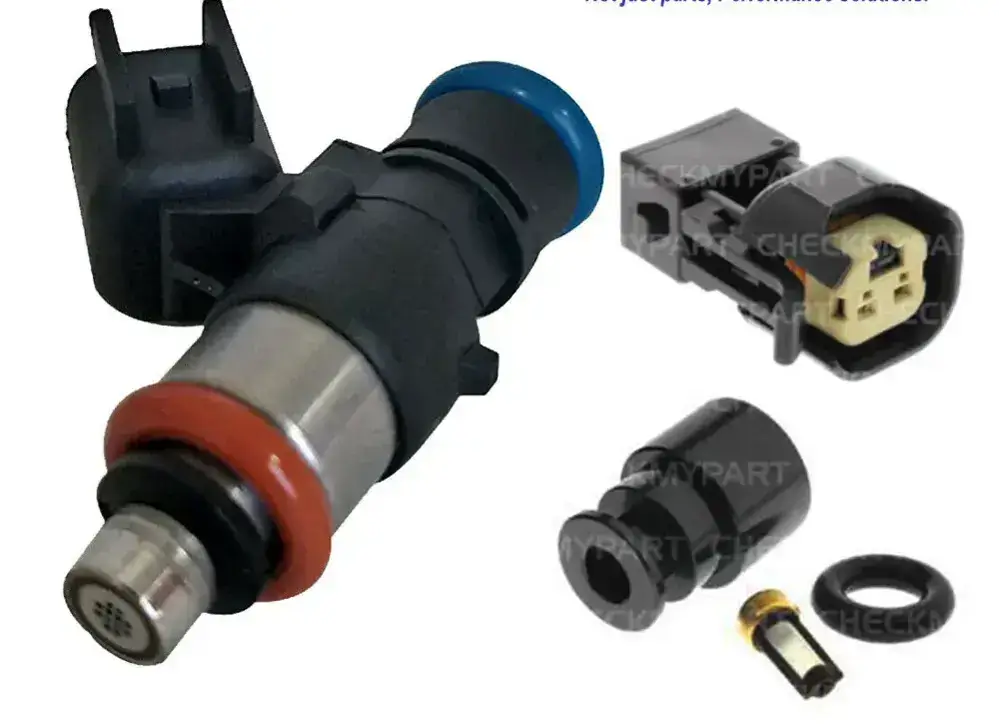
Fuel delivery can be unsuitable because of an electrical problem, an internal mechanical fault or another system condition. On a common-rail diesel, an injector assessment may include return-flow behavior alongside rail-pressure and supply checks. The technician must interpret those measurements against the correct application and test conditions. A low pressure reading does not, on its own, identify which injector or pump component should be replaced. Recent maintenance can be relevant without proving that the new component is defective. Give the workshop the exact work order and note whether the vehicle ever ran correctly afterward. A disconnected connector, an application mismatch or an installation issue may need consideration, but none should be asserted without inspection. Do not undo connections at random to search for the fault; that can erase the original state and create additional problems.
Delphi’s common-rail service guidance separates reading fault codes from testing injectors and the pressure-generating system. Its electrical guide addresses a different part of the assessment. This is why a no-start estimate should name the tests and findings rather than relying only on symptoms. A circuit test and a fuel-delivery test can each add evidence, but neither should be presented as answering every question about an injector.
Symptoms that help describe the complaint
Give the workshop a short timeline. Record whether the engine failed suddenly, became gradually harder to start, stalled while running or developed the problem immediately after fuel-system work. Note the last successful start and whether it was hot or cold. If safe, record the instrument-panel warning message. These details are more useful than repeatedly trying the key while searching for a noise that confirms a preferred diagnosis. Distinguish what you observed from what someone suggested. “It turns for several seconds and then stops” is an observation. “All four injectors are blocked” is a diagnosis that needs evidence. Preserve that separation in messages to the workshop. If you recorded a sound or warning display, share it with the repairer as context rather than presenting it as a definitive injector test.
- No crank: silence, a click or unusually slow turning needs a starting-system and power-supply assessment before assuming injector failure.
- Normal cranking without firing: this is a broader engine-management problem requiring evidence about fuel delivery, control conditions and other systems.
- Starts, then stalls: record the delay and warning messages; a brief run does not isolate an injector.
- Hard start only when hot or cold: identify the actual temperature pattern so the technician can reproduce it.
- Fuel smell, leakage or severe rough running: stop the attempts and arrange assistance rather than trying to gather more symptoms.
If it starts with a flashing engine lamp or severe misfire, do not regard that as a successful recovery. Ford’s warning-light guidance describes potential catalyst damage associated with a blinking engine warning. Follow your own vehicle’s instructions and arrange help if it runs unsafely. Our guide to injector-related trouble codes explains why the lamp and code are evidence, not a complete diagnosis.
Repair the cause and verify the result
A useful repair plan identifies the fault, explains the work needed to correct it and repeats the original starting condition afterward. Ask whether the diagnosis is confirmed or still provisional. If parts are proposed, request the measured reason for selecting them. A no-start can be expensive without being mysterious; a written sequence of findings helps prevent several unrelated replacements from being presented as one unavoidable package. Ask how the technician will distinguish a supply-pressure problem from an injector problem and whether the original complaint has been reproduced. For an intermittent no-start, an uneventful warm restart may not complete the verification. Agree on the relevant condition and what findings will be retained. A clear plan can reduce repeat visits without requiring you to specify the workshop’s instruments or interfere with a high-pressure fuel system.
- Document the confirmed fault. A statement such as “injectors suspected” is not the same as a test result identifying a failed part. Request the conditions, measured findings and applicable interpretation. Where fuel contamination is involved, ask how its source and extent will be addressed rather than treating injector replacement alone as the whole repair.
- Use the correct replacement and installation procedure. Match the engine application and follow the specified sealing, cleanliness and calibration requirements. Not every engine requires injector coding, and coding cannot make an incompatible part correct. The injector compatibility guide explains the checks to settle before fitting a replacement.
- Recheck the original complaint. Verify starting under the relevant hot or cold condition and complete the appropriate leak and diagnostic checks. Our post-replacement guide separates those checks from unsupported universal reset or break-in advice. Keep the results so a recurrence can be compared with the repaired condition.
Information to take to the repairer
Provide the vehicle and engine identification, fuel level, last refueling details, recent service history, warning messages and saved scan report. Include any cleaner, incorrect fuel or other fluid added to the tank, even if it seems unrelated. Record any jump-start, code clearing or disconnected connector. Do not conceal an attempted shortcut: knowing what changed helps the technician distinguish the original fault from its consequences. The next step should be a controlled diagnosis or recovery, not a stronger starting spray or another improvised method.


Automotive reference information. Confirm specifications in the manual for your exact vehicle. Original replacement guides link to their research sources. About us