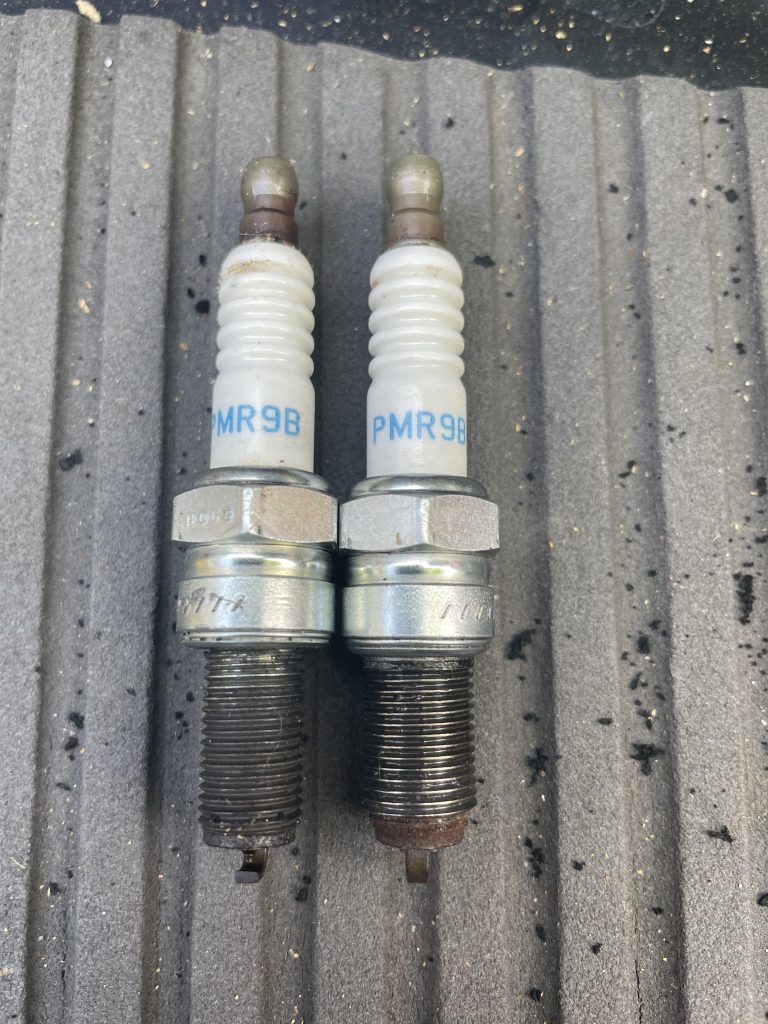

Spark plugs come in different dimensions, and a single number cannot describe their fit. Thread diameter, thread pitch, reach, sealing seat, tool size and firing-end projection answer different questions. Two plugs may accept the same socket yet extend different distances into an engine. Others can share a thread diameter while requiring different tools. Choose the part specified for the actual engine, then use its dimensional information to check the replacement and the tools. Do not choose by an electrode-material label or by whether the first threads appear to engage. This guide explains which measurements people confuse and how to investigate a mismatch before installation; it does not certify an interchange between particular engines.
Credit: www.sparkplugs.com
Read a specification drawing before comparing parts
A dimension needs both a unit and a defined reference point. For example, measuring from the terminal to the tip describes overall length, while the published reach uses the seating area and threaded shell. Those values answer different fitment questions. Keep the manufacturer’s drawing beside the specification table when the reference points are unclear. A photograph of two plugs lying together can expose an obvious discrepancy, but perspective and removable terminal hardware make it unsuitable for approving small dimensional differences. Treat visual comparison as a reason to check documentation, not as a substitute for that documentation.
Identify what the quoted size actually measures
When a listing says 14 mm, ask which feature it describes. A thread measurement refers to the screw-in portion of the metal shell. The hex measurement refers to the flats used by the tool. Reach concerns how far the threaded section extends from the specified seating reference. Overall height is another measurement again. A seller can supply a correct number that answers the wrong question. Write the feature name beside each value before comparing products, and retain the units shown in the manufacturer data. Do not compare a bare number copied from a socket package with a thread diameter copied from a plug listing. If the drawing defines a measurement reference, use that reference instead of measuring between whichever endpoints are easiest to reach.
Three groups of dimensions deserve separate checks
Treat engine attachment, combustion-end geometry and external access as separate checks. The attachment must suit the cylinder head; the firing end must occupy the intended location; and the installed ignition connection and service tool must fit. Passing one check does not prove the others. DENSO’s application guidance specifically includes dimensions, projection, thread and hex size alongside heat range and electrode specification. That is why its recommended selection route begins with the vehicle application. A measurement comparison is useful for spotting discrepancies after selection, but it is a poor substitute for establishing the intended application in the first place.
- Thread and sealing seat: Diameter and pitch must match the intended threaded hole. A diameter match alone does not establish pitch, and a thread that starts is not evidence that the whole part is correct. The seat is where the plug seals against the head: a design using a gasket is different from a tapered-seat design. DENSO’s installation tables distinguish seat and thread categories rather than assigning one tightening instruction to every plug. Do not add washers or other spacers to make an incorrect reach or seat seem acceptable. If the specified part does not seat as expected, investigate the part identification and the head’s condition before proceeding.
- Reach and projection: Thread reach and the position of the insulator or electrodes are not interchangeable measurements. A longer threaded shell is not simply a larger version of the same part, and equal reach does not guarantee equal firing-end geometry. Compare the exact specification fields rather than judging only overall length in a photograph. A different-looking end may be a documented replacement design, but that requires application evidence. Do not assume that a tip can be bent, ground or spaced into suitability. Our guide to using the wrong spark plug addresses the consequences of an unsupported choice; this comparison should happen before the engine is operated.
- Hex, upper body and connection: The tool must engage the intended flats while clearing the plug well and ceramic. Above that area, terminal design also matters. DENSO’s construction explanation distinguishes threaded, removable-nut, crimped and solid terminals. A boot or ignition lead designed for one connection should not be forced onto another. A nut that looks removable may not be intended for casual removal on that design. Resolve an apparent terminal mismatch through the correct part reference and instructions. These upper-body details are another reason that matching a thread alone is insufficient.
Real examples show why one dimension cannot select a plug
The DENSO Iridium Power specifications list IK16, IKH16 and IW16 with the same 14 mm thread diameter, but not the same reach and hex combination. The following comparison uses only those listed fields. It is an illustration of dimensional independence, not a recommendation to substitute one reference for another. The publication also contains other specifications that this compact comparison does not reproduce. A matching value in one column is therefore an observation, not an approval. Verify current application information before purchase, especially when a retailer has shortened a complete part reference or omitted a suffix.
| DENSO reference | Published dimensions for comparison |
|---|---|
| IK16 | 14 mm thread; 19 mm reach; 5/8-inch hex. |
| IKH16 | 14 mm thread; 26.5 mm reach; 5/8-inch hex. |
| IW16 | 14 mm thread; 19 mm reach; 13/16-inch hex. |
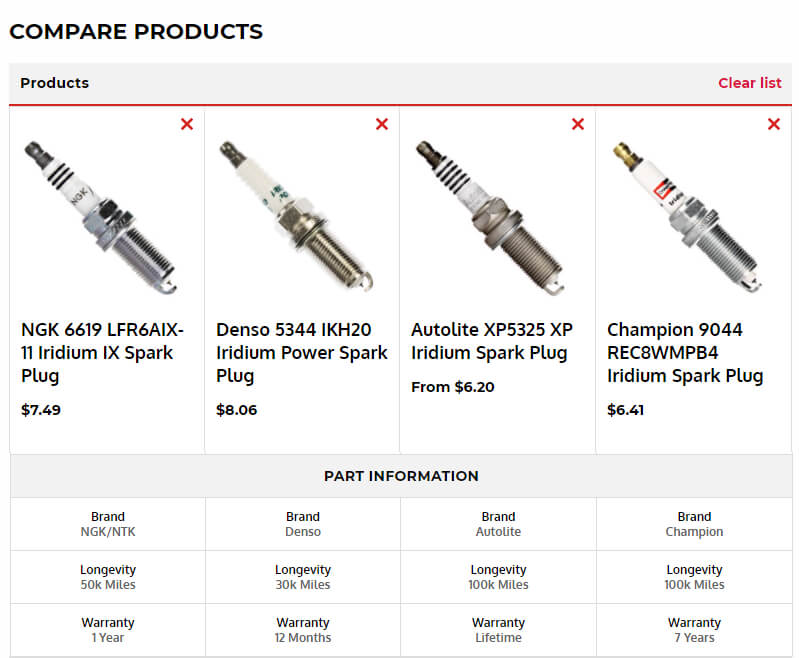
These examples also explain why changing material does not resolve a size question. All three belong to one iridium product family, yet their dimensions differ. Conversely, a familiar appearance is not proof of identical internal specification. NGK clarifies that the common phrase copper spark plug usually describes a standard nickel-alloy electrode design, often with a copper core; precious-metal designs can also have a copper core. Material names therefore cannot be used as a universal size chart. Keep the product reference and application separate from the marketing category. When comparing photographs, remember that image scaling, viewing angle and a removable terminal can make unequal parts look deceptively similar. A retail description such as fits most cars is also too broad to resolve a dimensional conflict. Ask for the catalog application and the complete supplied reference. If the cylinder head has had a thread repair, disclose that history to the repairer rather than choosing a larger plug yourself. The repair documentation needs to establish which original specification the repaired hole is intended to accept; a damaged thread is not a legitimate new sizing standard.
A practical sequence for resolving a size discrepancy
Begin with identification, then evaluate the discrepancy. Do not install several candidates to discover which seems to work. Keep the packaging and record the actual markings on the delivered part; a correct order description does not establish what arrived. An old installed plug can supply a lead, but it is not independent proof of suitability, particularly after an engine swap or uncertain previous repairs. The steps below produce a useful question for a parts specialist without requiring the owner to infer a whole engineering specification from measurements. They also help distinguish a tool problem from a part problem, which avoids replacing a correct plug merely because an unsuitable socket will not reach it.
- Identify the engine precisely. Record the vehicle year, engine variant and the identifiers required by the applicable catalog. If a replacement engine is installed, resolve that difference before relying on the registration description. Locate the manufacturer’s specified reference or an explicitly supported replacement. Preserve every letter and suffix while asking for confirmation; trimming a reference can remove the very distinction being investigated.
- Compare defined fields with defined fields. Make a short record of thread diameter and pitch, reach, seat, projection, hex and terminal arrangement where those are supplied. Mark any field you cannot verify as unknown. Do not fill it from a nearby product or infer it from packaging color. A drawing or written explanation from the supplier is more useful than a claim that two parts are approximately the same size.
- Check the specifications that dimensions cannot settle. Heat range and the ignition requirements still matter even when every visible feature appears to agree. DENSO’s heat-range update describes an alternative designation used on some M12 OE plugs, illustrating why a familiar number needs product context. For the broader distinction between a part number and its coded features, read our spark-plug identification guide. Do not turn a size comparison into an improvised heat-range conversion.
- Resolve the difference before fitting. If the current documented replacement differs from the removed plug, ask which application or supersession supports it and retain that answer with the service record. If neither part can be verified, leave the engine unoperated until a qualified repairer establishes the correct choice. Do not compensate for uncertain fitment with extra tightening, added lubricant or an altered electrode. A measurement mismatch is information to investigate, not resistance to overcome.

Credit: www.tien-i.com
Resolve incomplete listings without guessing
A dimensional comparison can end with an unanswered question. That is useful: it identifies exactly what the seller or manufacturer must confirm before the part is used. These common gaps need different follow-up information:
- The listing gives diameter but omits pitch. Request the complete threaded-shell specification and confirmed engine application; do not assume that all plugs with that diameter use the same pitch.
- The reach agrees but the seat looks different. Request the specified seat type and the replacement application record. An apparent length match does not explain a gasket-versus-taper difference.
- The box and plug markings differ. Photograph both references and ask the supplier to identify the supplied item. A packing or catalog discrepancy cannot be resolved by selecting whichever label seems more familiar.
- The current reference replaces a discontinued part. Ask for the documented supersession and any applicable installation notes. A supported replacement can differ in appearance, so neither visual similarity nor visual difference settles the question alone.
Keep the unresolved field explicit in the service record. “Reach not verified” is more useful than “looks close,” because it prevents a later reader from mistaking an informal comparison for a completed fitment check.
Separate correct fitment from correct installation
Once the intended part is confirmed, installation still needs its own instructions. Socket clearance, alignment, the correct seating method and the specified tightening procedure cannot be inferred from the phrase standard spark plug. NGK warns that both insufficient and excessive torque can interfere with proper operation; its plated plugs also have specific dry-installation guidance. Those instructions are not a reason to invent a universal torque for every thread diameter. Check the vehicle procedure together with the actual plug maker’s information, and stop if they appear inconsistent. Keep the old and new references, the supporting application record and any explained design difference on the invoice. That record makes a future service easier than repeating an uncertain visual comparison. The useful answer to the original question is that spark-plug size is a set of dimensions, while suitability is a complete application decision. This article compares published specifications and selection principles; it does not claim workshop testing of the example parts or a fitment determination for an unidentified engine.


Automotive reference information. Confirm specifications in the manual for your exact vehicle. Original replacement guides link to their research sources. About us