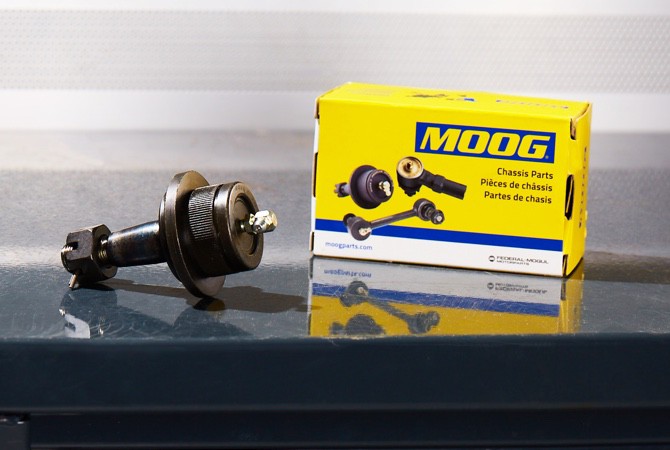

A MOOG ball joint can be a suitable replacement when its exact part number matches the application, its service requirements are understood and it is installed correctly. The brand name alone cannot establish that a particular joint is the best choice for every vehicle.
Evaluate fitment, documented design, installation support, maintenance and the applicable warranty together. This is a document-based buying assessment, not a hands-on durability test or a ranking against competitors.
No universal lifespan or failure-rate advantage is claimed. The useful question is whether the specific product and seller provide a complete, supported solution for your repair.

Credit: www.amazon.com
Evaluate the specific part rather than the brand label
Start with the vehicle and installed suspension. Confirm year, model, relevant options and joint position through the catalog and supplier. Tell the supplier about modified arms, lifts or earlier repairs. A part intended for the vehicle as originally manufactured may not match a different arm fitted later. Upper and lower positions are not interchangeable, and a visually similar taper or housing does not prove compatibility. Ask for the exact part number and any application notes before ordering. Keep that information with the repair record so later maintenance can identify what was installed. MOOG’s ball-joint product page presents application-specific design features and provides vehicle and part-number lookup routes. Its descriptions include lubrication-related and bearing-design features.
Treat those as manufacturer descriptions, not independent proof of a particular service life. Do not assume every feature shown on a range page appears on every individual part. Ask the supplier which features apply to the catalog number you are considering. That is particularly important when comparing a standalone joint with a complete control arm carrying a joint as part of the assembly. Check what is actually included. Required hardware, boots, fittings or retainers can vary with the kit. A product photograph may illustrate the family rather than every item in a specific box. Compare the contents with the instructions before dismantling the vehicle. If something required is missing, resolve it with the supplier instead of reusing a part that the procedure says to replace.
A complete, correctly identified package reduces uncertainty during installation. It also makes the comparison with another product more meaningful than comparing two headline prices. Look for accessible installation guidance as part of the buying decision. The instructions should identify important application limits and any special installation details. MOOG’s K500422 instruction sheet is one example of product-specific guidance, including attention to mating-component condition. It is not a procedure for every MOOG joint. Its value here is demonstrating the kind of documentation to obtain for the actual part. If the selected product's instructions are unclear or conflict with the installed hardware, ask technical support before proceeding.
Consider maintenance and installation alongside design claims
A greaseable design can be useful only when the correct maintenance is performed. Determine whether the actual joint requires lubrication, which product is specified and what service guidance applies. Do not infer a universal grease type or number of pumps from the brand name. A service fitting also needs practical access after installation. If you rely on a workshop for maintenance, tell it which replacement parts are installed and retain the instructions. A design feature is not an automatic benefit if its required upkeep is ignored or carried out incorrectly. A sealed design should be handled according to its own guidance. Do not add an improvised fitting or puncture a boot because another model is greaseable. Similarly, new grease cannot repair a joint that has exceeded its wear limit or suffered mounting damage. Maintenance and diagnosis answer different questions. When assessing value, compare the ongoing service requirements and your ability to meet them, rather than assuming that more visible hardware always indicates a better product. A suitable part that fits the intended maintenance pattern can be a more practical choice than an unsupported upgrade claim.
Installation quality remains a separate variable. Correct part identification does not prevent damage from a misaligned press, unsuitable separator or incorrect fastening. The retained arm and knuckle also need assessment. A replacement joint cannot restore a damaged mounting surface merely because the new component is from a familiar brand. Ask the installer to document any related defects and the completion checks. If an early problem occurs, diagnosis should consider the component, fitment, installation and surrounding system rather than immediately assigning blame to one factor. Avoid converting marketing language into an unsupported comparison. A description of a hardened stud or particular bearing construction explains a design choice, but it does not quantify an advantage over every competing product. A meaningful durability comparison would need relevant testing and comparable applications. This article has not performed that testing. Likewise, a heavier-looking housing or a higher purchase price is not evidence that a joint is appropriate for a modified suspension. The product's intended application and documented limits remain the controlling questions.
Compare the purchase, warranty and repair support
Ask who is selling the part and who will handle a problem after installation. The seller's identity, invoice and return arrangements matter alongside the product number. Check whether the packaging and supplied component match the order before fitting. A questionable listing or missing documentation should be resolved before the vehicle is dismantled. If a shop supplies the part, ask what parts and workmanship support it provides. If you supply it yourself, clarify the shop's policy rather than assuming it accepts the same responsibility for an outside purchase. Read the warranty that applies to the purchase and region. MOOG’s published United States warranty sets eligibility conditions and excludes removal and installation costs from its stated remedy. It also addresses authorized selling channels and application restrictions.
Do not interpret a lifetime headline as a promise that every future repair bill is covered. Obtain the terms for the specific product and purchase route, and check them before relying on warranty value in a comparison. Warranty language is not a substitute for statutory rights advice in your jurisdiction. Ask the seller practical questions. What proof of purchase must be kept? Who receives a claim? Must the removed part be returned? What happens to labor and alignment costs? What coverage, if any, comes from the installer separately?
A clear answer does not prove a product will never fail, but it reduces uncertainty if it does. Our ball-joint warranty guide explains how vehicle coverage, replacement-part coverage and service contracts differ. Keep those arrangements separate when comparing offers. Compare installed cost rather than only shelf price. Include required hardware, the supported installation method and maintenance obligations. A complete-arm option may renew additional components, while a separate joint may retain them. Ask why the proposed option fits the vehicle and current condition. The lowest purchase price can be a poor comparison if another quote includes more work. Conversely, an expensive product is not automatically better value if it adds features irrelevant to your application.
Use our quote comparison guide to identify the actual differences. Online owner reports can help identify questions to ask, but they are not controlled evidence of brand-wide reliability. A report may omit the exact part number, installation method, vehicle modifications or the cause confirmed after removal. A successful experience on a different vehicle does not establish fitment for yours. A reported early failure deserves attention, but it does not quantify the failure rate without knowing how many comparable parts were used. Give greater weight to verifiable application information and documented findings than to a broad claim that a brand is always excellent or always defective. If your existing MOOG joint has developed a concern, record the symptom and arrange an appropriate inspection. Keep the purchase and installation dates, mileage, part number and maintenance records. Ask the technician to identify the actual defect and any related mounting damage.
Preserve the removed part if the claim process requires it. Do not keep driving a confirmed unsafe joint while waiting for a warranty answer. Repair urgency and claim administration are separate matters, even when the final cost is disputed. A useful buying decision can be written in a few concrete points: this part number matches the installed application, the required features and maintenance are understood, installation guidance is available and the seller provides clear support. If any point is unresolved, resolve it before ordering. That is a more defensible basis for choosing MOOG than relying on a reputation slogan. It also provides a fair method for comparing an original-equipment part or another supplier without inventing a ranking. Are MOOG ball joints universally better than original equipment?
This review does not establish that. Will every MOOG joint have the same features and warranty? Check the actual product and market rather than assuming so. Does a new joint guarantee that a steering complaint disappears? Only diagnosis can connect the complaint to that component. Is the brand worth considering? It provides cataloged products and technical information that can be evaluated for a specific repair. The final choice should follow that evaluation and the condition of the vehicle, with no unsupported promise about mileage or immunity from future wear.


Automotive reference information. Confirm specifications in the manual for your exact vehicle. Original replacement guides link to their research sources. About us