
A Dodge Dart tie rod end is not automatically covered simply because it is a steering component. Coverage depends on the warranty or service contract still in force, the cause of failure and the specific vehicle. A manufacturing defect during applicable basic coverage is a different claim from wear on an older car.
For most used-Dart owners today, start with the repair history and any separate coverage purchased. Do not budget around the original new-car warranty without checking its dates.
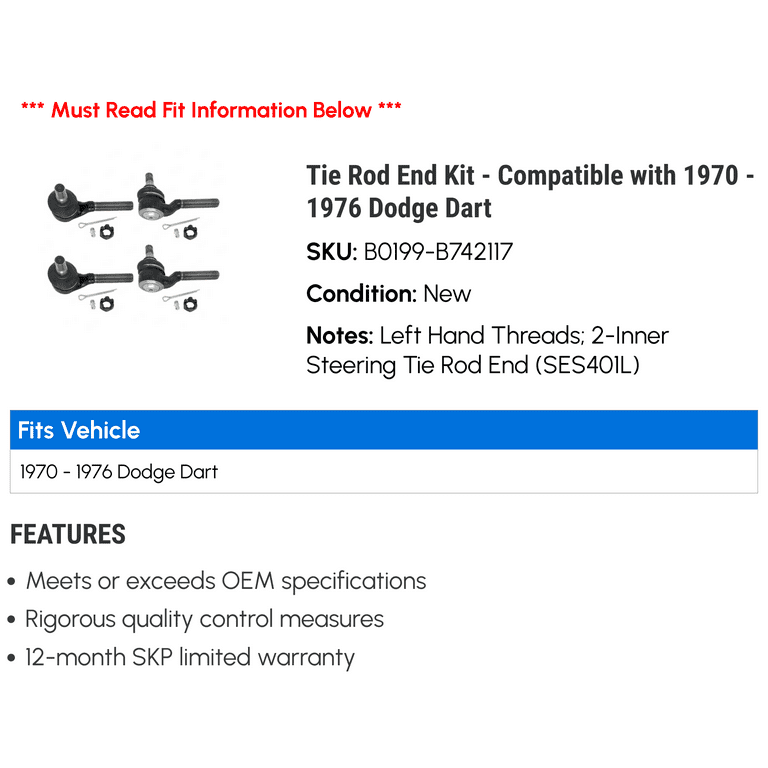
Credit: www.walmart.com
What the 2016 US warranty says
The 2016 FCA US Dodge warranty booklet describes basic coverage for factory defects in materials, workmanship or preparation, generally ending after 36 months or 36,000 miles, whichever comes first. Its clock starts at delivery or first use, whichever occurred earlier. This is a US-market, 2016 example; another model year, country or contract requires its own document.

Credit: www.ebay.com
A defective original tie rod could fall within that broad basic coverage, subject to the booklet and claim assessment. That does not mean every loose joint qualifies. Separately defined powertrain coverage should not be treated as an extension of basic coverage for all steering parts.
Why an older Dart needs a different check
Dodge identifies the modern Dart production run as 2013–2016. A low-mileage example can still be out of time-based coverage. Buying it used does not restart the original warranty clock.
Look for a service contract, dealer repair warranty or replacement-part invoice. Ask the administrator to identify the clause covering the inner or outer tie rod, along with the deductible, authorization requirements and exclusions. A description such as extended protection is not a substitute for that contract.
Document the actual diagnosis
Ask the workshop to record which side and joint has excessive movement, the inspection finding and any boot or knuckle damage. Steering feels loose is not enough to establish the defective part or why it failed.
Collect the VIN, odometer reading, purchase invoice, original service date if available and prior repair receipts. Ask whether diagnostic labor is chargeable if the claim is declined and whether approval is needed before disassembly. Those questions matter even when replacement parts are covered.

Credit: www.amazon.com
Separate repair cost from coverage
An estimate should distinguish the tie rod, hardware, labor and alignment. Ask which items the particular warranty pays. If coverage is refused, request the diagnosis and contract provision used, in writing.
Sudden changes in directional control, visible looseness or a displaced wheel call for stopping and arranging recovery, not driving while waiting for a claim decision. For vehicle coverage versus replacement-part protection, see our tie rod warranty guide.


Automotive reference information. Confirm specifications in the manual for your exact vehicle. Original replacement guides link to their research sources. About us


