
Yes, a fuel-pump relay can work intermittently, but an intermittent no-start or stall does not prove that the relay is responsible. The relay's contacts, coil, socket connections, supply and control input all need to be considered. The pump and its downstream wiring can also fail intermittently.
The most useful evidence is captured while the fault is present: is the relay being commanded, does its load side receive power, and does the output remain adequate under load? A click or a successful restart after touching the relay is only a clue.
This guide explains how to separate those possibilities without turning an intermittent complaint into repeated parts swapping. Exact terminals and operating conditions must come from the vehicle's wiring diagram and diagnostic procedure.

Credit: verticalvisions.com
Understand the different ways operation can come and go
A conventional relay uses a control circuit to operate contacts in a load circuit. Those circuits perform different jobs. The control side can be interrupted by a supply, ground or command problem even when the relay itself is healthy. The load side can have resistance or an open connection despite a functioning coil. Identifying which function disappears during the fault is more useful than describing the whole assembly as sometimes working. Contact condition can affect the ability to carry current.
A relay may appear to operate mechanically while its load path is inadequate. That is why a clicking sound is not a complete test. A measurement under the specified load can reveal behavior that a simple continuity check does not. The exact acceptable result depends on the circuit and service procedure. Do not use a generic resistance number to judge every fuel-pump relay. The socket and terminals are part of the circuit.
A loose or heat-damaged connection can change with movement or temperature and make the relay seem intermittent. Removing and reinstalling the relay may temporarily alter that connection. A restart afterward does not prove that the internal relay contacts were the cause. Inspect the socket using the approved method and avoid spreading terminals with oversized probes. A damaged connection needs the specified repair, not a wedge or bent relay blade. Temperature can be relevant, but it is not a diagnosis by itself.
Record whether the complaint occurs after a hot drive, during a restart or only at certain ambient conditions. An engine that starts after cooling may have several possible faults. Do not heat a relay or fuel-system component with an uncontrolled heat source to reproduce the problem. A technician can select an appropriate test approach without creating an ignition hazard or damaging surrounding parts. Vibration-related changes also require interpretation. If a bump or movement coincides with a stall, a harness or connector may be involved.
Striking the fuse box or tank is not a controlled diagnostic method and can damage components. Record the observed circumstances instead. The technician should inspect and test the relevant circuit in a way that distinguishes the relay from the connections around it. A missing control command may be intentional or caused by another system fault. The engine controller may require particular operating information before maintaining pump operation. The expected behavior must be established from the vehicle documentation.
A relay that stops receiving a command is not necessarily defective. Bypassing it can make the pump run while hiding the reason the command disappeared, so the bypass result alone does not identify the repair. Not every vehicle uses a conventional removable fuel-pump relay. Some use electronic control modules or integrated switching. A fuse-box label or online photograph from a similar model can be misleading. Identify the actual architecture before ordering a relay or attempting a substitution.
A diagnostic approach for mechanical contacts does not automatically apply to an electronic driver output. The pump motor can have its own intermittent failure. Delphi: fuel pump current-waveform testing discusses how current-waveform testing may reveal motor problems that a single pressure check misses. That possibility matters when a relay is blamed because the pump sometimes remains silent. The diagnosis should establish whether power reaches the pump during the failure and whether the pump responds correctly. Otherwise, the relay and motor can be confused with each other.
A loaded supply or ground problem elsewhere can also imitate a relay fault. Delphi: loaded fuel pump voltage-drop testing explains why measuring the operating circuit is important. An unloaded voltage reading can look normal even when the circuit cannot support the motor. This is particularly relevant to intermittent complaints, because a marginal connection may behave differently as conditions change. The measurement must match the condition in which the fault occurs.
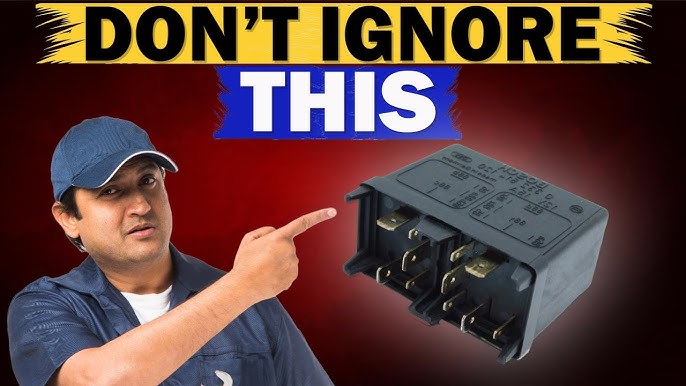
Credit: www.youtube.com
Capture the failure and verify the repair
Begin with a symptom log. Note whether the engine cranks normally, whether it stalls while running, how long it has been operating and whether it restarts after waiting. Include fuel level, recent service and any warning messages. Save codes and associated information before clearing them. The purpose is not to collect every possible detail, but to identify the pattern that makes a diagnostic test likely to capture the failure. Obtain the correct circuit diagram and identify the relay's control and load functions. The service procedure should define the expected command, supply and output conditions. Use suitable test equipment and adapters. Do not jump terminals based on a generic relay drawing or assume that a similar-looking relay has the same internal arrangement. The circuit must be positively identified before electrical activation or substitution. During the fault, compare the command with the output. If the relay has the required control conditions but its load output fails the specified test, that supports a different conclusion from an absent command. If output is correct at the relay but inadequate at the pump, investigate the intervening path. If the pump receives the required supply but does not perform, the diagnostic branch moves again. These distinctions make the test informative rather than merely confirming that the vehicle is not running. For example, a relay that clicks and shows voltage with the pump disconnected may still fail under load. Conversely, a silent relay with no valid control input may be correctly inactive. Both vehicles can have the same no-start symptom. Testing only for a click treats those cases as though they were equivalent. A proper record separates the input conditions, contact behavior and downstream result so the next step follows evidence. A permitted known-good relay substitution can be useful, but it has limits. The replacement must be equivalent in the ways the service procedure requires, not just physically interchangeable. Moving the relay can also disturb a poor socket connection. If the complaint disappears, verify the circuit rather than immediately declaring the original relay proven bad. Reproducing the relevant test result provides stronger evidence than one successful start after a swap.
Inspect any signs of overheating or terminal damage. Delphi: analysis of failed fuel pumps demonstrates how connection problems can contribute to fuel-pump failures. For a relay complaint, the same system-level reasoning means looking beyond the replaceable cube. If the socket or harness is compromised, replacing the relay alone can leave the cause in place. Use the correct repair components and sealing methods, and document the affected location. Do not leave a jumper installed to avoid waiting for an intermittent fault. A bypass can remove normal shutdown control and make the vehicle unsafe to operate. It can also erase the distinction between a relay problem and a missing command. If the vehicle stalls or cannot start reliably through its normal circuit, arrange repair or recovery. A temporary improvement is not a completed electrical repair. After a confirmed repair, repeat the checks that identified the problem. Verify that the pump is controlled normally, that the loaded circuit meets the relevant requirements and that fuel delivery is correct where tested. If the original fault depended on temperature or operating time, use a safe verification plan that reflects it. Do not create hazardous road conditions to provoke a stall. State any condition that was not reproduced. If the fault cannot be captured, report the limitation honestly. The relay may remain a possibility, but it should not be presented as a confirmed cause merely because it is inexpensive to replace. The workshop can discuss monitoring or further testing based on the symptom history. Keep records of any substituted parts so that repeated attempts do not obscure what has actually been checked. When reviewing a repair recommendation, ask what failed during the event and whether the socket, command and downstream circuit were distinguished. A concise answer with measurements is more useful than a claim that relays often do that. The goal is to identify the intermittent path and restore reliable normal control, not to accumulate spare relays until the symptom temporarily disappears. An intermittent relay fault is possible, but proof comes from the circuit behaving incorrectly under known conditions. Preserve the event information, test while the fault is present where feasible and verify the whole repaired path. That approach separates a faulty relay from the many other faults that can make a fuel pump seem to work only some of the time.


Automotive reference information. Confirm specifications in the manual for your exact vehicle. Original replacement guides link to their research sources. About us


