
Air in a hydraulic brake circuit usually causes a soft or unusually long pedal, rather than being the ordinary explanation for one caliper staying applied. A sticking brake needs a separate investigation into mechanical binding, parking-brake release and hydraulic pressure that cannot return normally. Those problems can coexist with air after a repair, so choosing one diagnosis from pedal feel alone is unreliable. If a wheel is smoking, the car pulls strongly, braking is reduced or the pedal feels unsafe, stop in a safe place and arrange recovery. Do not keep driving to see whether repeated braking clears the symptom. This guide explains what different observations mean and what to ask a technician to check; it is not a roadside instruction to open a hot brake circuit.
Why a brake can stay applied after you release the pedal
A disc brake needs hydraulic force to apply the pads, then sufficient release for the wheel to turn without excessive drag. The small running clearance is not the same as a visible gap that opens widely every time the pedal comes up. Light pad contact can occur in a functioning disc brake, while a wheel that becomes abnormally hot or difficult to rotate requires investigation. The distinction depends on the vehicle and the conditions of the check, not a universal number of free wheel revolutions.
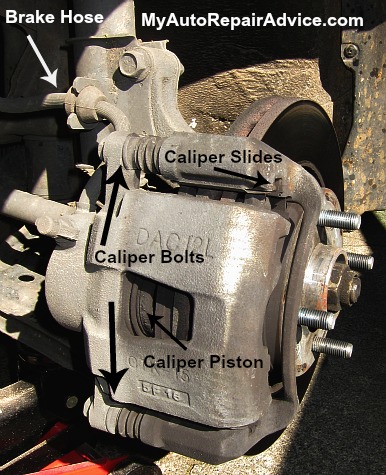
Mechanical drag means something at the wheel cannot move as intended even after hydraulic pressure is relieved. Possible locations include the piston, sliding hardware, pad contact points and an integrated parking-brake mechanism. Corrosion, damaged components or an installation mistake can prevent release. A caliper is an assembly, so saying that it sticks does not establish which part has failed.
Replacing the entire assembly without checking its surroundings may leave the original problem in place. Hydraulic drag means pressure remains where it should have fallen away. A restricted return path can allow application but delay release. The fault may be local to a hose or further upstream, and its location must be isolated through the appropriate pressure checks.
Pressure trapped at one wheel is a different observation from air compressing inside the system. Adding those concepts together under the phrase air lock can obscure the repair decision. The parking brake introduces another route to unwanted clamping at some rear wheels. A cable that does not return, an internal mechanism problem or an electronic service-state error may affect release independently of the main pedal circuit.
A released dashboard switch is not proof that every component at the wheel has returned correctly. Conversely, not every rear caliper incorporates the parking brake; some vehicles use separate shoes or another arrangement. Recent work is useful evidence. Drag immediately after pad replacement raises questions about pad fit, piston retraction, guide hardware and parking-brake preparation.
A soft pedal after disconnecting a hose raises questions about bleeding and leakage. Both symptoms after the same job require both questions to be answered. The fact that one symptom started first does not license ignoring the other.
For a broader overview of heat, pulling and wear clues, see sticking-caliper symptoms and diagnostic limits. This article concentrates on the narrower question of air versus retained pressure. Keeping that distinction explicit helps you describe the fault accurately when booking a repair.
What air changes, and what pedal feel cannot prove
- Liquids transmit brake pressure with relatively little compression; a gas bubble compresses much more. That extra compression can consume pedal travel instead of producing the expected braking response. Brembo explains the related effect of compressible vapour when brake fluid boils. Air admitted during service and vapour formed through overheating have different origins, even though both can make the pedal response unsafe. Neither explanation identifies the cause of a hot wheel by itself. Air can enter when a hydraulic connection is opened, when the reservoir is allowed to run too low during service, or through a fault that requires proper diagnosis. A leak must be repaired before bleeding can be considered a completed remedy. If fresh air keeps appearing or pedal quality deteriorates again, simply repeating a bleed is not an adequate investigation.
The system needs inspection for why it is not remaining sealed and functioning correctly. Bleeding removes air through the procedure specified for that brake system. Some applications require diagnostic equipment to operate valves or pumps, and the correct wheel sequence is not universal. A pedal that improves after bleeding supports the conclusion that air was affecting pedal response. It does not prove that a hose, pad or caliper now releases properly. A separate release check is still needed when dragging was part of the complaint. A pedal that feels firm is also not a certificate of brake health. One wheel may remain applied while the pedal otherwise feels normal to the driver.
- A pedal that slowly sinks, a warning lamp or visible fluid loss introduces further possibilities that cannot be sorted safely through an online symptom list. Tell the workshop exactly what happens with the engine running and stationary, but do not create a road test to gather evidence when braking is already suspect. Heat can complicate the sequence. A dragging brake creates heat; excessive heat can then compromise fluid performance and friction components. A later soft pedal may therefore be an effect of the original drag, rather than evidence that air caused the caliper to seize. A complete assessment asks what started the event, what was damaged afterward and what must be verified before returning the car to service. Replacing fluid alone may address only one part of that chain.
How a technician separates pressure retention from binding
Start with an accurate description rather than a proposed part. Record which wheel seems affected, whether the symptom began after work, whether it happens from cold or after several stops, and whether the parking brake was used. Mention smoke, smell, warning lights and any fluid loss. Avoid touching the rotor or caliper to compare temperatures; hot brake components can burn skin. A photograph of a warning message can be useful without requiring further driving. The technician first establishes that the vehicle is safely supported and that the brake configuration is understood.
Wheel-rotation checks must account for the parking brake, drivetrain resistance and the manufacturer's procedure. The opposite side may provide a comparison, but it is not automatically a known-good reference. Both sides can be affected, and an all-wheel-drive system can complicate a simple hand-spin test. The meaningful question is whether the brake itself is failing to release. A controlled pressure-release test can help distinguish retained hydraulic force from a mechanical restriction. If releasing pressure through an approved service procedure frees the wheel, the finding supports a hydraulic cause upstream of the released point.
It does not by itself identify a particular component. If binding remains, a local mechanical cause becomes more likely, but that still requires inspection. These tests involve fluid containment, eye protection and restoration of the hydraulic system, so they are workshop diagnostics rather than permission to loosen a fitting on the roadside. Wagner explains a piston-movement comparison used to distinguish hose restriction from internal caliper binding. Its inspection guidance treats these as different potential causes after external hardware has been checked. A hose that looks acceptable therefore cannot be cleared solely from a photograph.
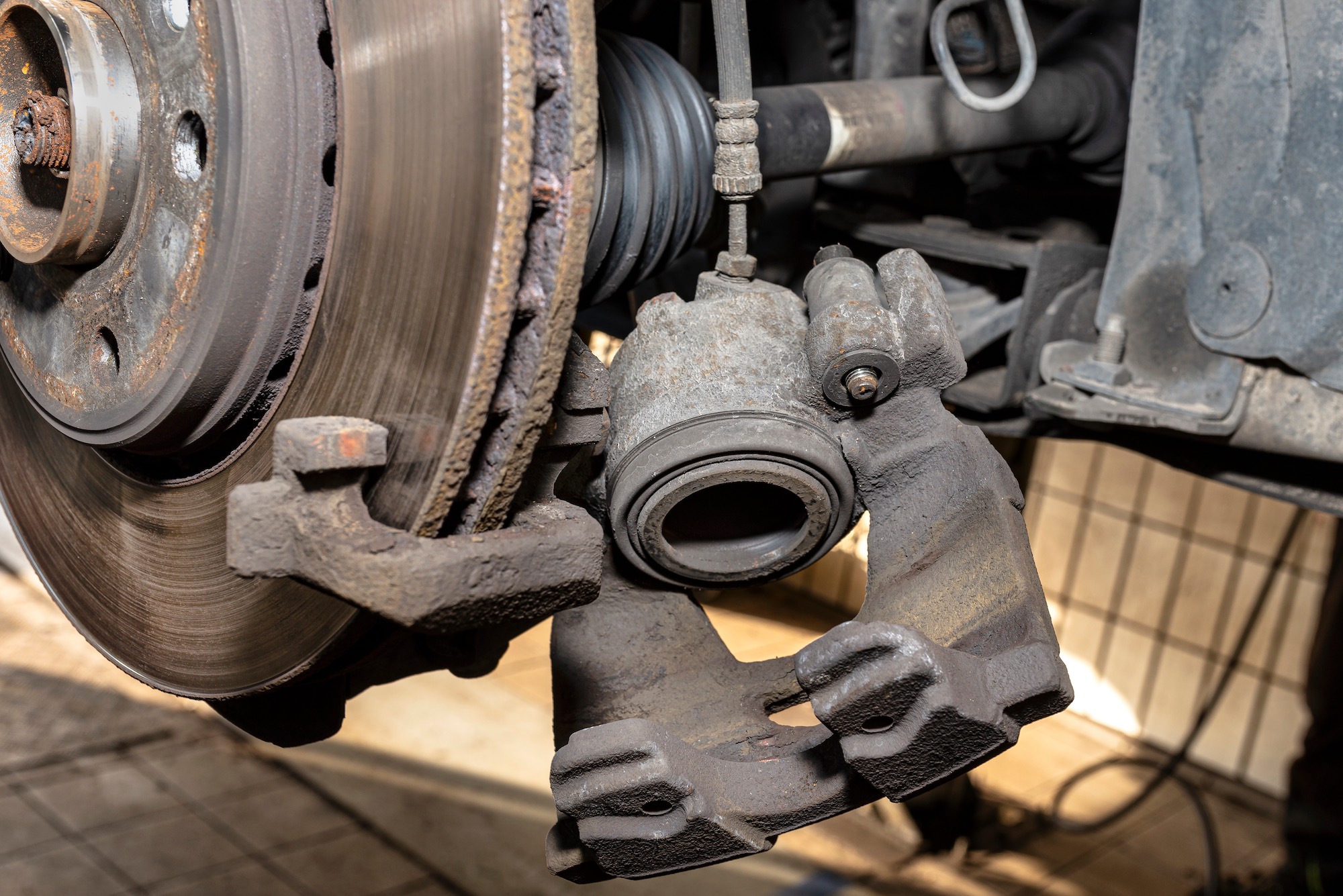
The response of the piston under the appropriate workshop test provides more useful evidence than appearance alone. Applying the test correctly to the actual vehicle matters more than treating an inspection checklist as a diagnosis. Mechanical inspection follows the evidence. The technician checks whether the pads move correctly in their supports, whether the guide elements travel as designed and whether the piston and protective components are sound. HELLA identifies restricted guide-pin movement as a source of uneven wear and overheating. These are reasons to inspect the hardware, not reasons to grease every surface indiscriminately.
Credit: www.ebay.com
Friction surfaces must remain uncontaminated, and damaged parts may require replacement rather than lubrication. Ask for the repair explanation in three parts: the observation that demonstrated the fault, the component or condition corrected, and the checks that demonstrated proper operation afterward. For example, documented retained pressure and a verified restricted hose are stronger evidence than a parts list headed sticky brake. If an estimate includes both a hose and caliper, ask whether both failed or whether one suffered damage from the other. That question supports an informed repair decision without assuming either recommendation is unnecessary. After repair, the workshop should verify pedal response, leaks, free release and parking-brake operation as applicable before a controlled test.
Overheated pads and rotors also need assessment against their service limits. Clearing a warning lamp or obtaining a firmer pedal alone does not verify all of those conditions. The objective is restored braking and release, not simply a wheel that briefly turns while the car is on a lift. If the only confirmed fault is air introduced during a correctly completed repair, proper bleeding may resolve the pedal complaint. If a wheel remains hot or drags afterward, return to the release diagnosis instead of calling the remaining symptom normal. If the problem disappears when cold but returns with heat, report that pattern; intermittent behavior still deserves investigation.
Do not accept a universal instruction to drive until it loosens up as a substitute for finding why the brake stays applied. When collecting the vehicle, retain the invoice with the affected wheel, findings and replaced parts identified. Ask whether any bedding procedure applies to new friction parts and follow the actual manufacturer's instructions. A recurrence of pulling, smoke, severe heat or abnormal pedal behavior warrants stopping and contacting the repairer. Air and a sticking caliper are connected through the same braking system, but they are different faults to prove and verify.


Automotive reference information. Confirm specifications in the manual for your exact vehicle. Original replacement guides link to their research sources. About us