
White smoke can involve injectors, but color is not proof
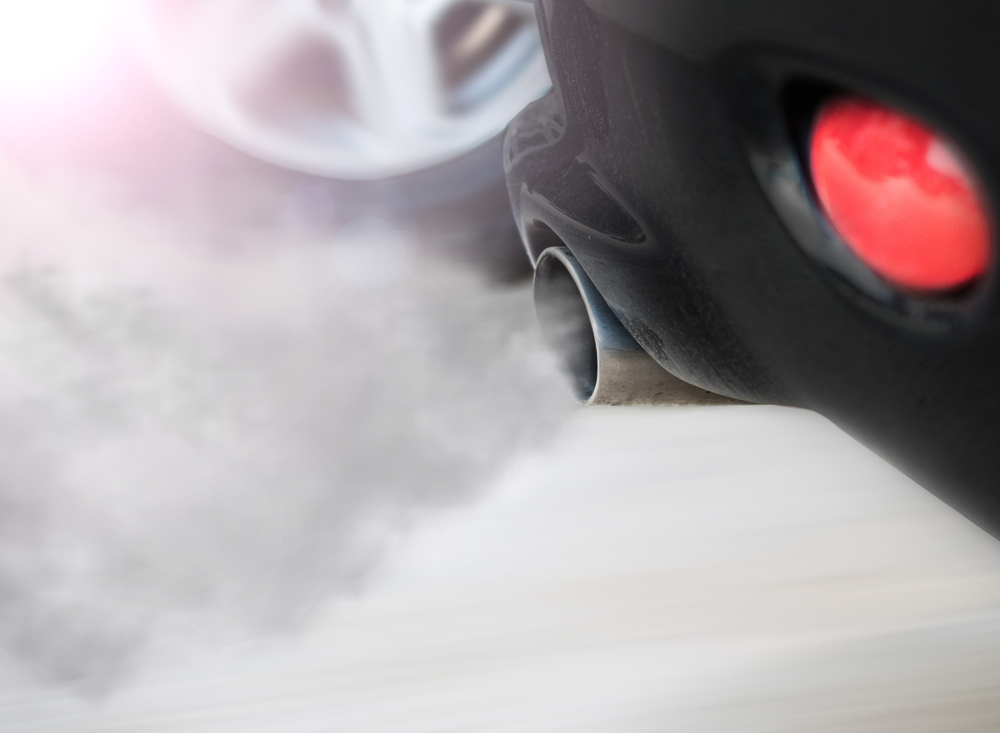
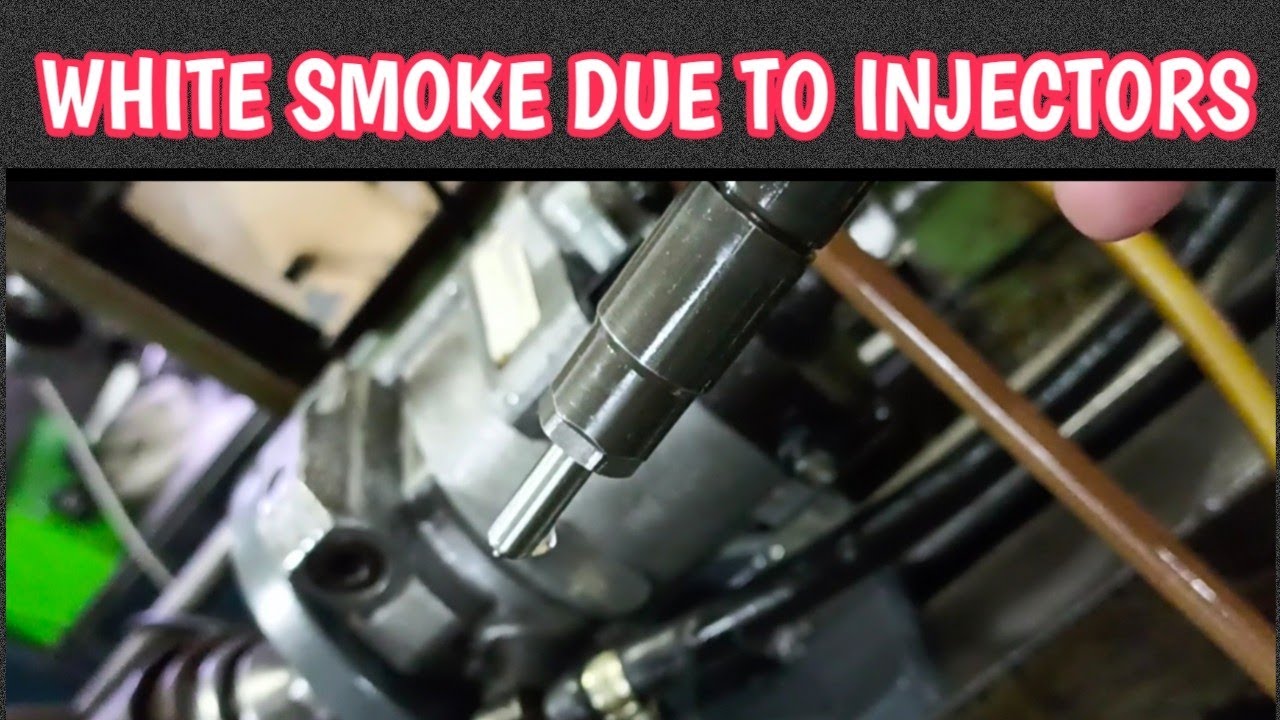
A fuel injector fault can be one possible contributor to white exhaust on a diesel engine when fuel does not burn as intended. White exhaust alone cannot identify a bad injector.
Temperature, fuel-system condition, coolant-related faults and application-specific operating behavior can require different investigations. Gasoline and diesel engines must not be treated as though they have identical smoke diagnoses.
The first decision is whether the vehicle can be operated safely, not which injector to order. Persistent heavy smoke, severe rough running, overheating, a fuel leak or an abnormal warning requires prompt assessment.
Stop safely and arrange assistance when those signs appear.
Do not drive harder to try to clear the exhaust or reproduce a dangerous condition.
Describe the event before naming a failed part
Record whether the exhaust appears at the first cold start, after warming up, during acceleration or after a particular repair. Note how long it lasts without treating duration as a universal pass/fail limit.
Include the ambient conditions and whether the engine runs smoothly. These observations help a technician select relevant tests.
A short video from a safe position can preserve the sequence. Do not stand in the exhaust plume, run the vehicle in an enclosed space or approach moving engine parts to obtain it.
A video is supporting context, not a chemical analysis of the exhaust.
Keep the vehicle identification and fuel type with the recording so the repairer can interpret it appropriately.
Why several symptoms still do not prove injector failure
Hard starting, rough idle and visible exhaust may occur together, but counting symptoms does not establish their common cause. A shared supply problem can affect several cylinders.
- A mechanical or starting-system concern can also change how combustion occurs. The workshop needs evidence that separates these possibilities.
- Fault codes may narrow the investigation. They still require the application’s diagnostic procedure.
- A misfire or contribution result identifies an observed effect, while an injector circuit code concerns an electrical path. Our injector fault-code guide explains why neither should automatically become a replacement order.
Save the original scan information before clearing it.
Signs that call for stopping and arranging help
Do not continue driving with overheating or a serious temperature warning. Follow the vehicle’s stopping instructions.
Do not open a hot cooling system to investigate smoke. Pressurized hot coolant can cause injury.
- Visible fuel leakage also changes the priority.
- Switch off when safe and arrange professional assessment.
- Never touch a suspected high-pressure leak or loosen an injector pipe to see whether fuel emerges.
- Persistent heavy smoke with severe running problems needs diagnosis rather than a trial bottle of cleaner.
Tell the recovery provider about the symptoms so the vehicle can be handled appropriately.
What you can record without opening the fuel system
Write down the fuel station and date of the last refill if the complaint began shortly afterward. Record any treatment that was added, including its actual name and approximate quantity.
A temporal link is useful evidence, but it does not prove the fuel or additive caused the problem. Avoid presenting a guess as a laboratory result.
When the engine is cold and the owner’s manual permits the check, note fluid levels using the specified method. Do not open a hot cap or top up with an unidentified fluid.
Report repeated unexplained changes to the workshop. A fluid trend can support further investigation, but a single reading taken under the wrong conditions can be misleading.
Keep the test sequence tied to the actual engine
Begin with the vehicle identity and the complaint. Confirm the engine and fuel-system design.
Preserve stored fault information. Identify when the smoke occurs.
Check for any immediately unsafe condition. The technician can then select the relevant diagnostic procedure.
That may involve fuel supply, cylinder operation, electrical control or a separate engine system.
No single test is compulsory for every smoky exhaust complaint.
Each chosen test should answer a defined question.
Ask what result would support the injector hypothesis.
Delphi’s common-rail guidance discusses injector assessment as part of a broader service process.
It does not justify diagnosing every diesel smoke complaint by color.
Ask for results and test conditions rather than only an invoice description saying “injectors checked.” A test performed when the complaint is absent may leave uncertainty.
That uncertainty should be documented instead of hidden behind a definite parts recommendation.
Do not substitute a home spray test for the workshop procedure.
Injector pressure and electrical requirements vary.
Proper containment, equipment and application knowledge matter.
An uncontrolled visible spray is neither a safe observation nor a valid comparison with a calibrated test.
Brief vapor and persistent smoke need different context
Exhaust appearance depends on operating and environmental conditions. A brief visible plume during a cold start does not carry the same information as sustained heavy exhaust after the engine is warm.
That distinction helps describe the complaint, but it should not be turned into a universal seconds-based rule. Use the vehicle’s guidance and the accompanying symptoms.
Do not identify coolant, fuel or oil by a photograph alone. Lighting and background can alter perceived color.
Nor should you deliberately inhale exhaust to decide what it contains. If the symptom is new, increasing or associated with a warning, have it assessed.
| A familiar appearance on another vehicle is not a diagnostic standard for yours. |
Credit: www.youtube.com
Manufacturer examples show why application matters
Ford’s TSB 11-2-2 addresses significant white exhaust under specified weather conditions on certain 2008–2010 F-Super Duty vehicles with the 6.4L diesel. The restricted model and condition list matters.
It is an example of why a manufacturer procedure may lead somewhere other than a generic injector replacement. Do not apply that bulletin to an unrelated engine or assume it remains the latest instruction for a particular vehicle.
Ask the workshop to check current applicability using the vehicle identification.
A bulletin found through a keyword search is a lead, not a diagnosis.
Its test conditions and scope must match before its repair procedure becomes relevant.
Regeneration can be relevant on some diesel vehicles
Some diesel-filter operating procedures describe exhaust behavior that would be misleading without context. Ford’s manual-regeneration precautions note that a small amount of white smoke may occur during that specific process.
This does not make all white smoke normal, and it does not authorize forcing regeneration to cure an unknown fault. Tell the workshop whether the vehicle displayed a regeneration message or was undergoing a known service procedure.
Keep exhaust-temperature precautions in mind and follow the actual owner’s manual.
Do not run a regeneration experiment near combustible materials or in an enclosed area.
The observation belongs in the diagnosis; it is not a substitute for it.
What would strengthen the case against an injector?
A repeatable cylinder-related fault plus a suitable injector test can provide stronger evidence than appearance alone. The report should identify what was measured and why the result is outside the relevant specification.
- Electrical integrity and fuel delivery are separate questions. A normal result in one does not automatically settle the other.
- If several injectors are recommended, ask why the quantity is justified. A shared age does not prove simultaneous failure.
- Equally, a wider contamination finding may require more than one isolated replacement.
Our replacement decision guide explains how to connect the findings to the repair scope without treating a symptom checklist as proof.
Coolant and mechanical concerns need their own checks
Do not ignore a changing coolant level because the exhaust also smells unusual. Do not assume that white exhaust always means a failed head gasket.
Both shortcuts replace investigation with a label. Tell the repairer about overheating, repeated top-ups or other changes.
- The appropriate cooling-system or mechanical checks depend on the engine and complaint.
- Ask what evidence supports each proposed test.
- Keep results from separate systems distinguishable.
- An injector estimate should not silently stand in for an unresolved overheating problem.
If the workshop finds more than one fault, request a clear explanation of which symptoms each repair is expected to address.
Avoid cleaner experiments while the cause is unknown
An additive does not repair every mechanism that can produce abnormal exhaust. It cannot establish whether an injector is electrically sound, whether coolant is entering an unintended area or whether a mechanical fault exists.
Do not combine products in an attempt to make the exhaust change color. That adds uncertainty to the original complaint.
If a compatible treatment is recommended for a documented deposit concern, ask how the result will be checked and what happens if the smoke remains. Keep that plan separate from urgent safety decisions.
A vehicle that is overheating, leaking fuel or running severely rough should not be driven through a treatment interval merely to finish the tank.
Verify the original smoke complaint after repair
Ask the workshop to revisit the conditions in which the problem occurred. A cold-start complaint should not be declared solved solely from a warm idle.
A weather-dependent symptom may require a qualified result if the same conditions cannot be reproduced. Keep that limitation in the service record.
Retain the initial scan, test findings and final invoice.
Record which parts were replaced and any fuel-system cleaning performed.
Ask whether the post-repair check found leaks or remaining faults.
Clearing codes is not the same as demonstrating normal operation.
If smoke returns, describe the new event precisely.
State whether it matches the original timing and intensity.
Do not immediately conclude that the new part failed.
The repairer needs to compare the renewed complaint with the original evidence.
That comparison is more useful than adding another product or replacing another injector without a new finding.


Automotive reference information. Confirm specifications in the manual for your exact vehicle. Original replacement guides link to their research sources. About us