
You can recycle an empty motor-oil bottle only when the program serving your address specifically accepts that packaging. A plastic number, a recycling triangle, or a store that collects used oil does not answer the container question. Some communities accept drained bottles; others direct residents to put empty bottles in the trash. First separate three items in your mind: usable oil left in a bottle, waste oil needing collection, and the empty package. They can have different destinations. This guide explains how to obtain a clear local answer and prepare the container without washing petroleum residue into a drain.
The practical first step is to search your city, county or collection company's website for “empty motor oil containers,” rather than searching only for “oil recycling.” Read the exclusions as well as the accepted-material list. If the website covers several services, confirm whether the rule refers to a curbside cart, a staffed recycling center or a household hazardous waste facility. A heading saying “plastic bottles” may be followed by an exception for automotive-fluid packaging. Save the relevant page or note the date of a telephone answer, especially if a neighbor remembers a different rule. The accepted stream at your own address determines what you should set out.
Treat uncertainty as a reason to keep the bottle separate temporarily, not a reason to try the blue bin and hope. There is no need to turn a small packaging decision into an elaborate cleaning project before you know what the collector wants. Leave the identifying label attached, close the cap and place the container where residual oil cannot leak onto cardboard or other recyclables. If there is still a useful quantity of clean oil, keep it for an appropriate vehicle only when its identity and storage history are reliable. An engine should never be overfilled simply to make a bottle empty. Our engine-oil specification guide explains how to check compatibility.
Credit: georgiastrait.org
Separate the plastic, the remaining oil and the collection rules
EPA explains that plastic identification symbols identify the material; they do not by themselves establish that a community collects the item. Think of the number as information for a processor, not a collection promise made to a household. An oil bottle can share a resin category with a detergent bottle while receiving different instructions locally. This is why following a general “number two plastic” rule can still produce the wrong result. Look for an explicit reference to motor-oil or automotive-fluid containers. If you find only a broad list, ask the provider to confirm the exception before combining those bottles with clean household packaging. The same caution applies to a recycling claim printed by a packaging manufacturer.
Two official examples show why location matters. Zero Waste Sonoma states that empty plastic quart- and gallon-size motor-oil containers can go in its blue recycling carts after 48 hours of draining, with screw caps replaced. That is a concrete preparation rule for its service area, not a national standard. In contrast, Kalamazoo County tells residents to put empty oil containers in regular trash and says they are not recyclable through that program. Both instructions can be correct for the systems they describe. Copying the Sonoma draining time into a Kalamazoo answer would not change the destination. Check the current instructions where you live, even after moving only a short distance.
Houston provides another useful distinction: its recycling information lists used motor oil but excludes empty used-oil containers. A place accepting the liquid is not necessarily accepting its package for recycling. A staffed collector may empty your jug and return it, or may have a separate disposal route for containers. Ask what happens before bringing several bags of empties. “Do you recycle motor oil?” and “Do you accept these empty plastic bottles?” are two separate questions. Make the second one specific: describe the bottle size, whether it held new or used oil, and whether any liquid remains. This avoids a wasted trip and gives staff the information needed to direct you.
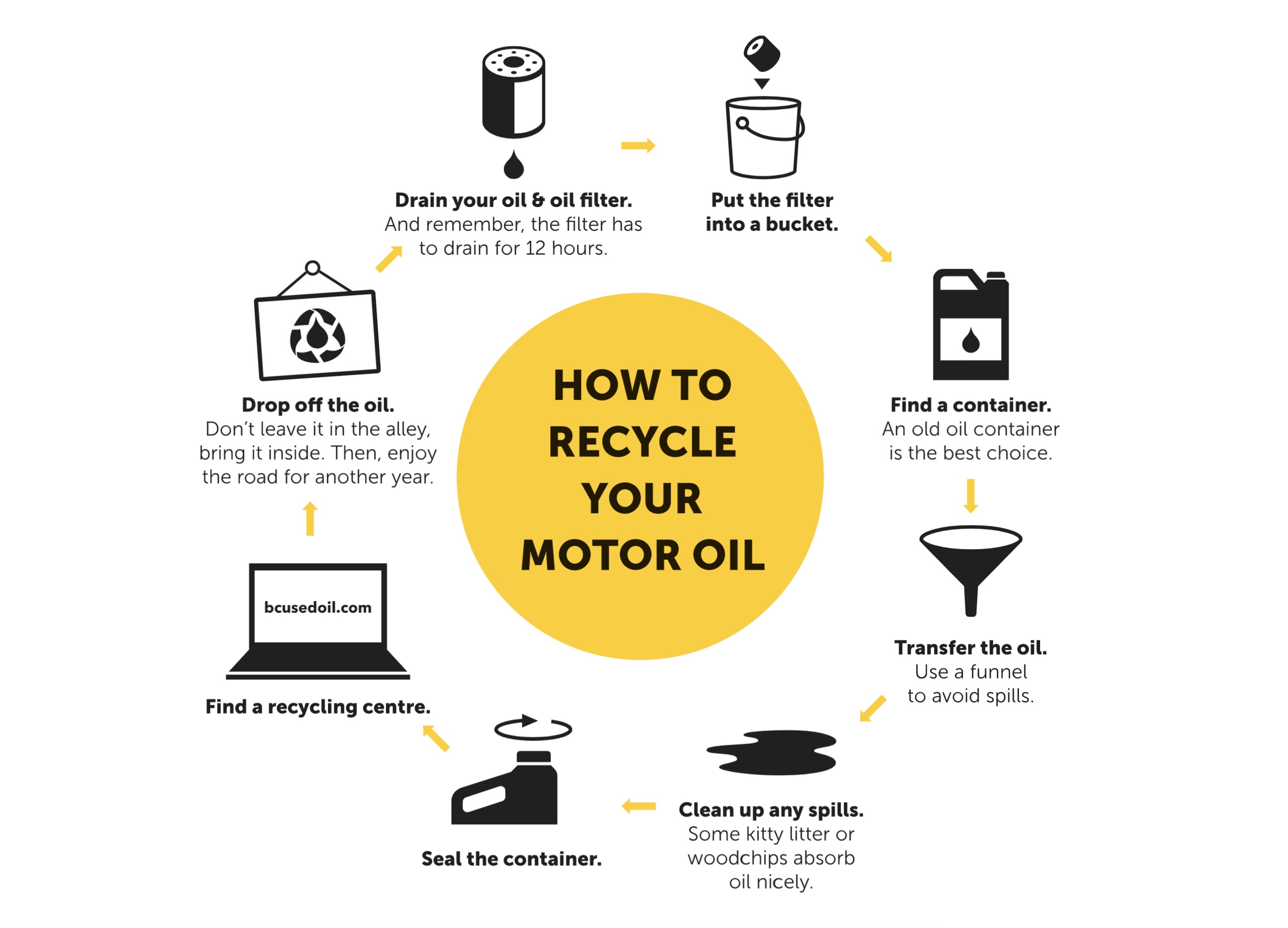
If your program requires draining, use a stable setup over a suitable collection pan or other container that will retain every drip. Follow its specified preparation time; there is no universal draining interval that makes all packaging acceptable. Keep the setup protected from rain, children and pets, and do not balance bottles where they can tip. Collect the residual liquid with the appropriate oil stream only if the receiver allows it. Do not leave bottles draining over the street, soil or a household sink. Once prepared, replace or remove the cap exactly as your program instructs. The point of preparation is to meet an actual receiving rule, not to make the bottle appear clean from a distance.
Do not rinse an oily bottle into a sink, toilet or storm drain to imitate the preparation used for drink bottles. EPA advises consumers to collect used oil without spills, use a leak-proof container and check local collection options. Rinsing creates another liquid containing the oil you were trying to remove. Adding detergent does not turn that liquid into ordinary clean water, and it can complicate the question of where it belongs. If a provider gives washing instructions, ask specifically how the oily wash water must be managed before starting. Never add bleach, solvents or another automotive fluid as a shortcut. Keep unknown mixtures separate and tell the receiving facility what they contain.
A partly full bottle needs a contents decision before a packaging decision. Read the label and decide whether the oil is known, clean and suitable for a future maintenance need. Keep usable product in its original package rather than pouring it into a drink bottle. If it is unwanted, contaminated or unidentified, ask the local waste program which collection service accepts it; do not pour it into the trash simply to qualify the container as empty. EPA household-waste guidance recommends following product labels and local collection instructions and warns that residues can remain in empty containers. Tell staff if the bottle also contains antifreeze, fuel, cleaner or another material. They need the actual contents, not the name still printed on the package.
Prepare a short collection checklist before loading the car. Confirm the site takes your type of oil or empty packaging, whether it serves your residence, what quantity it allows, and whether you must keep the container after unloading. Then inspect each cap and bottle for damage. Put the containers upright in a stable, leak-retaining carrier and secure the carrier for the journey. Keep empty bottles separate from full waste-oil jugs so nobody mistakes one category for the other. If a container has become brittle or split, do not depend on a shopping bag to contain a leak. Ask the receiving program about suitable overpacking. Our used-oil disposal guide covers the liquid collection process in more detail.
Package shape also matters. A rigid quart bottle, a large jug and a flexible bag inside a cardboard box are not automatically interchangeable items for a recycling program. Chevron explains that its Havoline Smart Change box has separate handling considerations for the inner bag and outer cardboard, and notes that local recycling practices differ. Use those manufacturer directions together with the destination's rules, not in place of them. For any package, identify which parts are clean and which contain oil, then ask about each material. Do not cut apart or puncture a partly full container to separate components. If you choose larger packaging for a future oil change, first verify the vehicle's required quantity so the purchase does not create unnecessary leftovers.
Credit: www.fcgov.com
A practical answer for your own recycling day
Consider three common situations. You have four empty quart bottles and your official guide explicitly accepts drained oil bottles: prepare them exactly as directed and use the specified collection stream. You have the same bottles but the provider explicitly excludes them: follow its disposal instruction instead of adding them to mixed recycling. You have one jug holding several quarts of used oil: book or locate a liquid-oil collection option and ask whether the jug returns home with you. These are different jobs even though every object looks like an oil bottle. If the guide is silent, send the provider a concise description of the packaging and contents. Keep it contained while awaiting a clear answer. A photograph can help distinguish rigid plastic from a multilayer pouch, but it cannot establish what an unknown liquid contains.
Reusing a sound original oil container for collected oil may be possible when the receiver accepts that container, but label the new contents clearly and keep it separate from fresh stock. Never repurpose it for food, water or anything someone might ingest. Do not retain damaged empties merely to avoid disposal, and do not assume an automotive retailer takes packaging because it accepts a used-oil delivery. For that specific visit, our O'Reilly used-oil guide explains what to confirm with the location. The dependable result is a three-part match: the actual contents, the exact package and a collector that accepts both in the condition presented. Once you have that answer, repeat the same preparation for future changes and recheck whenever your service provider or its rules change.


Automotive reference information. Confirm specifications in the manual for your exact vehicle. Original replacement guides link to their research sources. About us