
Use a passenger-car motor oil in a motorcycle only if the exact product meets every requirement for that motorcycle and the system being filled. Matching the viscosity is not enough. A four-stroke bike may require a particular JASO friction class and may exclude certain fuel-economy oils. If you cannot verify the complete match, obtain the specified motorcycle oil before riding.
The answer depends on the lubrication system, not the number of wheels pictured on a bottle. Identify whether the engine, gearbox, and clutch share oil, then read the actual manufacturer specification. Do not assume that every scooter, motorcycle, or automatic bike has the same arrangement.
This guide concerns choosing oil and resolving uncertainty. It does not claim that we road-tested a substitute or that an unapproved fill is harmless for a particular distance. A separate guide covers oil intended for a two-stroke fuel mixture, which is a different decision.
Identify what the oil must lubricate
Start with the motorcycle model, model year, market, and engine identification. If the engine or clutch system has been modified, include that information when requesting advice. A recommendation for another bike with similar displacement does not identify the requirements of yours.
Confirm the engine cycle
Determine whether you are servicing a four-stroke engine oil sump or a two-stroke lubrication system. Neither the size of the engine nor the shape of the motorcycle tells you the answer reliably. Use the manual and the actual engine identification.
Check for shared lubrication
In some motorcycles, one oil serves several jobs. Mobil identifies shared engine and transmission lubrication as an important difference from common passenger-car applications. That additional service is why choosing solely by the engine-oil grade can leave out a relevant requirement.
Establish the clutch arrangement
A wet clutch operates with oil around its friction components; a dry clutch has a different arrangement. Identify yours from reliable documentation. Do not infer it from the presence of a clutch lever, the way the gearbox shifts, or the description of an unrelated motorcycle online.
Keep separate reservoirs separate
If the motorcycle has separate engine, transmission, or primary-drive lubricant requirements, record each one individually. Permission for one compartment does not establish permission for another. A service worksheet should say which opening and system each product belongs to before any bottle is opened.
Read every part of the oil requirement
Copy the SAE viscosity, API category, JASO class, and any manufacturer exclusions exactly. Read footnotes as well as the main specification line. A bottle can satisfy two items while failing a third, so the check must cover the whole instruction.
Cooling type is context, not a specification
Air-cooled and liquid-cooled designs can have different operating requirements, but the cooling description alone does not select a grade. Do not replace the handbook with a blanket claim that every air-cooled bike needs thicker oil or that every liquid-cooled bike can use automotive oil.
Do not transfer a car fuel-economy priority automatically
Yamaha’s oil-development explanation describes why motorcycle-specific standards became important as automotive lubricant priorities changed. The practical lesson is to check the motorcycle application, rather than assuming an oil promoted for passenger-car efficiency is an upgrade for a shared-sump motorcycle.
Write a compact application record
Keep the vehicle identification, lubricant requirement, manual reference, and planned task together. Add the actual product only after comparing its claims. This small record is useful when a retailer suggests an alternative or a service provider stocks a different brand.
Read the bottle without guessing its chemistry
The front label gives useful clues, but it rarely settles every motorcycle requirement. Turn to the performance claims, restrictions, and current product data. Use the exact grade and regional formulation rather than assuming a similarly named overseas product is identical.
Base-oil wording does not establish clutch suitability
Synthetic describes a formulation category, not a wet-clutch approval. A synthetic oil can be designed for motorcycles; the word does not automatically mean it will cause clutch slip. Equally, conventional on a bottle is not proof of suitability.
Compare the stated performance requirements first. Choosing a base-oil category before checking the application can create a false argument about synthetic versus conventional while the real mismatch is an omitted friction class or an excluded label claim.
The same grade can appear on different products
Two bottles marked 10W-40 are not necessarily interchangeable. That shared viscosity designation does not prove identical additive systems, application claims, or manufacturer acceptance. Use it as one item in the compatibility check, not the entire check.
For background on matching engine requirements to product information, see our engine-oil selection method. Apply the motorcycle manual’s additional clutch and transmission requirements rather than stopping at the passenger-car examples.
Read fuel-economy exclusions literally
Some motorcycle manuals exclude oils marked Energy Conserving or Resource Conserving. If yours does, check the actual API service symbol and label. Do not ignore the exclusion because the bottle has a newer gasoline-engine performance category.
The absence of those words also does not complete the check. You still need the required grade, performance category, and friction specification. A missing warning is not equivalent to a positive statement that every requirement has been met.
Use product evidence for wet-clutch applications
Mobil’s motorcycle FAQ discusses formulation choices for engine, transmission, and wet-clutch service. Those product explanations should not be converted into a rule about every automotive oil or every motorcycle oil. Compare the exact bottle with the required specification.
Do not decide compatibility by looking for one ingredient on an unofficial oil-analysis chart. A reported additive element is not the same thing as the finished product’s friction performance, and the chart may describe an older formulation. Use documented application and performance evidence.
What JASO classes do and do not tell you
The JASO T 903:2023 implementation manual describes four-stroke motorcycle-oil classes MA, MA1, MA2, and MB using clutch-friction test results. They are not brand names or viscosity grades. Read the required class alongside the remaining engine-oil requirements.
MB is the lower-friction classification in that system. Do not treat it as universally worse or better than MA. The appropriate classification is the one required for the particular motorcycle, not whichever letters a retailer presents as the newest upgrade.
Keep the required viscosity
A suitable friction class does not authorize a different viscosity. If the handbook allows several grades under specified temperatures, retain those conditions. If it lists one grade, do not create a seasonal alternative from another model’s chart.
Do not manufacture an approval with additives
Adding a friction treatment or other supplement to an unmatched oil does not establish the required finished-oil performance. Obtain a suitable product rather than experimenting with a mixture. Ask the manufacturer before following advice that conflicts with its lubricant instructions.
Check the filed-product information accurately
The JASO panel publishes filed-oil lists and implementation documents. Match the product details when investigating a claim. The filing system places responsibility on the submitting supplier; do not describe it as an independent performance guarantee for every bottle.
A product claim is still application-specific
Check whether a product is intended for the four-stroke engine compartment being serviced. Motorcycle branding alone does not authorize use in a two-stroke injection reservoir, final drive, or separate transmission. Each system can have its own documentation.
When identification remains uncertain
Send the manufacturer or workshop the full vehicle identification and photographs of both sides of the oil container. Ask which requirement is satisfied or missing. A precise compatibility question is more useful than asking whether the brand is generally good.
If car oil has already been added
Keep the container and record how much was added, the previous oil if known, and whether the engine has operated. Do not start or ride merely to test compatibility. Obtain advice for the specific motorcycle and actual product before further use.
Describe symptoms without diagnosing from them
If clutch behavior, shifting, noise, or a warning changed, describe when it happened and whether it existed before the fill. These observations help a technician; they do not by themselves prove which component is damaged or that oil is the only possible cause.
Avoid invented damage thresholds
There is no universal safe percentage or riding distance for an unsuitable oil. Nor can this guide promise that a drain and refill will resolve every symptom. The remedy depends on the product, lubrication arrangement, operating history, and inspection findings.
What a suitable motorcycle oil helps you establish
An appropriate product gives you a documented match to the service requirement. It removes the need to justify an uncertain automotive substitute through anecdotes. It does not eliminate normal maintenance, diagnose a mechanical problem, or establish a particular improvement in power.
Evaluate the exact formulation
If you compare two suitable motorcycle oils, review their current product sheets and the specific claims they make. Do not transfer a favorable test result from one grade to a different grade merely because both use the same brand name.
Keep claims proportional to the evidence
A manufacturer may describe temperature or wear performance under named conditions. That is not a measured result for your motorcycle. We have not conducted comparative oil tests, and this guide does not assign unsupported protection scores or rankings.
A manufacturer example of a complete requirement
The cited Honda CMX1100A/A2/D/D2/D3 oil-selection instructions specify JASO MA, SAE 10W-30, and API SJ or higher, while excluding Energy Conserving and Resource Conserving oils. All those conditions belong together in this example.
That example shows why answering only with a viscosity leaves out important information. It is not an all-Honda specification. Use the manual corresponding to the motorcycle’s model year and market and check any applicable manufacturer update.
Capture the requirement before shopping
Photograph or save the relevant manual passage. Include footnotes and the page heading so you can identify the application later. An isolated screenshot of a viscosity chart without its model context can be misleading.
At the store, compare that record with the actual container. If the seller proposes an equivalent, ask for the exact product data that establishes the match. Keep the product sealed while resolving an uncertain specification.
Check size and grade variants separately
Online shopping pages often combine several grades and package sizes. Confirm that the selected variant matches the label photograph and specification text. Do not rely on reviews written for a different version under the same listing.
If the delivered bottle differs from the listing, verify the delivered product before using it. Returning an unopened mismatch is simpler than reconstructing the contents of the motorcycle after the service.
Account for modifications
An aftermarket clutch, engine rebuild, or race conversion may come with additional instructions. Gather the actual component documentation rather than relying on a forum account of a similar modification.
If those instructions conflict with the motorcycle manufacturer’s requirements, ask the responsible specialists to resolve the conflict. Do not select whichever recommendation permits the oil already on your shelf.
Do not borrow car transmission-fluid advice
A motorcycle shared sump does not mean that an ordinary passenger-car transmission can run on the same engine oil. Lubrication arrangements and requirements differ. See the separate transmission substitution guide for that question.
Likewise, a car fluid’s approval does not establish suitability for a motorcycle gearbox. Identify the component, then apply its requirement. Similar terms in two service manuals do not prove interchangeable products.
Keep warranty discussions factual
Record the product and the advice received if a service or damage claim arises. Ask for the actual applicable warranty wording and technical findings. Do not assume that a bottle choice automatically determines the outcome of every claim.
This guide does not provide a legal determination about coverage. Its practical recommendation is to follow documented service requirements and retain evidence of the work, rather than relying on a blanket online claim that a warranty is void.
What an internet anecdote cannot establish
A rider reporting no immediate problem has described one experience. Without the exact motorcycle, formulation, condition, and inspection, the report cannot validate your proposed substitute. Treat it as context, not permission.
A negative anecdote has limits too. A clutch problem following an oil change deserves investigation, but timing alone does not isolate every possible cause. Preserve records and let the diagnosis address the actual motorcycle.
For a clear technical overview of why application matters, Castrol’s motorcycle questions discuss shared lubrication and oil choice. Manufacturer guidance is useful context; the specific manual remains the selection reference.
Use the right oil within the right maintenance plan
Once compatibility is established, deal separately with service timing, level checks, and the change procedure. A product that meets the requirement does not tell you the correct drain-bolt torque or how the bike must be positioned for a level check.
Follow the applicable interval
Use the motorcycle’s time, distance, or service instructions and any relevant operating-condition schedule. Do not borrow an interval from your car or from an oil advertisement. Keep the date and odometer reading in the same service record.
A top-up is not a completed oil change
Record added oil separately from a drain-and-refill service and filter replacement. Otherwise, a later owner or technician may mistake a top-up receipt for proof that scheduled maintenance was performed.
Prepare before opening the system
Obtain the correct amount of suitable oil, any required filter or sealing parts, and the applicable instructions. If the service requires tools or support equipment you do not have, arrange qualified assistance before draining anything.
Use the motorcycle-specific level procedure
Check whether the manual requires the bike upright, a particular stand, a waiting period, or a specified engine condition. Do not apply a generic car dipstick routine to a sight glass or an unfamiliar motorcycle system.
Respond to warnings as warnings
A pressure warning, unexplained oil loss, or abnormal clutch behavior is a reason to follow the relevant troubleshooting instructions. Do not wait for the next scheduled change to decide whether a warning needs immediate attention.
Plan collection before draining
Arrange a receiving facility for used oil and filters and confirm its acceptance requirements. Keep the waste contained and identified. Our used-oil disposal guide addresses that separate task.

Credit: www.youtube.com
Compare costs after compatibility is established
The meaningful comparison is between suitable products and complete service options. A low bottle price is not a verified saving if the grade, quantity, or requirement differs. Compare the actual purchase, not an imagined universal price gap between car and motorcycle oils.
Compare cost per required service quantity
Calculate the cost of the required quantity rather than comparing bottle stickers alone. Check whether a discount applies to the exact grade and product you need.Include parts and disposal in the estimate
If a quote includes parts, inspection, and waste handling, compare it with the same scope of work. Do not describe an unsupported oil substitution as a saving while excluding the uncertainty it introduces.Keep the service evidence
Ask the provider to record the oil identity and specification on the invoice. Documentation is more useful than a generic reassurance that the shop always uses premium oil.Do not invent a longer change interval
Do not assign a longer service life merely because an oil is motorcycle-branded or synthetic. Use the applicable vehicle schedule and document any authorized exception.Compare do-it-yourself work with a complete quote
For a first do-it-yourself service, include the necessary tools, safe support equipment, consumables, and collection arrangements. If those are unavailable, a qualified service may be the practical option even when the oil itself costs less at retail.Four questions that settle common doubts
Use these questions to identify the missing evidence rather than repeating a broad yes-or-no claim about all car oils. The answer for one motorcycle can differ from the answer for another without either manual being wrong.
Does a dry clutch make any car oil suitable?
No. Removing one wet-clutch concern does not remove the engine’s grade, category, manufacturer requirements, or other lubrication needs. Verify the full requirement for that design instead of assuming the absence of a shared clutch supplies permission.
Does motorcycle branding prove compatibility?
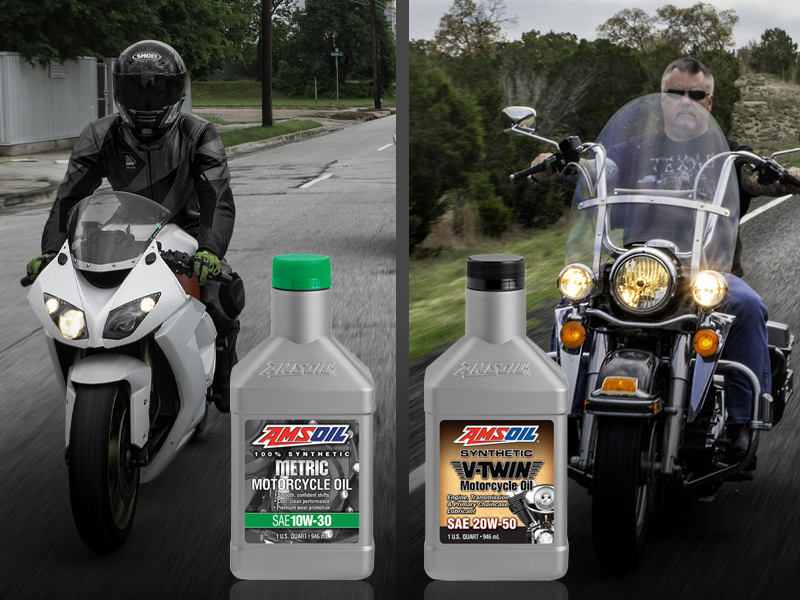
No. A brand can sell two-stroke oils, four-stroke oils, scooter products, and several friction classes or grades. Match the exact product to the exact requirement; the category on the shelf is only a starting point.
Can a small automotive top-up be ignored?
Do not invent a harmless amount. Identify the actual product, quantity, and motorcycle, then ask for specific advice. State uncertainty honestly if the amount or previous fill is unknown rather than replacing it with a confident estimate.
Can a newer API category override the clutch requirement?
No. A gasoline-engine category does not erase a required motorcycle friction class or a manufacturer’s explicit exclusion. Read all the conditions together and ask for clarification if a retailer presents one category as a substitute for everything else.

Credit: m.youtube.com

Credit: www.tiktok.com
Make the compatibility check before riding
If the bottle demonstrably satisfies every applicable requirement, its marketing category is less informative than that documented match. If the evidence is incomplete, use a verified suitable product. If an uncertain oil is already installed, resolve the actual fill before further operation.
Keep the product identity, specification, date, and service details. Those records help distinguish an ordinary brand change from a change in the required grade or friction performance.
The goal is a traceable motorcycle-specific choice, supported by the manual and the actual oil documentation.


Automotive reference information. Confirm specifications in the manual for your exact vehicle. Original replacement guides link to their research sources. About us