
Which difference are you trying to measure?
Car air filters make a difference to the systems they serve, but the result needs a precise definition. Maintaining engine filtration, restoring restricted airflow, reducing particles entering the cabin and increasing measured power are separate outcomes. Evidence for one does not establish the others.
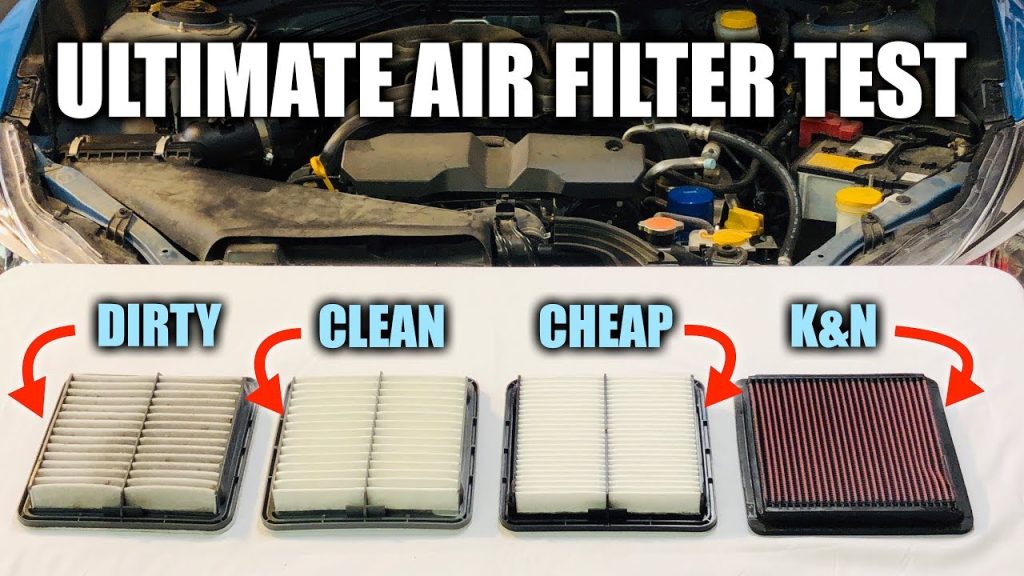
Start with the comparison. Replacing a damaged or heavily restricted filter with the correct new part is maintenance. Comparing two serviceable replacement products is a product test. Changing the intake assembly is a modification. Mixing those comparisons produces exaggerated expectations.
A cabin filter has a different job from an engine intake filter. Claims about cleaner ventilation air should not be presented as evidence that the engine will accelerate faster.
The following evidence guide helps assess a benefit claim and record an outcome without pretending that this article performed laboratory or road testing.
What research says about fuel consumption
DOE’s consumer guidance separates fuel-injected vehicles from older carbureted vehicles. For modern systems, replacing a clogged filter may improve acceleration without improving MPG. Its advice is not a promise that every routine replacement produces a noticeable driving change.
The 2009 Oak Ridge National Laboratory study examined three newer gasoline vehicles and one older carbureted vehicle under prescribed test conditions. The newer vehicles showed no significant fuel-economy effect from filter restriction in that study, while the carbureted vehicle behaved differently.
That is a bounded experimental finding. It does not say a missing filter is harmless, that every filter performs equally, or that service intervals can be ignored.
It also does not justify advertising the carbureted vehicle’s most extreme result as the saving a modern commuter should expect. The condition of the starting filter matters.
Acceleration is a different outcome from MPG
Fuel economy measures distance per fuel quantity, or the inverse. Acceleration measures how quickly speed changes under specified conditions. A vehicle can show an improvement in one measure without a corresponding improvement in the other.
The gasoline study reported improved acceleration with a clean filter on the vehicles tested. Do not convert that result into a universal horsepower number.
A 2013 diesel study examined three turbocharged diesel vehicles. Its measured fuel-economy effects were below the sensitivity of standard dynamometer testing, while the two sedans showed a modest acceleration loss with clogging.
The diesel truck did not undergo the same acceleration testing because of equipment limits. That distinction matters when describing what the research actually demonstrated.
What these studies cannot answer
Neither cited study is a ranking of every aftermarket filter available for your car.
Neither establishes the service life of the particular element now installed in your vehicle.
Neither substitutes for diagnosing a new hesitation, warning light or sudden loss of power.
Filtration performance has several dimensions
The public abstract for ISO 5011:2025 identifies test characteristics including airflow restriction, dust collection efficiency and dust capacity. These describe different aspects of an air cleaner; a single airflow figure is not a complete evaluation.
For example, ask what flow condition a restriction result represents and whether it concerns a clean or loaded element. A number without its test conditions is hard to compare.
Do not interpret a reference to a test standard as proof that an independent organization has approved the whole vehicle installation. Read the actual report and identify who conducted it.
This article uses the standard’s publicly described scope only. It does not claim to have inspected the full paid standard or certified a product against it.
For a buying decision, look for the exact part reference and applicable test report rather than borrowing results from another size in the same brand range.
Keep the comparison specific
The evidence so far supports separating maintenance condition from upgrade claims. The next step is examining what a product test actually compared.
A persuasive chart should answer a defined question, not merely give the impression that a colourful line represents a better filter in every respect.
Ten questions for a claimed power improvement
K&N’s testing overview lists power, airflow and filtration testing separately. As a manufacturer source it explains its testing categories; it is not independent verification of every advertised gain.
Use this checklist when a seller supplies a chart or performance claim.
-
Vehicle identification
- Is the tested model, engine and relevant configuration identified clearly enough to compare with yours?
-
Part identification
- Does the report name the exact filter or kit, rather than only the brand?
-
Starting condition
- Was the baseline a clean, serviceable original assembly or a restricted and damaged one?
-
Extent of modification
- Did the test change only the element, or also the housing, tube, software or another component?
-
Measurement type
- Is the result wheel power, engine power, acceleration time or bench airflow? Keep those measurements separate.
-
Operating point
- Does the headline describe one engine speed or a useful range, and are the axes and units visible?
-
Repeatability
- Are repeated runs and variation reported, so the claimed difference can be assessed against normal scatter?
-
Test conditions
- Are conditions and the comparison method disclosed rather than left to assumptions from a cropped image?
-
Source and date
- Who produced the evidence, when was it recorded, and does it concern the current product?
-
Limits of the conclusion
- Does the seller acknowledge where the result may not apply, instead of promising every buyer the same outcome?
Credit: www.sampiyonfilter.com.tr
Cabin airflow and particle capture need separate evidence
A cabin-filter comparison should begin with ventilation requirements and compatible products. MANN-FILTER describes particle, activated-carbon and biofunctional ranges; different treatment features do not make all cabin elements interchangeable.
If a restricted element was limiting airflow, replacement may change the air delivered through the vents. That observation does not establish a measured reduction in every pollutant.
A particle-efficiency claim needs the particle size and test conditions. An odour-control claim asks a different question. Neither should be translated into a guaranteed personal health benefit.
A higher advertised efficiency is also not a reason to force an incompatible element into a housing. Correct fit remains part of the installed system.
Make an owner observation useful
Before service, write down the actual concern: weak flow at a stated fan setting, an odour, a documented maintenance requirement or an engine symptom. Avoid a vague baseline such as “the car feels tired.”
After the work, record what changed and what stayed the same. Keep the date, odometer, fitted reference and invoice so another technician can interpret the history.
If the original concern persists, return to diagnosis. Repeatedly changing filter brands can obscure the service history without identifying the fault.
Do not remove required filtration for an experiment or attempt uncontrolled acceleration tests on public roads. Professional testing requires suitable equipment and controlled conditions.
Why a new sound can mislead
A modified intake can change the sounds reaching the driver. A louder induction note may feel more dramatic, but sound alone does not measure power, economy or dust protection.
Keep subjective preferences honest: liking a sound is a personal judgment, not a laboratory result.
When evaluating a review, check whether it distinguishes what the driver noticed from what instruments measured. Both can be useful when labelled accurately.
Be cautious if several parts were changed at once. The owner may have a real improvement without enough evidence to assign it to the filter alone.
Check installation before blaming the product
Ford’s 2024 Bronco Sport guidance emphasizes correct seating and warns against trapping the filter edges. This is a specific example of installation affecting the air path.
A loose cover or disturbed connection after service needs correction before drawing conclusions about product performance.
If the replacement does not fit naturally, verify its application. Do not reshape it to make the comparison possible.
A cost comparison needs realistic assumptions
Separate the purchase price from any claimed saving. Include required service supplies and labour when comparing reusable and disposable options.
Use the documented maintenance requirements for each candidate. A long warranty is not automatically an equally long maintenance interval.
Do not insert an assumed fuel saving into a payback calculation simply because the packaging mentions airflow or performance.
If no credible saving is established for the application, compare costs without that benefit. You can still consider convenience or maintenance preferences.
The reusable-filter value guide explains how to build a transparent ownership-cost comparison.
Benefits should survive a fair comparison
A useful result remains meaningful when the baseline, test method and limits are visible.
That principle applies equally to claims favouring original equipment and claims promoting an aftermarket alternative.
Consider a hypothetical owner who replaces a due filter while also changing tyres and driving a different commute. Lower fuel use afterward is an observation, but that sequence cannot isolate the filter’s contribution.
Another owner may notice no change after routine replacement. If the old element was not restricting performance, that is compatible with successful preventative maintenance.
Neither story establishes which product is best for everyone. Start with the question and choose evidence that can answer it.
Build a simple record for a useful comparison
You do not need a laboratory notebook for ordinary servicing. A concise record makes later questions easier to answer.
Keep these ten details together when discussing a result.
-
Concern before work
- Describe the symptom or scheduled action that led to the service.
-
Vehicle specification
- Include engine and any relevant intake modifications, not only the model name.
-
Previous component
- Record the removed reference if it is readable, without assuming it was correct.
-
New component
- Keep the installed reference and confirm the quantity and application.
-
Service date
- Record the odometer as well as the date to distinguish elapsed time from distance.
-
Other work
- List simultaneous repairs or adjustments that might affect the observed result.
-
Observation conditions
- Note a changed route, load or ventilation setting before attributing the difference to the part.
-
Remaining problems
- Describe unresolved concerns rather than marking the whole vehicle fixed.
-
Supporting evidence
- Keep the relevant invoice, product instructions and any actual test report.
-
Follow-up decision
- Choose routine maintenance, further diagnosis or no additional action based on the remaining evidence.
Credit: www.sampiyonfilter.com.tr
Particle protection does not make hazardous air safe
A cabin filter operates within a vehicle that can admit air through several paths. It is not a general guarantee against smoke or gases.
EPA’s wildfire guidance includes vehicle-window and recirculation measures to reduce exposure. Follow current local instructions instead of relying solely on a product label.
Do not enter an unsafe area to test whether a filter removes smoke. Laboratory claims and emergency decisions have different purposes.
Persistent symptoms or unexplained fumes require appropriate professional attention, not an assumption that a more expensive filter solves them.
Keep scheduled maintenance separate from experimentation
Use the vehicle schedule and the fitted element’s instructions to decide service timing. A comparison article is not authority to extend an interval.
For reusable products, maintenance quality is part of the ownership decision. Cleaning permission and required finishing steps are product-specific.
For disposable products, do not assume washing restores the original performance. Follow the stated replacement procedure.
The maintenance-priority guide separates damaged assemblies, warnings and routine service decisions.
Questions to put to a supplier
Ask which exact benefit is claimed for your application and request the evidence behind it.
If the answer is a test from another vehicle, ask why the supplier believes it applies to yours.
If the answer is only a broad material description, treat it as product information rather than proof of a quantified driving improvement.
Keep a copy of the stated application and conditions before buying. That is more useful than remembering a shortened sales headline.
Three claims that need clarification
“Better airflow” needs a defined measurement and does not alone describe filtration efficiency.
“More power” needs an identified vehicle, baseline and test, not only an intake sound recording.
“Cleaner cabin air” needs a stated contaminant and system context; it is not a medical promise.
What counts as a worthwhile difference
For routine maintenance, correct fit and restored service condition are meaningful outcomes even without a dramatic performance change.
For an upgrade purchase, a worthwhile benefit depends on credible application-specific evidence and what the owner values.
For a symptom, the useful outcome is finding and addressing its cause. A part swap that leaves the symptom unchanged is information for further diagnosis.
These standards make the decision more transparent than assuming every new filter adds power or that no filter can ever matter.
Keep those distinctions when comparing reviews, workshop recommendations and manufacturer data.
Define the result before accepting the claim
Car air filters do make a difference, but protection, airflow, power and fuel economy need different evidence. Maintain the correct assembly and demand a fair comparison for additional claims.
Choose the part for its documented application, service it properly and assess the outcome you actually needed.


Automotive reference information. Confirm specifications in the manual for your exact vehicle. Original replacement guides link to their research sources. About us