
American Honda’s position statement revised in March 2019 says fuel-injection cleaning/flushing is not recommended as routine maintenance and is not its prescribed repair for a malfunctioning injector. It directs replacement of the faulty injector when a malfunction is established. The statement concerns Honda vehicles under normal conditions and directs owners to their manual and Maintenance Minder. Check current, vehicle-specific guidance before acting on a service proposal.
Start with Honda’s position, not an invented interval
There is no universal Honda injector-cleaning interval supplied by this article. A recommendation to clean every 30,000 miles needs an applicable manufacturer basis before it is described as required maintenance. A dealership package may be optional even when offered during a scheduled service.
Ask the advisor to distinguish those categories. The published American Honda statement is more specific than a general opinion that cleaning is useful or useless.
It identifies cleaning/flushing as an unnecessary maintenance procedure and calls for replacement of a malfunctioning injector. That does not diagnose your car.
- It explains why a confirmed fault and an appropriate repair procedure matter. Because the statement is dated and market-specific, ask for any current instruction that applies to the actual model and engine.
| A later applicable procedure should be evaluated on its own scope. Do not assume a social-media excerpt is a complete or current Honda maintenance instruction. |
Symptoms require investigation before a service decision
Rough idle, hesitation and a warning light do not prove that an injector is dirty. They describe effects that can arise from several systems. An ignition fault or damaged electrical connection will not be identified by purchasing a cleaning package.
Ask what finding supports the proposed diagnosis. Preserve the scan information and describe when the complaint occurs. A symptom after an overnight stop may not be reproduced during a warm service appointment.
Tell the advisor about recent repairs, refueling and treatments already added. Keep observations separate from suggestions about which part is responsible.
If an injector malfunction is confirmed, ask which injector and which test established it. Honda’s replacement position does not mean every injector should automatically be changed together.
Quantity and installation requirements should follow the applicable service information and findings. Our replacement decision guide explains the evidence to request.
Read Maintenance Minder and the owner’s manual together
Use the maintenance information supplied for your vehicle and market. Record the displayed codes and ask what operations they call for on that model. A service package may contain both scheduled items and extras, so request an itemized list. Do not assume every line on a bundled estimate is represented by the Maintenance Minder display.
If a service advisor describes injector cleaning as required, ask for the exact document and the applicable model, year and engine. Include any footnotes or operating-condition qualifications. A cropped checklist from another market may omit the context that makes the recommendation relevant or irrelevant. Retain enough information to verify the claim.
Do not reset a maintenance reminder merely because an unrelated cleaning package was purchased. The reminder should be handled according to the actual scheduled work and vehicle instructions. Keep the invoice identifying the maintenance performed. That record helps future servicing and avoids substituting a sales package for the manufacturer’s maintenance requirements.
Different cleaning services should not share one vague label
An estimate might describe a tank additive, a connected workshop treatment, removed-injector cleaning or intake-system work. Those are different procedures with different targets. Ask the advisor to explain the proposed operation in ordinary language and identify the applicable Honda guidance. The phrase “fuel induction service” does not by itself establish what will be cleaned, whether injectors are removed or whether diagnostic testing is included. Evaluate the actual scope against the manufacturer’s position rather than assuming a renamed package avoids the question.
A tank additive is a separate product decision
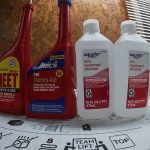
A product sold for the fuel tank has its own directions and compatibility requirements. Its availability does not establish that Honda requires it at a particular mileage. Ask for the vehicle-specific recommendation if it is being presented as mandatory. Do not treat a cleaner label as an authorization to repair an unconfirmed injector fault. If a product has already been added, retain its name, amount and date so a later diagnostic assessment has an accurate history.
Removed-injector cleaning needs application-specific authority
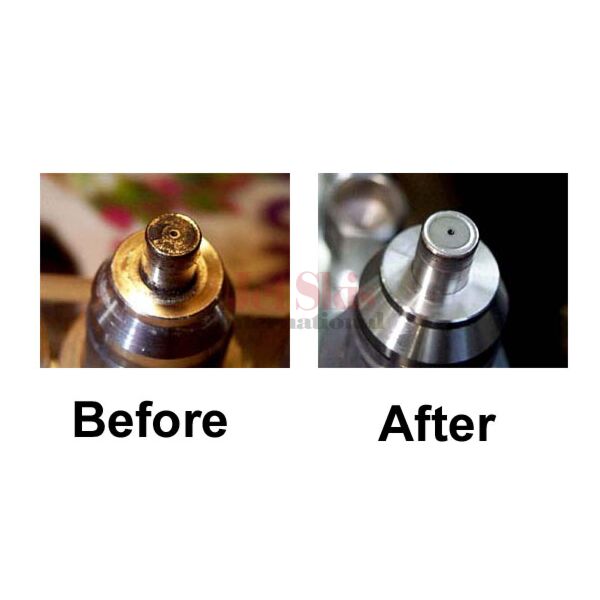
Off-car equipment can offer measurements and procedures that a tank product cannot, but the existence of equipment does not settle whether Honda prescribes that repair for your injector. Ask which current service instruction supports the proposed operation and what result will establish suitability afterward. Do not substitute an online ultrasonic-cleaning demonstration for a vehicle-specific repair procedure. Removal, installation parts and any required setup must also be accounted for, rather than treating cleaning as an isolated operation with no reinstallation consequences.
Intake deposits are not automatically injector deposits
If a proposal concerns intake valves or another intake surface, have that target named explicitly. Injector cleaning and intake cleaning should not be combined into an undefined promise to remove all carbon. Ask how the procedure reaches the affected area on your engine and what finding supports the work. A tank-carried product does not necessarily contact every intake surface in every injection design. Distinguishing the target prevents approval of a service that addresses a different problem from the one being discussed.
Questions for the advisor before authorization
Ask whether the recommendation is scheduled, optional or a repair for a diagnosed fault. Request the exact Honda reference if it is described as required.
- Pros:
- Confirm that the reference covers your vehicle. Ask whether a newer procedure changes the published position.
- Keep the reference with the estimate. Ask what the service physically involves.
- Identify the product and equipment. Confirm whether the injectors remain installed.
- Cons:
- Ask whether diagnostic checks are included. Request the total price and any separate charges.
- If the car has symptoms, ask what evidence was collected. Ask why an injector is implicated rather than another system.
- Agree on what will be checked afterward. Do not accept a cleared warning lamp as the only explanation of success.
- If the scope changes after investigation, obtain the new findings before authorizing more work. These questions do not require you to overrule a technician’s method.
- They require the recommendation to be understandable and tied to evidence.
- A legitimate application-specific explanation can be documented.
- An unsupported generic interval should not be presented as Honda’s instruction.
Fuel quality advice is not a workshop-cleaning schedule
Honda’s 2019 fuel-information guide recommends detergent gasoline and TOP TIER fuel where available. That is fuel-selection guidance for the covered application. It is not proof of a recurring workshop injector-cleaning requirement.
Read the fuel requirements in your own manual, including octane and ethanol limits. Do not equate a higher pump octane number with a guaranteed injector-cleaning result. Octane and detergent claims answer different questions.
Select fuel that meets the actual vehicle requirements rather than assuming the most expensive grade supplies every desired benefit. Keep refueling history if a complaint appears after a change of fuel.
Likewise, compatible fuel cannot repair every existing fault. A wiring problem or confirmed injector malfunction needs the appropriate repair.
Use fuel guidance for fuel selection and diagnostic evidence for repair selection. Combining them into one broad promise obscures what each can actually establish.
Do not postpone a confirmed problem
Rejecting an unnecessary maintenance upsell does not mean ignoring symptoms. A leaking fuel system, severe misfire or repeated stall deserves prompt assessment. Follow the vehicle’s warning instructions and arrange safe transport when needed.
Do not continue driving merely because routine cleaning is not recommended. A confirmed injector fault should be addressed under the correct service procedure. Ask what caused the recommendation and what installation requirements apply.
If there is evidence of contamination or another shared problem, have that scope explained as well. Replacing a part without addressing a verified underlying cause may leave the repair incomplete. If no fault has been confirmed, ask what further investigation would resolve the uncertainty.
That is a more useful next step than alternating cleaner brands or replacing a full set based on symptoms alone. Keep the original complaint and test findings available for any second opinion.

Credit: www.youtube.com
Coverage questions should use the actual warranty terms
Do not assume that buying an optional cleaning package preserves every form of coverage, or that declining one automatically cancels it. The relevant warranty or service contract and the applicable maintenance requirements need to be checked. Ask the provider to identify the written provision behind any coverage claim.
Obtain clarification before paying for work represented as a condition of coverage. If a repair may be covered, contact the responsible administrator before authorizing dismantling or replacement. Ask what evidence and preauthorization are required.
Keep maintenance records and the diagnostic report. This is especially important when the word “warranty” is being used for a separately purchased service contract.
Our injector coverage guide explains the questions to ask without promising coverage. The fact that a component is called a fuel injector does not settle every contract’s exclusions or claim process.
Keep the recommendation and the result in the service record
Retain the itemized estimate and the reason for any approved work. Save the applicable Honda reference if one was supplied.
Record whether the service was optional or fault-related. Keep the final invoice with the diagnosis.
These details prevent the same uncertainty from recurring at the next appointment. If replacement was performed, ask how the original complaint was verified afterward.
If symptoms remain, describe their timing and severity.
Do not assume that the new injector immediately failed.
Return to the evidence and compare it with the original findings.
American Honda’s published position gives owners a concrete basis for questioning routine cleaning claims.
Use it with current vehicle-specific information, not as permission to ignore a malfunction.
The decision should end with an identified need, a supported procedure and a clear record of what was actually done.


Automotive reference information. Confirm specifications in the manual for your exact vehicle. Original replacement guides link to their research sources. About us