
For wear assessment, brake pads are measured by the remaining friction material, not by adding the steel backing plate to the reading. For replacement-part identification, catalogs may give overall dimensions instead. Those are different measurements answering different questions.
A pad can also wear unevenly. One reading from the easiest visible edge does not establish the condition of all pads on an axle.
Identify the layers before measuring
The friction block is the working material facing the rotor. Behind it is the backing plate, and there may be shims or attached hardware farther back. A total thickness reading that includes those layers can substantially overstate the remaining lining.
If you cannot clearly distinguish the boundary, do not estimate from the entire stack. Ask the repairer to show the lining measurement and the applicable replacement criterion on the inspection report.
An external view is only a screening check

Credit: www.youtube.com
Looking through a wheel may reveal an outer pad, but it may hide the inner pad or the thinnest area. Wheel and caliper designs differ. A reassuring visible edge does not rule out wear elsewhere.
A complete inspection may require access beyond a wheel opening. Use the correct lifting and service procedure, or have a shop carry out the measurement. Do not reach around hot components or work under a vehicle supported only by a jack.
Record the thinnest working area
Assess the usable friction material at appropriate points and note taper or damage. Chamfers and grooves are design features, so compare the measurement method with the product and vehicle instructions rather than measuring an intentionally beveled edge as though it represented the whole pad.
Record inner and outer readings for both wheels of the axle. A difference can be diagnostically important even if one pad still appears thick. Measuring only the thickest pad conceals the reason for the inspection.
Use the applicable service limit
Do not substitute one internet thickness number for every vehicle and pad. The replacement criterion belongs to the specific application. Brembo’s automotive product guidance recommends checking residual friction thickness and wear indications; obtain the applicable limit from the vehicle and pad instructions.
The legal inspection threshold, the manufacturer’s limit and a shop’s recommended planning margin may be different concepts. Ask which one a recommendation uses. A planning recommendation should be presented as such rather than disguised as a universal failure threshold.
Thickness is not the entire condition assessment
Cracking, separation, contamination, severe taper or abnormal heat can require action even when a thickness reading seems acceptable. Likewise, rotor condition and caliper operation matter to the replacement decision.
If one pad is much thinner than its partner, investigate the cause rather than installing new pads and ignoring the difference. The report should preserve which wheel and position produced each reading.
Catalog measurements answer a fitment question
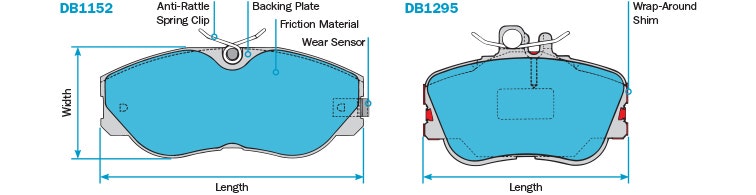
Credit: www.bendix.com.au
Width, height and overall thickness help identify a part, but matching those dimensions alone does not confirm compatibility. Hardware, sensor provision, friction specification and application details also matter.
When buying replacements, use the correct catalog application and part number. When judging wear, use remaining lining and the appropriate limit. Keeping these two tasks separate prevents a common measurement error.
Make the inspection useful for future service
Keep the date, mileage, positions measured and recorded thicknesses. A later comparison can show a pattern, but it should not be used to promise a fixed number of miles remaining: future driving and mechanical condition can change wear.
For brand-specific life claims, see why Duralast Gold pad life needs measurements. The best answer to how much pad is left is a documented inspection, not a mileage guess.


Automotive reference information. Confirm specifications in the manual for your exact vehicle. Original replacement guides link to their research sources. About us


