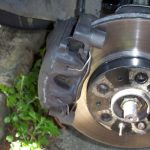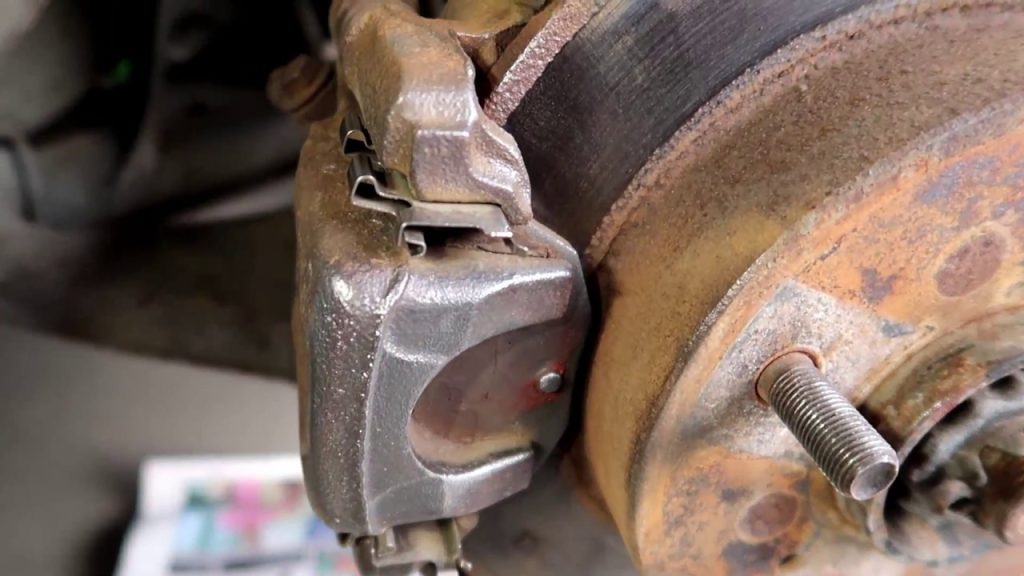

A rusty brake caliper does not automatically need replacement, but rust removal is not a repair for every corrosion problem. Light discoloration on an exposed casting has a different significance from a seized guide, a damaged piston surface or a weakened mounting point. The useful question is therefore not simply how to make the caliper look cleaner.
It is whether the assembly still moves, seals and attaches as its manufacturer intended. Start with an inspection that separates appearance from braking function. If the vehicle pulls sharply, a wheel smokes, braking changes noticeably or fluid is leaking, stop using it and arrange professional assessment.
Do not drive around to see whether the rust wears away. This guide explains how to discuss and scope cleaning work without treating a photograph, a wire brush or fresh paint as proof of safety. It does not provide a universal rebuild procedure for every caliper design.
Distinguish surface rust from a repair problem
Rust on an outer iron casting may be largely cosmetic when the material underneath remains sound and the moving parts work correctly. That possibility does not establish the condition of your particular caliper. Scale around a mounting ear, damage to threads, leaking fluid, torn boots and restricted movement require separate investigation. A cleaned outside surface cannot show whether a piston is corroded beneath its dust boot. Likewise, an attractive caliper can still contain an internal problem. Ask the technician to identify the precise location of corrosion rather than describing the whole assembly as rusty.
The bracket, pin, piston and caliper housing are distinct parts with different repair options. A photograph with the affected area marked is more useful than a general claim that the brakes need cleaning. Record whether the issue concerns appearance, movement, sealing or structural integrity. These categories help explain why two similarly colored calipers may need very different work. They also prevent a cosmetic service from disguising a mechanical defect that remains after cleaning.
Choose equipment around inspection and material compatibility
- The required equipment depends on whether the work is external cleaning, guide service or hydraulic overhaul. Safe vehicle support, suitable eye protection and a method of controlling brake dust come before abrasive tools. Do not blow accumulated dust into the air or brush it aggressively while breathing over the assembly. A cleaner labeled for brakes still needs to be suitable for the surfaces it contacts; rubber, plastics and painted finishes may have separate restrictions. Keep products away from friction material unless their instructions specifically cover the intended cleaning operation. Any lubricant used afterward must be approved for its actual location rather than chosen merely because the container mentions brakes. HELLA’s guide-pin guidance explains that incompatible lubricant can affect rubber parts and that damaged guides or protective boots need attention. This is a reason to identify materials before applying products, not an invitation to grease the entire assembly. Have the vehicle-specific service information available before loosening any hardware. If cleaning requires hydraulic disassembly, the job has expanded into brake repair and needs the corresponding tools, competence and post-repair checks.
An inspection-led cleaning and repair sequence
Begin by documenting the symptoms that led you to inspect the caliper. Note whether the concern is visible rust through the wheel, noise, uneven pad wear, a dragging wheel or an actual leak. These observations direct the inspection but do not diagnose the cause on their own.
- A hot wheel can reflect several brake faults, and touching it is not a safe way to compare temperatures. Let the brakes cool before examination and use proper workshop methods when a heat comparison is needed. If the vehicle has an electronic parking brake, establish its service requirements before any pad or caliper movement.
Disconnecting a plug is not automatically equivalent to entering maintenance mode. Once access is safe, inspect the housing and its attachment points before concentrating on appearance. Look for loose hardware, damaged threads, cracked material or heavy loss of metal.
- A brush cannot restore missing metal or the designed fit of a fastener. Do not grind a mounting face or thread until a bolt seems to fit again. Such changes can alter alignment or clamping and may conceal the reason the connection failed.
Suspected structural damage calls for a replacement decision against the applicable service criteria, not cosmetic refinishing. Where the condition is uncertain, have a qualified brake specialist assess it before the vehicle returns to use. Next, identify which exposed areas can be cleaned without disturbing critical surfaces.
- Remove loose external contamination using a method appropriate for that material and finish. Keep abrasive debris out of seals, guide bores and hydraulic openings. Avoid scraping a piston sealing surface merely to obtain a shiny result.
Aggressive abrasion can create its own damage even when the brown staining disappears. Protect surrounding hoses and electrical connectors from tools and cleaning chemicals. Do not use a pressure washer or solvent spray as a substitute for controlled inspection of hidden parts.
- The goal is to reveal condition without introducing contamination or new damage. For a floating caliper, guide operation deserves specific attention. A guide can bind because corrosion, damaged protection or unsuitable lubricant has affected the sliding assembly.
Cleaning the casting around it does not demonstrate that the guide now travels correctly. Ask whether the pins were inspected individually and whether their surfaces and boots met the service criteria.
- Parts that look similar may occupy different positions, so keep their identity and orientation clear during approved servicing. Some designs have particular bushings or lubrication rules that should not be replaced by generic advice.
See our explanation of guide-pin position before assuming either pin can be installed anywhere. A smooth hand movement after assembly is useful evidence only when the correct assembly method has also been followed.
- Pad support areas are another separate concern. Corrosion beneath hardware can affect how a pad fits, but removing material until a pad rattles is not a valid correction.
The technician should inspect the bracket, approved hardware and pad fit together. New clips do not compensate for an unsuitable or damaged bracket.
- Keep the friction faces of the pads and rotor free from grease and oily residue throughout the work. If contamination has reached friction material, follow the component maker’s assessment and replacement instructions rather than assuming a wipe has restored its performance.
A cleaning service should not introduce a braking imbalance that did not exist before it began. Examine dust boots without pulling or puncturing them simply to look underneath.
- A split boot indicates loss of protection, but it does not by itself tell you how far contamination has progressed. Wetness also needs identification; road moisture and brake fluid have different implications.
Suspected brake-fluid leakage requires a sealing-system inspection. Brembo’s caliper repair-kit overview shows that repair components exist for certain applications, but availability of a kit is not proof that every corroded assembly can be rebuilt.
- Confirm the exact caliper, allowed repair process and condition limits first. A damaged bore or piston may make cleaning alone inappropriate, and some assemblies are better addressed with a correctly specified replacement.
If the hydraulic circuit is opened, plan the complete return-to-service process before starting. Correct fluid, sealing parts, tightening instructions and bleeding requirements are part of the repair, not optional extras added after a leak appears.
Never leave the caliper hanging from its flexible hose while working. Do not press the brake pedal with an unsupported or incorrectly restrained piston.
These shortcuts can turn a modest service into an additional failure. The manufacturer’s instructions control how components are secured and checked.
Brembo’s replacement guidance reinforces the need for application suitability and proper installation; its illustrated procedure is not a universal recipe for every floating caliper. After cleaning, compare the findings with the original concern.
If the problem was only superficial discoloration, the record should say that the inspection found no related functional defect within the checks performed. If the caliper was dragging, the record should explain which fault was found and how its correction was verified.
Do not call a sticking piston repaired merely because the outside now looks better. Retained hydraulic pressure and a restricted hose can produce symptoms that resemble a caliper fault.
Our sticking-caliper guide explains why the cause needs confirmation before parts replacement. New rust-resistant paint does not distinguish these possibilities.
| For the final check, the workshop should confirm secure mounting, correct routing, absence of leaks and appropriate brake operation using the vehicle’s service procedure. A road test is a controlled verification after the brakes pass static checks, not a way to discover whether an uncertain repair is safe. |
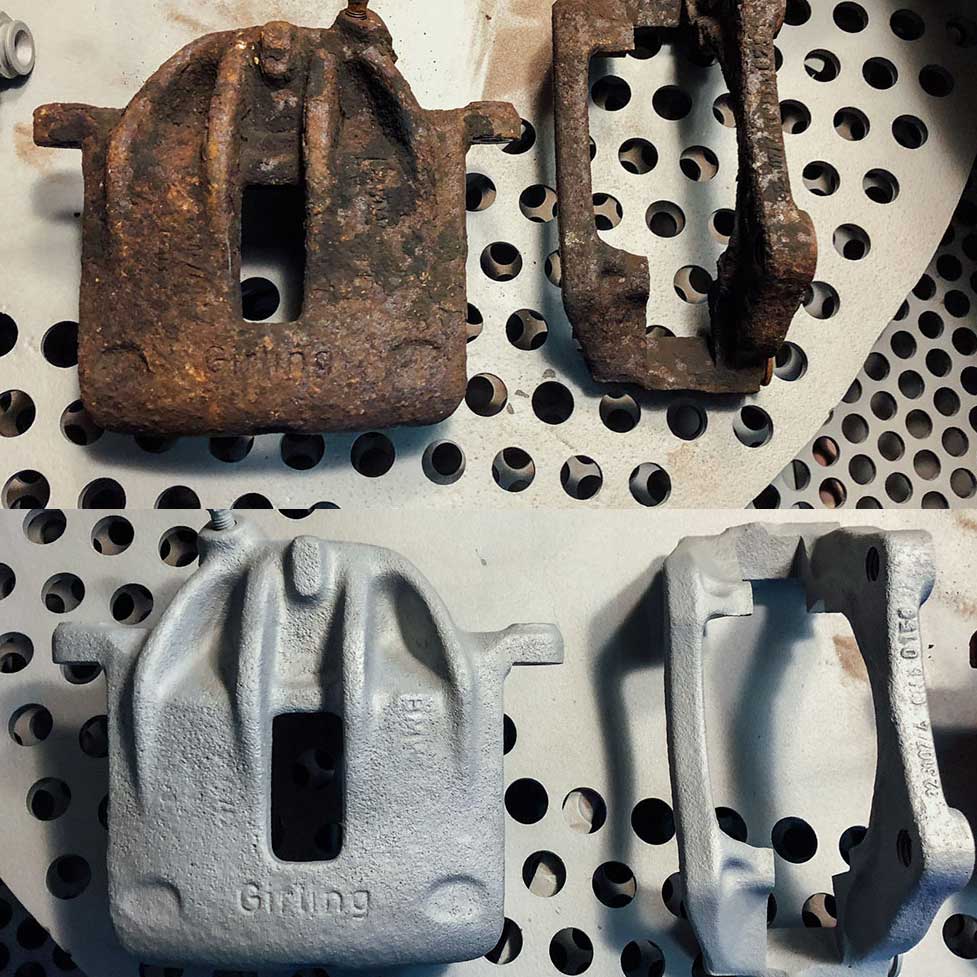
Credit: eeuroparts.com
Keep the invoice and inspection notes, especially where parts were considered serviceable rather than replaced. Ask what future symptoms should trigger another examination.
If corrosion was heavy, ask whether the opposite side received the same level of inspection. The practical result you want is an explanation of what was cleaned, what was tested and what remained outside the scope, rather than an unsupported promise that a clean caliper will last a particular number of years.


Automotive reference information. Confirm specifications in the manual for your exact vehicle. Original replacement guides link to their research sources. About us