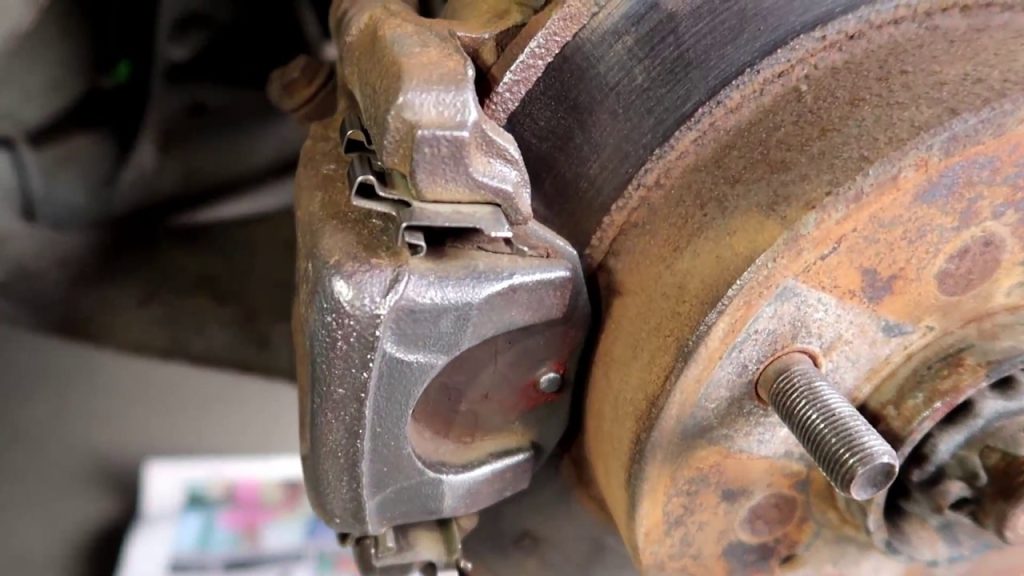

Clean brake calipers by identifying the material and the area being cleaned first. The outer casting, pad-support surfaces, guide mechanism and hydraulic interior are not interchangeable cleaning targets. Use a product and method approved for the actual surface, control brake dust, protect sensitive parts and inspect what the dirt was hiding. A general instruction to spray the entire assembly with brake cleaner can overlook rubber boots, painted finishes, electrical components and lubricated mechanisms. Cleaning is appropriate for serviceable parts with removable deposits.
It does not repair a fluid leak, restore a pitted sealing surface or prove that a brake releases correctly. If the wheel has overheated, braking has changed or fluid is present around the piston, establish the fault before treating the job as cosmetic maintenance. Do not drive an impaired vehicle to shake loose dust or burn off cleaner. This guide focuses on choosing and limiting a cleaning method, not on dismantling every caliper or providing a universal rebuild procedure. There are two common starting points.
You may want to remove visible road grime from an otherwise sound housing, or a brake service may expose deposits that interfere with inspection and component movement. The second situation requires more than a better appearance. Identify the relevant fit, material and service criterion before deciding how much to remove. Taking metal away until a part looks bright can create clearance or surface damage that ordinary cleaning never required.
Credit: www.reddit.com
Choose the method for the part and contaminant
Begin with the applicable service instructions and the cleaner's current label and safety data. A product called brake cleaner is not automatically compatible with every item near a brake. CRC’s Brakleen application guidance warns against applying that product to plastic or rubber. That limitation matters on a complete assembly containing boots and electrical housings.
Product names, packaging colours and chlorinated or non-chlorinated descriptions are not reliable substitutes for the exact compatibility information. List the surfaces likely to receive liquid or overspray. A painted caliper, an uncoated bracket, rubber guide boots, a hose and an electric parking-brake motor may sit close together. Protect or avoid incompatible surfaces according to the product and component instructions.
- If the cleaning requirement cannot be met without soaking an unsuitable material, choose a supported alternative or have the part serviced professionally. Do not assume that a quick spray is harmless because it evaporates before damage is obvious. Work on a cool assembly with the vehicle properly secured and supported wherever wheel removal is required. Follow product requirements for ventilation, eye protection and chemical-resistant gloves.
Keep ignition sources and hot work away as directed by the cleaner's safety information. Never use cleaning aerosol as a reason to work beside a hot exhaust or heated brake. Protect surrounding finishes and collect contaminated liquid rather than allowing it to flow across the floor or into a drain.
-
Brake dust also needs deliberate control. Do not blow an open assembly clean with an air gun or dry-sweep the debris into the work area. OSHA’s brake and clutch work practices describes controlled dust-removal methods for work involving asbestos, including enclosure and low-pressure wet approaches.
- An ordinary household vacuum is not an equivalent system. If the friction material's history is unknown, avoid creating an airborne cloud and use a suitably equipped service provider rather than improvising dust collection. Document fluid or grease before washing it away.
- A wet path near a hose connection or dust boot can be diagnostically useful, whereas a fully sprayed assembly may hide the point of origin. Photograph the condition and note whether the fluid appeared before any cleaning product was applied. Where an active leak is suspected, the priority is repair and safe handling, not making the evidence disappear.
- Cleaning may help a technician locate a leak, but it cannot establish that the leak has stopped permanently. For exterior grime, use the least aggressive method that the surface manufacturer permits. Work in accessible areas without forcing liquid under boots or into connectors.
- A suitable soft brush or lint-free wiping material may help on approved surfaces, but abrasive tools are not a universal upgrade. Avoid removing identification labels or damage clues in the pursuit of a uniform finish. Stop when remaining discoloration cannot be distinguished from a coating or corrosion without further inspection.
-
For service cleaning, distinguish the housing from the bracket that supports the pads. Deposits beneath hardware can affect fit even when the outside looks clean. HELLA’s illustrated brake-service example shows cleaning at defined locations and cautions against damaging guide surfaces.
- It describes a particular front-brake arrangement; its tool sizes and lubrication details should not be copied to every caliper. The transferable lesson is to inspect the functional surfaces and follow their own requirements. Pad-support cleaning should restore the specified seating condition, not enlarge the opening to make an incorrect pad fit.
- Check the identity and condition of clips, shims and abutment hardware. If corrosion has distorted the support or material is missing, more scraping may not produce a serviceable bracket. A pad that only moves after substantial metal removal warrants a fitment and component review.
- Do not grind a pad or bracket simply to conceal the source of binding. Guide pins and their bores need separate treatment. HELLA’s floating-caliper guide-pin guidance addresses the guide system as an assembly whose condition affects caliper movement.
-
Keep different pin positions and any damping components correctly identified. Cleaning away old lubricant does not mean any fresh grease can replace it. Use the specified compatible lubricant only where directed, and replace damaged protective parts or worn components rather than expecting lubricant to compensate.
- Do not spray solvent under a piston boot as a shortcut to freeing a stiff piston. The boot protects a different region from the exposed housing, while the hydraulic seal has its own material and assembly requirements. A boot that is torn, detached or concealing fluid calls for inspection of the relevant failure.
- Adding general-purpose oil can contaminate the system and obscure the symptom. The related stuck-piston decision guide explains why apparent improvement after force or lubrication is not a repair verdict. Likewise, internal hydraulic cleaning belongs to a supported rebuild process, with the specified cleaning media, seals, inspection criteria and assembly materials.
- Exterior aerosol suitability does not establish suitability inside the fluid circuit. Do not separate a multi-piece caliper body or extract a piston simply to make routine cleaning more thorough. Once disassembly crosses that boundary, pressure integrity and assembly validation become part of the job.
-
If the manufacturer does not support that repair, stop at its replacement recommendation. Protect pads and disc friction tracks from inappropriate chemicals and all lubricants. If a pad has been soaked in brake fluid, oil or grease, do not assume surface spraying restores its friction performance.
- Have contaminated friction components assessed and replaced as required by their service instructions. A housing can look clean while the pad remains compromised. Nor should a road test be used to burn off an uncertain residue; the contamination decision belongs before the vehicle returns to use.
Separate removable rust from damage requiring repair
A rusty exterior casting does not automatically mean that the piston has seized, and a shiny housing does not establish a healthy seal. Location matters. Surface discoloration on a noncritical exterior area is a different finding from corrosion on a sealing surface, a damaged guide bore or a cracked mounting feature. Identify what the affected surface does before deciding whether removal is useful.
- If the condition prevents reliable inspection, have it evaluated with the appropriate service criteria. Do not use a rotary abrasive, acid bath or blasting process on an assembled caliper without explicit manufacturer approval. Those methods can reach seals, finishes and passages that are not intended to receive them. Abrasive residue is particularly unwelcome in a hydraulic assembly.
- The ability to remove visible rust quickly does not establish that the part remains dimensionally correct or internally clean. Cosmetic restoration and brake-component remanufacturing are different jobs with different controls. On a supported service surface, remove only deposits using the method specified for that assembly. Preserve geometry, coatings and mating faces.
- If inspection reveals deep corrosion, cracking, distorted hardware or persistent binding, stop and select a repair or replacement path. Do not keep increasing abrasive pressure because a new part is inconvenient to obtain. The decision is whether the component can meet its requirements afterward, not whether it can be made attractive in a photograph. Brembo’s caliper repair-kit information identifies different repair components for supported applications.
A kit needs to match the actual assembly and the diagnosed damage. Replacing a dust boot alone cannot restore a corroded piston surface, and a new seal cannot correct a damaged housing. Record what failed, which parts are serviceable and which procedure supports the proposed rebuild.
If those questions cannot be answered, a correctly specified replacement may be the appropriate route. After cleaning, verify that all protective parts, clips and connections remain correctly seated. Restore only the prescribed lubrication at the prescribed locations.
Reassemble any disturbed hardware using the applicable tightening and replacement rules. If the hydraulic circuit was opened, include the required bleeding and leak checks. Cleaning with the circuit closed does not create the same task, but it also does not excuse checking that the completed assembly is secure and functional.
Keep the distinction between appearance and performance in the final check. Confirm that no cleaner remains where it can affect operation, no incompatible overspray has damaged a part and no original symptom remains unexplained. Follow the vehicle's static and functional verification requirements before use.
Do not regard a clean casting as proof that drag, noise or uneven pad wear has been cured. Those complaints require their own evidence. There is no universal mileage interval for cosmetic caliper cleaning.
Inspection opportunities during scheduled brake work are more meaningful than repeatedly soaking an assembled caliper between services. Record damaged boots, unusual deposits or recurrent corrosion and address the cause. Sensible cleaning exposes condition and supports correct service; it should never conceal a defect, substitute for diagnosis or introduce new contamination into an otherwise serviceable brake.


Automotive reference information. Confirm specifications in the manual for your exact vehicle. Original replacement guides link to their research sources. About us