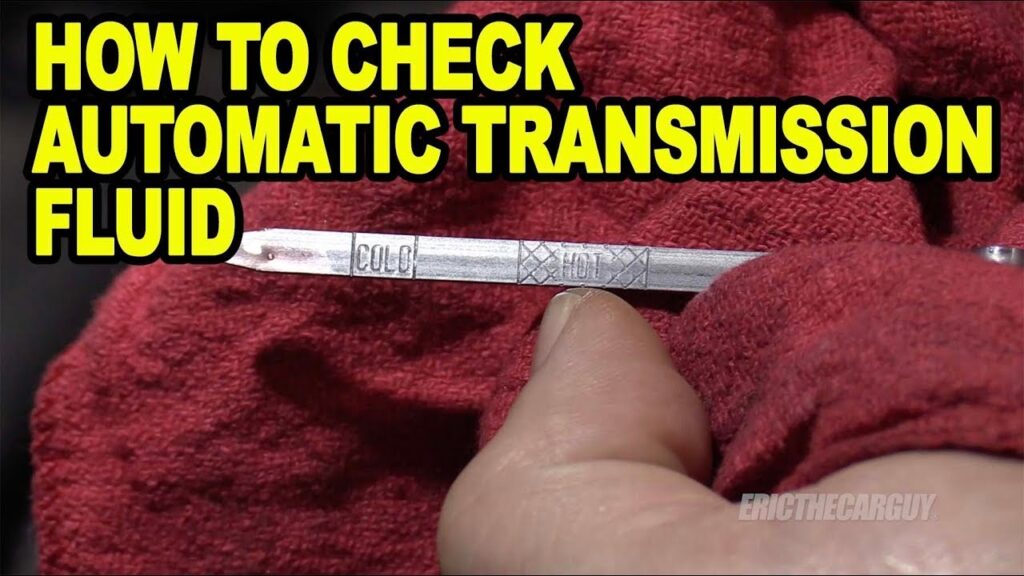

To measure transmission fluid accurately, use the level-check procedure for the exact transmission fitted to your vehicle. Establish the required temperature, engine state, selector position and measuring point before taking a reading. Some gearboxes use an accessible dipstick; others require a workshop procedure. A cold reading, an idling-engine reading and a reading after shutdown are not interchangeable. Start by finding the transmission-fluid section of the correct owner manual. If it directs you to a dealer or service facility, treat that as the next step rather than searching for a hidden dipstick.
Identify the measurement your vehicle actually requires
Record the model year, engine, transmission designation and market for which the vehicle was built. A registration year or model badge alone may not identify the gearbox. Use the VIN when asking the manufacturer or a qualified workshop to resolve an uncertain application. This matters because a procedure can be accurate for one version and unsuitable for another. Read the applicable subsection and its footnotes, not just the first page that mentions transmission fluid.
Before opening anything, make a short working note with five entries: measuring point, temperature requirement, engine state, selector position and acceptable level range. Add any specified waiting period. These entries expose missing information early. If your instructions merely say warm, determine how that document tells you to establish the required condition. If you cannot identify which temperature or range applies, you do not yet have enough information to decide whether fluid needs adding.
Credit: www.theartofdoingstuff.com
Locate the correct checking point
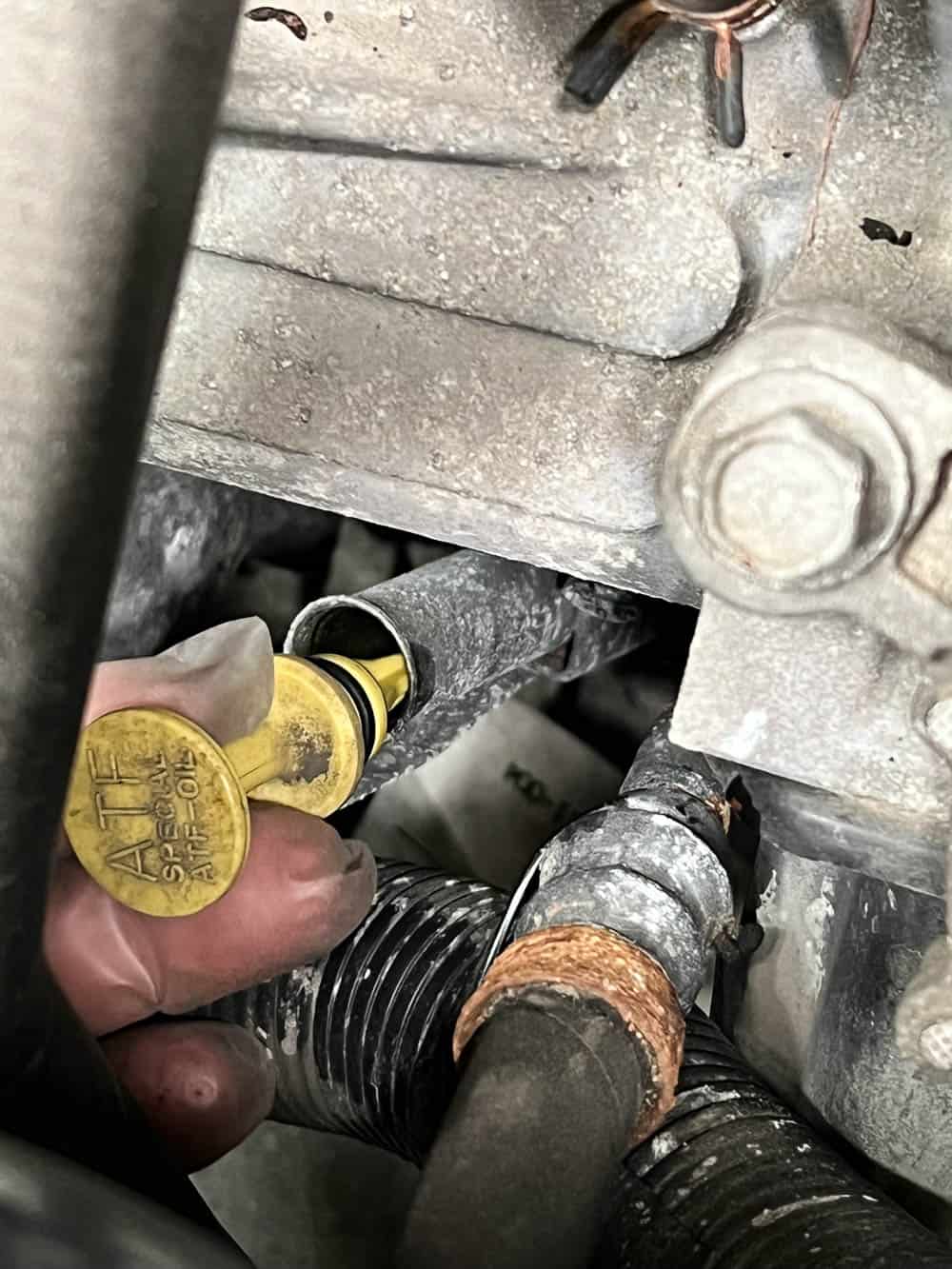
Use the component illustration in the vehicle documentation to identify a dipstick or service opening. Do not choose a handle by color or assume its location from front-wheel or rear-wheel drive. The absence of an obvious dipstick is meaningful: Honda’s 2025 Pilot instructions direct owners to have a dealer check the transmission-fluid level and explicitly advise against checking or changing it themselves. That instruction belongs to the stated application; it is not an engine-off rule for every Honda.
Decide whether you can reach the specified point safely with the equipment available. Secure the vehicle as its instructions require and use a ventilated location when the engine must run. Keep hands, clothing and tools clear of moving components and hot surfaces. A level check requiring access underneath a running vehicle is a workshop task unless you have the correct training, lifting equipment and service information. Never go underneath a vehicle supported only by a jack.
Take a dipstick reading under the specified conditions
An accessible dipstick makes the measuring step straightforward, but it does not remove the setup requirements. Think of the result as a measurement with conditions attached: which gearbox, which temperature and which engine state produced this wet line? Two readings taken under different conditions cannot establish that fluid has disappeared. Reproduce the prescribed setup before comparing results or deciding on an adjustment.
Engine running or stopped: follow the exact application
The 2010 Ford Fusion Owner’s Guide illustrates why the transmission designation matters. Its AWS21 automatic section specifies a normal checking range of 60–70°C, while its 6F35 section specifies 85–93°C. Both procedures leave the engine running with the selector in Park after the prescribed preparation. The AWS21 instructions also distinguish a cold-range reading from the required warm recheck. These are historical application examples, not temperatures to use on another Ford. Even within one manual, the first transmission heading may not be yours.
A different example appears in the 2014 Acura RDX Owner’s Manual. Its automatic-fluid procedure warms the engine until the radiator fan starts, then shuts the engine off. Dipstick removal begins after waiting about 60 seconds, with a stated limit of less than 90 seconds. The prescribed reading is in the HOT range. This engine-off example is why a general instruction to leave every automatic idling is unreliable. Do not transfer the RDX timing to a different Acura, Honda, CVT or transmission generation.
Read the intended marks, with the dipstick seated correctly
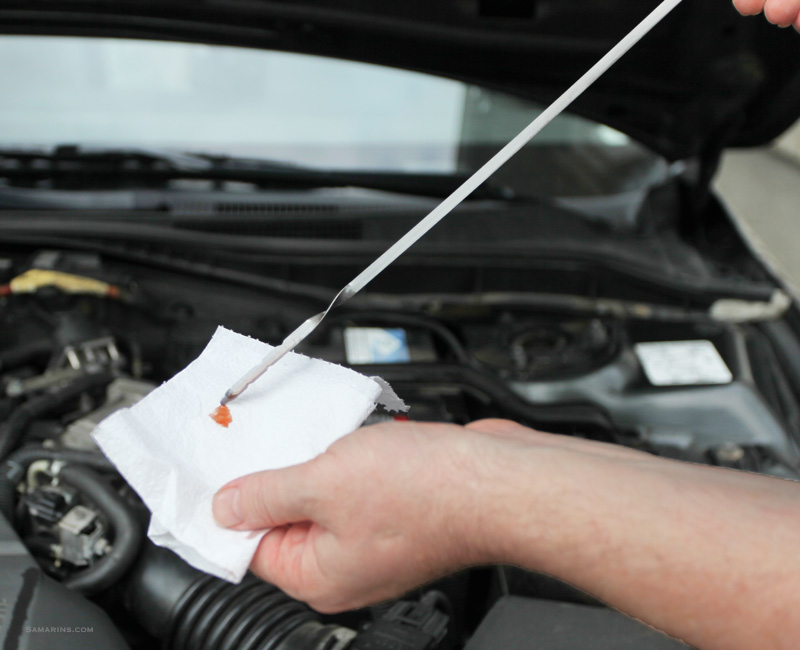
Where your manual prescribes a removable-dipstick check, follow its wipe, reinsertion and reading sequence. Use a clean, lint-free cloth and seat the dipstick fully in the intended position. Compare the wetted level with the marks identified for the required conditions. ZF’s level-check explanation emphasizes a level vehicle and the applicable manufacturer instructions. A photograph of an unfamiliar dipstick is not a substitute for the diagram that labels your own checking range.
If the trace is smeared, interrupted or difficult to distinguish, do not turn uncertainty into a top-up quantity. Check that the correct dipstick is present and properly seated, then repeat only as the vehicle procedure permits. An engine-off method may have a timing window that must be re-established. Record an unreadable result as unreadable; averaging a clear line with a random streak does not create a reliable level.
Credit: www.westplainsdailyquill.net
Keep temperature evidence separate from guesswork
The word hot can hide several different measurements. Cabin heat, coolant temperature, elapsed idling time and transmission-fluid temperature do not name the same thing. Use whichever indicator the exact procedure specifies. If the service instructions require a diagnostic reading of transmission-fluid temperature, confirm that the displayed data item is that measurement. A scan tool showing engine coolant temperature has not satisfied a requirement for gearbox-fluid temperature.
Likewise, do not substitute a guessed driving distance, hand contact with a housing, or an infrared reading of an external surface for a specified fluid-temperature measurement. If the required tool or operating condition is unavailable, postpone the adjustment and arrange an appropriate check. The useful distinction is between a reading taken under known conditions and one whose conditions are unknown. More decimal places on an unrelated thermometer will not resolve that uncertainty.
Understand what a level reading can tell you
A dipstick shows level relative to its calibration; it does not count every litre inside the transmission. The distance between two marks is not automatically one quart. Nor does a specification for total or dry capacity tell you what to pour into a transmission that already contains fluid. A measured drain quantity can be useful service information, but it cannot prove that the original level was correct or replace the prescribed final check.
A valid reading within the stated range answers a limited question: the level meets that check’s criteria at that moment. It does not verify fluid identity, prove that an intermittent leak is absent, or diagnose every shifting problem. If you are unsure what product belongs in the gearbox, read our comparison of transmission fluid and engine oil before considering a refill. Fluid compatibility and fluid level are separate checks.
Credit: www.autotransmatic.com
When the transmission has no owner-accessible dipstick
A transmission described as sealed may still have a service method for setting its level. That method is not necessarily a hidden version of an engine-oil dipstick check. It may require a defined opening, diagnostic temperature data and a controlled operating sequence. Do not remove a convenient-looking bolt to see whether oil comes out. Identifying the correct fill or level opening is part of the service procedure; a drain opening answers a different question.
Under-vehicle access also changes the practical decision. The vehicle may need to remain horizontal while properly secured on suitable lifting equipment. Raising only one end can defeat a procedure that requires a level position. Hot fluid can escape when a checking opening is released. If you cannot meet both the positioning requirement and safe access requirements, ask a workshop to perform the check instead of improvising around either condition.
Credit: www.theartofdoingstuff.com
A level-plug example shows why the sequence matters
ZF’s November 2024 service information 50130 EN provides an 8HP example, with a horizontal vehicle and a device reading transmission-oil temperature. Its flowchart uses a 30–50°C checking window, with a 50–60°C exception stated for Maserati, and includes engine-running and gear-selection stages before assessing flow at the fill opening. The document distinguishes oil running out from the point at which only individual drops remain. Those details belong to that document and its listed applications; they are not a universal plug-check recipe.
For an actual job, obtain the complete current instructions applicable to the vehicle and gearbox, including preparation, plug identification, seals and tightening requirements. A short online summary cannot establish all of them. Do not combine one source’s temperature with another transmission’s plug location or shutdown timing. If manufacturer and component-supplier instructions appear inconsistent, have the application resolved before opening the system. Choosing whichever step is easiest produces an unverified procedure.
Act on a low, high or uncertain result
Classify the result before changing anything. There are at least four useful outcomes: within the required range, confirmed below it, confirmed above it, or not valid because conditions or markings were unclear. The fourth outcome is not a diagnosis of low fluid. Tell a workshop which category you reached and how you checked; that information is more actionable than saying the dipstick looked strange.
If the level is confirmed low
Follow the exact vehicle instruction on whether owner topping-up is allowed and what specification is required. Check the full product requirement rather than relying on bottle color or a broad automatic-transmission label. If a wrong fluid has already been introduced, do not conceal that detail by adding the correct one on top. Our guide to mistaken transmission-fluid fills explains the information a workshop needs to assess the situation.
Where adjustment is permitted, use the specified increments and rechecking method; do not assume the gap to the upper mark equals a bottle. Ford’s 2017 Super Duty fluid-check instructions specify small additions for the applicable dipstick-equipped procedure, warn that non-approved fluid can damage components, and direct excess-fluid removal to a qualified technician. The same manual also contains a no-dipstick instruction for another application. Read the scope before borrowing any numerical top-up amount.
If the level appears too high
First verify that the correct range and operating conditions were used. A reading taken after shutdown cannot be compared directly with an engine-running criterion. If the prescribed check confirms an excess, arrange correction using the proper service method. Do not loosen an unidentified drain bolt and estimate the amount removed by time, or assume fluid disappearing from a checking hole means the final level is right.
Keep any removed fluid in a suitable container and arrange accepted collection. Do not pour it into drains or combine it with other waste merely to save space. Collection rules can depend on the receiving program; our guide to recycling transmission fluid with used oil explains the acceptance check. If a level repeatedly drops after correction, report the pattern rather than treating every top-up as routine maintenance.
Credit: www.westplainsdailyquill.net
Separate visible condition from a fault diagnosis
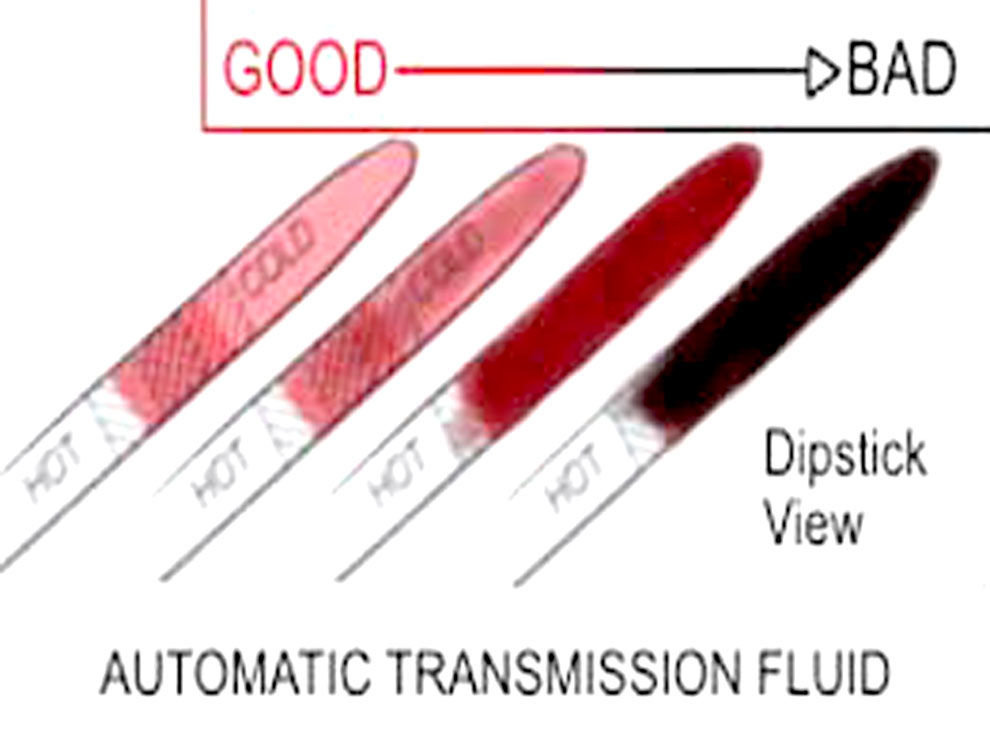
Note unusual appearance, particles, odor, leakage and operating symptoms alongside the level. Mobil’s fluid-check guidance identifies visible particles and a burnt appearance or smell as reasons for professional inspection. Those observations do not measure the missing quantity or identify every possible fault. Its generic warm-up and engine-running steps also should not override a vehicle-specific engine-off procedure such as the RDX example above. Product-provider guidance helps frame questions; the exact vehicle instructions control the check.
Do not use a normal-looking sample as permission to keep driving a vehicle with severe slipping, delayed engagement, a major leak or a transmission warning. Stop safely and obtain application-specific advice before further operation. If a properly performed check shows no fluid where the manual requires it, do not drive merely to make the next reading warmer. Explain the symptom, reading conditions and any recent work when arranging assistance; avoid promising yourself that a refill alone will repair the cause.
Keep a record that makes the next check useful
Save the procedure reference, date, mileage, transmission identity, temperature evidence, engine state and observed range. If fluid was added, record its exact specification and measured quantity separately from the reading. A photo of the dipstick can support those notes, but it cannot show whether the vehicle was level or the checking conditions were correct. For a workshop check, ask for the method and result on the work order, particularly when investigating an intermittent problem.
Follow the vehicle’s maintenance schedule instead of imposing a universal monthly check or fluid-change interval. For example, Honda’s 2026 Pilot Maintenance Minder lists transmission-fluid replacement under service subitem 3; a satisfactory level reading does not cancel a scheduled replacement. This guide uses manufacturer documents to explain measurement decisions, not a hands-on test of your vehicle. The useful endpoint is a valid reading with its conditions recorded, or a clear referral when the correct procedure requires workshop equipment.


Automotive reference information. Confirm specifications in the manual for your exact vehicle. Original replacement guides link to their research sources. About us
