
A brake caliper is confirmed defective when inspection or testing identifies a fault in the assembly that falls outside the manufacturer’s service criteria. Pulling, heat, vibration or uneven pad wear can justify investigation, but none names the caliper as the failed part by itself. Before replacing it, establish what failed, what evidence locates the fault and whether an approved component repair or complete replacement is appropriate. This distinction matters because a hose, pad support, parking-brake mechanism or another brake-system component can produce a similar complaint at the wheel.
A new caliper may not correct a fault located elsewhere. Equally, a piston that can be forced inward does not prove the whole assembly is healthy. A useful diagnosis connects an observed problem with a specific condition and a suitable repair. If there is brake-fluid leakage, severe drag, smoke, reduced braking, a strong pull or insecure hardware, stop using the vehicle and arrange safe assessment.
Do not perform repeated hard stops or loosen a fitting on the roadside to decide whether the caliper is bad. This article focuses on evaluating the evidence and repair recommendation. For the inspection order itself, see a structured caliper inspection.
Use the finding to choose further diagnosis, repair or replacement
A symptom without a located fault means further diagnosis. A hot wheel or an unevenly worn pad establishes a concern but not necessarily an internal caliper failure. Ask what checks distinguish the piston, guides, pad fit, parking brake and hydraulic release path. The answer should name the relevant observation or test result, not simply repeat the original symptom in different words. If that evidence is unavailable, the recommendation may still be provisional. For example, a shop may report that the left front brake drags.
That is useful information about the affected location. It becomes a more specific diagnosis only when the mechanism behind the drag is identified. Replacing every nearby component can sometimes make the symptom disappear without explaining which one was faulty, but that is not the same as an evidence-based repair plan. Ask which uncertainty the next diagnostic step is intended to resolve. A verified hydraulic leak requires repair of its actual source. Fluid around the assembly can come from a fitting, bleeder, hose or piston sealing area.
-
The lowest drip point is not automatically the origin. A damaged connection can wet a sound caliper body, while a true piston-seal leak may require a supported rebuild or replacement. The repair should address the identified location and any resulting friction-material contamination, not merely tighten the most visible threaded part. If the estimate says caliper leaking, ask whether the source has been observed under the proper inspection conditions and which component is defective. A report supported by a clear location and condition is more useful than a photograph of an entirely wet wheel area.
- Do not apply external sealant or a stop-leak chemical as an alternative to the required hydraulic repair. A temporarily dry exterior does not verify restored pressure integrity. Binding must be separated into mechanical and hydraulic causes. Wagner’s brake inspection guidance distinguishes internal caliper binding from hose restriction through controlled checks. Its diagnostic distinction shows why difficult piston movement does not automatically condemn the housing. The applicable method and conditions still matter, especially on parking-brake calipers.
- These tests involve hydraulic service responsibilities and belong in a properly equipped diagnostic process. If the evidence points to pressure retained upstream, ask which part of the hydraulic path was identified and how. A caliper replacement alone would not necessarily remove that cause. If pressure is appropriately released but the relevant parts remain mechanically restricted, inspection can focus on their condition. Neither conclusion should be inferred from the sound of fluid or a single informal attempt to push a piston.
- The finding must be interpreted within the correct procedure. A guide or pad-support fault does not always require a complete hydraulic unit. On a floating caliper, guides and protective components deserve their own assessment. HELLA explains that restricted guide movement can contribute to uneven wear and overheating. A damaged pin, swollen sleeve or corroded support may have a defined repair route, depending on the assembly and extent of damage. The estimate should explain whether the caliper body is also defective or whether the replacement package is being chosen for another stated reason.
-
Do not assume that grease restores every guide. The part may be worn, damaged, incorrectly located or incompatible with the lubricant previously used. Adding a coating can temporarily change movement without returning the component to its specified condition. Conversely, a serviceable body should not be called internally seized merely because external hardware needs repair. Separating those findings makes the parts decision more transparent.
- Confirmed structural or out-of-limit damage changes the decision. Cracks, damaged mounting features, rejected sealing surfaces or other conditions outside the approved limits may make replacement necessary. The applicable manufacturer criteria determine whether a repair is allowed. Do not accept a universal promise that every caliper can be saved with polishing or a seal kit. Ask what inspection finding prevents reuse and whether it applies to the body, bracket, piston or another component. A specialist may offer an approved rebuild where the assembly is supported and the remaining parts pass inspection.
- Brembo describes both supported component repair kits and replacement options. Kit availability is not proof that a particular damaged core is suitable. The repair plan should identify the exact kit, the components being renewed and the checks that establish the finished assembly is serviceable. Cosmetic cleaning or fresh paint is not a substitute for those decisions. A parking-brake fault needs its own component diagnosis. A rear wheel that will not release may involve a cable, actuator, internal mechanism, control issue or another arrangement.
- A dashboard warning does not identify the caliper body by itself. Ask whether the proposed assembly includes the faulty mechanism and what setup or calibration the procedure requires. Replacing a hydraulic housing without resolving an electrical or cable problem may leave the complaint unchanged. Recent pad service is important context. A piston that resists the wrong reset method can be mistaken for a seized piston, particularly where rotation or an electronic service state is required.
-
Confirm that the correct method was used before treating resistance as a failure finding. This does not mean every reluctant piston is healthy. It means procedure mismatch must be excluded before the observation is assigned to a defective part. Age, colour and appearance alone do not establish failure. An old caliper can pass its required checks, while a newly installed one can have a fault or an installation problem. Exterior corrosion requires assessment of its location and effect rather than an automatic verdict from colour.
- A bright replacement or painted unit can also conceal a damaged boot or unresolved leak. Use current condition and function rather than a fixed mileage rule as the basis for the recommendation. The same caution applies to vibration. A caliper can contribute to abnormal friction conditions, but disc, hub, wheel and chassis faults can overlap in how the driver feels them. Ask which measurement or finding connects the vibration to the proposed part.
- A visually marked rotor is not proof that the caliper caused the marking. If the main complaint is shaking, the more focused caliper and vibration guide explains that diagnostic relationship. Repair the cause and assess its consequences separately. A confirmed caliper defect may have overheated pads or a disc, or contaminated friction material through leakage. Those parts need their own inspection and remedy under the applicable instructions. Replacing only the caliper can leave damaged friction components behind.
Replacing associated parts also does not prove that both calipers on the axle failed. Ask the estimate to distinguish the primary fault, resulting damage and any manufacturer-required paired work. For the opposite caliper, follow the vehicle or brake-system instructions and the actual inspection findings. A recommendation to replace both may be mandatory for an application, justified by defects on both sides or offered as a preventative choice. Those are different reasons and should be described honestly.
Do not confuse a caliper decision with axle-set requirements for pads or discs. A lower-cost quotation that omits necessary related work is not directly comparable with a complete repair. When discussing an estimate, request four concrete items: the affected location, the demonstrated fault, the reason the chosen repair addresses it and the method for verifying success. The FTC’s repair guidance encourages clear written estimates and repair records.
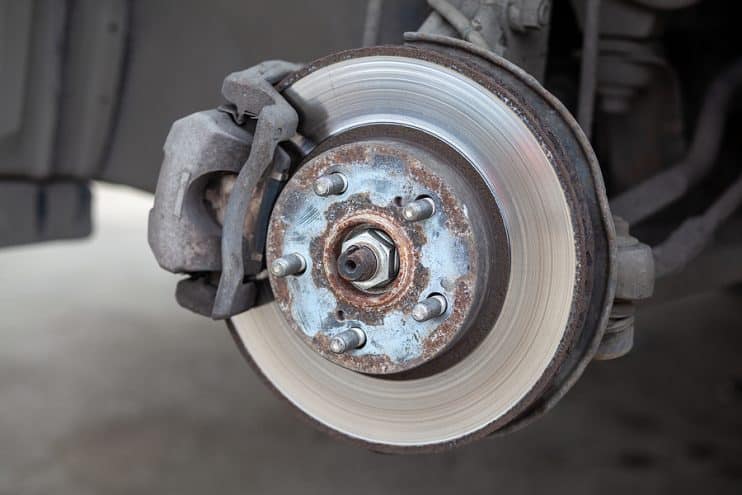
Credit: www.breakerlink.com
A concise explanation can be sufficient; the value is in its connection to evidence. If diagnosis is incomplete, the estimate should say so rather than presenting a list of possible causes as confirmed failures. After repair, the acceptance checks must cover the work performed and the original complaint. Brembo’s fitting guidance includes attachment and hydraulic verification within its installation process.
Use the actual vehicle procedure for leakage, pedal condition, release and any parking-brake completion. Controlled functional testing follows successful stationary checks. A warning cleared from a screen or a wheel that briefly turns on a lift does not certify every part of the completed repair. Keep the findings and fitted part numbers with the invoice.
If the same complaint returns, compare the new evidence with the earlier diagnosis instead of assuming the replacement part must be innocent or defective. Multiple problems can coexist, and a correctly repaired fault may not have been the only one. The useful conclusion is specific: the caliper has a confirmed repairable defect, requires replacement under its criteria, passes the relevant checks, or still needs diagnosis. That is a stronger basis for action than a symptom list alone.


Automotive reference information. Confirm specifications in the manual for your exact vehicle. Original replacement guides link to their research sources. About us