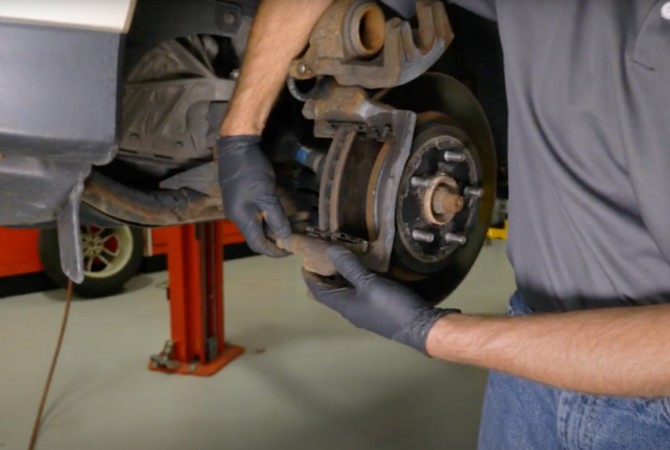

Check a brake caliper as part of the complete brake assembly, beginning with identification and visible condition before moving to controlled mechanical and hydraulic tests. Look for evidence of leakage, damaged protection, insecure mounting, abnormal pad wear and restricted movement. No single photograph, wheel-spin count or pad measurement proves that every part of a caliper is healthy. The useful result is a documented finding that supports continued service, a specific repair or further diagnosis.
An owner can record symptoms and inspect accessible areas without dismantling the brake. Removing wheels, lifting the vehicle, moving components or testing hydraulic release requires suitable equipment and the vehicle’s procedure. Do not crawl under a car supported only by a jack or open a hot brake circuit to see what happens. If there is a fluid leak, reduced braking, severe pulling, smoke or insecure hardware, stop using the vehicle and arrange safe assessment.
This guide gives an inspection order and explains what each stage can establish. It does not supply universal tolerances, tightening settings or permission to force a piston. Those details follow the fitted brake design. A front floating caliper and a rear assembly with an electronic parking brake cannot be checked through an identical set of movements.
Before authorizing parts, ask which observation or test identifies the problem. A report that says only bad caliper leaves important questions unanswered. A stronger record states the affected wheel, component condition, test performed and reason for the repair decision. That record also provides a useful comparison if the complaint returns.

Credit: www.carparts.com
Identify the assembly and define the inspection scope
Record the vehicle, model year, axle and relevant brake package. Check whether the installed brakes match the expected factory equipment or an aftermarket conversion. Use the service illustration and part markings to identify the caliper arrangement. A vehicle model can have several brake options, so a general parts picture may not describe the actual assembly. Resolve that difference before choosing inspection methods or replacement parts. A floating caliper relies on guide elements as well as its hydraulic piston.
A fixed caliper has a different mounting and piston arrangement. Rear brakes may combine a parking-brake mechanism with the caliper or use a separate parking brake. Those distinctions determine what needs movement checks and what must first enter a service state. Do not interpret resistance until you know which mechanism you are trying to move. Collect the complaint and service history before dismantling. Note whether the issue began after pad replacement, a hose repair, storage or an overheating event.
| Describe the affected wheel and whether the concern is noise, leakage, wear, poor release or an inspection finding without symptoms. Do not perform additional unsafe driving to refine the description. Existing observations are enough to plan the initial assessment. Define what the inspection must cover. A routine condition check during pad service is different from diagnosing an intermittent hot wheel or a newly low pedal. The latter may require checks beyond the caliper, including hoses, fluid circuit and parking-brake controls. |
Wagner’s brake-system checklist includes caliper hardware and the hydraulic path in its assessment. That system view prevents a replacement housing from becoming a substitute for locating the actual fault. Keep the owner’s observations separate from the technician’s findings. For example, hot left front wheel is an observation; retained hydraulic pressure or a seized guide is a diagnosis requiring evidence. This distinction helps avoid anchoring the inspection on a guessed part.
It also allows two findings to coexist, such as a damaged boot needing attention and a separate cause of vibration. Agree on documentation before work begins. Ask for measurements where relevant, photographs of damage where accessible and the service limits used to judge the result. An inspection can legitimately end with further testing needed. That is more useful than a confident diagnosis unsupported by what has actually been checked.
Inspect visible condition, pad patterns and mounting
Begin with a clean enough view to identify what is wet, damaged or out of position, using approved cleaning methods where necessary. Fluid can migrate across an assembly, so its lowest drip point is not necessarily the leak source. Inspect the hose connection, bleeder region and piston area as the procedure permits. Record whether moisture is fresh leakage or residue requiring further confirmation. Do not taste an unknown liquid or declare it harmless from colour alone. Check protective boots and sleeves for visible damage, displacement or deterioration. These components protect working surfaces but do not all serve as hydraulic pressure seals. A torn boot is a condition to assess, not automatic proof that a complete caliper must be replaced.
Equally, an intact outer boot does not certify the hidden seal or piston. Inspection must follow the relevant component criteria. Look at mounting hardware and the surrounding support structure. Confirm that required fasteners are present and that the assembly matches the service diagram. Evidence of movement, damaged threads, a broken bracket or an improvised attachment needs proper assessment. Do not simply tighten everything that can be reached. The correct part, thread condition and tightening procedure matter as much as the appearance of the bolt head.
Inspect hose, cable and wiring routing without pulling on the components. Note twists, chafing, strain or contact with moving parts. A hose may look acceptable externally while still requiring hydraulic investigation for a release complaint. Conversely, visible damage deserves attention even if no symptom has yet been reported. Record the finding separately from any conclusion about the caliper itself. Compare the inner and outer pads and, where appropriate, the opposite wheel using the specified inspection procedure. Uneven or tapered wear can direct attention to pad fit, guide movement, piston behavior or another cause.
It is not a one-to-one diagnostic code. HELLA links restricted guide movement with uneven wear and heat-related problems, supporting inspection of the guides rather than automatic replacement based on one worn pad. Assess pad supports and hardware for the condition and freedom required by the design. Corrosion under hardware, an incorrect clip or a poorly fitting pad can affect operation without being an internal piston failure. Keep friction surfaces free from lubricant and other contamination during inspection. Do not file or grind components to make uncertain parts fit unless the actual service procedure authorizes the operation. Record disc condition and applicable measurements separately.
The rotor and caliper interact, but a measured rotor defect is not proof that the caliper caused it. If overheating occurred, inspect the affected friction parts and nearby components as required. A replacement caliper alone may not address the consequences of the event. Treat appearance cautiously. A rusty exterior can coexist with serviceable internal components, while a freshly painted assembly can hide unresolved damage. Cosmetic cleanliness is useful for visibility but is not the acceptance criterion. The decision rests on documented condition, permitted movement and functional checks.
Use controlled tests and record the repair decision
Mechanical checks should follow the procedure for the exact assembly. Where a floating caliper uses guide pins, establish their condition and intended movement without damaging boots or sliding surfaces. Some designs have specific lubrication requirements and others include dry-running elements. Do not add grease during inspection merely to make a resistance problem disappear temporarily. Identify whether the part is dirty, damaged, incorrectly assembled or unsuitable before deciding on the remedy.
Piston checks require the correct retraction method. A rear integrated parking-brake caliper may need rotation, adjustment or an electronic service state. Resistance to the wrong tool or method cannot establish that the piston is seized. Stop when movement is abnormal and recheck the design and instructions. For the distinction between normal operation and service reset, see how piston retraction works.
Do not use unrestricted compressed air, a loose electrical supply or improvised force to test an assembled brake. A movement test should have a defined setup and result that the procedure explains. If the necessary equipment is unavailable, the test remains incomplete rather than passed. A piston that can be forced inward is not automatically free from leakage, damage or release problems. For a dragging wheel, distinguish mechanical restriction from hydraulic pressure that remains applied.
A qualified technician can perform the appropriate pressure or controlled release checks and then restore the system as required. The result helps locate the cause; opening a bleeder is not itself a repair. Read hose restriction and caliper drag for the narrower diagnostic question. Check the parking-brake function separately where relevant. A released cabin switch or lever does not by itself prove correct movement at the wheel.
Cables, actuators and internal mechanisms may have their own inspection and setup requirements. Likewise, a service-brake pedal check does not complete an electronic parking-brake initialization. Document the functions that were actually tested. Assess hydraulic integrity under the prescribed stationary conditions.
Look for leakage and abnormal pedal behavior, and follow the required bleed or commissioning process if the circuit was opened. Do not substitute a generic pedal-pumping routine for the vehicle procedure. An unresolved low pedal, fluid loss or warning requires further work before movement. The inspection should produce one of three practical outcomes.
Serviceable means the required checks passed within their scope, with normal maintenance continuing. Defective means a specific confirmed condition requires repair or replacement. Undiagnosed means the evidence is insufficient and the next test should be identified. None of those outcomes is improved by replacing parts simply to avoid documenting uncertainty.
For a confirmed defect, ask whether the manufacturer supports a component repair and whether the remaining assembly meets its limits. Brembo describes repair kits for supported caliper components as well as replacement options. Availability of a seal or guide kit does not establish that every damaged housing can be saved. The repair plan must match both the fault and the inspected condition.
After repair, verify the original complaint and complete the required attachment, routing, leakage, pedal and release checks. Brembo’s fitting guidance includes post-installation hydraulic checks within its procedure. Apply the vehicle-specific process and perform controlled functional verification only after stationary checks pass. A quiet wheel on a lift is not the entire return-to-service assessment.
Retain a report identifying the wheel, findings, measurements, fitted parts and final checks. This makes future inspections more informative and helps distinguish a recurring fault from a new one. Checking a caliper is therefore a sequence of identification, observation, testing and verification. The objective is a justified decision about the brake’s condition, not a quick verdict from one symptom or appearance.


Automotive reference information. Confirm specifications in the manual for your exact vehicle. Original replacement guides link to their research sources. About us