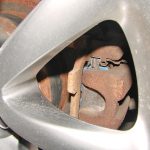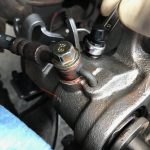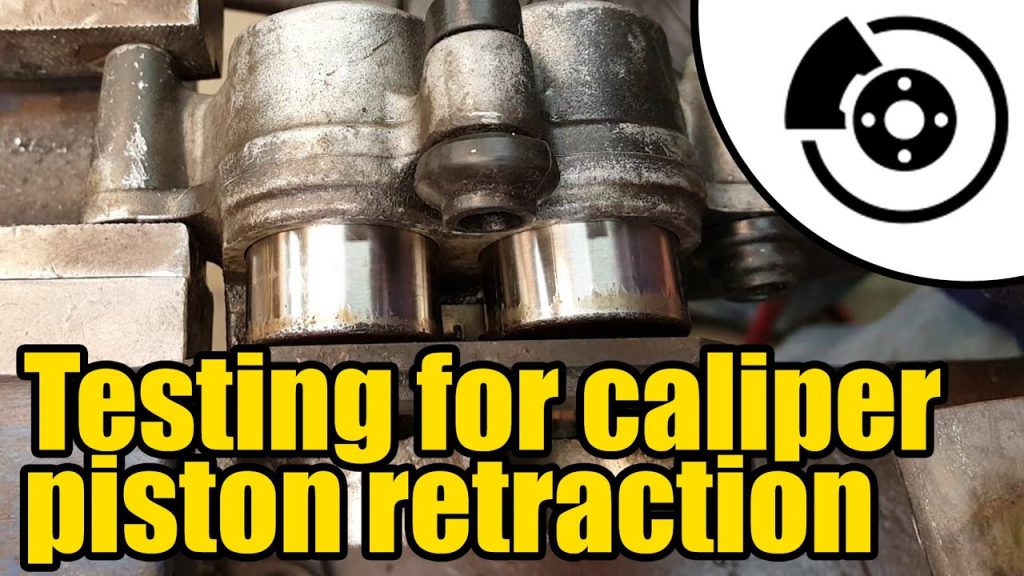

In a conventional hydraulic disc-brake caliper, the piston moves outward under fluid pressure and returns a small amount when that pressure is released. Elastic behavior of the piston’s sealing ring contributes to that return. The piston does not normally travel all the way back into the caliper after each stop. That small operating movement is different from the much larger service retraction needed to install thicker new pads. This distinction answers several common questions. A piston that remains visibly extended as pads wear is not automatically stuck.
A rear piston that requires a special service method is not necessarily defective. Conversely, a hot dragging wheel cannot be declared normal merely because disc pads run close to the rotor. Understanding how release is designed to work helps separate expected behavior from a fault that needs diagnosis. The explanation below applies to the basic hydraulic principle, with important differences for floating calipers, fixed calipers and integrated parking brakes. It is not a universal instruction for forcing a piston inward. If the brake is leaking, smoking, dragging severely or producing an unsafe pedal, stop using the vehicle and arrange assessment rather than experimenting with the mechanism.
Normal brake release is a small movement, not a full reset
When the brake circuit applies pressure, force acts on the caliper piston and the pads clamp the disc. The assembly’s configuration determines how both pads are brought into contact. In a floating caliper, the body moves through its guide arrangement as part of that action. In a fixed design, pistons act from the relevant sides of the fixed body. Neither arrangement needs the pistons to disappear fully into their bores when the driver releases the pedal. The system must then let the braking force fall away so that the wheel is not held under excessive drag. In the conventional hydraulic piston arrangement, the seal deforms slightly with piston movement and tends to recover as pressure drops.
That elastic recovery helps move the piston back by a small operating amount. Brembo identifies piston return and accommodation of pad wear among the sealing ring’s functions. The seal is therefore more than a barrier against fluid leakage. The exact release behavior is designed around the assembly, including its seals, geometry and any additional hardware. Do not assign every caliper one universal visible gap or retraction distance. The amount is small enough that casual observation through the wheel is not a reliable measurement. A pad can remain close to the disc without the brake being hydraulically applied at braking force.
| The proper assessment follows the vehicle’s release and drag checks. Normal release should also not be confused with a dramatic suction action pulling the piston to its original new-pad position. Hydraulic pressure must be able to fall appropriately, and the components must move as intended. The small return does not undo all of the piston’s outward adjustment over the life of the pads. If it did, the system would need to take up a large unnecessary distance every time the brakes were applied. This explains why the first question about an extended piston should be its context. Is the assembly operating with worn pads, being serviced for new pads or being investigated because it will not release? |
Those situations call for different conclusions. A still photograph cannot reveal the pressure condition, operating clearance or reason for the piston’s position. It is evidence of position only, not a complete diagnosis. For example, a technician replacing worn pads may find the piston farther outward than it will sit with the new set installed. That alone is expected in the service context. A driver reporting a burning smell and one wheel that remains unusually hot has a release complaint requiring a separate investigation. The same word retraction describes both conversations, but the movements and tests are not the same.
Seals, wear adjustment and caliper movement work together
The hydraulic sealing ring and the outer protective boot have different duties. The pressure seal contains brake fluid around the working piston and participates in its movement behavior. A protective boot helps exclude contamination from the exposed area. Fitting a new outer boot does not automatically repair a hydraulic leak, and seeing an intact boot does not prove the hidden seal is healthy. Identify which component is being discussed before interpreting a repair recommendation. The seal’s shape, material, groove and relationship with the piston are engineered as an assembly. As pads wear and more outward position is needed, the piston can advance relative to the seal rather than being pulled back through its entire accumulated travel. The result is wear accommodation alongside a small release movement. This is a simplified explanation of the conventional mechanism, not permission to alter a seal groove or substitute a similar-looking ring.
A rebuild must preserve those designed relationships. A generic rubber ring that fits the bore visually is not an approved piston seal. Neither is a surface made shiny by arbitrary polishing necessarily within the allowed condition. The correct repair parts and inspection criteria determine whether a caliper can be rebuilt. Our rebuild-kit compatibility guide explains how that decision differs from merely obtaining new seals. Fluid and assembly-material compatibility matter because the seal must retain its intended properties. Do not inject an unknown lubricant under the boot to make a reluctant piston move. A temporary change in friction does not establish a sound seal, correct method or safe release.
For the separate assembly-material question, see piston lubrication and hydraulic compatibility. Normal elastic return is not maintained by periodically adding arbitrary grease. On a floating caliper, guide movement and pad fit are part of the release picture as well. A piston can be capable of moving while the outer pad or caliper body remains constrained by another component. HELLA describes how restricted guides can affect wear and heat in floating calipers. That is why a dragging brake cannot be diagnosed by looking only at piston travel. The full wheel-brake assembly needs to function correctly. Pad support hardware must also suit the design and be installed correctly.
Do not remove a spring or clip simply because it seems to oppose movement, or add one from another assembly to create a stronger return. Some brakes use additional pad-control or retraction features, and those must be evaluated through their own instructions. The basic seal explanation should not be turned into a claim that every visible spring is unnecessary. Nor is excessive retraction automatically desirable. If the pads or pistons must travel too far before applying, pedal response can be affected. The goal is the designed release and operating clearance, not the largest possible gap. A low pedal or unusual first application after movement may require investigation of several possible causes. It cannot be solved responsibly by modifying return behavior without identifying the system and fault.
Why service retraction and parking-brake release differ
Installing new pads requires space for thicker friction material. The piston therefore needs a service movement much greater than its ordinary release after one brake application. On an appropriate plain hydraulic design, the service procedure may call for controlled straight retraction with a suitable tool. That does not mean every piston should be pushed straight back. The correct method must be identified before force is applied. An integrated mechanical parking brake adds an internal adjustment mechanism. Depending on the design, the service method can involve controlled rotation, a separate adjuster or another prescribed operation.
HELLA illustrates multiple integrated-handbrake arrangements and differing adjustment methods. A universal clockwise rule or a bigger clamp cannot replace the application-specific instruction. Resistance to the wrong method is not proof of seizure. An electronic parking brake adds a control and service-state requirement on relevant systems. TRW’s service-tool documentation describes supported maintenance functions for covered EPB applications. Entering a maintenance state and moving the hydraulic piston are related but distinct steps. The parking-brake motor does not necessarily retract the piston fully just because a service command was accepted.
Follow the actual vehicle sequence for mechanical movement and completion. Releasing the parking brake for normal driving is also not the same as preparing it for pad replacement. Automatic activation logic, internal adjustment and the necessary final initialization can matter during service. Do not directly power a motor from loose wires or remove its mechanism as a universal shortcut. The vehicle needs to be secured independently while the parking brake is unavailable. Our integrated parking-brake retraction guide addresses those service decisions. For a brake that will not release after pedal application, hydraulic pressure retention must be considered separately from mechanical binding.
A restricted hose or another upstream condition can keep force at the wheel. Wagner’s inspection guidance distinguishes hose restriction from internal caliper binding through controlled checks. Those are workshop tests that require safe fluid handling and restoration of the system. Loosening a bleeder and continuing to drive is not a repair. Mechanical causes also require identification rather than a guess. The piston, guide arrangement, pad supports or parking-brake mechanism may prevent the intended movement. Corrosion or damaged protective parts can be relevant, but their condition must be inspected against the service criteria.
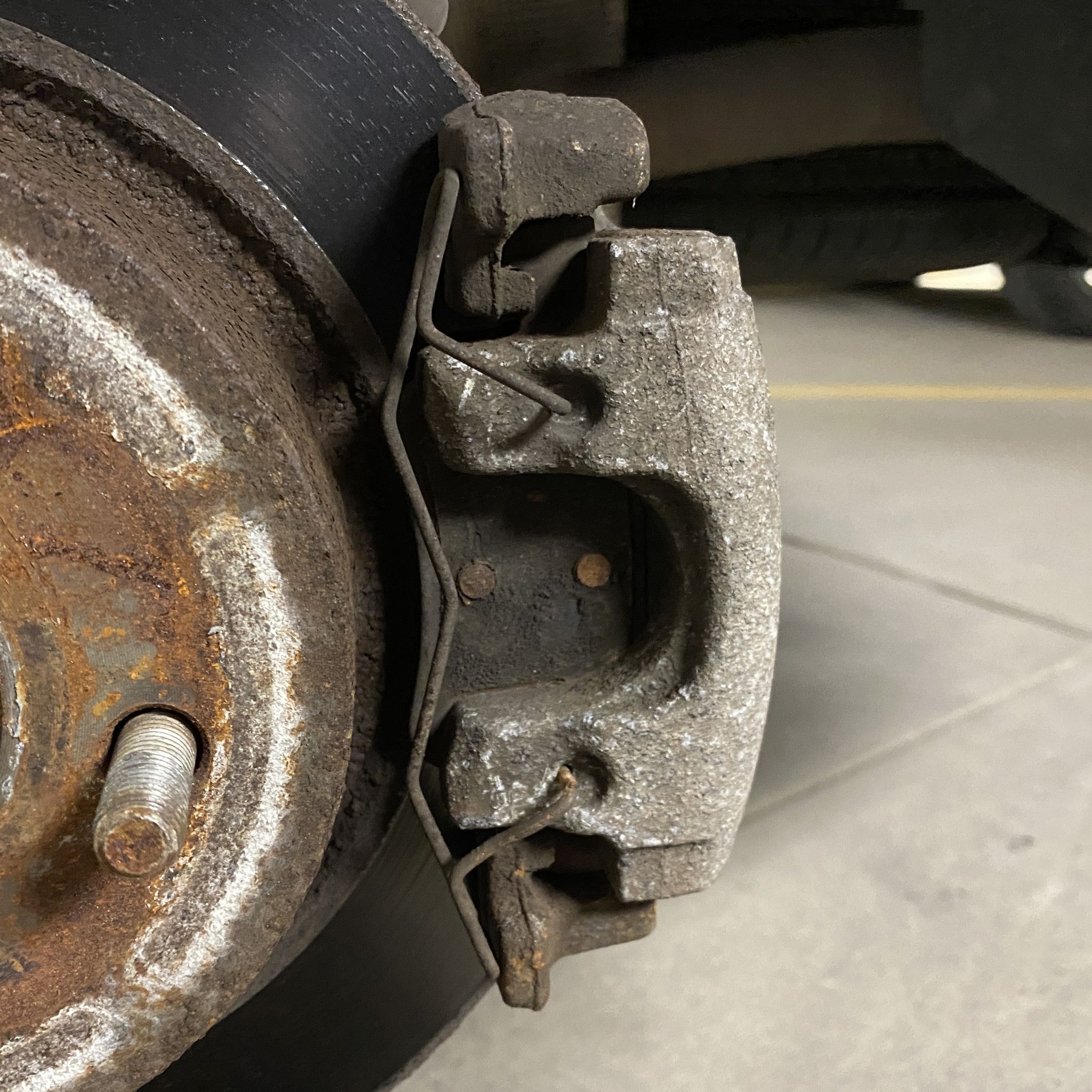
Credit: www.popularmechanics.com
A hard-to-retract piston during a pad change is a clue only after the correct service method has been confirmed. Extra force can damage an assembly without explaining the original resistance. Fluid returning during service retraction can affect reservoir level, so the specified fluid-handling procedure matters. Do not assume that spilling fluid is unavoidable or open a hydraulic fitting simply to make the tool easier to turn. If the circuit is opened, its required bleeding and leak checks become part of the job. Any unexpected resistance or fluid behavior should be investigated before assembly continues. After the prescribed service movement and reassembly, normal pedal condition must be restored and verified before the vehicle moves.
Complete any required parking-brake exit or initialization process, inspect for leaks and confirm correct release. A successfully compressed piston is only one completed step, not proof that the brake is ready for the road. An unresolved warning, abnormal pedal or continued drag requires further work. When discussing a repair, use precise language: ordinary release, wear accommodation, manual service reset and parking-brake adjustment describe different functions. Ask which one was abnormal and what observation demonstrated it. That makes the explanation more useful than saying the piston would not go back. The expected behavior is a small controlled return during normal braking and a separate, correctly performed reset when service requires it.


Automotive reference information. Confirm specifications in the manual for your exact vehicle. Original replacement guides link to their research sources. About us