
Worn shocks or struts can contribute to poorly controlled body movement, changes in handling and some tire-wear patterns. However, a bumpy ride, a clunk or a damp shock body does not identify a failed damper on its own. Tires, springs, mounts, steering parts and alignment can produce overlapping complaints.
A useful assessment combines the driver's observations with inspection of the whole relevant suspension. If the vehicle has become unstable, a component is visibly broken or the tire is damaged, stop using it until it is assessed.
Do not perform an emergency braking or swerving experiment to decide whether the shocks are bad. This guide explains which observations help and which conclusions they cannot support.
Look for a change in body control
Compare the current behavior with the vehicle's usual response on familiar roads, rather than with a different model. A firmer or softer design is not automatically a fault. Note whether the change was gradual or followed an impact, tire replacement or suspension repair. That timeline helps a technician separate wear from a recent change in setup or damage.
Repeated movement after an ordinary bump
A vehicle that continues oscillating after a normal road disturbance may need its damping and related parts checked. The observation is more useful when you describe the road, load and speed at which it occurred. Do not deliberately hit a pothole or speed bump to reproduce it. Poor tire condition or an incorrect load can also affect the response.
Excessive pitch under normal braking
More forward body movement than usual during ordinary braking can be relevant, but the amount depends on vehicle design and operating conditions. It is not a standalone damper test. Record whether the complaint began with other changes, such as uneven loading or new tires. A braking fault and a suspension-control complaint also need to be distinguished rather than treated as interchangeable.
Unexpected sway in normal cornering
Describe sway noticed during routine use without attempting an aggressive cornering test. Loading, tire pressures, springs, anti-roll components and dampers can all deserve inspection. A new feeling of instability is a reason to reduce use and seek assessment, not to explore the limit of grip. The technician should know whether the concern occurs in both directions or mainly on one road surface.
A strut includes more than a damper
A strut assembly can combine the damper with mounting and spring-related components. Noise or steering resistance near it may involve a mount or bearing rather than the damper's internal function. Ask which component the diagnosis identifies. A recommendation for a complete assembly should explain why that scope is appropriate instead of using the word strut for every possible fault.
Tire wear needs a broader inspection
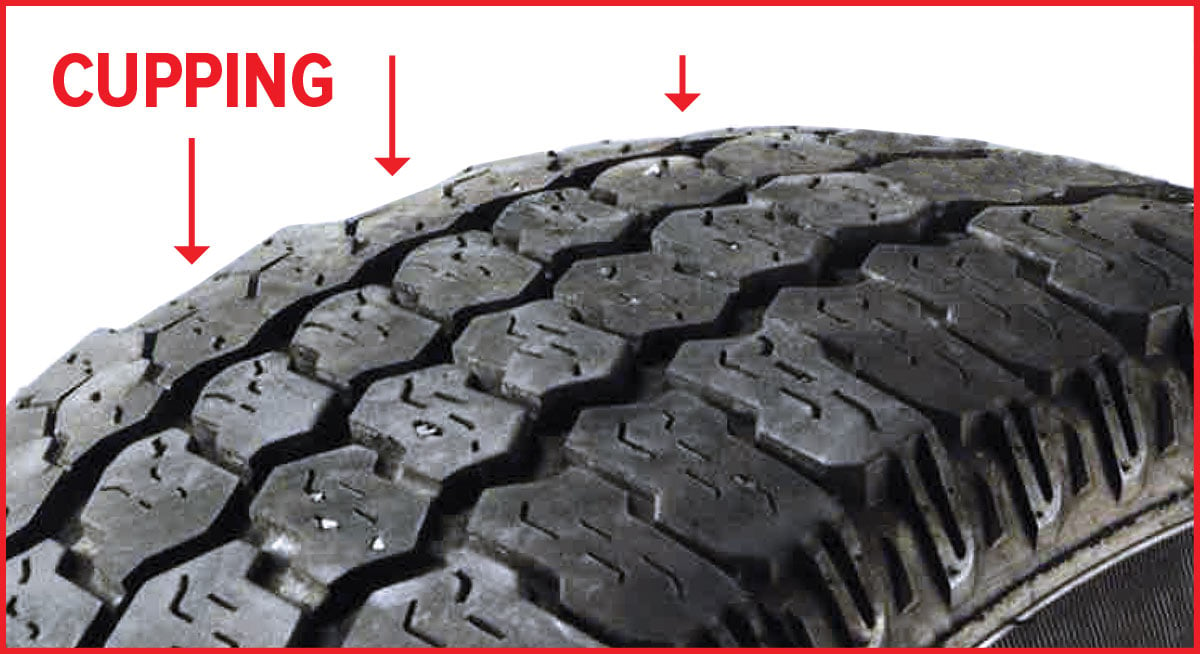
Uneven tread wear can support a suspension investigation, but it does not prove that shocks are the cause. KYB: shock and strut installation and inspection guidance identifies several influences on tire wear, including pressure, alignment and other worn components. Inspect the tires and steering system rather than replacing dampers from a photograph of cupping alone. Keep the old tire observations available if new tires have already been fitted.
A light film differs from an active leak
An oily appearance needs interpretation. Monroe: weepage versus leakage service bulletin distinguishes limited weepage from a wet, leaking unit using illustrated examples. Do not equate every trace of oil with total damper failure. Conversely, do not dismiss a substantial leak as normal simply because small amounts can be acceptable. The unit's condition and the applicable manufacturer's criteria should guide the decision.
Steering vibration is not a damper diagnosis
A vibration felt through the wheel can involve tires, wheels, brakes or steering components. Note whether it follows road speed, braking or a particular surface. That distinction helps direct the inspection. Replacing a strut without checking those possibilities can leave the original complaint unchanged. Avoid using a generic vibration checklist as proof that a particular suspension part needs replacement.
Inspect only from a safe position
Look for obvious damage with the car parked securely and without placing yourself underneath an unsupported vehicle. Do not reach around a loaded spring or moving suspension to check for looseness. A workshop can safely unload or support components as required by the relevant procedure. Photographs taken from an accessible position can still provide useful evidence for the service appointment.
Bent, broken or displaced parts need attention
A visibly bent damper, broken mount or displaced component warrants professional assessment. An impact can damage adjacent parts even when only one item is obvious. Do not assume that replacing the most visible component completes the repair. Tell the workshop about the impact and any subsequent change in tracking, ride height or tire clearance.
Identify where the fluid originates
A wet suspension area can be contaminated by another leak or by material from nearby components. The source needs to be identified before a damper is condemned. A technician may clean and recheck the area using an appropriate method. Record the initial condition, but do not scrape protective coatings or dismantle a dust cover merely to obtain a clearer photograph.
Check the whole tread, not one photograph
Tire inspection should include wear pattern, condition and pressure according to the vehicle guidance. A worn edge and a repeating scalloped pattern are different observations, and neither should be interpreted without context. Do not continue driving on an unsafe tire while waiting to prove a suspension theory. Have the tire problem addressed together with the suspected underlying cause.
Use noise as a location clue
A clunk or rattle can help locate an area that needs inspection, but sound travels through the body. Describe whether it occurs over a bump, while steering or during a change in load. Avoid reaching into the wheel area while someone turns or rocks the vehicle. A repairer can reproduce and isolate the complaint with appropriate equipment.
Clunks may come from attachments or adjacent parts
A clunk near a strut can involve a mount, link, joint or other attachment. Ask whether the noise source has been demonstrated before authorizing a damper replacement. A new part installed against a worn neighboring component may not remove the sound. The work order should separate the driver's complaint from the component confirmed faulty.
Rattles require the same evidence discipline
A rattle after suspension work can justify checking the installation and disturbed components. It does not automatically mean the new damper is defective. Provide the date and scope of recent repairs, including any tire or brake work. The technician should follow the proper inspection sequence rather than retightening unidentified fasteners to see whether the noise disappears.
Understand the limits of informal tests
No single driveway observation establishes complete suspension performance. Vehicle design, tire stiffness and other components influence how a car responds to a push or road disturbance. A professional assessment combines several findings and compares them with the applicable specifications. Ask how the proposed test distinguishes a failed damper from the other plausible causes.
The bounce test is not a universal pass or fail rule
Pushing down on a body corner and counting movements cannot provide a universal service limit for every vehicle. It may reveal an obvious loss of control in some circumstances, but a car that stops moving quickly is not thereby certified healthy. Do not damage bodywork or place hands near pinch points to perform it. Treat it as limited context rather than a replacement decision.
Do not create a hazardous handling test
Avoid deliberate hard braking, weaving or abrupt steering to assess the suspension yourself. If normal driving already suggests poor control, arrange inspection and discuss whether recovery is appropriate. A workshop road test should be conducted only when the vehicle is safe enough and with a defined purpose. The absence of a dramatic symptom on one short drive does not rule out wear.
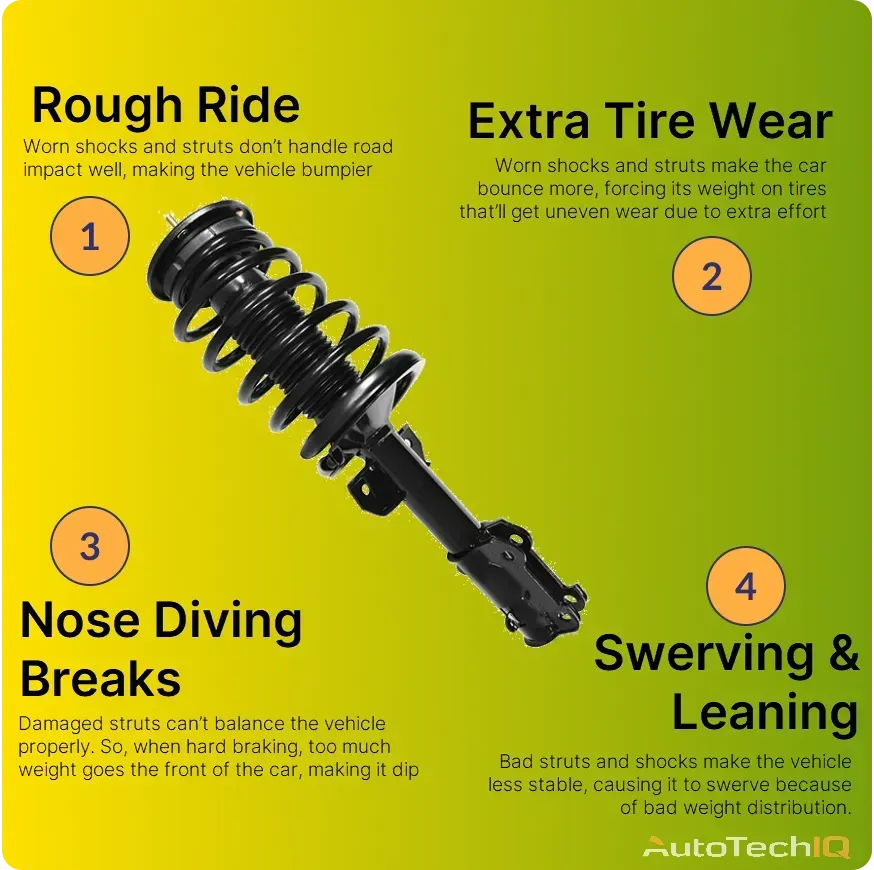
Credit: www.autotechiq.com
Consider why a part deteriorated
If a damper or mount needs replacement, ask whether a damaged boot, stop, attachment or nearby part contributed. A repeated failure shortly after repair deserves more investigation than another identical replacement. The condition of related components affects whether a new part will operate as intended. Preserve the history of previous replacements and the circumstances in which the fault returned.
Age and mileage provide context, not a diagnosis
Mileage can support a maintenance discussion, but it is not a universal failure threshold. Loading, road conditions and the actual component matter. Do not promise that every damper will last a fixed distance or require replacement at the same number. Inspect the vehicle's condition and follow applicable manufacturer guidance rather than relying on age alone.
Impacts and loading can change the investigation
A new complaint after a pothole or collision should include checks for impact damage, not just ordinary wear. Likewise, symptoms that appear mainly with a load require information about that load and the vehicle's limits. Do not use an accessory damper as a way to ignore a broken spring or an overloaded vehicle. Correct the identified cause.
Recent installation deserves a specific review
If the behavior began immediately after replacement, verify the installed part numbers and the work performed. Mount orientation, required tightening conditions and any alignment or calibration steps are application-specific. Do not supply a generic torque value from another vehicle. Ask the installer to compare the job with the manufacturer's procedure and document what was checked.
What to request from a professional assessment
Ask for the complaint to be recorded, the tire and suspension findings explained, and the defective component identified. A useful explanation distinguishes visible damage, excessive movement, active leakage and a performance concern. Stellantis: shock absorber inspection and misting guidance also illustrates that manufacturer inspection guidance can distinguish normal misting from a leaking shock. Its examples should be applied only within their documented context.
When use should stop
A broken component, severe instability, unsafe tire contact or sudden major change in control needs prompt assessment before normal driving continues. The appropriate transport method depends on the fault and vehicle. Do not ask a generic article to provide a safe remaining distance. Tell the workshop exactly what happened and follow its advice about getting the vehicle inspected.
Review the proposed repair scope
A quote should identify the parts, why they are being replaced and the required completion work. Ask whether associated mounts, boots or stops are damaged and whether alignment or other checks are required for the application. Avoid assuming that every related part must be renewed or that only the visibly leaking item can matter. The inspection should support the scope.
Credit: www.lesschwab.com

Credit: www.youtube.com
Confirm the original complaint after repair
Keep the before-and-after observations together: noise, body movement, tire condition, leaks and the circumstances in which each occurred. A completed repair should address the confirmed fault and any required checks, not simply install new parts.
If the original symptom remains, return with that information instead of assuming more dampers are needed. Do not confuse light surface misting with an active leak, or a tire-wear pattern with a component diagnosis.
Evidence from several checks is more useful than a single dramatic symptom. The goal is controlled, predictable vehicle behavior with the cause of the complaint explained.


Automotive reference information. Confirm specifications in the manual for your exact vehicle. Original replacement guides link to their research sources. About us


