
Replacing spark plugs does not, by itself, establish that the ignition coils need replacement. Decide whether to include coils by checking the vehicle's instructions, the condition and diagnosis of the ignition system, and any application-specific repair requirements. A scheduled plug change on a normally running engine is a different situation from repairing a failed coil. Replacing both can be justified, but the reason should be stated clearly on the estimate.
There are three separate questions to answer: Are the plugs due or damaged? Has a coil or related component been shown to be faulty? Would additional preventive replacement be worthwhile while access is already available? Keeping those questions separate makes a repair proposal easier to assess. A package advertised as a tune-up may combine scheduled work, necessary repairs and optional parts without explaining which is which.
Coils generate the high voltage used by the plugs, but the physical arrangement varies. Niterra's coil overview includes individual and shared-spark technologies. Therefore, do not assume every engine has one separately replaceable coil per cylinder. Identify the system before comparing a quote for one coil, a coil pack or a complete rail assembly.

Credit: www.youtube.com
Read the maintenance requirement before choosing a package
For a concrete example, the 2025 Mazda CX-5 maintenance schedule for U.S.A. and Puerto Rico lists spark plug replacement at 40,000 miles for SKYACTIV-G 2.5T and 75,000 miles for the non-turbo application shown. It does not pair those entries with routine replacement of all ignition coils. Those figures belong to that manual and market, not to every Mazda or every gasoline engine.
The absence of a coil interval in that example means the plug interval cannot be used as evidence that the coils are simultaneously due. It does not promise that the original coils will last indefinitely. Look up the exact year, engine, market and any applicable service information for your car. A manufacturer's specific repair instruction carries more weight than a generic mileage estimate from a parts listing.

Credit: www.youtube.com
A coil fault needs evidence beyond a familiar symptom
Rough running, hesitation or a warning light may bring the ignition system under suspicion, but they do not identify every failed part. DENSO's failure guidance describes several possible causes and advises checking the system before replacement. Ask what finding supports the diagnosis: a damaged assembly, an electrical test interpreted against the proper specification, or another documented result.
DENSO also identifies oil leakage, water intrusion, connection problems and supply faults as possible contributors. If contamination or a wiring problem caused the failure, a new coil alone may leave the cause in place. The estimate should explain any associated repair. A cylinder number on a scan report is a location clue; it should not become an automatic order for a coil and plug on that cylinder.
Why worn plugs matter to coil health
Delphi explains that an excessive or worn plug gap increases voltage demand, potentially stressing the coil. This supports inspecting the plugs when a coil fails and keeping scheduled plug maintenance current. It does not prove that every coil exposed to an old plug has already suffered permanent damage, nor that replacing the whole set is always necessary.
DENSO's plug precautions describe electrode wear and application-dependent service life. Use the specified replacement plug instead of trying to compensate for a suspected weak coil with a different heat range or an improvised gap. New plugs can address worn plugs; they cannot repair damaged coil insulation, a broken connector or an unresolved power-supply fault.
One coil or a complete set is a separate decision
Where the system has individually serviceable coils, the confirmed fault may involve one unit. Where multiple outputs share an assembly, the service part may necessarily cover more than one cylinder. Establish which arrangement is fitted before treating a higher parts count as either sensible prevention or unnecessary work. The component boundary, diagnosis and manufacturer's procedure should explain the proposed scope.
Equal age is a consideration, not a failure test
Coils installed together may have similar service histories, but age alone cannot tell you which will fail next or when. There is no universal 100,000-mile replacement rule in this guide. Several recent failures, visible deterioration or repeated difficult access can support a broader discussion, provided the technician still investigates any common cause rather than assuming old age explains everything.
Testing must match the coil design
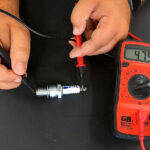
Delphi's diagnostic guidance places visual and system checks before its resistance procedure, which it describes for conventional coil designs. Do not apply one online resistance number to all modern coils or assume a basic meter reading proves an entire assembly healthy. A suitable test depends on the wiring diagram, component electronics and the conditions under which the fault occurs.
Boot kits and rail assemblies can change the parts list
A quote containing boots is not necessarily a quote for new coils. Standard's product program includes coil-on-plug boots and kits containing related contacts. If a serviceable boot is damaged, establish whether the proposed repair addresses that component or whether the coil itself is defective. Request the exact part description instead of comparing totals built from different contents.
Check whether the boot is serviceable
Not every boot should be detached. Delphi's assembly precautions tell installers not to disassemble its coil boot, because internal pieces can be lost. Follow the instructions relevant to the installed assembly. The existence of a replacement kit for another product does not override those instructions.
Our spark plug boot explanation distinguishes the insulating sleeve, internal contact and electrical coil. That distinction is useful when a shop proposes replacing a torn boot or a contaminated lead. A small service part can be the correct repair when the design permits it, but it cannot substitute for a failed coil winding or driver.
A documented GM rail-coil example
The NGK U6026 bulletin covers listed GM 2.2L Ecotec applications and says that replacing the coil assembly requires the ignition control module and coil-on-plug boots too. Its U6026 product includes the module and four boots. This is a concrete reason why an appropriate repair can involve more components than a single coil-shaped part.
Keep that instruction within the bulletin's application list and confirm current fitment. It is not a rule for every GM engine, every rail coil or every routine plug service. Also distinguish included components from separately billed ones when comparing quotes. A bare assembly and a kit containing a module and boots may have different prices because they contain different parts.

Credit: stevesautorepairva.com
Compare the additional cost while access is available
If reaching the plugs requires substantial disassembly, replacing other aged components during the same visit may avoid paying for access again. Standard's repair recommendations, for example, favor replacing coils on an inaccessible bank when intake-plenum removal is required. Treat this as a preventive-repair recommendation to evaluate for the actual vehicle, not as a diagnosis that every coil behind a manifold has failed.
Ask for two itemized options where both are mechanically acceptable: the necessary repair with scheduled plugs, and that work plus additional preventive coils. Compare the difference in parts, added labor and required seals, rather than adding two complete standalone job prices. Also ask how much repeat access would cost if another coil failed later. The probability and timing of that future failure remain uncertain; do not present possible labor savings as guaranteed savings. A recently replaced, correct coil deserves separate consideration from untouched older units.
Correct parts and careful installation still matter
A larger parts order cannot compensate for installation errors. DENSO's coil instructions emphasize orientation and alignment with the spark plug; misalignment can cause damage. The vehicle procedure also determines how the ignition is disabled and what must be removed for access. This is particularly relevant when an engine can restart automatically. Do not diagnose it by pulling live ignition components.
Match the actual application
Record the engine identity, plug specification and coil part number before approving substitutes. Matching the connector shape or the word iridium is insufficient. Check any replacement-number guidance with the vehicle or parts manufacturer, and clarify what the warranty covers. Avoid assuming that an advertised higher-output coil improves a standard engine or eliminates the need to investigate a recurring fault.
Verify the details disturbed during the job
The plugs need their specified installation procedure, while coil fasteners and harness connectors have their own requirements. NGK's plug guidance discusses torque, thread lubrication and fine-electrode handling; it does not supply a universal setting for every plug. Confirm correct seating, intact connectors and the specified treatment of any serviceable boot rather than applying the same grease or tightening method to every joint. The question of whether new plugs need adjustment is addressed in our preinstallation gap guide.
Do not leave an active misfire unresolved
An urgent running fault should not wait for the next convenient plug-service date. Mazda's warning-light guide identifies flashing or red engine warnings as requiring immediate attention and advises a safe stop and assistance. Follow the vehicle's own warning instructions. Severe shaking, stalling or loss of power also calls for stopping safely and obtaining help rather than continuing to test the car under load.
After repair, the workshop should verify the result against the original complaint. A cleared warning light alone is not the same as demonstrating that the cause has been corrected. Record whether the problem occurred cold, hot, at idle or during acceleration so the technician can choose appropriate verification. If the fault returns, retain the prior diagnostic and parts records instead of starting another speculative replacement cycle.
A practical answer for the service estimate
For scheduled plug maintenance without evidence of a coil problem, begin with the specified plug service and inspection. For a confirmed coil failure, investigate the cause and assess plug condition and any required associated parts. Delphi recommends replacing plugs when repairing a failed coil; that recommendation runs in a different direction from saying all healthy coils must be replaced whenever plugs are due. For preventive replacement, document the access and condition reasons separately.
The useful final record states which parts failed, which were due by schedule, which were replaced preventively and why. Include the cylinder or bank, exact parts, related leak or wiring repairs and the verification performed. That gives the next technician evidence to work from and lets you judge what was purchased. The goal is a justified repair scope, not the smallest possible invoice or the largest possible replacement package.


Automotive reference information. Confirm specifications in the manual for your exact vehicle. Original replacement guides link to their research sources. About us