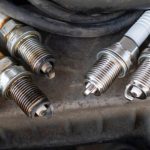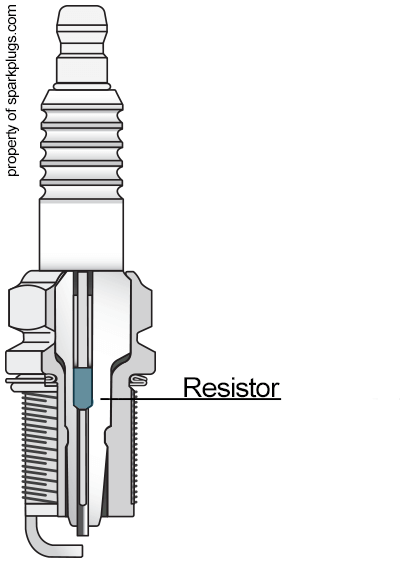

A resistor spark plug contains an electrical resistance element inside its current path to reduce interference produced when the plug fires. It still ignites the engine’s mixture; the resistor is part of controlling the electrical disturbance associated with that event. It is not a device for changing fuel type, a replacement for the ignition coil or a statement about electrode metal. Use the resistor specification intended for the engine’s ignition system rather than assuming that removing resistance makes a better plug.
The noise involved is electrical interference, often described as electromagnetic interference or radio-frequency interference. It is not necessarily a noise you can hear coming from the engine. NGK Australia explains that ignition interference can affect communication and vehicle electronic systems. That provides a reason for suppression even when the driver never listens to the radio. It does not mean every electronic fault or radio complaint is caused by a spark plug.
This distinction is useful when buying parts for a car, motorcycle, generator or small engine. The machine’s age or lack of a dashboard screen is not enough to select resistor versus non-resistor construction. A specification may involve the plug, cap and lead together. Start with the listed application and preserve the complete part number while investigating any proposed change. The following explanation separates what the resistor does from what it cannot tell you about fitment, heat range or condition.
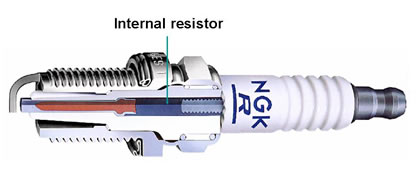
Credit: www.ngk.com.au
Understand the resistor before comparing plug types
DENSO’s construction guide places the suppressor between the terminal connection and the centre-electrode assembly. It describes a glass-and-copper-powder resistor construction in its plugs and explains that suppressing the current peak reduces electrical noise. That description concerns DENSO’s illustrated design; other manufacturers need not use identical materials. The important distinction for selection is the specified electrical function, not whether the internal element can be seen from outside the assembled plug.
A plug therefore has several independent characteristics. Its outside dimensions determine physical compatibility, its heat range concerns heat transfer, its electrode design affects the firing end, and its suppression features address electrical interference. A product can be both an iridium plug and a resistor plug. Neither label excludes the other, and neither alone establishes that the item is suitable for an engine. Keep these characteristics in separate columns when comparing two proposed replacements rather than treating them as competing categories.
Resistance values and markings need product context
NGK Canada’s FAQ describes its R-type plugs using a 5 kΩ ceramic resistor and recommends resistor plugs where appropriate for on-board electronics and manufacturer requirements. Five kilohms means 5,000 ohms. That description is useful context, but it should not become an acceptance limit for every plug ever manufactured. A nominal product value also should not be confused with a published diagnostic tolerance. Find the exact reference before deciding what any measured value means.
- Read the complete product code. A letter associated with a resistor in one manufacturer’s system is not a universal decoding rule. Keep the letters before and after it, the heat designation and any suffix when searching the official catalog. A listing that omits characters may hide another important specification difference.
- Keep the product family attached to a numerical claim. DENSO specifies a 5,000-ohm monolithic resistor for its Iridium Power range. That verifies the cited range; it does not prove that every DENSO design, every racing plug or every other brand has that value.
- Notice documented exceptions rather than rounding them away. DENSO’s identification table includes a 5 kΩ resistor designation and a separate 10 kΩ suffix example. These are particular coding entries, not an invitation to select a new resistance by changing a letter yourself.
The plug, lead and cap form a specified combination
Some systems incorporate suppression in more than one component. NGK’s wire-set explanation describes resistor cables used with resistor plugs and discusses why excessive resistance is a different issue from the intended suppression arrangement. Therefore, the presence of a resistive lead does not automatically justify replacing the specified resistor plug with a non-resistor one. A collection of individually familiar parts is not necessarily the original system configuration.
- For a lead-equipped engine, verify the wire set as well as the plugs. Record the actual cable reference and routing when a replacement preceded an interference complaint. Do not treat all black ignition leads as electrically equivalent or assume that a universal cut-to-length product reproduces the specified construction.
- For motorcycles and other cap-equipped applications, check the documented cap-and-plug pairing. Niterra describes applications using both resistor covers and resistor plugs. This is evidence that the combination can be intentional, not permission to add or remove suppression components arbitrarily.
- For a coil mounted directly over the plug, identify the complete coil, boot and plug arrangement before drawing conclusions from the absence of a visible long wire. The system still has a specified connection and insulation arrangement. Do not infer that a direct coil eliminates every need for suppression merely because the high-voltage path is shorter.
Resistance is not a heat-range or power rating
The word resistance can suggest wasted performance, but an engine ignition system is not selected by minimizing an isolated ohmmeter reading. Its components must work together under the intended conditions. Likewise, a plug’s heat-range number describes a different characteristic from the internal resistor. Changing to a hotter or colder designation is not a legitimate way to tune radio suppression. A promised horsepower gain from deleting a required resistor needs more than the argument that less resistance sounds better.
- Ask what the proposed substitution actually changes. Two references that look similar may differ in resistor construction as well as projection, gap or heat range. A seller should identify the supported application rather than claim that one omitted letter makes the plug universally superior. Our spark-plug number guide explains the limits of decoding a reference.
- Separate electrical noise from mechanical symptoms. A ticking sound, rough idle or vibration is not a measurement of radio interference. Describe what you observe and when it began. A radio problem that follows engine speed is a diagnostic clue, but it cannot by itself identify which component or connection needs repair.
- Keep modified engines within their own engineering requirements. An ignition conversion, changed control electronics or racing setup may have specific recommendations. Obtain those from the relevant system supplier and application documentation. Do not transfer a competition recommendation to an ordinary road vehicle solely because the plug screws into the head.
What a resistance check can and cannot establish
A resistance measurement can be meaningful when the manufacturer supplies a test method, specified contact points and acceptance criteria for that exact component. It does not measure spark quality under every operating condition. A continuity beep is especially easy to overinterpret: it reports the meter’s own threshold, not a complete ignition-system assessment. Use the relevant service procedure, with the component safely isolated as instructed, rather than experimenting on an energized ignition system.
- Record the method with the number. A value without units, contact locations or the precise part reference is difficult to interpret later. Do not compare a reading across an entire lead-and-cap assembly with a specification for the plug alone. They describe different paths. If a workshop recommends replacement based on resistance, ask which component was measured and which published criterion it failed.
- Do not create exposed sparks as a substitute for diagnosis. Niterra’s pressure-chamber testing discussion demonstrates why engine-like pressure matters when evaluating ignition behaviour. A spark visible in open air does not establish that the assembled system works correctly in the cylinder. High-voltage testing belongs to the appropriate equipment and procedure.
- Distinguish a defective component from a wrong specification. A new plug can be unsuitable without being faulty, while the correct design can later become damaged or contaminated. The remedy differs: one problem requires restoring the supported application, the other requires determining the actual failure and its cause. Retain the removed part’s identification rather than reducing both situations to the phrase bad plug.
When a complaint begins after service, compare the before-and-after parts record before replacing unrelated electronics. Include the plug reference, any lead or cap changes, the date and the affected function. If the engine also has serious running problems, respond to those under the vehicle’s warning guidance instead of concentrating only on a radio symptom. Our explanation of spark-plug symptoms and diagnostic limits helps separate observations from a confirmed cause.

Credit: www.ngkntk.com.br
Choose the intended suppression specification
For routine replacement, retain the application’s required resistor arrangement and verify the complete reference through current manufacturer information. Buying a non-resistor plug is not an automatic upgrade, and adding resistance everywhere is not a universal improvement either. Ask the supplier to explain a documented replacement if its marking differs from the old part. Keep that explanation with the invoice so the same uncertainty does not return at the next service.
The practical purpose of a resistor plug is controlled ignition-noise suppression within a suitable system. Electrode metal, physical dimensions, heat range and service condition remain separate questions. Understanding those boundaries is more useful than memorizing a single resistance value. This guide draws on manufacturer descriptions and documented product examples; it does not claim that a remote symptom report, a code letter or one meter reading can certify your engine’s ignition health.


Automotive reference information. Confirm specifications in the manual for your exact vehicle. Original replacement guides link to their research sources. About us