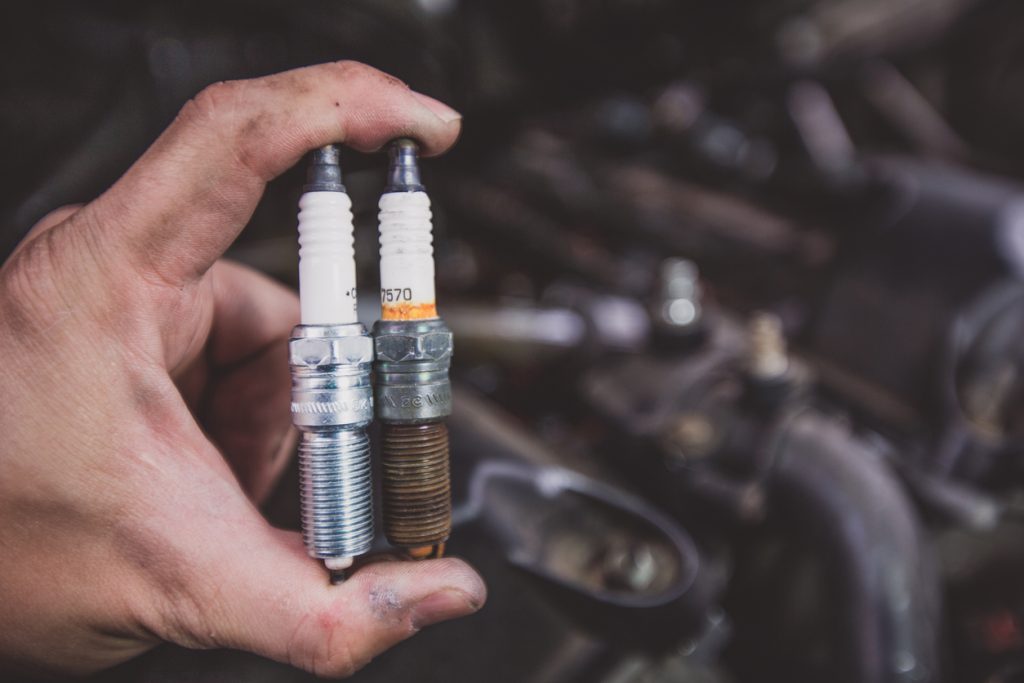

Worn, fouled or damaged spark plugs can make an engine run unevenly, hesitate, start poorly or lose power. Sometimes the problem is intermittent rather than a complete failure. These are possible signs of an ignition problem, not a reliable way to identify a failed plug without checks. Coils, fuel delivery and engine condition can produce similar complaints. The useful first step is to describe exactly what changed, when it happens and whether there is an urgent warning.
If the engine shakes severely, loses power dangerously or has a flashing engine warning while running, stop in a safe place and seek assistance under the vehicle’s instructions. Do not perform repeated road tests to prove a suspected plug fault. A mild symptom still deserves investigation, but a general internet symptom list cannot tell you how far a particular car can safely travel.
For a vehicle that is safely parked, organize your observations before ordering parts. This guide explains what a plug problem can feel like, what removed-part evidence can show and what a reasonable diagnostic conversation includes. It does not turn a sound, color or code into an automatic replacement decision.
What changes when ignition becomes unreliable?
NGK’s technical overview describes the plug’s role in initiating combustion and the importance of preventing fouling. The plug provides the firing location within a larger ignition system. A problem at that location can interrupt normal combustion, but so can a fault supplying energy to it or preparing the mixture.
The engine may miss some combustion events
A cylinder that does not burn its charge properly contributes differently from one operating normally. The driver may feel an uneven beat, hesitation or jerking. That describes the behavior, not the defective component. A workshop must connect the symptom to evidence from the particular engine.
The change can depend on operating conditions
DENSO’s June 2026 misfire guide discusses problems that emerge when hot or under load, including plugs, coils and installation issues. A smooth cold idle therefore does not rule out an intermittent concern. Record conditions already encountered rather than deliberately provoking a fault through heavy acceleration.
A symptom is more useful when it has a pattern
Write down whether the problem occurs on the first start, at a stop, on gentle acceleration or after a longer drive. Add whether it disappears after restarting and whether recent maintenance preceded it. “Runs badly sometimes” gives a technician much less to work with than a repeatable description. Mazda also lists several possible systems behind starting complaints.
Power loss does not measure how bad a plug is
The amount of hesitation felt in the cabin is not a scale of electrode wear. Different engines and faults produce different responses. A dramatic symptom may require urgent action, while a less noticeable problem can still need repair. Judge urgency from the vehicle’s warnings and behavior, not from a guess about plug age.
Maintenance history changes the starting point
Record the last plug replacement and the exact references used if known. A long-overdue set and a newly serviced engine deserve different initial questions. Recent replacement does not rule out a damaged part, an installation error or a completely unrelated fault.

Credit: wilcomotosave.co.uk
Wear, deposits and damage are different findings
The phrase “going bad” can conceal several mechanisms. Separating them matters because the plug may be the failed part, a part affected by another fault, or simply a component being blamed without evidence. The next inspection should clarify which situation applies.
Electrode wear can increase the firing demand
NGK’s condition guide explains that electrode erosion can enlarge the gap and increase the voltage needed to fire it. The useful observation is the actual condition compared with the specified design. Do not assume every visible opening should be adjusted back to a generic dimension.
Deposits can interfere with insulation and firing
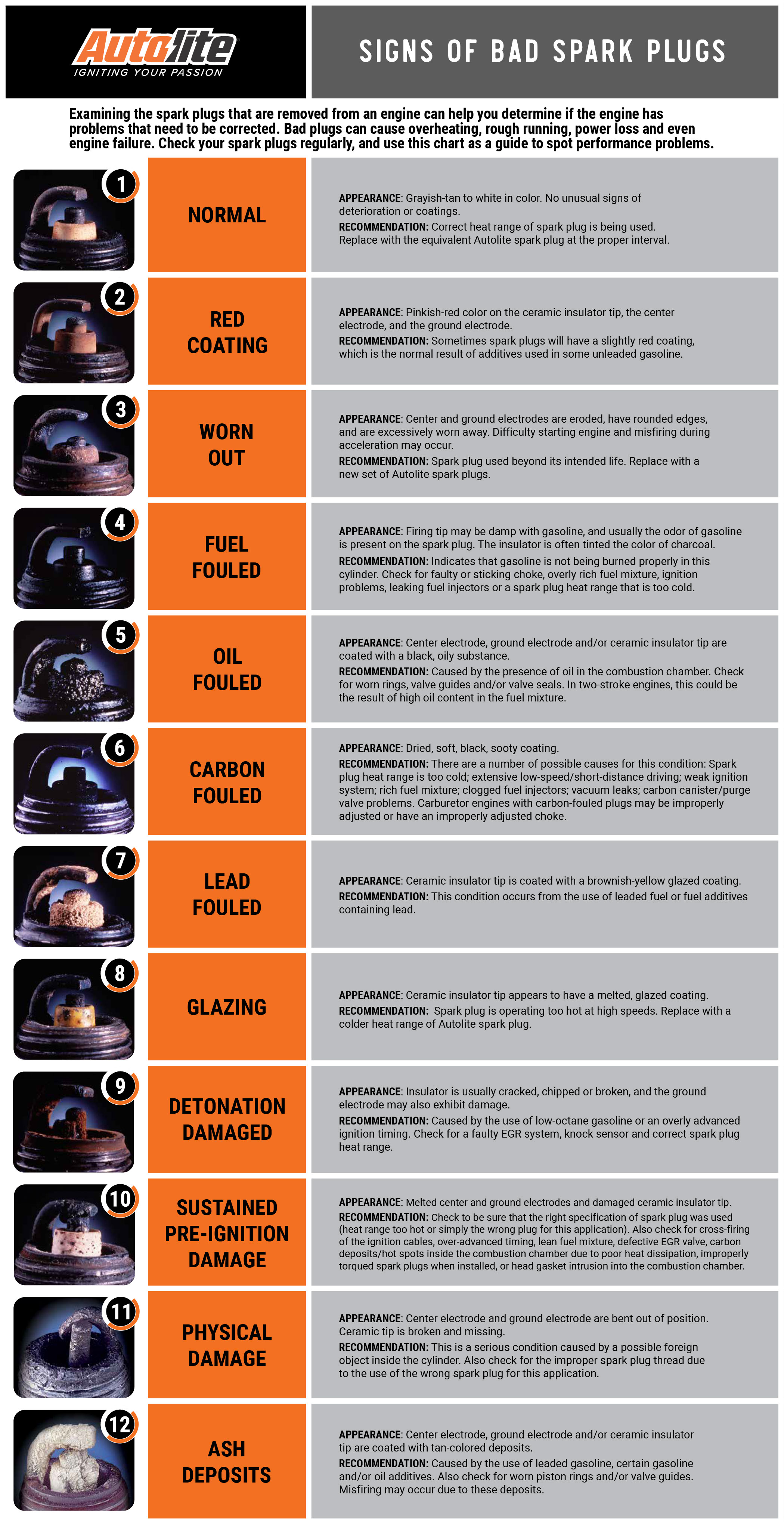
Deposits around the firing end may interfere with reliable ignition. Their presence raises a second question: why are they there? Operating conditions, mixture problems or other engine issues may need attention. Simply fitting another set may not prevent the same condition from returning.
Oil on a plug needs its location recorded
DENSO’s diagnostic examples distinguish oil fouling at the firing end from other appearances. Oil outside the plug in its well is not the same observation as oily material inside the combustion area. Describe where it was found and let inspection establish the source.
A recent change can introduce a separate problem
An incorrect replacement, poor seating or handling damage can make a newly installed plug unreliable. That is different from normal wear. If the complaint began after service, keep the invoice and ask for the work to be checked; do not assume a new material or brand will solve it.
Describe the symptoms in useful, ordinary language
You do not need to name a failed component when booking an inspection. A clear account of the driving conditions, warning behavior and recent events is more useful than declaring that all the plugs are bad. The observations below help organize that account.
Hesitation, jerking or an uneven engine beat
Note whether the engine stumbles once, repeatedly surges, or runs unevenly throughout a journey. Include approximate conditions you remember, such as a warm engine or climbing a hill. You do not need to reproduce the event for a video while driving. A safe written account is enough to begin the diagnostic discussion.A change in fuel consumption
Compare fuel-use observations over reasonably similar journeys before treating one dashboard reading as a trend. A change accompanying rough running is relevant; a change after different routes or weather is less specific. There is no reliable percentage drop that proves a spark plug is responsible, and no guaranteed saving from replacement alone.Longer cranking or difficulty starting
Distinguish an engine that turns normally but struggles to fire from one that turns slowly or does not turn at all. Those descriptions guide different checks. A plug problem is among possible ignition concerns, but the battery, starting system, fuel supply and engine condition must not be dismissed merely because the plugs are old.Shaking while the vehicle is stationary
Describe whether the shaking occurs only when cold, after warming up, with an accessory switched on or at every stop. Cabin vibration does not establish that combustion is the only source; other mechanical issues can affect what you feel. Record the engine behavior and any warning rather than diagnosing a particular cylinder by sensation.Bring the observations together in a short note: what happened, when it began, the conditions, recent work and warning behavior. That note can prevent a service visit from becoming a series of unrelated guesses. A precise description is useful even when the fault is not present at the appointment.
What removed plugs can and cannot reveal
Removal and inspection should follow the vehicle’s service procedure. A photograph can document a finding, but lighting, deposits and the plug design affect its appearance. Ask that removed parts be kept identifiable by cylinder where practical, especially when one location has repeatedly caused a concern.
Worn edges are different from missing material
Rounded or eroded electrodes suggest a different investigation from a broken ground strap or missing ceramic. Keep damaged parts for assessment rather than discarding them at the counter. If material is missing, fitting a replacement alone does not determine what happened inside the engine.
Discoloration is not a complete diagnosis
NGK describes external corona staining as a normal phenomenon that can be mistaken for leakage. Location matters: an outside insulator mark is not automatically a deposit on the firing end. Avoid diagnosing compression loss or a failed seal from a brown ring alone.
Cracks and impact marks need an explanation
A visibly cracked or broken plug should not be returned to service as though cleaning restored it. The damage could also prompt a check of installation or engine conditions. Do not assume all cracks came from age, or that a plug that still sparks is structurally sound.
When a symptom needs prompt attention
Mazda’s dashboard guidance emphasizes that warning behavior can change the urgency of a fault. Read the message and consult the specific vehicle instructions. A light, fuel smell, abnormal temperature or loss of safe control deserves attention on its own, even before the defective part is known. See spark plugs and the check-engine warning for the distinct diagnostic-light question.
A symptom that affects safe acceleration or appears with a serious warning needs a response before its cause is proven. It is not necessary to decide whether the plug, coil or another system is responsible before moving the vehicle out of danger and obtaining help.Avoid demanding more power from a struggling engine
If the vehicle cannot accelerate or maintain speed safely, avoid continuing into traffic to test it. Reduce demand while reaching a safe stopping place and arrange assessment. Do not assume a brief improvement after restarting makes a severe or recurring loss of power safe to ignore.A warning light is not a spark-plug replacement reminder
Note whether the warning began before the roughness, at the same time, or only after the engine had been running poorly for a while. If the roughness stops but the warning remains, report both facts. That sequence describes the event more accurately than assuming the lamp and the sensation always start and end together.Do not identify detonation by a casual sound comparison
Knocking, rattling, popping and an uneven exhaust note are not interchangeable descriptions. A new metallic noise or harsh running deserves prompt inspection, rather than a guess that ordinary plug wear is responsible. Tell the workshop what you heard and when, without attempting to recreate a concerning sound by increasing engine speed.
Credit: www.reddit.com
What a diagnostic appointment should establish
A useful inspection moves from the reported behavior to evidence, then to a repair decision. Ask what was observed, which checks support the conclusion and whether another condition caused the plug to foul or fail. This makes the difference between replacing a worn service item and resolving a recurring problem visible.
Tests should suit the engine and suspected fault
A scan, electrical measurement and physical inspection answer different questions. None should be presented as a magic test that proves every aspect of a spark plug. The technician should use the manufacturer’s procedure and appropriate equipment, particularly around high-voltage ignition components.
Do not pull ignition connectors from a running engine or hold a removed plug to watch its spark as an informal comparison. Ask for the intended test and its result instead. A diagnostic explanation should be understandable without requiring the owner to perform a live ignition experiment.
Gap findings need a specification
If an opening is measured, record the actual value, units and relevant specification. A large-looking gap in a photo is not sufficient evidence. Some fine-electrode replacements have handling restrictions; our new-plug gap guide explains why measuring and adjusting are separate decisions.
If replacing worn plugs removes the symptom, retain the service record and monitor for recurrence. An immediate improvement is useful, but it does not by itself prove that every possible underlying cause has been excluded. Repeated fouling or damage needs further investigation.
Ask whether the plug was the cause or the evidence
For an oily or heavily deposited firing end, ask what checks address the source of contamination. For a damaged insulator, ask whether selection and fitting were verified. For ordinary wear, ask whether the observed condition fits the service history and prescribed replacement schedule.
These questions do not require the same repair on every engine. They ask for a reasoned link between the finding and the proposed work. A cylinder-specific problem should not be generalized into a diagnosis of every plug without additional evidence.
Keep the repair discussion tied to your original complaint. If the original issue was difficult hot starting, an idle check while cold may not fully address it. Explain the conditions clearly, while allowing the workshop to choose a safe and appropriate verification procedure.
Replacement and diagnosis can be separate jobs
A scheduled plug replacement may be due even if another system caused the current complaint. Conversely, a specific damaged plug may require attention before the routine interval. Ask the workshop to distinguish scheduled service from the work needed to investigate the reported symptom.
Use the specified application
DENSO’s selection and service FAQ directs users to application information and the vehicle’s replacement interval. The correct reference depends on the actual engine. An electrode-material label alone does not establish compatibility or authorize a longer maintenance interval.
Avoid creating a new fault during fitting
DENSO’s torque guidance explains how incorrect tightening can damage a plug or compromise its seating and heat transfer. This article does not supply a universal installation torque. A correct replacement still needs the specified procedure, suitable tools and careful handling.
Confirm that the original complaint has been addressed
Ask what inspection or verification was completed after the repair and what to do if the symptom returns. Retain diagnostic results, part numbers and the work description. “New plugs installed” describes a service action; it does not necessarily describe the cause of the original fault.
For an intermittent issue, a short account of later behavior can help: the date, operating condition and warning message if it recurs. Do not erase that record by treating every new episode as an unrelated event or repeatedly clearing warning information.
Credit: www.autolite.com
Recognize the change, then establish its cause
Spark-plug problems can appear as roughness, hesitation, difficult starting or reduced performance. Those clues become useful when combined with operating history, correct specifications and appropriate checks. A symptom list is a starting point for investigation, not a parts verdict.
The objective is dependable engine operation with the cause understood. Respond to urgent warnings first, describe what you observed and ask for evidence that connects the repair to the complaint. This guide synthesizes manufacturer information; it does not report firsthand fault testing.


Automotive reference information. Confirm specifications in the manual for your exact vehicle. Original replacement guides link to their research sources. About us