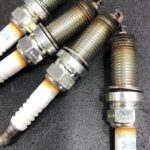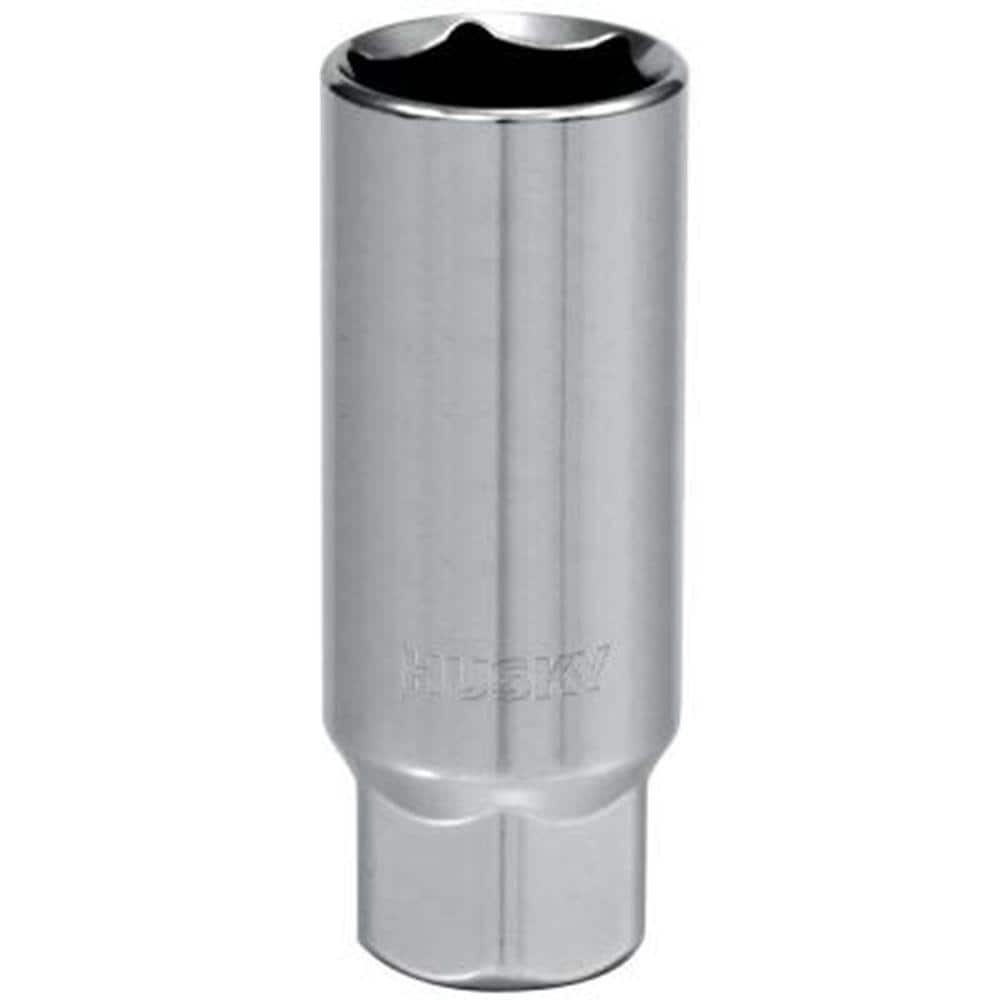

A spark plug socket is a wrench attachment made to engage the metal wrenching portion of a spark plug while providing room for its projecting ceramic insulator and terminal. It connects to a suitable ratchet, extension or torque wrench. Many designs also retain the plug so it can be lifted from a recessed opening without falling out of the tool. Retention may use rubber, a magnet or spring elements; a rubber insert is not a defining feature of every spark plug socket. The socket turns the plug's metal shell, not its top terminal, and it is different from the electrical boot that normally covers that terminal. Remove the ignition connection by the vehicle's service procedure before trying to reach the plug. A socket is also not a gap gauge or a thread-repair tool. Owning one does not establish the correct plug, tightening specification or removal method for a particular engine. Its purpose is narrower: provide the mechanical fit and access needed to handle the plug without loading parts that were never intended to take wrench force. A regular deep socket may share the same wrenching profile, but the words deep socket do not establish plug retention, terminal clearance or suitability for the engine opening. Compare those features rather than assuming either that all deep sockets work or that a spark plug label guarantees success. The meaningful distinction is the actual tool geometry and the service requirement, not the name printed on a store shelf.
Consider the socket as several interfaces joined together. At the bottom, its internal profile must match the plug's wrenching surface. Around the outside, its body must clear the plug well. Inside, there must be enough space for the insulator and terminal. At the top, the square drive must match the driving tool or an appropriate adapter. Finally, any retainer must hold and release the plug as intended. TEKTON's SHD15021 illustrates these separate features: it is a 13/16-inch, six-point spark plug socket with a 3/8-inch drive, extended body and internal rubber grommet. The 13/16-inch designation and the 3/8-inch designation describe different ends of that single tool. Neither number identifies the thread diameter that screws into the engine. This example is a way to read a specification, not a recommendation for every car. Our explanation of spark plug dimensions covers the separate measurements that determine plug fitment. Check the required wrenching size from the correct plug and service information before choosing the socket.
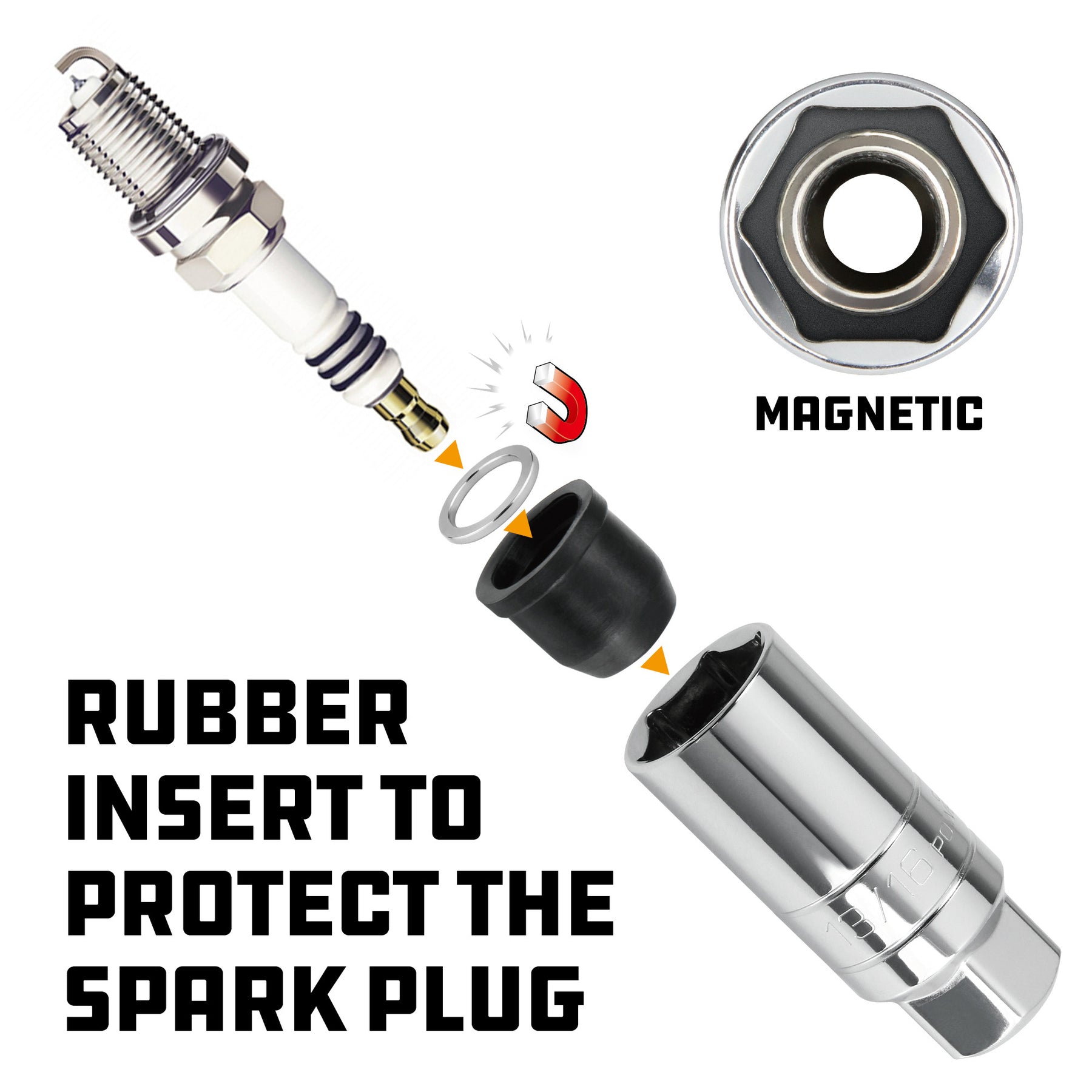
Retention deserves attention because it changes how the plug is supported during handling. A rubber insert grips the upper portion of the plug; magnetic tools retain it through their magnetic feature. Lisle's 63080, for example, combines a magnetic insert with a thin-wall, 14 mm twelve-point socket and swivel. Other designs use mechanical spring elements instead. These approaches do not establish a universal winner or guarantee that every plug of a nominal size will release equally easily. Before lowering a new plug into a deep well, check the socket and retainer for obvious damage or loose pieces, and confirm that the intended plug seats fully in the tool. Do this away from the open engine. If an insert falls out, account for it before proceeding rather than leaving a loose item around the plug opening. Do not improvise with wadded paper, adhesive or other packing to make a loose-fitting tool hold a plug. A retainer helps with handling; it does not correct the wrong drive profile or protect a ceramic insulator from excessive sideways force.
Credit: www.powerbuilt.com
Match the profile, outside diameter and working reach
A number such as 14 mm still leaves an important question unanswered: which wrenching profile does the plug use? Tools are offered with different point patterns, and the actual mating surfaces must be compatible. HAZET specifies its 4766-2 as a 14 mm twelve-point spark plug tool suitable for the six-point and twelve-point profiles it describes. The same listing identifies a 3/8-inch drive, spring retention and manual operation. Those are specifications for that product; do not convert them into a claim that any twelve-point socket suits every plug, or that an arbitrary six-point socket will engage a twelve-point plug. A tool should sit on the intended metal surfaces without being held up by the insulator or terminal. Feeling resistance before the socket reaches its working position is a reason to inspect the fit, not to push harder. A socket that slips or rocks on the wrong profile can damage the wrenching surface. This is why choosing by the engine's displacement, the electrode material or the vehicle badge is less reliable than checking the actual plug specification and required service tool.
Outside clearance can rule out a socket even when its internal size is correct. The plug sits within an engine opening, and the socket body has to pass through that opening without binding. This is the purpose of thin-wall designs; it is not a claim that the thinnest tool is always best. CTA publishes both internal size and outside diameter for its 1180: a 14 mm twelve-point socket with an 18.45 mm outside diameter. CTA also flags a fit limitation involving some aftermarket plugs in the MINI N18 application. The useful lesson is that the same nominal wrench size does not settle every internal-clearance question. Verify the fitted plug and the tool's current application notes rather than extrapolating from a broad list of brands. If an ordinary deep socket has the right opening but the wrong outside diameter, no amount of extra ratchet leverage fixes the clearance mismatch. Do not grind a socket to create an unverified thin-wall tool. A stuck tool can obstruct access just as effectively as an unsuitable one that never reaches the plug, so fit should be resolved before applying removal force.
Reach is the distance and route the assembled tool must cover, not simply the length of the socket itself. A deep plug well may need an extension, while nearby components may limit how a ratchet can enter or swing. A swivel can help negotiate access, but it does not justify bending the tool against the plug's ceramic. GEARWRENCH's 41740D feature list describes a long-reach 5/8-inch magnetic swivel set with 4-, 6- and 11-inch lengths. That illustrates how one wrenching size can be offered in several reaches; it is not a claim that those three lengths cover every engine. Compare the complete assembly, including the extension connection and ratchet head, with the available working space. An adapter may solve a drive-size mismatch while making the tool too tall to fit. If the service instructions require removal of an obstructing part, a complicated stack of joints is not automatically an approved shortcut. The goal is controlled engagement with the plug and sufficient access for the specified tightening method, rather than merely finding an angle from which the ratchet will turn.

Credit: www.amazon.com
Using the right socket without mistaking fit for correct installation
The tool must stay aligned with the plug during removal and installation. DENSO's installation guidance warns that a tilted wrench in a deep plug hole can trap and crack the insulator. It directs installers to use the correct wrench and begin tightening lightly by hand, while referring to the vehicle repair manual for specific procedures. That warning applies even when the socket carries the right size marking. Before service, establish the engine condition, access steps and ignition-disabling procedure required for the vehicle. Protect the open area from debris and follow the specified cleaning method. A plug that does not begin threading normally needs investigation before more leverage is applied; the ratchet should not be used to drag a misaligned plug into position. Likewise, unusual removal resistance is not a general invitation to use an impact wrench or a longer handle. Some engines need particular removal procedures, and the socket manufacturer's operating limits also matter. Hand tools identified for manual operation should be used within that rating. If a plug, insulator or tool breaks, stop and assess what is missing before cranking the engine or continuing the job.
Correct tightening remains a separate step from choosing the socket. NGK explains that torque affects plug seating and heat transfer, and that dirt can create a misleading torque reading before the plug is properly seated. Use the applicable vehicle and plug instructions, a suitable torque wrench and the required units; a socket size is not a torque specification. Do not add a universal extra fraction of a turn after reaching the specified torque. Follow the tool instructions for any adapters or extension arrangement rather than guessing at a correction. Thread lubrication is another independent issue: NGK advises against anti-seize on its plated plugs because lubrication changes tightening behavior. After tightening, withdraw the tool carefully and verify that its retainer and other parts are accounted for. Refit the ignition components using their own instructions; our spark plug boot guide explains why that connection should not be confused with the socket. For a useful tool purchase, write down the plug profile, required clearance, reach, drive and retention needs first. Buy the tool that meets those requirements rather than assuming a large set or a familiar size makes the service procedure unnecessary.


Automotive reference information. Confirm specifications in the manual for your exact vehicle. Original replacement guides link to their research sources. About us