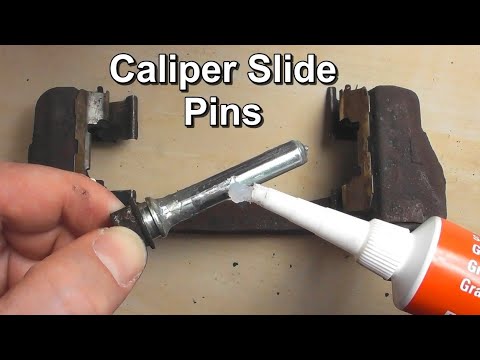

Use the lubricant specified for your exact caliper guide system, and first confirm that the system is supposed to be lubricated at all. Many lubricated internal guide pins require a suitable rubber-compatible brake lubricant, but some guide-sleeve designs are installed without grease on the internal pin surfaces. There is no single tube that belongs on every caliper pin. The correct choice follows the vehicle or caliper manufacturer's instructions and the lubricant's stated application compatibility.
Do not choose solely by colour, the words high temperature, or the fact that a product is sold near brake pads. Lubricant for metal pad contact points may have a different intended use from lubricant touching a guide-pin rubber sleeve. Threadlocker, anti-seize compound and hydraulic assembly paste also serve different purposes. Similar packaging or a broad brake-service label does not make them interchangeable.
This guide is about selecting and applying guide-pin lubricant where specified. It does not replace the service procedure for removing the caliper, tightening its fasteners or handling an electronic parking brake. If the brake is already dragging, the pin is damaged or the rubber is swollen, adding grease is not a diagnosis. Establish the condition of the parts before deciding whether lubrication is the required repair.
For a wider view of contact points and surfaces that must remain clean, see caliper lubrication locations and precautions. The narrower question here is how to make a defensible product choice for the guide mechanism. That starts with the assembly's design rather than an online ranking of popular grease brands.
Why the guide design and rubber materials come first
Floating calipers use guide elements to move as the pads clamp the disc. Those elements may include metal sliding surfaces, protective boots and damping sleeves. HELLA describes how restricted guide movement can contribute to uneven wear and overheating. In its illustrated internal-guide example, HELLA calls for a thin suitable silicone-based lubricant film and warns that an unsuitable lubricant can swell rubber. The useful principle is compatibility with the fitted components, not that every product containing silicone suits every brake. Rubber damage can change how a pin moves even if the metal surface looks clean.
A sleeve that has expanded or distorted may bind in the guide. Forcing the pin into place or trimming the rubber to make it fit removes evidence of the problem and changes the assembly. Replace damaged components according to the service information and determine what caused the damage. A fresh coating over an incompatible residue is not a reliable correction. Some systems follow a different rule. ATE workshop guidance identifies guide-sleeve arrangements whose internal guides must remain ungreased.
Lubricant applied where the design calls for dry operation is not an upgrade. Do not assume a previous repair was correct because grease is already present. Look up the fitted caliper and reconcile its condition with the service instruction before repeating what you find. The guide-pin contact surface is also distinct from a piston seal inside the hydraulic caliper. A product suitable for an external guide is not automatically approved inside the brake-fluid circuit. Similarly, a pad's friction face has no place for grease at all.
Map the part you are servicing to the product's intended location. Broad statements about lubricating the brakes can be misleading because these surfaces perform very different functions. A temperature rating is only one property. A product must also suit the contact materials and intended movement, remain appropriate in that environment and meet the applicable service requirements. The highest temperature number on the shelf does not override a warning about rubber contact. A racing-oriented product is not automatically better for a road-car guide pin.
| Start with the manufacturer's specification, then verify the exact product against it. If the manual names a particular lubricant or specification, record that information before shopping. If it allows an equivalent, confirm what equivalence means through the product data or manufacturer support. A supplier's statement that a tube is popular is not technical evidence of compatibility. When the instructions are unavailable, a brake specialist can identify the caliper and its service requirements rather than guessing from the vehicle's age. |
Read the product information beyond the words brake grease
The relevant label or technical sheet should identify caliper guide pins or the exact intended sliding application, and it should address compatibility with the rubber components present. Permatex uses rubber on slide pins as a distinction in its brake-lubricant selection guidance. That illustrates why products in one manufacturer's brake range can have different uses. It is not a blanket recommendation of every formula in that range for your vehicle. Check the full product name and identifier, because related products may share a brand and similar package artwork. A formulation available in one market may not be the same item discussed in an older video or forum post. Read the current container directions and technical sheet for the product you actually have. Keep the container or product number with the service record so a future compatibility question can be answered precisely. Silicone-based brake lubricants are commonly encountered in rubber-compatible guide applications, but the base description alone is insufficient. Additives and intended uses still matter, and the caliper's own instruction remains controlling.
Ceramic wording describes a product feature, not a universal approval category for pins. Synthetic is similarly broad. Neither term tells you by itself whether a particular sleeve material and guide design are supported. Anti-seize is not a default substitute for guide lubricant. It is intended for specified applications where preventing seizure of assembled parts is appropriate, and that does not establish suitability for a moving rubber-lined guide. Threadlocker serves a different fastener-retention purpose again. Do not lubricate bolt threads merely because you are greasing a nearby sliding shaft; doing so can change the relationship between tightening torque and fastener load. Follow the separate fastener instructions. General chassis grease, penetrating oil and household lubricants should not be improvised into this role. A spray that makes a pin move temporarily may not provide the required long-term material compatibility or protection.
Do not use brake fluid as an external guide lubricant unless the exact procedure specifically calls for it in that location. The fact that a fluid belongs somewhere in the braking system does not make it suitable everywhere. Consider a simple comparison when choosing between two containers. If one explicitly supports rubber-contact guide-pin service and the other only discusses pad backing plates, they do not provide the same evidence for a sleeved pin. If neither matches the caliper instructions, choose neither until the requirement is resolved. This method is more reliable than selecting the cheaper tube or the one with a larger temperature claim. When you need manufacturer support, supply the caliper application, the contact location and whether a rubber sleeve or bushing is present. Ask whether the exact product number is appropriate under the caliper's specified procedure. A clear written answer is useful; a generic assurance that the product is for brakes leaves the original compatibility question unanswered. Do not mix several products in the hope that their strengths will combine.
Apply only what is specified and check movement afterward
-
Inspect before lubricating. A pin with significant corrosion, damage or wear needs assessment against the service limits. A torn boot or distorted damping sleeve may need replacement.
- Lubricant cannot restore missing material or correct a bent component. If repeated cleaning has not resolved binding, reconsider the diagnosis rather than adding a thicker layer. Keep upper and lower components identified during removal.
- Some assemblies use different pins or sleeves by location, and lubricant will not correct a swapped pair. Consult guide-pin position identification if the parts have been mixed. Do not assume the rubber-sleeved pin always belongs in the same position on every vehicle.
- Remove old residue using the cleaning method appropriate to the parts and service instructions. Avoid soaking rubber in an unknown solvent or using an aggressive abrasive that alters the guide's dimensions. Keep cleaning debris out of the bore and away from the friction material.
-
If the previous product is unknown and rubber has changed shape, address the damaged parts rather than trying to preserve them with a new coating. For a guide that requires lubrication, apply the prescribed amount to the specified surfaces. A thin film is not the same as packing a blind guide cavity solid with grease.
- Excess product can interfere with seating, displace a boot or create resistance as the pin enters. More lubricant is not automatically more protection. Follow the actual procedure rather than filling every available space.
- Fit the correct sleeve and boot without twisting or trapping them. Check that their sealing features engage properly and that the pin moves as intended. A guide that becomes difficult to insert after lubrication needs inspection of product quantity, component condition, location and compatibility.
-
Do not use the retaining bolt as a press to force an uncertain assembly together. For a guide specified to run dry internally, keep those surfaces in the prescribed condition. Any separate instruction for the outside of a bushing or another assembly surface must not be expanded into permission to grease the pin itself.
- Read location words carefully. A single component can have different requirements at its mounting surface and its moving interface. Keep all lubricants off rotor faces and pad friction surfaces.
- If contamination occurs, follow the component manufacturer's remediation or replacement instructions rather than assuming a quick wipe restores performance. Wash or change contaminated gloves before handling clean friction parts. Organizing the work area to separate dirty guides from new pads helps prevent this avoidable mistake.
-
Support the caliper so the hose is not carrying its weight while the guides are serviced. Reassemble with the correct hardware, torque and any required replacement fasteners. Verify hose, cable and wiring routing before the wheel goes back on.
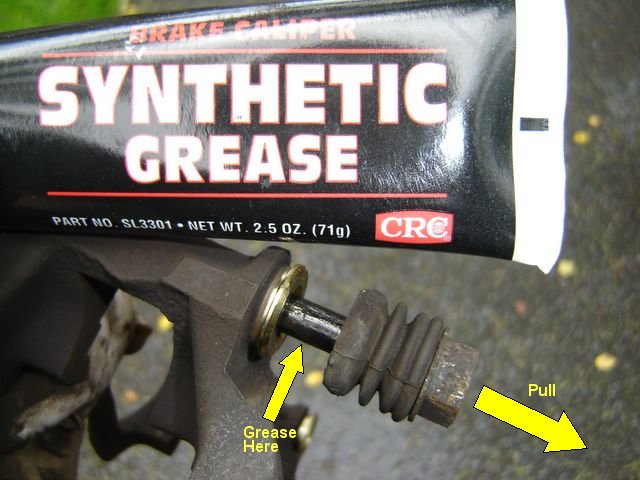
Credit: bobistheoilguy.com
Lubricating pins is one part of a brake service; it does not remove the need to check the rest of the assembly. Complete the required stationary pedal, leakage and release checks before controlled vehicle movement. If the brake still drags, overheats or pulls, stop and investigate the remaining cause.
A piston, pad support, hose or parking-brake fault can exist alongside guide-pin trouble. A smooth pin alone cannot certify the whole brake.
Record the product used and the application instruction followed. If a future inspection finds swollen rubber or recurring binding, that information is more useful than a note saying brake grease applied.
The right outcome is correctly functioning guides with intact protective parts. Product selection is successful when it meets the caliper's requirements, not when every visible metal surface has been coated.


Automotive reference information. Confirm specifications in the manual for your exact vehicle. Original replacement guides link to their research sources. About us