
Neither ceramic nor metallic brake pads are automatically better. The right choice is a pad approved for your exact brake system and intended use. Material names help describe broad product families, but they do not establish stopping distance, temperature capability or compatibility on their own.
For an ordinary replacement, start with the vehicle application and the characteristics you want to preserve. Then compare suitable products. Choosing a pad purely because ceramic sounds premium, or because more metal sounds stronger, reverses that process.
First establish what actually fits
Identify the model year, engine, axle and brake package. Some cars sold under one model name have different calipers, rotor sizes and pad shapes. A pad that appears to fit the bracket can still have the wrong sensor arrangement, friction specification or hardware. Confirm the catalog application rather than relying on appearance.
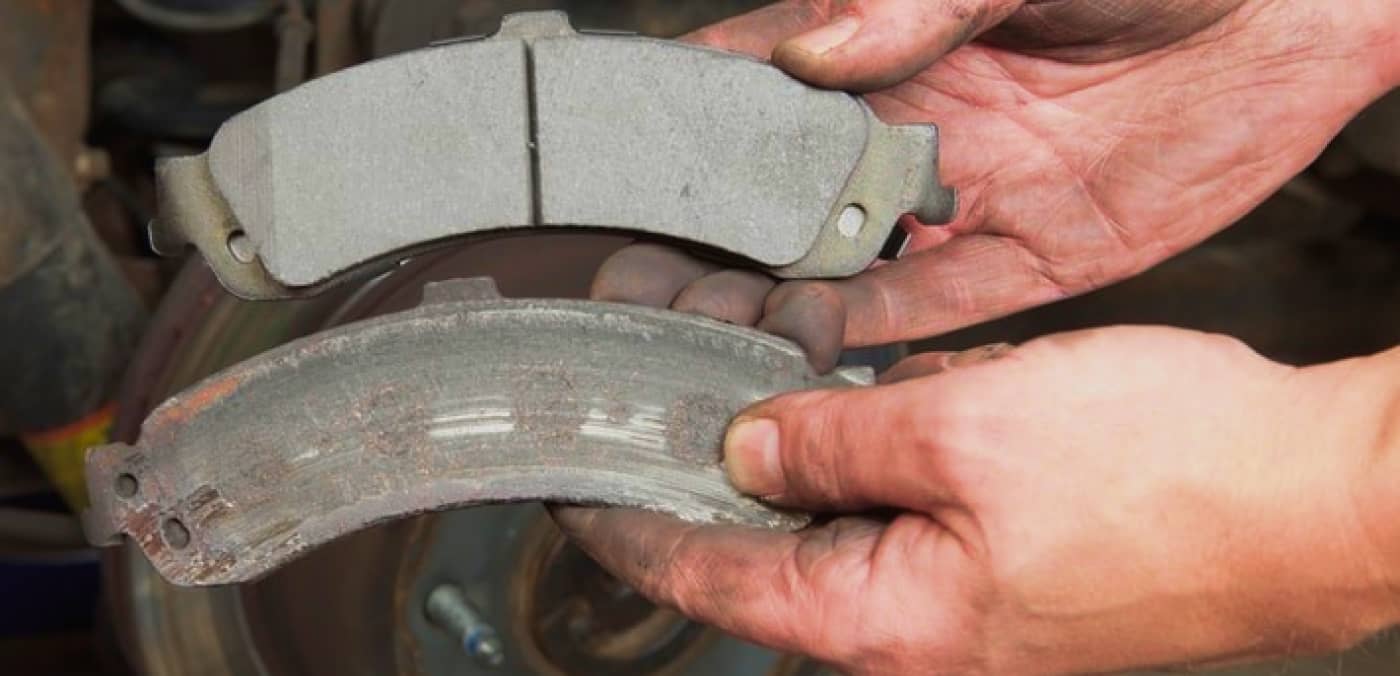
Credit: www.bridgestonetire.com
If the original brakes worked well, a replacement designed to retain their behavior is a sensible baseline. A change intended to reduce wheel dust should not silently trade away suitability for the vehicle. Keep the existing system in mind when comparing compound choices.
What the material labels mean
Ceramic and semi-metallic are formulation families, not standardized recipes. Pads contain a mixture of ingredients, and the exact mix is normally product-specific. The term metallic in a passenger-car shopping comparison often means semi-metallic; it should not be confused with every fully metallic or competition friction product.
Brembo distinguishes multiple ceramic and low-metallic product ranges with different aims in its pad-selection guide. That is why a label alone cannot tell you how two individual part numbers will perform. Compare the stated application and service purpose, not a supposed universal ranking.
When quiet operation and wheel cleanliness matter
For a commuter car, noise and the appearance of the wheels may be important purchase factors. Read the manufacturer’s claims for the exact available pad rather than assuming that every ceramic formulation will behave identically. Ask whether included shims and hardware are specific to that application.
Dust visibility is also different from dust production. A less visible deposit does not mean the brakes produce no wear particles. See the separate low-dust brake-pad guide if wheel cleaning is the main problem you want to solve.
When load and repeated braking matter
A heavily loaded vehicle, repeated descents or demanding service changes the questions to ask. Verify that the chosen pad is intended for that duty and that the vehicle’s towing and loading limits are respected. Do not substitute a normal commuter product for a severe-duty application solely on price or material name.
Likewise, a track-oriented compound is not automatically an upgrade for a road car. Confirm its intended operating conditions and road suitability with the manufacturer. A useful recommendation identifies the actual part and use case; it does not declare that one material wins every hot-braking comparison.
Check the rest of the brake system before blaming the pads
Changing friction material will not repair a sticking caliper, seized pad support, damaged rotor or hydraulic defect. If the complaint is pulling, overheating, heavy drag, abnormal pedal travel or sudden loss of braking, the system needs diagnosis before a shopping decision.
An unevenly worn set is evidence to investigate. Ask for measurements of the inner and outer pads on both wheels of the axle, along with rotor condition. A new set can repeat the same failure if the cause is left in place.
Compare complete installed quotes
Compare one axle with the same axle. Confirm the pad brand, range and part number; whether replacement hardware is included; the rotor inspection or replacement decision; and labor. A parts-only box price cannot be compared directly with an installed brake service.
Ask what the shop does if the new assembly makes noise or wears unevenly. A parts warranty, workmanship warranty and noise remedy can be separate arrangements. A longer advertised warranty does not prove a longer friction-material life.
A practical decision sequence
Use this sequence: confirm fitment, identify the vehicle’s duty, preserve required braking performance, choose the comfort or cleanliness features you value, and compare total service cost. If two suitable pads remain, ask the supplier which is intended to match the original equipment behavior most closely.

Credit: gexhaust.com
For example, an owner satisfied with braking but frustrated by dirty wheels has a different problem from a driver seeing overheating after loaded mountain descents. The first needs a compatible low-dust option; the second needs a brake-system and duty assessment. Neither question is answered by the word ceramic alone.
What to confirm after installation
Follow the vehicle and pad manufacturer’s installation and bedding instructions. There is no universal series of aggressive stops appropriate to every compound and every traffic setting. Confirm a normal pedal and correct assembly before driving.
Keep the invoice and exact part number. Record how the brakes behave in normal use, and return promptly for new pulling, grinding, excessive heat or a changed pedal. Choosing the correct pad is one part of a successful brake repair, not a substitute for confirming that the system works correctly.


Automotive reference information. Confirm specifications in the manual for your exact vehicle. Original replacement guides link to their research sources. About us


