
Coolant around a spark plug can mean an external leak into its well or a leak into the combustion chamber, and those are different faults. A wet plug removed from a flooded well does not by itself prove a blown head gasket. Identify where the liquid was found, establish what the liquid is, and have the leak path diagnosed for the exact engine before approving a repair.
The phrase coolant in my spark plugs is imprecise. Was liquid pooled around the ignition coil or plug boot before removal? Was the firing tip wet after the plug was removed from an otherwise dry area? Or did a technician see liquid inside a cylinder with a camera? Write down that distinction; it changes the next diagnostic question.
If the vehicle is overheating, running severely roughly or losing coolant rapidly, stop safely and arrange professional assistance. Do not remove a cooling-system pressure cap while the engine or system is hot. Ford warns that hot coolant and steam can escape under pressure. The correct owner manual governs checks on your vehicle; a generic article cannot establish a safe waiting time or permit continued driving.
Start by locating the liquid
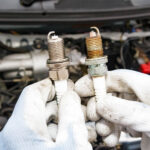
A spark plug has an electrical connection outside the combustion chamber and a firing end exposed inside it. DENSO illustrates its terminal, insulator, metal housing and electrodes. In engines with recessed plugs, the surrounding well can collect fluid outside the installed plug. Marking the affected surface in a photograph is more informative than showing a wet removed component without context.
Before removal and after removal are different observations
If the well already contained liquid, removing the plug can make the subsequent wetness difficult to interpret. Record whether the recess was wet beforehand and whether the technician cleaned it before opening the cylinder. This does not prove that the chamber is dry; it explains why the sequence of observations matters. Ask the workshop to distinguish what it directly observed from what it suspects.
Confirm the fluid instead of guessing from its color
A liquid may resemble coolant yet be water, oil, fuel or a mixture. Its color is only one clue, especially where earlier service or cleaning could have left residue. Do not taste it or deliberately inhale it. Tell the workshop about coolant loss, recent washing, spills and repairs. A reliable conclusion should connect the fluid's identity with the route by which it reached that location.
When the liquid is outside the plug
External contamination can affect ignition components without establishing an internal engine leak. DENSO recommends checking ignition systems for oil or water contamination, damaged insulation and related faults. A misfire therefore needs more context than a photograph of moisture on a coil boot. Inspection should address both the liquid source and any contamination-related component damage.
The external route depends on the engine layout. A technician should inspect the relevant nearby components and any evidence of a spill, tracing the liquid instead of selecting a gasket by reputation. Ask whether a leak was observed under the appropriate test conditions or only inferred from staining. Historical residue and an active leak can look similar in a single photograph.
When coolant is confirmed inside a cylinder
An internal finding requires a different investigation. Ford technical instructions for its June 2022 program 21N12 describe a diagnostic sequence for certain 2017–2019 Escape and Fusion vehicles with the 1.5L GTDI engine. That sequence includes cooling-system testing and borescope inspection through spark-plug openings. It illustrates the need to verify intrusion; it is not a procedure or repair entitlement for every Ford engine.
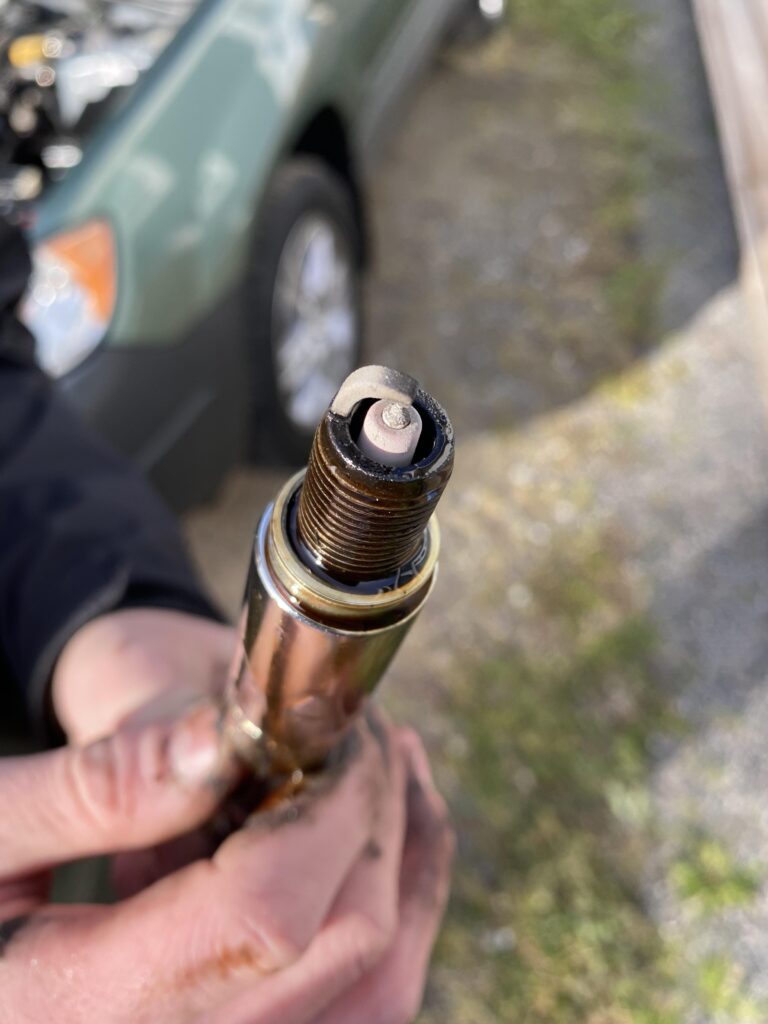
A plug's appearance can contribute evidence, but it is not a chemical test. DENSO shows several plug conditions associated with different ignition or engine problems, including fouling and overheating. An unusually clean tip, pale deposits or a wet electrode should be recorded and interpreted alongside other findings. Do not use one color chart to declare which internal component has failed.

Credit: www.reddit.com
Why the repair is not automatically a head gasket
Fel-Pro explains that head-gasket failure and a cracked cylinder head can produce overlapping symptoms. Separating those possibilities can require disassembly and specialist inspection. The useful question is not which fault is most frequently mentioned online; it is which leak path the available tests support on this engine.
Different engines have different coolant passages, castings, seals and service history. Before applying an example from another vehicle, confirm model year, engine identification and any production restrictions. A repair that solved somebody else's wet-plug complaint is background information, not an application check. Keep a previous diagnosis available, but ask the current technician to explain whether the same evidence is present.
What a meaningful diagnostic record contains
Ask the report to identify the affected cylinder or well, the original fluid location, relevant trouble codes, coolant-level history and tests performed. The shop should explain whether it found an external leak, evidence of internal intrusion, or an unresolved concern. You do not need to prescribe the test equipment to request a clear distinction between those outcomes.
For a pressure or camera test, useful information includes the conditions, the result and the limitation. A pressure loss indicates a problem to locate; the location of escaping fluid matters. A camera image should be tied to the correct cylinder and the circumstances in which it was captured. A test name written on an invoice is less useful than its finding.

Credit: www.reddit.com
Use codes and symptoms to support the investigation
An ignition-related trouble code does not identify coolant as the cause. DENSO's troubleshooting guidance notes that an apparent ignition fault can originate elsewhere in the vehicle. Preserve the code numbers and diagnostic record before they are cleared. The technician can then compare them with the fluid finding instead of treating a reset warning as a successful repair.
Write a short symptom timeline: when coolant needed topping up, when rough running appeared, whether it followed maintenance, and whether anyone removed the plugs before the photographs. Use approximate dates where exact dates are unknown. Do not fill gaps with guesses. Several accurate observations are usually more helpful than a confident story assembled from unrelated symptoms.
When further running creates risk
Misfire and overheating deserve prompt attention independently of the final leak diagnosis. Ford owner guidance warns that misfire can raise exhaust temperatures and damage the catalytic converter or other components. Follow the exact vehicle warning instructions and arrange recovery when safe operation is uncertain. Do not keep the engine running merely to see whether the wetness dries out.
Confirmed liquid in a cylinder is also a reason not to keep cranking the engine. Motorservice documents hydraulic-lock damage where a cylinder fills with liquid, including coolant. A starter that cannot turn an engine normally should not be forced repeatedly. Tell the recovery service and workshop about the suspected liquid so they can choose a suitable handling and inspection method.
Evaluate the proposed repair in stages
First establish the fault being repaired: an external leak affecting the well, a verified internal leak, or an ignition defect found during the investigation. These descriptions imply different work. The quotation should name the diagnosed condition, not simply list spark plugs and a gasket kit without explaining their relationship.
Next separate necessary work from work contingent on inspection. A workshop may not know the condition of a head or other internal part until it is removed and tested. Ask what is authorized initially, what findings would change the repair and when the shop will contact you before additional expense.
Finally ask how completion will be verified. Replacing a wet plug may address a damaged component, but it does not establish that a continuing leak has stopped. The final record should explain the relevant leak checks, operating checks and any follow-up required for the repaired engine.
If oil and coolant are also contaminated, make that a separate item in the repair discussion. Our guide to oil mixing with coolant explains why stopping the leak and dealing with contaminated circuits are distinct parts of a repair. Do not assume that every wet-plug case also has contaminated engine oil.
Prepare for the workshop conversation
Bring the vehicle details, maintenance receipts, fluid-top-up history and original photographs. If old plugs have already been removed, keep their cylinder identities with them when practical and safe. Do not clean deposits away solely to improve their appearance before the technician sees them. Ask what information the shop actually needs before transporting loose contaminated parts.
What an owner can contribute without dismantling the engine
You can record accessible observations and warnings while leaving difficult access and testing to the workshop. Do not pull coils from a running engine or remove plugs to perform a speculative home test. High-voltage ignition, hot components and the possibility of introducing debris make casual dismantling a poor way to resolve an uncertain fluid diagnosis.
Check bulletin applicability and current support separately
A historical manufacturer bulletin can explain a known failure pattern, but it does not establish current coverage for your VIN. Ask the manufacturer or dealer to check current applicable information and support separately from the mechanical diagnosis. Keep the bulletin number with your notes and distinguish its technical example from a promise about who will pay for a repair.

Credit: www.supraforums.com
A location-first answer avoids unnecessary repairs
The first useful answer is where the liquid was: outside the installed plug, on the firing end after removal, or verified inside the cylinder. Then establish its identity and the leak route. That sequence helps avoid both extremes: assuming every wet plug needs a head gasket, or assuming an external puddle rules out a second internal problem.
If the evidence also points to oil loss, keep that question separate; see how to document an engine-oil leak. Choose repairs from the combined findings, and retain the completed diagnostic record for any follow-up.


Automotive reference information. Confirm specifications in the manual for your exact vehicle. Original replacement guides link to their research sources. About us