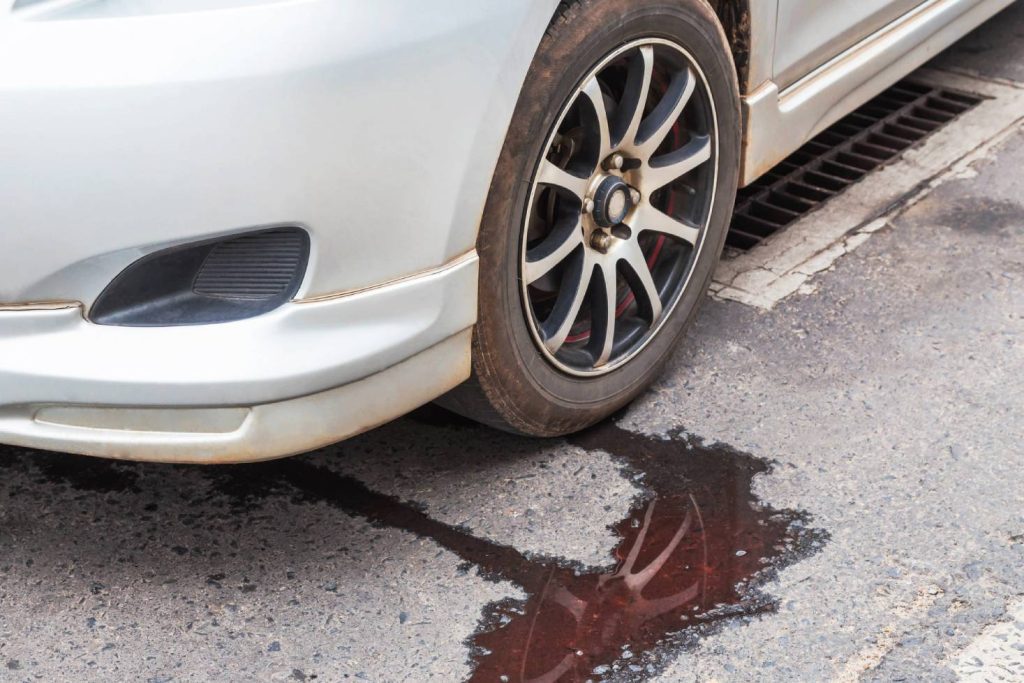

Fresh oily drips, a falling engine-oil level, and wetness on the engine can indicate an oil leak, but none identifies the failed part by itself. Begin by checking for urgent symptoms, then record where and when the evidence appears. If an oil-pressure warning comes on while driving, stop safely and switch off the engine rather than continuing a leak investigation on the road. If fluid is pouring out, smoke is developing, or you suspect a fuel leak, arrange assistance. A small-looking stain is not enough information to declare a vehicle safe to drive, and a dry parking space does not prove that it is leak-free.
This guide focuses on oil escaping externally from a passenger vehicle. Oil consumed inside the engine is a related but different problem, discussed in how to recognize possible oil burning. Your immediate goal is to distinguish an observation from a diagnosis: fresh liquid below the engine is an observation; a failed crankshaft seal is a diagnosis requiring more evidence. Keep those statements separate when contacting a workshop. You do not need to select a replacement part before asking for help, and a photograph from underneath another vehicle cannot establish the source of your own leak.
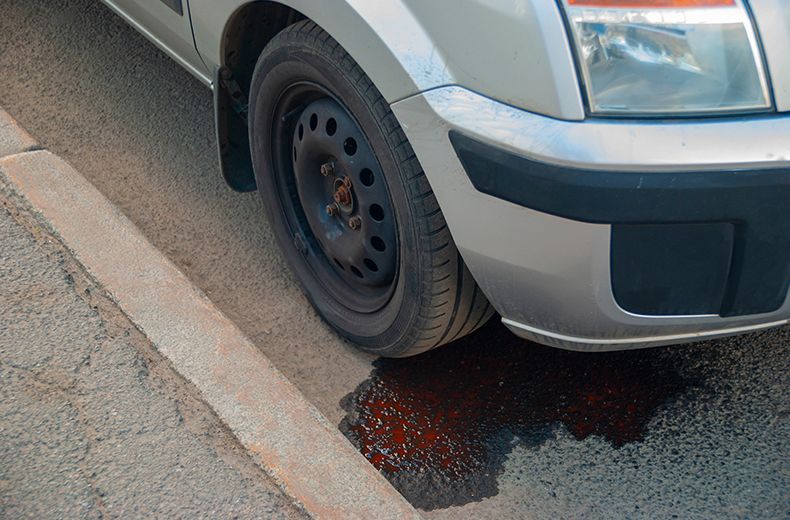
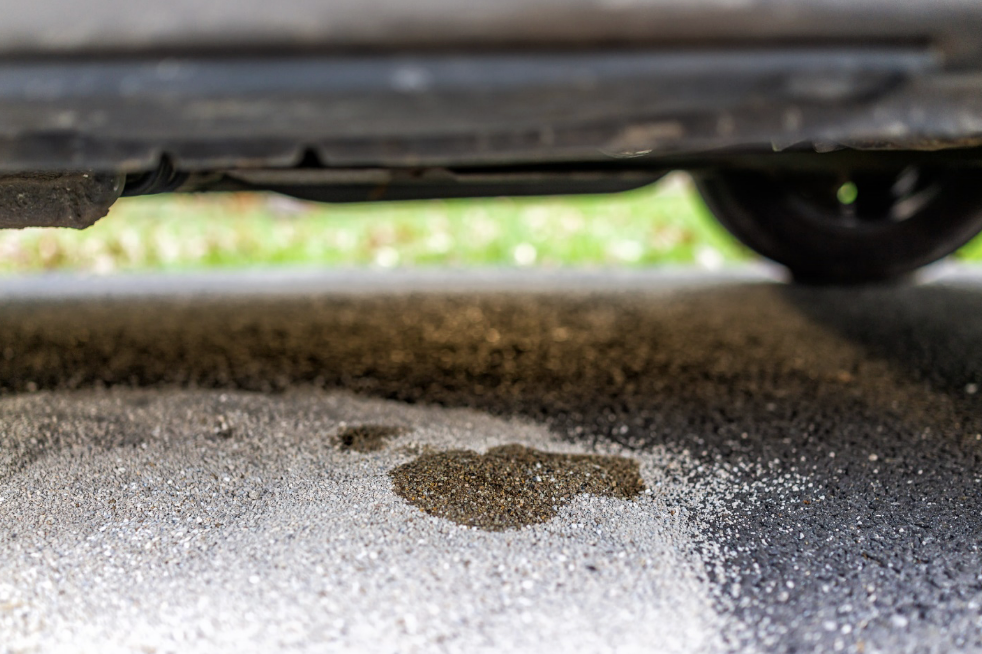
Start a short record with the date, odometer reading, recent service work, dashboard messages, and what you actually noticed. Describe a spot as newly wet or already dry, and note whether it appeared after parking, overnight, or after a recent oil change. Photograph its position relative to the vehicle from a safe standing location. If several cars use the same space, do not assume the stain came from yours. A clean parking surface can help establish ownership of the next spot, but move the vehicle only if doing so is appropriate given the symptoms and the manufacturer's instructions. Do not convert a stain's width into an assumed lost volume. Different surfaces absorb or spread liquid differently, and one mark may include more than one deposit. Record approximate dimensions only to compare observations on the same surface under similar conditions. That comparison remains supporting evidence rather than a measurement of the engine's remaining oil.
Credit: www.rac.co.uk
Build the evidence before choosing a repair
Handle warning lights first. The 2021 Mazda CX-5 owner's manual, for example, identifies its engine-oil warning as a pressure warning and directs the driver to pull over and stop the engine. Use the manual for your own vehicle to identify its message; a service reminder, oil-level warning, and pressure warning do not mean the same thing. Our oil-light guide explains that distinction. Do not keep the engine running merely to make a leak easier to photograph, and do not assume a normal-looking level cancels a pressure warning.
Check the level using the correct procedure. Use the exact manual's parking, temperature, waiting-time, dipstick, or electronic-measurement instructions. Record the reading rather than translating every mark into an assumed number of quarts. Different engines use different measurement arrangements. If the level cannot be obtained reliably, report that limitation instead of continuing to add oil until a guessed target is reached. Our guide to identifying a low oil level covers that separate task. A falling level supports a loss concern, but external leakage, internal use, and measurement differences still need to be separated during diagnosis.
Describe the fluid without performing a home identification experiment. A dark spot is not a chemical analysis. Dirt, the ground surface, previous spills, and lighting can alter how a liquid looks. Do not taste it, deliberately inhale fumes, or reach into moving or hot machinery to collect a sample. Tell the technician where it appeared and whether there are other symptoms, including fuel odor or changes in braking. Those observations can change the urgency and the inspection required. A photograph is useful context, but it cannot prove that a liquid is engine oil rather than another fluid used by the vehicle.
The place oil drips is not necessarily where it escapes. A useful manufacturer example is GM bulletin 21-NA-240, revised April 2025. For its listed vehicles with the 2.0L LSY engine, a leak can appear to originate from several areas, while the procedure calls for isolating its actual path. This does not diagnose an unrelated engine. It explains why a technician may need cleaning and controlled tracing before quoting a repair. Ask which location is the confirmed origin, which surfaces are merely wet, and what observation distinguishes one from the other.
Recent work is relevant history, not automatic proof of fault. If the first spot appeared after an oil change, tell the servicing shop and provide the invoice date and mileage. They can check the serviced areas and distinguish residual spilled oil from an active leak. Avoid tightening the filter, drain plug, or random fasteners without the specified procedure; an incorrect adjustment can create another problem. Do not wash away the evidence before discussing the issue if the vehicle needs immediate inspection. Equally, do not assume every stain after a service proves that the last person who worked on the car caused it.
Some oily residues have another explanation. Ford service message 47420 describes assembly grease on certain 2018 Escape vehicles with the 1.5L EcoBoost engine that could resemble an engine-oil leak near the bellhousing. Its diagnostic procedure is for technicians and that specific application. The useful lesson is not that your leak is harmless grease; it is that even an oily substance in a familiar location may need confirmation. A responsible diagnosis should explain what identifies the material and whether fresh engine oil is still arriving after the suspect area is appropriately assessed.
Keep the first inspection within safe limits. You can record visible evidence from outside the vehicle without crawling underneath it. Do not get under a car held only by a jack or improvise supporting it to take a better photograph. Leave inspection requiring lifting, access near hot components, or operation around belts and fans to a suitably equipped person. If the vehicle is already at a workshop, request photographs showing both the close-up and the wider location. A close-up of wet metal without orientation is harder to assess than an image showing where that area sits on the engine and how the suspected leak was traced.
Do not use stop-leak treatment as a substitute for finding the source. Whether an additive is permitted depends on the vehicle and product, and adding one cannot establish which component is leaking. The 2017 Ford Expedition manual, for example, warns against supplemental engine-oil additives. Follow your own manufacturer's instructions rather than generalizing a product's marketing claim. Tell the shop if any treatment has already been added, including its name and amount. Do not add an unspecified thicker oil merely to make a symptom less visible before the fault has been evaluated.
Control a spill without sending it elsewhere. Keep people and pets away from contaminated surfaces and avoid washing oil into drains or soil. The EPA's consumer oil guidance explains the importance of controlled collection and appropriate local recycling. Ask the local waste service how to handle used absorbents and contaminated material; their route may differ from the liquid-oil collection route. If a spill reaches a drain or waterway, contact the responsible local authority promptly. Repair and cleanup are separate tasks: making the driveway look clean does not show that the vehicle's source of leakage has been corrected.
Credit: www.cbac.com
Turn the observations into a clear workshop plan
Give the workshop the vehicle's model year, engine, mileage, service history, warning messages, photographs, and level observations. Ask whether the vehicle should be transported rather than driven in its current state. Request an inspection that identifies the fluid and source before a parts recommendation. If the concern is intermittent, explain the circumstances instead of trying to reproduce it through hard acceleration or prolonged idling. A technician may need the original cold-start or recent-service context to choose a suitable check. Agree how the shop will contact you if further tracing is needed, and what evidence will be provided before a larger repair is authorized.
When a bulletin or recall is mentioned, verify applicability to the exact vehicle. NHTSA's lookup distinguishes VIN recall results from broader model searches that include manufacturer communications. A service bulletin is not automatically a recall or a promise of a free repair. Ask the manufacturer or dealer about current eligibility and any superseding information. For a repair estimate, request the confirmed source, proposed parts and labor, any related cleanup, and the verification afterward. That makes two estimates easier to compare than a total price alone, especially when one shop has traced the source and another has only observed oil nearby.
After a repair, ask what follow-up is appropriate and whether residual oil may still need removal. Keep the invoice and the stated diagnosis with your original notes. Watch for fresh evidence under the conditions the technician recommends, without ignoring new warnings while waiting for a scheduled follow-up. A useful resolution is a documented source, an appropriate correction, and a check for recurrence. It is not simply a smaller spot on the ground. If the visible leak stops but the oil level continues to fall, report that separately so external loss and internal consumption can be investigated on their own evidence. Also preserve any advice about reinspection, permitted operation, or returning if a symptom changes. That written plan helps another household driver understand the situation and gives the workshop a clear comparison if the vehicle comes back with a recurring concern.


Automotive reference information. Confirm specifications in the manual for your exact vehicle. Original replacement guides link to their research sources. About us