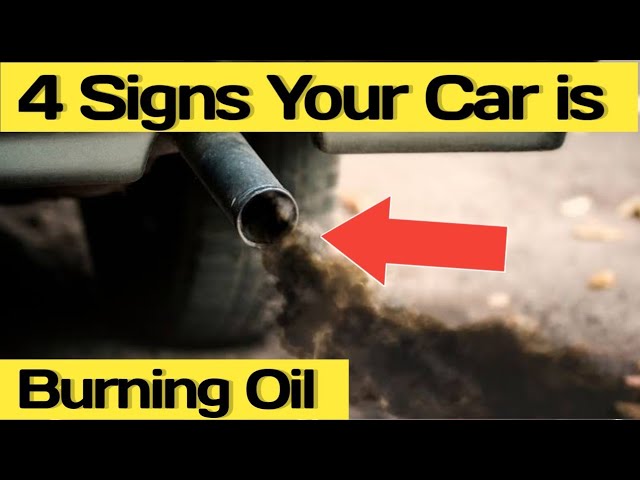

A car may be burning engine oil if it repeatedly needs top-ups and there is evidence of oil reaching combustion or the exhaust. Blue or blue-gray exhaust smoke can be a clue, but the diagnosis should combine symptoms, consistent level measurements, and an inspection for external leaks. A low dipstick reading alone does not tell you where the oil went, and no visible smoke does not establish that oil use is normal.
Treat an oil-pressure warning, severe loss of power, new mechanical noise, or heavy smoke as a reason to stop safely and obtain assistance. Do not run an engine low on oil just to finish a consumption test. If you are dealing with a warning now, use the exact vehicle manual and our guide to oil warning lights before working through the slower diagnostic process below.
The aim is to turn I think it burns oil into a useful set of observations: how much oil was added, over what distance and time, under which driving conditions, and with which accompanying symptoms. You can gather that history without dismantling the engine or choosing parts. This article describes research-based diagnostic reasoning, not a remote inspection of your vehicle or a promise that one symptom identifies its fault.
Start by separating oil use from an external leak
Motorservice's oil-consumption guide distinguishes oil entering combustion from oil escaping through a leak. In everyday conversation both can become the engine is losing oil, but they lead to different investigations. Wet engine surfaces, a drip trail, or fresh spots need the external-leak assessment in our oil-leak guide. A vehicle can also have more than one problem.
Record exhaust smoke without diagnosing by color alone
If smoke has already been observed, note whether it appeared at startup, after idling, during acceleration, or continuously. Record it from a safe location without asking someone to rev the engine or drive aggressively. Color seen in a phone video depends on lighting and background. Tell the shop exactly what you observed and when; do not label the cause as piston rings or valve seals merely because a generic online chart associates them with a smoke pattern.
Measure oil additions instead of counting top-up occasions
Added oil needs an amount, not just a frequency. Topping up twice with small quantities is different from adding two full bottles, and the bottle size itself may not equal the amount poured. Keep the product and measured quantity with each date and odometer reading. If an amount is approximate, mark it as such. A clear record helps identify a trend without pretending that imperfect estimates are a laboratory measurement.

Credit: www.reddit.com
Understand what other engine symptoms can and cannot prove
Rough running and a check-engine light can accompany several kinds of engine trouble. They may help a technician choose tests, but they do not prove that the engine is consuming oil. Keep the oil-use history and the drivability history together, while describing each accurately. A new symptom deserves attention even if it does not fit an online explanation you have already selected.
Spark-plug deposits need a careful interpretation
NGK's spark-plug reading guidance explains that wet deposits can have different causes depending on the material present. A photograph of a wet plug therefore is not enough to call it oil fouling or to select an engine repair. Ask the technician which part of the plug was affected, what the material was, and how the finding relates to the measured oil use.
Oil fouling is evidence to investigate, not just clean away
NGK's technical FAQ identifies worn rings or valve seals as possible routes for excessive oil entering combustion and notes the effect of fouling on ignition. Those are possibilities, not a diagnosis from one misfire code. Replacing a fouled plug can address an immediate symptom while leaving the reason for repeated fouling unresolved. Ask what will verify that the underlying problem has been corrected.
Distinguish exhaust smoke from an underhood odor
A smell described as burning oil does not establish where the oil is going. Tell the workshop whether it was noticed outside, through cabin vents, or near the exhaust, and whether smoke was visible. Do not deliberately breathe fumes or leave the engine running in an enclosed space to investigate. A problem that changes with heater or ventilation settings still requires identification rather than masking with fragrance or a cabin-filter replacement by guesswork.
External oil on hot components is a different investigation
If the evidence is wetness or smoke around the engine, ask for an external-leak assessment instead of jumping straight to an internal rebuild. A falling level could support either path. Recent work, a spilled top-up, and an active leak need to be distinguished before deciding why the smell appeared. Report what changed recently, including an oil service or other engine work, without assuming the timing proves responsibility.
Fuel-like odor should be reported separately
A gasoline-like odor associated with the oil raises a different question about possible contamination and its source. It should not be described as proof that oil is burning. Our article on motor oil that smells like gas explains the distinction. A strong fuel smell around the vehicle or visible fuel leakage needs immediate attention and should not be investigated through repeated starting or improvised flame tests.
Build a consistent oil-use record
First establish the correct starting level using the procedure for the exact engine. Keep the parking surface, measurement method, and temperature/waiting conditions consistent with that procedure. Do not copy a wet-sump routine onto a dry-sump system or assume an electronic display works like a dipstick. If the reading is unreliable, address that before estimating consumption. Our oil-check temperature guide explains why the manual's conditions matter.
Use the manufacturer's test and limits for your engine
GM bulletin 01-06-01-011P describes an oil-consumption evaluation for its stated vehicles, with specific applicability and operating assumptions. It addresses measurement, external leakage, driving patterns, and other factors rather than offering one unrestricted number for every car. Ask your manufacturer or workshop which current procedure and comparison limit apply. Do not turn another engine's warranty guideline into reassurance about a sudden change in yours.
Calculate a rate only when the records support it
For illustration, an accurately measured half liter added over 1,000 kilometers corresponds to 0.5 liter per 1,000 kilometers. The same amount over 500 kilometers corresponds to 1 liter per 1,000 kilometers. These are arithmetic examples, not acceptable-consumption limits. They assume comparable starting and ending levels and no unrecorded additions, drains, or leaks. A calculation is only as useful as the observations used to create it.
If a shop begins a formal test, ask how to record additions and when to return. Tell them about any required top-up rather than avoiding it to keep the test untouched. Do not drive below the allowed level while waiting to reach a mileage target. Record towing, long idling, unusually short trips, or another material change in use, so the technician can interpret the period accurately.
An unchanged level is also not a full assessment of oil condition. Contamination can complicate the relationship between quantity and lubricant quality. Keep unusual rising levels, fuel odor, coolant concerns, or engine symptoms in the record rather than treating the absence of a downward trend as a clean bill of health. These observations help decide whether a consumption test alone addresses the actual complaint.
Respond to warnings without using them as a consumption gauge
Oil-pressure messages and check-engine messages serve different purposes. Neither replaces scheduled level checks or a measured consumption record. Photograph a warning only after stopping safely and note whether it was steady, flashing, or accompanied by another message. Avoid clearing codes before the workshop has a chance to read them, because the associated information may help explain the event. A warning's disappearance does not by itself identify or resolve its cause.
A pressure warning requires prompt action
The 2021 Mazda CX-5 manual illustrates the distinction: its engine-oil warning refers to pressure and requires stopping the engine after pulling over safely. Follow the relevant instructions for your vehicle. Do not wait for a pressure warning before checking a known oil-use concern, and do not assume adding oil proves that the reason for a pressure warning has been repaired.
When calling roadside assistance, describe the exact message and what happened immediately before it. Tell them about smoke, noise, a suspected leak, and any oil already added. This helps separate a stopped-vehicle decision from a routine workshop appointment. Do not restart repeatedly to see whether the warning returns or run the engine solely to gather a longer video of a symptom.
A misfire code does not identify the oil's route
A diagnostic trouble code identifies a condition detected by a control system, not a complete mechanical conclusion. For a misfire concern, a technician may need to distinguish ignition, fueling, compression, and contamination issues. Report the code exactly if it has already been read, including the conditions when the symptom appeared. Do not buy rings, seals, injectors, or ignition parts solely because their names appear in a list of possible causes.
The important question is what evidence links the fault to the measured oil use. For instance, a replaced ignition component might resolve rough running while an unrelated external leak continues. Conversely, an oil-control problem could contribute to repeated fouling. Ask the workshop whether it has identified one connected problem or separate concerns. Keeping that distinction clear helps evaluate whether the proposed repair addresses everything you reported.
If the vehicle needs urgent attention, arrange that before assembling a perfect log. A partial record is still useful if its limits are clear. Mark unknown dates or quantities rather than inventing them retrospectively. The goal is to help diagnosis, not to produce a spreadsheet that delays action while the engine operates with a warning or an unsuitable oil level.

Credit: www.tiktok.com
What a professional investigation should establish
A useful investigation first confirms the complaint and distinguishes external loss, inconsistent readings, and internal consumption. It then considers causes appropriate to the engine and its symptoms. Ask what each test is intended to distinguish and how the result changes the repair recommendation. An inspection can be worthwhile even if it rules out a suspected part; the value is narrowing the cause using evidence rather than replacing plausible components in sequence.
Turbocharged engines need a system check
Garrett's turbo diagnostic guidance directs attention to filters, oil specification, drain restrictions, crankcase pressure, and breather function when investigating smoke or oil use. It warns that a turbo problem can reflect another underlying condition. Do not assume a replacement turbo is the first answer to every smoky turbocharged car. Ask how the related systems were assessed before authorizing that particular repair.
Laboratory information can supplement the mechanical evidence
Blackstone describes oil analysis as including tests such as viscosity and examinations for contaminants and wear-related information. Such testing can add context, but it does not independently locate every leaking seal or prove which route consumed the oil. Discuss the question you want answered with the technician and laboratory. A sample should supplement the relevant inspection, not postpone action on an active warning.

Credit: www.reddit.com
Judge the result by the original complaint
Before approving work, request the confirmed findings, the proposed correction, and how oil use will be evaluated afterward. If a manufacturer communication is cited, check the exact engine, model year, VIN applicability, and current version. NHTSA's vehicle lookup can help distinguish recall results from broader manufacturer communications. A bulletin's existence does not automatically establish a recall, a current warranty entitlement, or the cause in your vehicle.
After the repair, follow the agreed checking procedure and retain the same useful records: oil added, distance, elapsed time, and symptoms. Do not compare an unmeasured period before the repair with a carefully measured period afterward as if both were equally precise. If smoke disappears but top-ups continue, or the level stabilizes while a warning returns, report those outcomes separately so the unresolved concern remains visible.
The strongest evidence of an oil-burning concern combines reliable quantity records with findings that explain where oil enters the combustion or exhaust path. Smoke, smell, deposits, and dashboard messages are clues whose meaning depends on context. Start with safe action and accurate observations, then let the engine-specific diagnostic process determine whether the oil use is expected, excessive, or being confused with another problem.


Automotive reference information. Confirm specifications in the manual for your exact vehicle. Original replacement guides link to their research sources. About us