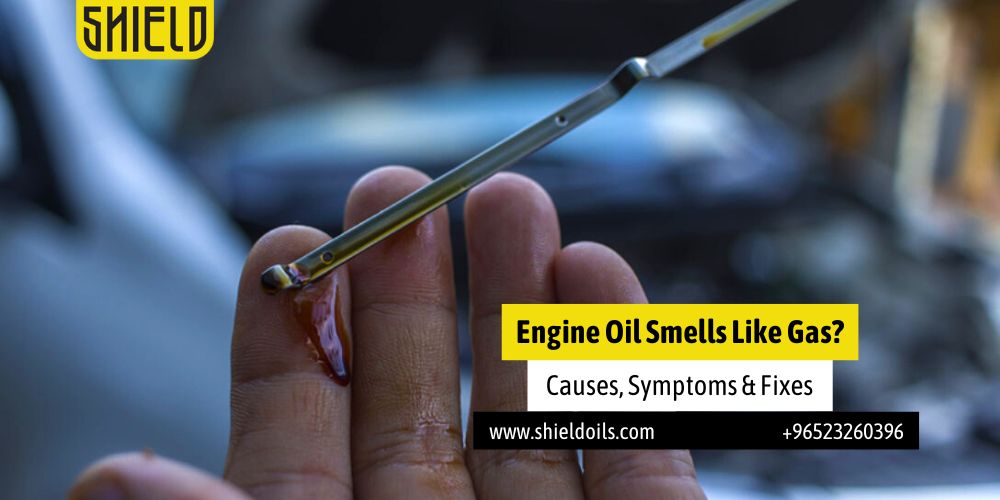

A gasoline-like smell associated with engine oil can indicate fuel dilution, but smell alone cannot measure the amount or identify the cause. Consider it alongside the oil level, its trend, warning messages, running symptoms, and recent service history. If there is a strong fuel odor around the vehicle, visible fuel leakage, smoke, or an oil-pressure warning, stop safely and obtain assistance rather than continuing to run the engine as a test.
Fuel dilution means fuel has entered the lubricant. Some operating patterns can contribute to it, while a fault can require a different response. Neither all fuel smell is harmless nor all fuel smell means failed injectors is a sound diagnosis. This guide helps you collect the information a workshop needs and understand the difference between an observation, a laboratory result, and a confirmed mechanical cause.
First distinguish where you noticed the odor: at a dipstick during a routine check, from drained oil, around the engine bay, or inside the cabin. These are different reports. Do not deliberately sniff a container or open components to intensify the smell. If you are unsure where it originated, describe that uncertainty. An apparent oil odor should not divert attention from a possible external fuel leak.
Credit: carfromjapan.com
Why fuel can become associated with engine oil
Motorservice's explanation of fuel flooding describes unburned fuel affecting the cylinder-wall oil film and discusses operating conditions that can contribute. The important distinction is between the pathway and the diagnosis: knowing that fuel can reach the oil does not prove why it happened in a particular engine. Avoid selecting a part until the relevant symptoms and tests support that conclusion.
Operating history is part of the evidence
Write down recent trip patterns, cold starts, lengthy idling, unusual running, and the period since the oil change. Be specific: several short errands is more useful than normal use, but do not invent temperatures or distances you did not record. This history can help a technician interpret a result. It is not a basis for declaring that a strong smell or rising level is automatically acceptable.
GM's oil-consumption bulletin 01-06-01-011P includes a discussion of fuel and moisture affecting level readings under certain short-trip conditions. It is an example for its stated applications, not a universal drive-it-until-it-clears instruction. If the level is outside the permitted range or there are running symptoms, obtain engine-specific advice before attempting a longer drive to change what you observe.
A suspected fueling fault still needs a diagnostic path
A workshop may investigate fueling and combustion when the symptoms support that direction. The relevant tests depend on whether the engine uses port injection, direct injection, another fuel system, or a different operating strategy. Do not treat generic advice for a carbureted small engine as a repair procedure for a modern car. Supply the model year, engine, market, and any exact diagnostic codes so the correct information can be selected.
Ask what test would distinguish a component fault from an operating-condition explanation. A recommendation to replace an injector should be supported by findings appropriate to that engine, not just the statement that fuel smells like fuel. Likewise, do not assume replacing spark plugs will resolve the origin of contamination simply because rough running temporarily improves. The repair should address the verified cause as well as any resulting service needs.
Wear and contamination should not be diagnosed from odor
A smell cannot tell you whether piston rings, cylinder surfaces, or another internal component are worn. Mechanical condition, fuel control, and lubricant condition are related but distinct questions. If a workshop recommends invasive work, ask which observations and test results support it. Keep a copy of those findings, especially when a second opinion would otherwise start with only a vague report of gasoline in the oil.
Do not pour an additive, solvent, or thicker oil into the engine to conceal the symptom while diagnosis is pending. Such a change can alter the lubricant or complicate interpretation of a sample. If something has already been added, give the product name and quantity to the technician and laboratory. Accurate disclosure helps them evaluate the actual mixture rather than assuming it is unchanged engine oil.
A head-gasket diagnosis needs its own supporting evidence
Do not jump from fuel-like odor directly to a failed head gasket. A technician should evaluate the symptoms relevant to that suspected failure, including any cooling-system concern, overheating history, or confirmed contamination. Report those observations separately. An online list of possible engine failures is not a ranking of the likely cause in your vehicle, and replacing the most expensive item on the list is not a diagnostic method.
A useful distinction is between an unexplained observation and a failed test. For example, the owner may have noticed an odor while a workshop subsequently measures a fuel-related abnormality. Those are separate pieces of evidence acquired in sequence. Ask for the test name, sample conditions, result, and interpretation rather than reducing the entire investigation to someone agreed that it smelled unusual.
If the problem started after maintenance, document what was done and whether the oil quantity, product, and warning-system reset were recorded. Recent timing helps the workshop reconstruct the case but does not prove who caused it. A high reading immediately after service might raise a fill-quantity question; a later rising trend raises additional questions. Establish the timeline before deciding those are the same event.
Which accompanying observations matter most?
Record the exact oil-level result, the conditions of measurement, and whether there has been a change over time. Add any warning, rough running, difficult starting, smoke, or unusual noise. Tell the workshop which facts you observed yourself and which were reported by another driver. Avoid substituting an interpretation such as rich mixture for the actual symptom unless a diagnostic result has established it.
Drivability symptoms make the context more specific
American Honda's April 2019 communication addressed oil-dilution-related drivability concerns in certain 2016–2018 Civic and 2017–2018 CR-V vehicles. It linked the investigation to specific conditions and VIN-based repair information. This historical example shows why model-specific service guidance matters. It does not establish that every car with a fuel odor has that issue or that an old warranty extension is currently available to you.
Smoke is a symptom to describe, not a fuel-percentage test
If smoke is already visible, report where it appeared, its duration, and the operating context from a safe location. Do not rev the engine to create a more dramatic video. Smoke color in photographs can be misleading, and several faults can affect exhaust appearance. The separate guide to possible oil burning explains how consumption evidence differs from suspected fuel entering the lubricant.
A rising level deserves a careful recheck and advice
A rising reading can be useful evidence, but first confirm that measurements follow the same vehicle-specific procedure and that no unrecorded oil was added. Use the required temperature, waiting period, level surface, and dipstick or electronic method. Our oil-checking temperature guide addresses those differences. A reading above the allowed maximum should not be dismissed because the engine still sounds normal.
Do not simply drain enough fluid to make an unexplained high reading look normal and assume the problem is solved. That changes the level without necessarily resolving the reason it increased. Contact the workshop with the measurements and service history, and ask about safe operation and the diagnostic plan. If the reading itself is uncertain, report that rather than experimenting with repeated drains and top-ups.
How to obtain a useful diagnosis
Give the technician a concise timeline: when the odor was first noticed, where it was noticed, the last service, subsequent level readings, driving conditions, and accompanying symptoms. Include any products added. Ask whether an oil sample should be taken before service and who should take it. Do not postpone urgent mechanical attention merely to preserve a sample or produce a longer trend record.
External fuel concerns take priority over sample collection
A strong ambient fuel odor or visible leakage changes the task from interpreting oil condition to addressing a potential immediate hazard. Stop using the vehicle and arrange appropriate assistance; do not search for the leak with ignition sources or by loosening pressurized fuel-system connections. If there is smoke or fire, move people away and contact emergency services. A laboratory report is not the first step in that situation.
Check the exact service information and its applicability
Honda bulletin 19-032, June 2019 version 3, gives distinct procedures for listed 2017–2018 CR-V trims and symptoms, with eligibility checks. Its professional diagnostic sequence is not a recipe to copy onto another engine. Ask the dealer whether current information applies to your VIN and service history. A familiar code or internet discussion does not by itself establish eligibility or the correct repair.
Laboratory testing can quantify evidence that smell cannot
Blackstone explains its flashpoint-based fuel estimate and notes that the oil type, fuel, other contaminants, and testing limits affect interpretation. Its oil-analysis overview also describes the broader range of tests. Read a reported number with the laboratory's method and comments, not by blindly comparing it with an unrelated sample online. Do not attempt a home flame or heating test. Follow the laboratory's sampling instructions and provide the engine, oil, fuel, and service history.

Credit: www.youtube.com
Understand the result before choosing a remedy
A test result, the condition of the lubricant, and the mechanical cause are three separate conclusions. A workshop may need to combine laboratory evidence with vehicle inspection and manufacturer information. Ask whether the proposed action addresses a confirmed fault, a required oil service, or further investigation. That distinction helps you understand why an oil change can be necessary without being the complete answer to recurring contamination.
Keep the laboratory question precise: is there evidence of fuel contamination, what does the method establish, and how does the result compare with the lubricant's measured condition? Tell the laboratory about additives or nonstandard fuels. A technically meaningful answer depends on knowing what went into the engine and how the sample was obtained.Interpret fuel findings alongside lubricant condition
Blackstone's flashpoint discussion links excessive fuel dilution with thinner oil and reduced protective capability. That relationship explains why the concern merits evaluation, but it does not supply a universal safe percentage for every engine and test method. The technician and laboratory should interpret the result in its specific operating context.Avoid predicting damage from one observation
An abnormal sample cannot tell you exactly when a component will fail. Likewise, a lack of obvious mechanical noise cannot prove that lubricant condition is acceptable. Ask what additional findings are needed to assess the engine rather than accepting either an unsupported catastrophic prediction or unconditional reassurance based only on how it sounds.Make the repair and follow-up plan specific
The right next step depends on the verified situation. It might include correcting a confirmed engine fault, applying applicable manufacturer instructions, servicing the oil, or gathering better measurements. Do not adopt a universal oil-change interval because one article names it. Follow the actual maintenance schedule and any diagnostic instructions given for the vehicle, including how to respond if the level or running symptoms change before the appointment.
Keep service dates and quantities traceable
Record when oil is changed and how much is added between changes. If a shop gives additional monitoring instructions during diagnosis, keep them with the service record. Those instructions do not erase the regular maintenance schedule, and a generic internet mileage interval should not replace the vehicle's actual requirements.Replace parts when findings support that decision
A newer or more expensive part is not automatically the answer. Ask which result supports replacing the proposed component and whether a relevant update, adjustment, or further inspection applies instead. This keeps the repair connected to the evidence rather than turning an uncertain odor report into an open-ended parts replacement exercise.Define what successful follow-up will look like
Define the follow-up evidence before leaving the shop: permitted level range, measurement conditions, symptoms requiring another call, and any planned recheck. Ask who will review a laboratory report if one is ordered. Have the workshop or laboratory specify the appropriate test rather than assuming every report answers every mechanical question.
Credit: www.youtube.com
When to return for further assessment
A recurring concern is easier to evaluate when the record distinguishes what changed after the first visit. Note the service performed, the oil product and amount, any software or component work documented, and the subsequent symptoms. Do not assume that a fresh oil smell proves the mechanical cause is fixed. Equally, do not diagnose continued fuel contamination solely because you remember a similar odor from before the service.
Report a renewed level trend or running problem
If the level rises again under comparable checking conditions, or rough running and warnings return, contact the workshop with the new observations. Ask whether the original diagnostic conclusion still fits. Keep any laboratory reports so that methods, sampling circumstances, and trends can be compared appropriately. A different laboratory or sample taken under different conditions can complicate comparison; explain those changes rather than treating every number as directly interchangeable.
Confirm current campaigns without assuming free repair
Use the manufacturer and NHTSA recall lookup to check current VIN-related information where applicable. Broader model searches can include manufacturer communications, which are not automatically safety recalls. A historical bulletin's warranty language should not be treated as a present entitlement without an eligibility check. Ask the dealer to explain the applicable program, if any, and the reason the proposed diagnostic or repair work fits your vehicle.
What to do with the information you have
A fuel-like odor is a starting observation. The useful next steps are to identify urgent symptoms, verify the oil-level measurement, record the operating and service history, and obtain the appropriate assessment. Do not deliberately inhale the oil, perform flame tests, or try to burn off suspected contamination by driving an engine whose condition is uncertain. Specific evidence is more useful than a confident guess about the failed part.
If the oil must be removed, tell the receiving service about suspected fuel contamination before disposal. Keep it separate from ordinary collected oil until the program gives instructions; our motor-oil collection guide explains that routing process. A household oil tank is not the place to hide an unidentified mixture. The workshop performing the service can also explain how it manages the material it removes.
Keep the distinction between quantity, quality, and cause clear throughout the process. The dipstick reports a level under specified conditions. Appropriate laboratory testing provides information about a sample. Mechanical and manufacturer-specific diagnosis establishes what action the vehicle needs. Combining those sources of evidence gives a better answer than relying on odor alone or applying another owner's repair story to your engine.


Automotive reference information. Confirm specifications in the manual for your exact vehicle. Original replacement guides link to their research sources. About us