
An OBD2 scanner can reset some airbag fault warnings only if it supports the vehicle's supplemental restraint system and the fault is eligible to be cleared. A basic emissions reader may not communicate with that controller at all.
Even a successful erase command does not repair a failed component or establish that the restraint system is safe. Diagnose and correct the underlying problem before considering a reset, and follow the vehicle manufacturer's verification procedure.
If your aim is simply to make the warning disappear before a sale or inspection, clearing it is the wrong objective: the unresolved condition still matters.

Credit: www.safetyrestore.com
The scanner has a limited role
Think of the tool as an interface to diagnostic information and supported service functions. It does not physically inspect a harness, verify installation of replacement parts or establish that a crash-damaged assembly is serviceable. Its result must be interpreted alongside the vehicle history and the correct repair information. A warning that goes out is one observation, not a complete assessment.
Reading and clearing are separate functions
A reader may retrieve a fault description without supporting every follow-up operation. Conversely, an erase button can be present before the correct system has been selected. Establish communication with the intended controller and preserve its report before considering any command that changes stored information. Reading engine codes is not a substitute for reading the restraint controller.
Coverage must match the actual vehicle
Innova documents a dedicated SRS reading procedure for its 5610 and distinguishes supported access from an unsupported application. That example shows why the brand name or OBD2 label alone is insufficient. Check the exact device, software version, model year and vehicle system against its coverage information. A connector that fits does not prove the required diagnostic capability.
Understand which indicator you are seeing
An airbag fault warning and a passenger-airbag status indicator have different purposes. Record the exact symbol or message, when it appears and whether it changes after the normal startup sequence. Consult the owner manual for that vehicle rather than matching an internet photograph alone. This avoids treating a normal status message as a fault needing erasure.
Why a persistent warning needs attention
The warning is a reason to investigate a possible restraint-system problem, not permission to assume that every airbag is disabled or that every airbag still works. Neither conclusion follows from the lamp alone. Arrange qualified diagnosis and follow the owner's safety instructions. Do not use the absence of a dramatic driving symptom to dismiss an occupant-protection warning.
Describe the event without guessing the failed part
Useful history includes whether the warning followed a collision, interior work, water exposure, battery service or another repair. These events are context, not proof of causation. Do not reach under a seat and unplug restraint connectors to test a theory. Give the history to the technician so any circuit examination follows the appropriate isolation and handling procedure.
Reset comes after a supported repair decision
The practical question is not merely whether the scanner can erase a code. It is whether the cause has been identified, the repair completed and the manufacturer permits the proposed action for that record. Some conditions require additional setup or verification beyond clearing diagnostic information. A generic reset tutorial cannot replace the application-specific sequence.
Capabilities to confirm before using the tool
Confirm access to the actual SRS controller, the ability to preserve its full report and the precise function you intend to use. Do not infer crash-record handling, coding or calibration from ordinary read-and-clear coverage.
Those are different operations.
If the coverage description is ambiguous, obtain clarification using the exact vehicle and tool identifiers rather than experimenting with commands.
A safe decision sequence
First identify the warning using the owner manual.
Next obtain a supported SRS report and save the complete code, status and controller information.
Have the cause investigated and repaired using the manufacturer's restraint-system procedure.
Only then use an authorized clearing or verification function when that procedure calls for it.
Finally confirm the required post-repair checks and retain both the original findings and the outcome, rather than relying on a photograph of an extinguished lamp.
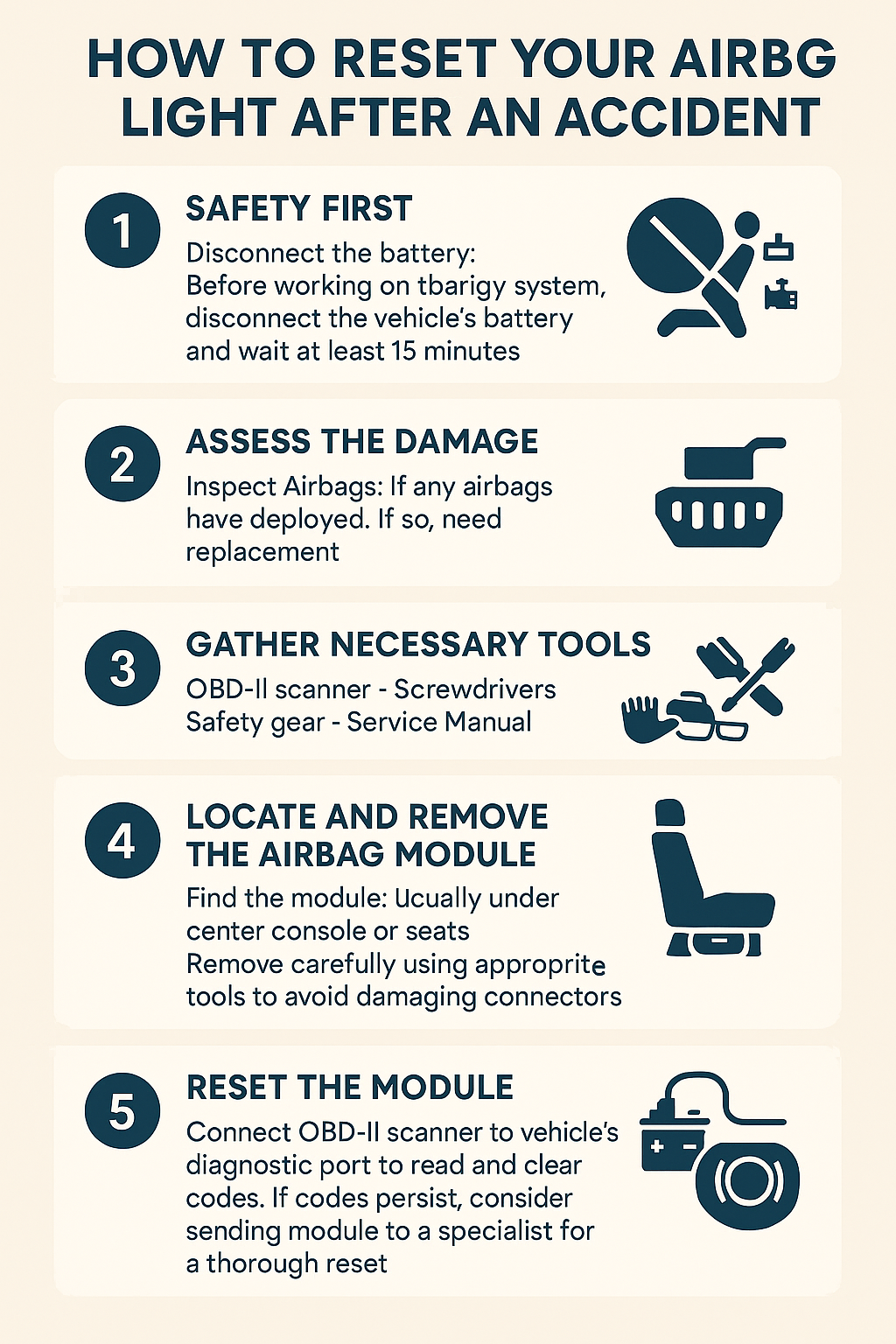
Credit: www.lndsolutions.org
What an ordinary OBD2 tool cannot establish
Generic emissions access does not provide a universal view of the airbag system. A message saying no engine codes were found says nothing conclusive about an SRS warning. Likewise, a failure to connect is not a clean bill of health. It is a communication or coverage result that needs to be resolved before interpreting the controller's condition.
Why a warning can return
If the underlying condition remains, the controller may detect it again after an erase. A returning code is not necessarily a scanner malfunction. Preserve its exact identity and timing instead of repeatedly clearing it. Also distinguish a record that never cleared from one that cleared and later returned; those observations can lead to different next steps in the authorized diagnostic procedure.
When professional restraint-system service is necessary
Collision history, deployed restraints, damaged wiring, uncertain replacement parts and unexplained persistent warnings require qualified assessment. Do not substitute online reset services for a documented repair plan.
Ask the repairer what was diagnosed, what was replaced or repaired and which verification steps were completed. Keep this record with the vehicle because future diagnosis depends on knowing what actually happened, not merely when the lamp was last erased.
Do not experiment with deployment circuits
Do not probe airbag igniter circuits, bridge connectors or install resistors to suppress a warning. Do not assume disconnecting the battery makes every restraint circuit immediately safe to handle. The manufacturer's isolation, waiting and handling requirements are specific to the application. This article explains the diagnostic decision, not a procedure for dismantling or electrically testing explosive restraint components.
A cleared warning does not erase the original risk
Erasing information can remove useful evidence while leaving the physical problem in place. That makes the next diagnosis less informed rather than the car safer. Innova cautions against erasing diagnostic information before service because useful troubleshooting records can be lost. Apply that evidence-preservation principle before any reset, particularly when the original warning is intermittent.
Verify the repair rather than the button press
Ask which manufacturer checks establish that the repair is complete. These may involve more than observing startup behavior, depending on the work performed and the vehicle. Do not invent a road test or staged impact to prove airbag operation. Verification should follow documented service information with the proper equipment, while the owner keeps the repair report and any relevant instructions.
Select a scanner for an identified task
Buying a more expensive scanner is not automatically the answer to an unresolved warning. Begin with the vehicle and required diagnostic function. If the repair will be handled by a qualified shop, paying for a correct diagnosis may be more useful than owning a tool whose restraint coverage is uncertain. Separate the cost of reading information from the cost and competence needed to repair the system.
Useful features are specific, not promotional
A clear report export, controller identification and documented vehicle coverage are more useful than a vague promise to turn off warning lights. Check whether software updates or access requirements affect the function you need. Read the limitations as closely as the supported-system list. An advertisement describing many resets does not establish eligibility to clear every restraint-related record.
An example is not a universal recommendation
The Innova 5610 documentation is an example of a manufacturer explaining SRS access; it is not proof that this device supports your vehicle or every repair operation. Other tool families have different coverage and workflows. Compare the exact documentation before purchase or use. Avoid copying menu steps from a similarly named product because its software and system access may differ.
Updates cannot replace vehicle-specific repair knowledge
Software improvements can change coverage, report handling or diagnostic access, but they do not make every historical fault safe to erase. Recheck the current documentation when the tool changes. Preserve the software version with the report if a result is disputed. The durable skill is distinguishing information retrieval, repair and verification rather than memorizing a particular button sequence.
Crash history requires a different level of review
NHTSA recommends replacement of airbags after deployment. That is a physical safety requirement, not a scanner-clearing task.
Other affected components and subsequent service operations must be assessed using the vehicle's repair information. Do not assume that a used module, an erased crash record or a warning-free dashboard demonstrates proper restoration after a collision.
Keep normal passenger-status questions separate
NHTSA also advises consulting the owner manual when the passenger-airbag status indicator behaves unexpectedly. Seat loading and occupant classification can be relevant, so identify the exact indicator before requesting a reset.
Do not place objects or use improvised tricks to manipulate the display. If the manual does not resolve the concern, seek qualified service instead of attempting to override the system.

Credit: www.amazon.com
The answer depends on coverage and completed repair
A compatible SRS-capable scanner may clear eligible faults after the cause has been repaired, but a basic OBD2 reader may not access the system. Neither the ability to erase nor a temporarily dark warning lamp proves occupant protection has been restored.
Preserve the original report, follow the correct repair procedure and require its verification steps. That approach answers the useful question: whether the vehicle has been properly repaired, rather than whether a warning can be hidden.


Automotive reference information. Confirm specifications in the manual for your exact vehicle. Original replacement guides link to their research sources. About us


