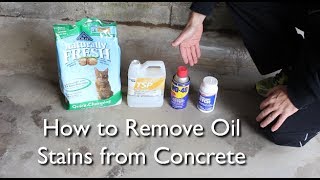

For a small, known motor-oil spill, the best starting sequence is to stop the leak, contain the liquid, absorb what you can and collect that waste before washing the floor. Then use a cleaner approved for the floor's material and finish. A fresh pool, a dry mark in bare concrete and a stain on an epoxy coating need different decisions. More water or stronger chemicals are not automatically better.
Do not begin by hosing the oil toward the garage door. That can turn one contained patch into contaminated wash water moving across a driveway or into a drain. Decide how you will collect and dispose of both the oil and the cleaning liquid before introducing water. If you cannot safely contain a continuing leak or the material may include fuel or an unknown chemical, get appropriate spill assistance instead of following a routine floor-cleaning method.
This guide is for household-scale cleanup of identified engine oil on hard garage flooring. It does not guarantee that old concrete will return to its original color. Photograph the spill, estimate its extent and identify the floor coating if there is one. If the oil is inside the vehicle, use our separate carpet oil-spill guide; soaking a hard slab and soaking vehicle padding create different problems.
Identify the floor and prepare a contained work area
Bare concrete can absorb contamination into its surface. Simple Green explains this difference between porous concrete and a fresh surface spill. Paint, epoxy, other resin coatings and garage tiles introduce additional compatibility questions. Check the floor manufacturer's cleaning guidance. If the finish is unknown, begin with identification and a concealed test instead of assuming a concrete degreaser is suitable.
Before choosing a cleaner, identify the boundaries of the work: which part of the floor is affected, where liquid would travel, and where people need to walk. Keep children and pets out of the area. Move electrical items and unaffected belongings away without dragging them through oil. If the floor is leased or covered by a coating warranty, check the maintenance requirements before testing chemicals.Supplies should match the spill
Gather oil-compatible absorbent, a scoop or dustpan, a suitable brush, labelled waste containers and clean wiping materials. Add the selected cleaner only after checking the finish. Keep a second set of clean gloves and cloths available for handling doors and tools after the dirty stage. Plan the route for taking waste out so a leaking bucket does not create another cleanup.Use the product label to choose protection
Wear the eye and skin protection specified by the oil, absorbent and cleaning-product instructions. Choose footwear that provides footing on a potentially slippery floor. Avoid raising dust while spreading or collecting granular material. A simple dust mask is not protection against chemical vapors; if the required ventilation or protective equipment is unavailable, choose another appropriate method or get help.Ventilate without creating another hazard
Follow the cleaner’s ventilation requirements and keep ignition sources away from the work. Do not deliberately work in strong fumes or mask them with fragrance. Never run a vehicle or gasoline-powered cleaner in the garage for heat or convenience. Keep the escape route clear while equipment and containers are positioned around the spill.Remove free oil before treating the stain
If a bottle tipped, set it upright in suitable containment when you can do so safely. If a vehicle is leaking, keep the engine off and address the leak rather than repeatedly cleaning beneath it. Do not crawl beneath an unsupported vehicle. Move unaffected possessions away from the spill so oil cannot transfer to boxes, shoes or tools during cleanup.
Keep the oil within a small area
Place suitable oil-absorbent pads or a spill barrier along the direction the liquid is moving, particularly toward a doorway or drain. Avoid walking through the center and spreading tracks. A barrier buys time but is not a permanent repair or permission to leave the spill. If oil has entered a drain or escaped the property, seek instructions from the relevant local spill or environmental service.
Absorb, collect and reassess
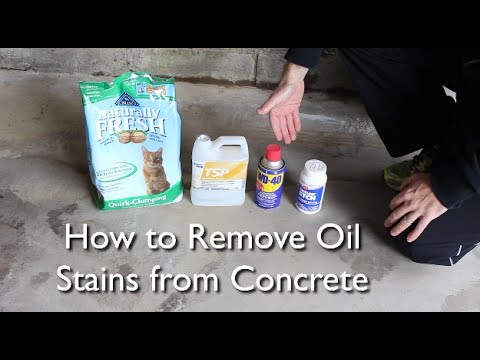
Albany, Oregon's oil-spill guidance recommends absorbent material, including clay cat litter, followed by collection. Use a product intended for the liquid and follow its instructions; not every scented or clumping pet litter is an equivalent industrial absorbent. Apply gently to avoid dust and let the material take up the oil before gathering it with suitable tools.
Collect saturated absorbent into an appropriate labelled container and keep it separate from unused supplies. Repeat with fresh material if free oil remains. Do not sweep oily granules into a drain or spread them around to make the wet patch look smaller. Once the liquid is removed, inspect what remains: a slick film calls for cleaning, while an old dark mark may require a slower stain treatment.
Use a compatible cleaner in a controlled section
Remove loose dirt and spent absorbent before applying a cleaner. Test the product on a small inconspicuous patch, using the labelled concentration, contact time and removal method. Let the test area dry so changes in color, gloss or coating texture are visible. If the coating softens, dulls or transfers to a cloth, stop and seek its manufacturer's advice.
Read the exact dilution and dwell instructions
Rust-Oleum's Cleaner & Degreaser label distinguishes bare-concrete preparation from diluted cleaning of coated surfaces. This is why the instruction on the product in your hand matters more than a generic online ratio. A concentration appropriate for an uncoated slab should not be copied automatically onto a finished floor. Check surface temperature and ventilation requirements too.
Measure any dilution rather than estimating a splash in a bucket. Mark the mixture if it will remain in a container during the job, and make only the amount required for the treatment area. Do not mix cleaners, add bleach or use fuel as a degreaser. Increasing chemical strength can create a compatibility problem without improving the ability to collect the loosened oil.
Oil Eater's application guidance also distinguishes dilution by surface and calls for a hidden-area test. Use manufacturer examples to understand the decision, not to combine instructions from different brands. If one product is ready to use and another is a concentrate, their amounts cannot be swapped. Keep the original label available throughout the work.
Agitate without grinding damage into the finish
Use the brush or pad allowed by the cleaner and flooring instructions. For bare concrete that may be a stiff nonmetallic brush; a coated surface may need a gentler method. Work only the intended area and keep the cleaner within its stated contact conditions. Do not assume a wire brush is acceptable simply because the surface feels hard.
Lift or collect the contaminated cleaning liquid using the method suitable for the product and the waste it now contains. Rinse only as required and only when you can control where that water goes. Keep clean and dirty tools separate so the final pass does not spread oily residue back over the surface.
Evaluate the result after the area dries. A glossy wet floor can hide residue, and a pale test patch may reflect a coating change rather than successful stain removal. Compare with the untreated area and your original photograph. If the first compatible treatment produces little improvement, pause before moving to harsher chemistry or aggressive abrasion.
Pressure washing needs a runoff plan
A pressure washer is not the default first tool for an oil spill. It introduces a large moving stream that you must manage, and its suitability depends on the surface and machine instructions. Remove free oil first. If you cannot collect contaminated runoff or confirm the surface can withstand the treatment, choose a contained hand-cleaning method or hire appropriate help.
Bothell's pressure-washing guidance tells residents to identify storm drains and keep oily or chemical-containing wash water out of them. Its specific rules belong to that locality; check your own area's requirements. A cleaner labelled biodegradable does not make the oil it lifts acceptable for release. Do not assume a nearby floor drain connects to a treatment system.
CDC warns that pressure washers can cause serious injection wounds and that gasoline-powered equipment must not be operated in enclosed spaces. Never run a gasoline pressure washer inside the garage, including with the door open; follow the specified separation from doors, windows and vents. Use electrical equipment only according to its water and grounding precautions. Do not aim the jet at skin, animals or electrical fittings.
There is no single safe pressure or nozzle distance for every slab, joint and coating. Follow the equipment and flooring instructions and test first. A jet that removes a stain by eroding the surface is not a successful cleaning result. Stop if the finish lifts, the concrete surface changes or runoff starts escaping your collection area.

Credit: www.reddit.com
Treat old stains as a separate problem
Absorbent can remove liquid available at the surface, but it does not prove oil already in concrete pores has been removed. Separate your goals: first eliminate the slippery residue and ongoing contamination, then decide whether further cosmetic improvement is worth pursuing. An old stain may lighten without disappearing completely. Do not promise a like-new finish before testing. Oil Eater describes repeat treatment for some old concrete stains and distinguishes its separate overnight product.
Once free oil is gone, compare an old stain with a fresh nearby surface only after both are dry. Record whether it is still slick or whether it is simply darker. That distinction helps you avoid repeatedly adding cleaner to a mark that now needs professional assessment rather than another routine scrub.Compare stain-treatment methods by their instructions
A degreaser and a drying stain-removal product may have different contact times and collection methods. Oil Eater’s published concrete-stain guidance, linked in the surrounding discussion, describes repeated applications for some old stains and a separate overnight product. Do not transfer one product’s dwell time to another. If the instructions require the treatment to dry before collection, protect the area from foot traffic and weather until that step is complete.Do household mixtures provide a better answer?
Do not assume vinegar, baking soda or a mixture of household products will outperform a labelled oil cleaner on your particular finish. Absorbing free liquid and removing a set-in petroleum stain are different jobs. The bubbling of a mixture is not evidence that oil has left the concrete. If you choose any household material, verify its surface compatibility and waste handling rather than treating familiarity as proof of effectiveness.Prevent the next leak from reaching the floor
Cleanup will be temporary if the same vehicle or storage bottle keeps dripping. Put a suitable drip tray or oil-resistant containment mat beneath the source while arranging a repair or improving storage. Position it so it does not create a trip hazard or interfere with moving the vehicle. Check and empty it before its capacity is exceeded.
Use containment that you can inspect
A tray should retain liquid; a mat should be rated for the intended oil exposure and kept in good condition. Cardboard can show where a drip lands, but it should not be relied on as leak-proof containment. Check beneath any cover periodically so an unnoticed leak is not simply hidden. Remove saturated or damaged material according to local disposal instructions.Track the source of new spots
Photograph the position of a new drip in relation to the parked vehicle and record when it appears. Use that information when arranging a repair; the spot on the floor does not by itself identify the failing seal. Check oil level using the vehicle’s procedure. A persistent leak or warning needs diagnosis even if a tray keeps the floor clean.Plan waste handling before rinsing
The job creates more than one waste stream: recovered oil, oil-soaked absorbent and perhaps cleaner mixed with water and oil. Keep them identified. EPA recommends appropriate collection and recycling of used oil, but a used-oil receiver may reject a mixture containing detergent or water. A liquid that has contacted the floor should not be returned to an engine.
Ask about absorbent and mixed wash water
EPA's household hazardous waste guidance directs consumers to product labels and local collection arrangements. Ask your local program about the particular oil-soaked material and cleaner mixture. Do not assume every city's trash instruction is valid where you live. Provide the cleaner's name and disclose any fuel or other contamination. Our used-oil disposal guide covers collection of the oil itself.
Environmental labels do not replace containment
Consider a product's compatibility, required amount, protective measures and waste route alongside any environmental claim. Using less water can simplify containment, but a low-water method still leaves contaminated material to collect. Read the label rather than equating “natural” with harmless. The practical success measure is oil removed and responsibly handled, not merely a stain moved out of sight.
Know when professional cleaning is appropriate
Get help if the spill is too large to contain, extends beneath fixed structures, involves unknown fluids, or has entered drainage. A professional may also be appropriate for an expensive floor coating whose product history is unclear. For a continuing vehicle leak, a cleaner and a repair technician solve different parts of the problem.
Give the contractor useful information
Explain the floor material, approximate spill size, how old it is, the oil type if known and every product already applied. Share photographs and mention any drain connections. Ask what will be collected, how waste will be managed and what cosmetic result is realistic. An estimate should distinguish cleaning from coating repair or concrete restoration.
Prepare carefully before applying a new coating
Do not cover contamination with paint merely because the dry mark is unattractive. If you plan to seal or coat the floor, follow that coating system's required cleaning, surface preparation, moisture checks and drying conditions. The appearance of a stain alone cannot establish readiness for adhesion. A coating professional can assess an uncertain surface before materials are purchased.
Credit: www.reddit.com
Credit: www.youtube.com
Choose the smallest effective cleanup process
For a fresh contained spill, absorb first and clean the remaining film with a compatible product. For an old mark in bare concrete, test a suitable stain treatment and reassess after drying. For a coated floor, use the coating maker's instructions. For a large or unknown spill, stop and arrange appropriate help. These choices are more dependable than a universal strongest-cleaner recommendation.
Finish by collecting the waste, drying the floor, checking for slippery residue and correcting the leak. Store remaining products upright with their labels intact. Keep a small spill kit where you can reach it before the next oil change. A clear floor, a known disposal route and a resolved leak provide a better result than repeatedly scrubbing the same expanding patch.


Automotive reference information. Confirm specifications in the manual for your exact vehicle. Original replacement guides link to their research sources. About us
