
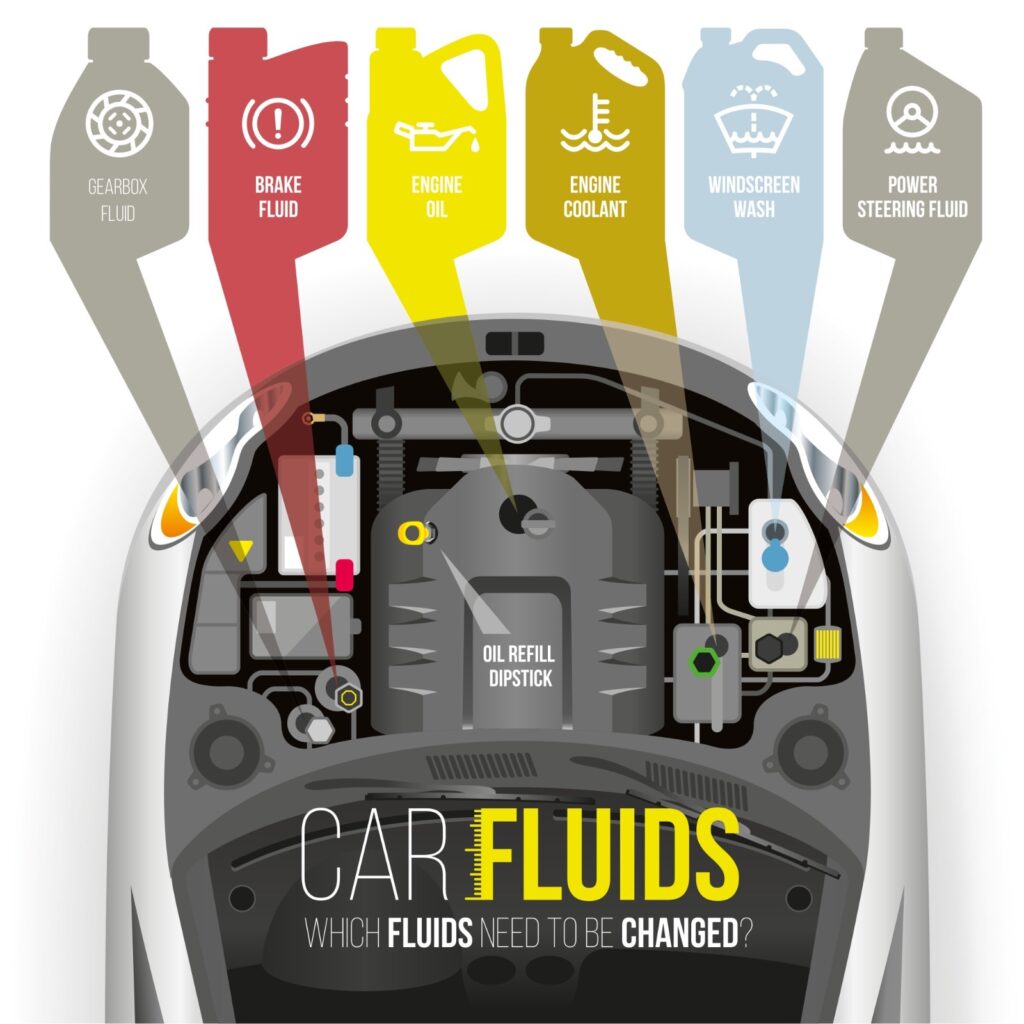
Motor oil and brake fluid are different products for different systems, and neither should be substituted for the other. Engine oil lubricates the engine under its specified operating requirements.
The correct brake fluid transmits hydraulic pressure and must be compatible with the brake system's materials and performance needs. If motor oil has been added to a brake reservoir, do not drive the vehicle or keep operating the brakes to test the result.
Arrange qualified assessment and recovery as needed. A simple top-up with correct fluid does not undo contamination, and the required repair cannot be established from the amount of visible discoloration alone.

Credit: gandharoil.com
Identify the system before choosing a bottle
Read the reservoir or fill-point identification and the vehicle information. Do not rely only on location or fluid color. Different vehicles arrange their service points differently, and a familiar-looking cap may serve another system. If you cannot identify the intended fill point and required product, stop before adding anything.
Engine oil is formulated for engine service
Its job includes providing suitable lubrication under engine temperatures and loads while managing the environment in which it operates. The required viscosity and performance specification are selected for that application. Those properties do not establish compatibility with a hydraulic brake system. Shared words such as fluid or synthetic are not evidence that the products can be interchanged.
Engine-oil grades do not identify brake-fluid suitability
A viscosity marking on a motor-oil bottle answers a different classification question from a brake-fluid specification. Check the full engine requirement for an oil purchase, and check the brake requirement separately. API's motor-oil guide concerns engine-oil quality marks and categories; it is not a guide for choosing fluid for the brake reservoir.
Additive chemistry is application-specific
Finished fluids contain ingredients chosen to meet their intended requirements. The fact that an oil resists wear or corrosion in one application does not prove it is suitable for another. Do not select by a broad protective claim on a label. Compatibility must be established by the actual vehicle specification and the product's documented application.
Brake fluid has a different set of requirements
The hydraulic system depends on appropriate pressure transmission, temperature behavior and material compatibility. Its fluid is not simply engine oil with a different name. A product chosen for lubrication alone may be unsuitable for the seals and other parts in the braking circuit. Follow the exact specification rather than improvising a substitute during a low-level event.
Hydraulic response depends on the whole system
Brake-fluid condition is one part of braking performance; leaks, air, mechanical faults and other conditions can also affect the pedal. Do not diagnose every soft pedal as old fluid or assume adding fluid repairs a fault.
A changed pedal or warning requires the appropriate inspection. If braking performance is compromised, do not drive to test whether it improves.
DOT names need careful reading
DOT 3, DOT 4 and DOT 5.1 are not the same label as DOT 5. HELLA's technical guidance explains distinctions among fluid types and the need to follow manufacturer specifications.
Do not choose the highest-looking number as a universal upgrade. Some systems have specific requirements beyond a broad class name, so identify the exact product needed.
Do not infer compatibility from color
Fresh fluids may have recognizable appearances, but dyes, aging and contamination can alter them. A dark liquid is not automatically motor oil, and a clear liquid is not automatically suitable brake fluid.
Read the container and maintain traceability. An unmarked bottle should not be used in either system merely because its contents resemble the expected fluid.
Material compatibility is a critical distinction
A fluid that behaves acceptably in an engine can damage materials in a brake system. That is why cross-contamination deserves immediate attention even before a symptom appears. Do not wait for a pedal change to decide whether the mistake matters. The appropriate response depends on the system and contamination history, which need professional assessment.
Petroleum contamination can damage brake components
Raybestos documents a petroleum-fluid contamination case involving swollen rubber parts and a brake-system fault. That is a concrete reason not to treat motor oil as an emergency brake-fluid substitute. It does not provide a universal home repair procedure for every contaminated vehicle; the affected components and required work must be established for the actual system.
Keep formulation families separate from service permission
Knowing that a fluid belongs to a particular chemistry family is not enough to approve mixing or substitution. Vehicle requirements and product instructions still apply. The same caution extends to unusual brake or hydraulic systems that specify dedicated fluids. Do not generalize a requirement from one specialized application to a conventional passenger car.
Credit: www.autoapp.sg
Viscosity matters differently in each application
Both products have flow characteristics, but matching a rough thickness is not a compatibility test. A brake system's required fluid behavior is not established by comparing a drop with engine oil on a workbench. Use the specification, not a feel test. Cold and hot performance must be evaluated through the relevant standards and vehicle requirements.
Heat behavior cannot be judged by appearance
Brake-fluid performance includes requirements related to temperature and boiling behavior. Engine oil is designed for another operating environment. A liquid looking stable in a bottle does not show how it will perform in a braking circuit. Do not attempt a household heating test as a substitute for correct product identification or professional fluid assessment.
The wrong fluid can create more than a service inconvenience
A contamination event can affect safety and require component work, not just replacing the liquid in the reservoir. Record the exact product and what happened. Do not assume the absence of an immediate symptom means no action is needed. Early accurate reporting helps the repairer assess the extent and appropriate recovery plan.
Engine symptoms do not justify brake-fluid experiments
Brake fluid is not an engine-cleaning additive or a substitute lubricant. If an engine has noise, deposits or another complaint, diagnose it through the correct procedure. Adding a different system's fluid creates a new variable and may damage components. A temporary change in sound or appearance would not prove a beneficial or safe result.
A low brake-fluid level needs an explanation
Follow the vehicle's instructions and identify why the level is low before treating a top-up as the complete repair. Wear and leakage can require different responses, and a warning or changed pedal needs assessment. Use only the specified fluid where an addition is appropriate. Motor oil is never an acceptable shortcut because it is the bottle available nearby.
Keep maintenance records specific
Record the exact product used for each system, not just fluid added. If service was performed by someone else, retain the invoice and ask about an unclear specification. A precise record becomes especially valuable when a symptom begins after maintenance. It helps distinguish the original problem from a possible wrong-product or handling error.
Engine-oil service does not service the brakes
Changing the oil and filter has no role in renewing brake fluid. Each system has its own maintenance instructions. Do not assume a full-service description includes both operations without checking the invoice. Clear service scope prevents missed maintenance and makes it easier to verify that the correct product went into the correct location.
Brake-fluid replacement needs the proper procedure
Use the vehicle's specified fluid, equipment and sequence. Some systems require additional steps or diagnostic support. A generic bleed instruction is not sufficient for every vehicle, and contaminated components may require more than routine replacement fluid. Do not treat a normal maintenance procedure as a guaranteed solution to petroleum contamination.
Prevent cross-contamination during handling
Keep containers labeled and separate, and use clean equipment suitable for the fluid. A funnel or syringe that retains engine oil can contaminate another system even when the new bottle is correct. Do not return unused fluid from questionable equipment to a clean container. Handling discipline is part of selecting the right product, not an optional extra.
Store products according to their instructions
Close containers properly and protect them from contamination. Follow the fluid manufacturer's guidance about storage and use after opening. Do not invent one shelf-life rule for all brake fluids and engine oils. If a container's identity or history is uncertain, obtain guidance or use a known suitable product instead of guessing.
If oil entered the brake reservoir, stop and document
Do not drive. Avoid further operation intended merely to test the pedal. Keep the container and record the estimated amount, time and whether the vehicle or brakes were operated afterward. Arrange a qualified repairer to assess the system and organize recovery where needed. Do not promise that suctioning the reservoir alone will restore safety.
Ask for a system-specific contamination repair plan
The repairer should identify the affected system, assess the contamination and follow the applicable service guidance. The work may involve more than a fluid exchange. Ask how the repair will be verified before road use. Avoid accepting a generic assurance that several flushes always solve every wrong-fluid event, because extent and material exposure matter.

Credit: www.reddit.com
Keep the distinction clear before every top-up
Engine oil and brake fluid have different jobs, specifications and compatibility requirements. Identify the fill point, read the required product and keep dispensing equipment clean.
If a mistake occurs, preserve the facts and obtain the correct assessment before further use. Preventing the mix-up is simple; assuming the fluids are interchangeable can create a much more serious repair.


Automotive reference information. Confirm specifications in the manual for your exact vehicle. Original replacement guides link to their research sources. About us


