
A bad spark plug can cause a misfire, but white exhaust is not reliable evidence that the plug caused it. In a gasoline car, investigate what accompanies the plume: cold-weather conditions, coolant loss, rough running, warning messages and whether the appearance is new. Replacing plugs solely because the exhaust looks white can miss the real fault.
The direction of cause matters. An engine problem can produce abnormal exhaust and also interfere with combustion, leaving a plug looking unusual or producing a misfire code. In that situation, the plug may be evidence of the problem rather than the original source of it. A new plug cannot repair a coolant leak into a cylinder.
If there is overheating, escaping steam, substantial loss of power or unsafe running, stop somewhere safe and follow the vehicle's emergency instructions. Do not keep driving to determine whether the smoke eventually clears. This guide explains how to frame the investigation, not how to certify a smoking engine safe from a distance.
Credit: motoraxle.com
Start with the source and circumstances of the plume
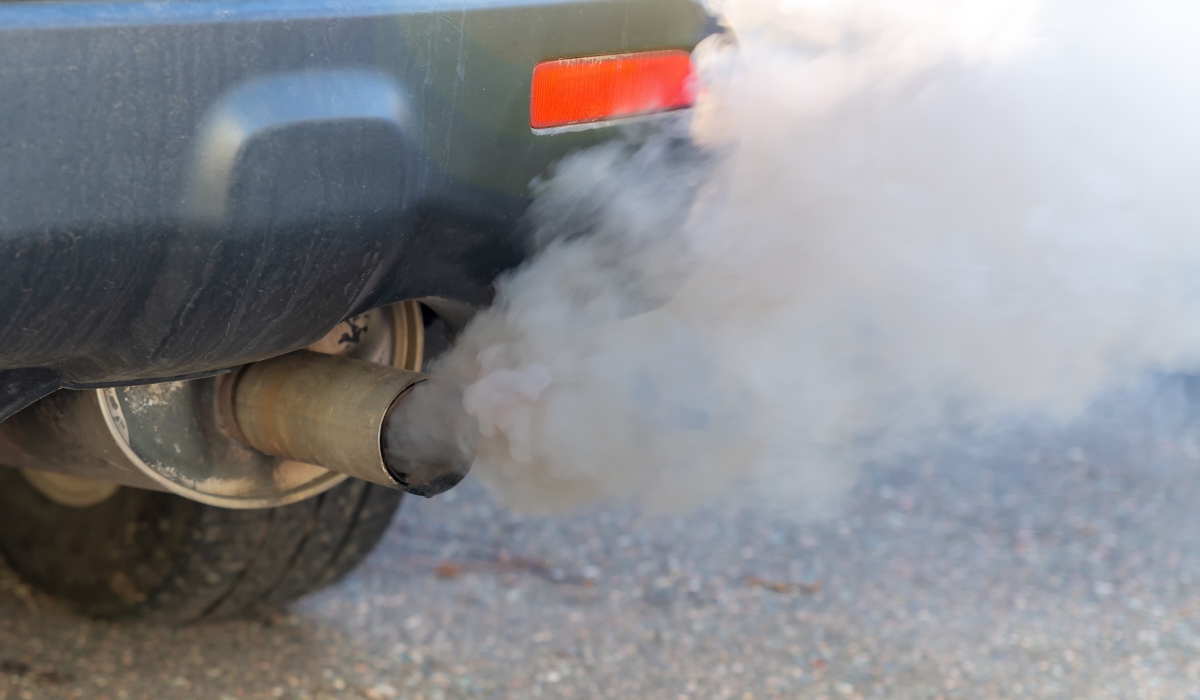
Make sure the observation is exhaust leaving the tailpipe, rather than steam or smoke emerging under the hood or elsewhere on the vehicle. These locations point to different investigations. Do not approach hot components to locate a leak, open a steaming engine compartment or assume every white cloud is harmless water vapor. Research on condensed vehicle exhaust in cold weather documents this ordinary phenomenon; it is not a diagnostic study that can declare a particular plume harmless.
Brief visible exhaust can be condensation
Exhaust moisture can condense visibly in cold conditions, so seeing a pale plume does not automatically mean coolant is being consumed. Its appearance can vary with weather and operating conditions. Observe changes during normal safe use only; do not idle an unhealthy engine for a chosen number of minutes to prove that the plume is harmless.Persistent or changing exhaust needs context
Visible exhaust that is new, unusually dense or accompanied by fluid loss or rough running warrants more attention than an unchanged cold-weather mist. It is especially useful to report several observations together. Do not require every possible symptom to appear before seeking help: the absence of overheating or a warning light does not certify that an unexplained exhaust change is normal.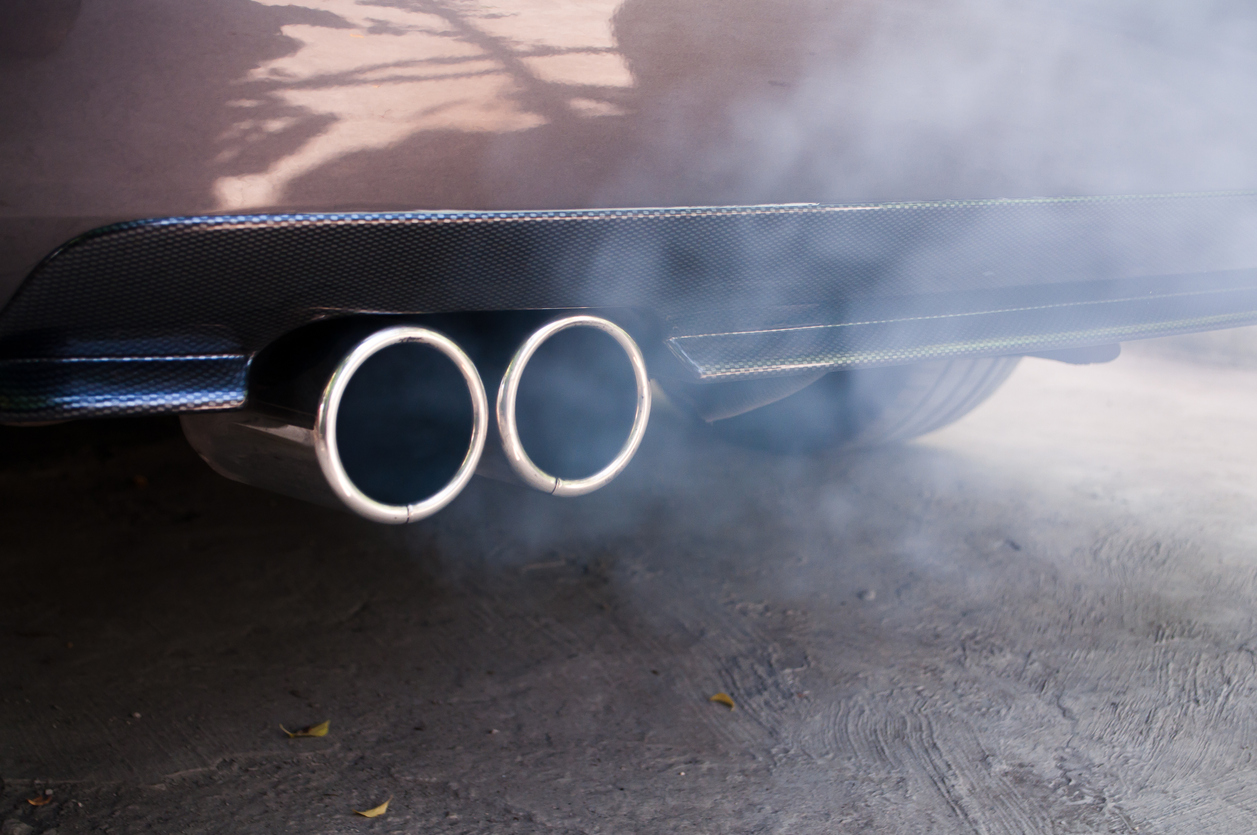
Credit: www.autozone.com
What a spark plug actually controls
A spark plug provides the discharge that initiates combustion in a spark-ignition engine. It does not meter coolant or act as a valve separating the cooling system from the cylinder. NGK's operating explanation describes its electrical and thermal roles; neither role makes white exhaust a direct plug-condition indicator.
An ignition fault can disturb combustion
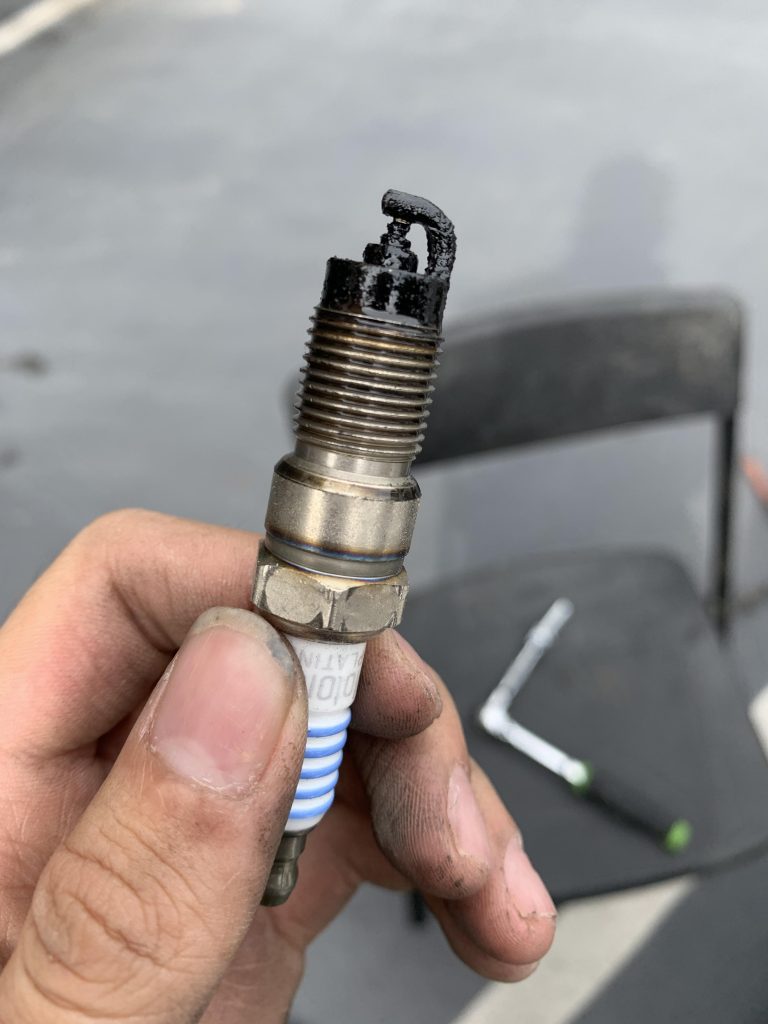
A worn, contaminated or damaged plug can fail to ignite the mixture correctly. That can affect engine smoothness and emissions. However, a change in combustion does not assign one dependable visible color to every failure. Do not turn the reasonable statement that plugs can misfire into the unsupported rule that bad plugs produce white smoke.
Rough running does not settle the cause
DENSO's misfire discussion covers symptoms such as roughness, hesitation and reduced power while considering ignition and other diagnostic factors. If you feel those symptoms with abnormal exhaust, record both. They need to be explained together, rather than using one to dismiss the other as merely a worn plug. The Bosch plug-condition chart distinguishes several deposits and damage patterns, reinforcing why a discolored plug needs interpretation rather than a color-based verdict.
A real example of smoke and misfires sharing another cause
Ford's December 2019 bulletin 19-2346 describes certain 2.0L EcoBoost vehicles with coolant intrusion, white exhaust, low coolant or rough running. Misfire-related codes may also be present. This is a documented example of why a misfire code beside white exhaust does not automatically justify an ignition-only repair.
Keep the bulletin's application limits
That historical document covers specified 2015–2018 Edge and 2017–2019 Fusion, MKZ, Escape and MKC applications, with engine, build-date and further identification requirements. It is not a diagnosis for every EcoBoost engine, and it does not establish that your vehicle needs its listed repair. A workshop must check current information against the actual vehicle.
The useful lesson is about evidence: the bulletin requires checks beyond reading a misfire code before reaching its repair decision. Treat the example as a reason to investigate coolant-related signs properly, not as a reason to order an engine or a head gasket from a symptom description.
White appearance does not always mean coolant
A second historical Ford example shows the limits of color charts. June 2020 bulletin 20-2207 discusses excessive white or blue startup smoke after a cold soak on certain 2018–2020 F-150 trucks with the 2.7L EcoBoost engine, associated with oil reaching the left turbocharger turbine housing.
Its procedure specifically sends vehicles with additional oil-consumption, drivability or other concerns to normal diagnosis instead of that bulletin's repair path. This qualification matters: even a matching model and smoke description are insufficient when the rest of the complaint differs. The bulletin is an example, not a universal turbocharger or oil-line replacement recommendation.
Taken together, these examples explain why changing plugs, coolant parts or turbo parts by color alone is unreliable. Similar-looking exhaust can occur in different conditions, and the required checks depend on the engine. A repair proposal should name the established fault and explain how it accounts for the observations.
Information you can provide without dismantling the engine
Record when the plume first appeared, whether it was noticed at startup or during a journey, the weather and any recent repair or treatment. State whether the engine ran evenly and what the dashboard showed. A short video made safely while parked can document the appearance, but it cannot identify the fluid or failed component.
Report fluid history accurately
Tell the workshop about recent coolant additions, visible leaks or oil-level changes. Include dates and amounts if known instead of estimating a loss rate from one glance. Only check levels using the owner's specified conditions. A low reservoir is a reason to investigate; it does not by itself identify an internal leak or prove a head gasket has failed.
Let the tests answer a defined question
A technician may assess cooling-system integrity, inspect cylinders, examine plug condition and use relevant diagnostic data. The appropriate combination depends on the engine and symptoms. Ask what each finding establishes: evidence of fluid entry, an external leak, an ignition fault or something still unresolved. No single generic internet test replaces that assessment.
Decide the repair after identifying the cause
Before authorizing plug replacement as the solution, ask what evidence identifies the plugs as faulty and what explains the white exhaust. The answers may involve one problem, two simultaneous problems or an ordinary condensation plume beside an unrelated running fault. A plausible explanation should cover the complete complaint without pretending those possibilities are interchangeable.
A repair should address the mechanism found during diagnosis. If contamination damaged a plug, replacement may be necessary as one part of the work. If the underlying source remains, changing that plug alone can leave the original complaint unresolved. Ask for the findings in writing, including which symptoms were confirmed and which could not be reproduced.When new plugs are part of the repair
Replace plugs when their condition or the vehicle's maintenance requirement supports replacement, using the specified parts and installation procedure. Do not treat a fresh set as a coolant-system repair. If the engine becomes smoother afterward but the abnormal plume or fluid loss continues, report that distinction immediately rather than assuming the whole complaint has been fixed.When the fault lies beyond the plugs
An external coolant leak, internal fluid entry, turbocharger-related condition or fuel-system fault requires its own evidence and repair path. The relevant workshop instructions determine the checks and limits. A generic promise to stop smoke is not a diagnosis, and a symptom match to another owner's car is not enough to choose the same replacement parts.Avoid misleading shortcuts while arranging help
Do not add injector cleaner, cooling-system sealer or another treatment merely to see whether the exhaust changes. A change after a product is added would not identify the original cause, and the vehicle may have restrictions on its use. Record anything already added so the technician can include it in the history.
Do not use smell or a hot coolant cap as a test
Never deliberately breathe exhaust to identify a sweet or fuel-like odor. Keep clear of the outlet and do not run the vehicle in an enclosed space for observation. The 2023 Mazda3 overheating instructions warn against removing cooling-system caps while hot and opening the hood while steam is escaping. Use your vehicle's corresponding precautions.
Do not transfer diesel advice to a gasoline car
Conventional diesel engines use compression ignition rather than gasoline-style spark ignition. Their fuel, cold-start and exhaust-aftertreatment behavior requires different diagnosis. Cummins' 2015 fire-and-emergency vehicle guide, for example, discusses visible vapor under defined conditions on its covered diesel engines. Those observations are not permission to ignore a smoking passenger car or to replace nonexistent gasoline spark plugs.

Credit: www.facebook.com
Use the full symptom pattern to choose the next step
A light plume in cold weather with otherwise normal operation may be condensation. A new persistent plume, fluid loss, rough running or warning needs an assessment. Those are different situations, and neither can be resolved reliably by the statement that the plugs are old. Uncertainty is a reason to seek the relevant checks, not to run the engine harder.
If the immediate concern is engine shaking, the misfire-sensation guide explains how to describe it. If a removed plug is discolored, the deposit guide separates dry carbon from other conditions. Keep those observations alongside the exhaust complaint rather than allowing either to become a diagnosis on its own.
White exhaust can coexist with a bad plug, but that does not prove the plug made the plume. Establish the source of the exhaust change and repair the confirmed cause.


Automotive reference information. Confirm specifications in the manual for your exact vehicle. Original replacement guides link to their research sources. About us