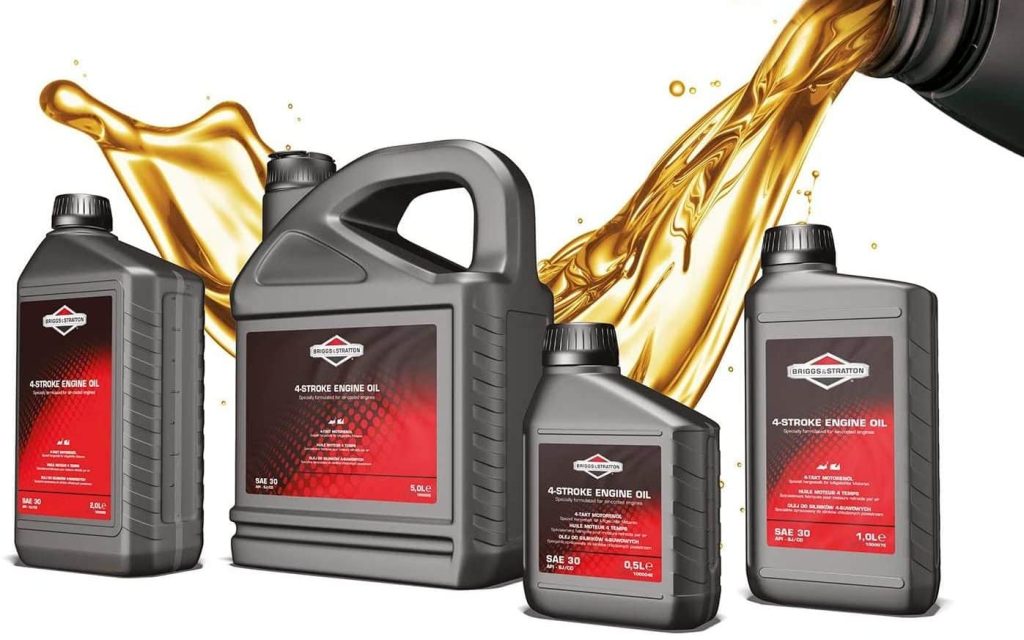

Yes, some clean motor oils sold for cars can be used in a four-stroke lawn-mower engine when they meet that engine’s required viscosity and performance specification. The automotive label alone neither approves nor disqualifies the oil. Check the exact engine manual before filling. This answer does not authorize car oil in a two-stroke fuel mixture or another reservoir on a riding mower.
Begin with the engine, not the mower’s paint color or the nearest bottle in the garage. A mower brand can use engines from different manufacturers, and replacement engines can change the relevant requirement. Confirm which engine is installed and whether the task is a top-up, a scheduled oil change, or a mistaken-fill correction.
The process below helps you make a documented choice without assuming that all mowers need SAE 30 or that every synthetic car oil is unsuitable. It is based on manufacturer guidance and original decision-making examples, not on a durability test we performed.

Credit: www.youtube.com
Check whether the oil belongs in this engine
Find the engine identification and the matching operator instructions. Record the required oil category, allowed viscosity, temperature conditions, level-check procedure, and maintenance schedule. Those items are more useful than a generic recommendation for lawn-mower oil. If the requirement is missing, resolve it before pouring.
Four-stroke sump oil and two-stroke mixture are different
Many mower engines have a separate oil sump. For an engine using a fuel-and-oil mixture, the product and ratio must follow its own instructions. Do not assume that an oil acceptable in a four-stroke sump is suitable for mixing into gasoline.
Use our two-stroke mixing guide for that separate decision. An electric mower has no combustion-engine sump to fill with motor oil; service only the components actually identified in its maintenance instructions.
Match the viscosity and the operating conditions
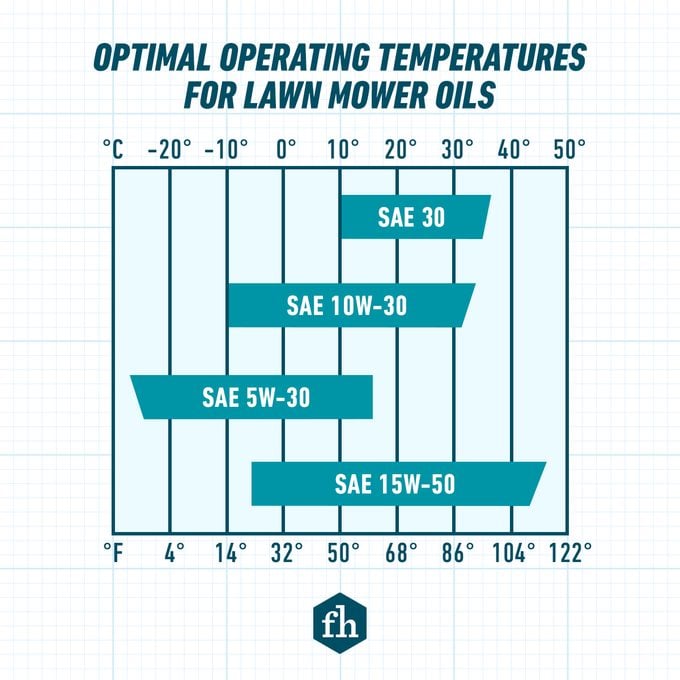
The engine manual may provide a viscosity chart rather than one grade for every climate. Read its temperature limits and notes. Do not choose a grade simply because the mower operates outdoors or because another machine in your household uses it.
Briggs & Stratton’s oil guidance accepts specified high-quality detergent oils and discusses several grades according to temperature and use. It notes potential increased consumption with 10W-30 above 80°F/27°C in its guidance. That supports checking the chart and level instructions; it does not establish a universal oil for every mower engine.
When your manual permits the proposed grade and performance category, compare them with the actual bottle. A retailer’s shelf label saying car oil is less specific than the product’s own specification. If one required item is absent, obtain clarification or choose a product with a clear match.
Synthetic and conventional labels need context
Choose the required application first. Synthetic, conventional, high mileage, and racing are not interchangeable statements of mower-engine compatibility. A more expensive product does not automatically satisfy an omitted requirement, and a lower-priced product is not unsuitable solely because it lacks a mower picture.
Synthetic can be acceptable when requirements match
Honda Engines allows synthetic oil when it meets the owner manual’s oil requirements. Briggs & Stratton also discusses acceptable synthetic choices in its oil guidance. Neither point authorizes ignoring the engine specification or extending the maintenance schedule just because the oil is synthetic.
Single-grade and multigrade are not quality rankings
SAE 30 and 10W-30 describe different viscosity classifications, not competing claims that one is always premium. Use the allowed option for the stated conditions. For general label reading, see our engine-oil specification guide, then return to the mower engine’s own instructions.
Use leftovers only when they remain identifiable
A partly used container of clean oil can still provide the required product information. An unlabelled bottle or mixed leftovers from several services may not. Keep the original label and know what is actually in the container before deciding whether it belongs in the mower.
An unopened bargain still needs a specification check
Verify the complete product name, grade, performance category, and any relevant restrictions. If shopping online, check the selected variant against the listing text and photograph. Different bottle sizes or similar names can refer to different products, so do not rely on an image alone.
Do not use oil drained from a car as a free mower refill. It is a used waste stream with an operating history, not a verified clean service product. The question about automotive-labeled new oil does not authorize recycling used lubricant through another engine.
If a container’s history is uncertain, keep it out of the engine while resolving its identity. The cost of a known suitable oil can be compared directly; the compatibility of an unidentified mixture cannot be established by color or smell.
Avoid unsupported life-extension promises
This guide does not claim that one compliant product will add a particular number of years to an engine. Oil selection is one part of maintenance. Air filtration, level checks, use conditions, and the actual condition of the machine also matter to the service decision.
A neighbor’s mower surviving on a particular oil does not identify your requirement. Ask for the engine model and the documentation behind the choice before treating the example as relevant. Even then, verify the bottle formulation being sold now.
Likewise, a mower failing after an oil change does not by itself prove that the automotive branding caused the failure. Record the exact product, fill amount, level-check method, and symptoms so a technician can investigate the actual event.
A correct product can still be filled incorrectly. Distinguish compatibility from quantity and procedure. Buying the right oil does not replace verifying which opening is the fill, how the level is read, or whether a service requires a filter change.
Find the instructions for the installed engine
Briggs & Stratton identifies engines using model, type, and code information rather than emissions-label numbers. Use its manual finder or the appropriate manufacturer library. Honda offers engine manuals, a GCV160 serial-range selector, and the HRS216K4PDA manual used in the example below. Photograph accessible identification markings without touching hot components or dismantling unfamiliar covers.
Use the complete model and serial information
The Briggs & Stratton manual finder and Honda Engines manual library let you start from engine identification. Honda’s GCV160 library also separates manuals by serial prefix and number range. That is a useful reminder to match the full identifier, not download the first PDF whose model name looks close.Keep the manufacturer example within its scope
For a specific example, the Honda HRS216K4PDA manual lists SAE 10W-30 and API SJ or later. Its exact requirement belongs to the covered machine. It does not establish that all Honda-powered mowers, all commercial mowers, or every separate transmission should receive the same oil.Handle used oil as a separate task
Plan the receiving container and disposal route before service. This avoids finding yourself with an open drain pan and nowhere suitable to put the oil. Keep fuel, coolant, cleaners, and other unidentified liquids separate rather than creating a mixture a collection facility cannot accept.
Verify local collection arrangements
The EPA’s consumer guidance directs owners to proper used-oil collection and recycling. Check the actual facility’s container and acceptance requirements. Our disposal guide provides a separate planning sequence.
Environmental wording does not replace compatibility
Do not select an engine oil solely because a package says biodegradable, natural, recycled, or environmentally friendly. Establish the required engine performance first and investigate the precise claim separately. A product intended for external equipment lubrication may not be an appropriate crankcase oil.
/mower-maintenance-for-four-cycle-engine-2131183-10-de8a484ada4a4c8896934080f0d61b65.jpg)
Credit: www.thespruce.com
Compare the full service cost
Once several products meet the requirement, compare their price per usable quantity, availability, and package size. There is no need to assume that all automotive oil is cheaper or that all mower-branded oil is better. Prices and formulations vary by product and location.
Avoid buying more than the task needs
A large jug can be economical if you can use and store it appropriately. A smaller sealed container may be more practical for occasional service. Keep any remainder in its labeled container with the cap closed, and retain the manufacturer’s storage information.
Include consumables and service work
For a do-it-yourself service, account for any specified filter, sealing parts, collection supplies, and tools. Compare a workshop quote with the same scope rather than comparing only the oil bottle price. Obtain the oil identity on the invoice regardless of who performs the work.
Prepare the oil change using the correct procedure
Read both the engine instructions and equipment safety instructions before starting. They establish how to prevent unintended starting, where service can be performed safely, and whether the machine may be tilted. A generic drain-and-refill recipe cannot account for every mower’s blade, fuel, starter, and oil arrangement.
Do not assume a universal drain or dipstick method
Locate the specified fill and drain points before opening them. Do not assume that every engine has a drain plug in the same place or that tipping the mower is permitted in any direction. Follow the model-specific procedure or use qualified service when the procedure is unclear.
A capacity figure and a routine refill amount may differ. Use the actual instructions and level indicator rather than pouring a whole bottle because its size resembles the listed capacity. Add only as directed and allow the specified settling or checking conditions.
Check whether the dipstick is read resting in the opening or screwed in, and whether the engine must be level or at a specified temperature. Those details affect the reading. Do not substitute the method used on another mower simply because the caps look similar.
After service, perform only the checks directed by the applicable instructions and confirm that caps, drains, and guards are properly secured. If the level is abnormal or oil leaks, resolve the issue before normal use. Keep the product and service record available if you need assistance.
Prepare the equipment required by the manual
- The exact suitable oil and any specified filter or sealing parts.
- The applicable engine and mower instructions.
- Suitable measuring, filling, and waste-collection equipment.
- The tools and safe working arrangements required for that model.
Do not buy a generic service kit until you know which items the actual engine needs. Some engine variants differ in filters, access, or service parts. Match components as carefully as the oil itself.
For a top-up, establish the current level by the correct method before adding anything. A full-service capacity is not the amount to add to an engine that already contains oil. If the level changes unexpectedly, investigate rather than repeatedly topping up without a record.
A riding mower may also have a hydrostatic transmission or other lubricant reservoirs. The engine-oil instruction does not automatically apply to those systems. Label the task and product before service so a correct engine-oil purchase does not become a wrong-reservoir fill.
If the wrong product was already added, record what it was, where it went, how much entered, and whether the engine operated. Keep the bottle and obtain application-specific advice. Do not test the mixture by mowing for a few minutes or try to correct it with an additive.
Credit: www.familyhandyman.com
The decision before you pour
If a clean automotive-labeled oil matches the installed four-stroke engine’s documented requirements, it can be an appropriate choice. If you only know that it is car oil, the decision is incomplete. Identify the engine, read the specification, and compare the actual product.
Keep the viscosity conditions, level procedure, and maintenance timing alongside the oil selection. That makes future service repeatable and avoids turning a valid choice for one mower into a universal recommendation for every small engine.
Use the label and manual as evidence; use marketing categories only as a starting point.


Automotive reference information. Confirm specifications in the manual for your exact vehicle. Original replacement guides link to their research sources. About us