
A fuel pump can fail through internal wear, contamination, an electrical defect or damage caused by its operating conditions. A vehicle can also behave as though the pump has failed when the real problem is elsewhere in the fuel supply or control circuit. That distinction matters: replacing a pump without identifying the cause can leave the same no-start, low-pressure or intermittent-stall complaint in place.
There is no single mileage at which every pump becomes bad, and a particular sound or trouble code does not prove the mechanism. The useful approach is to connect the observed symptom with measured delivery, electrical conditions and inspection findings.
This article focuses on how failures develop and what to investigate before installing another unit. It does not assume that every weak-running engine needs a pump, or that a replacement alone resolves contamination and wiring faults.
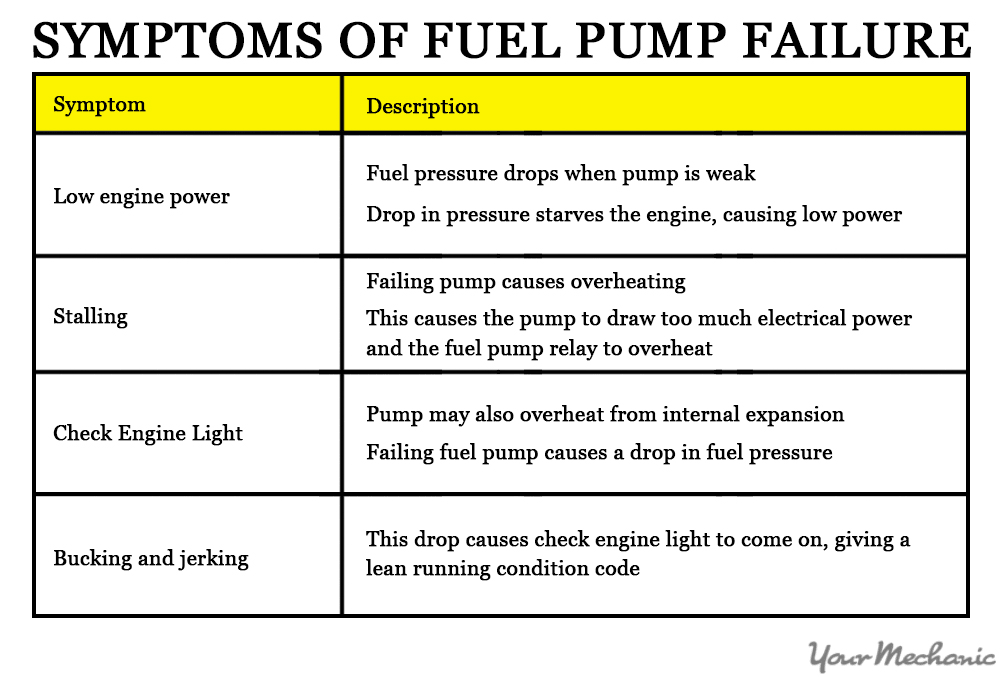
Credit: www.yourmechanic.com
Several different mechanisms can produce the same complaint
An electric pump motor and its pumping mechanism must work together. Internal electrical wear can interrupt operation, while mechanical wear or damage can reduce delivery. The resulting complaint may be intermittent rather than constant. A vehicle can start during a workshop visit and still have a real fault that appears under a different condition. Delphi: fuel pump current-waveform testing explains why current-waveform testing can reveal information missed by a single pressure or volume test. The appropriate test depends on the pump design; a waveform should be interpreted against relevant service information rather than a universal picture. Contamination can affect the pump and the surrounding supply system.
Dirt, rust or other material can restrict a strainer or reach parts that should receive clean fuel. The important question is where the contamination originated. Cleaning only the visible strainer may leave the source untouched. Delphi: analysis of failed fuel pumps includes examples in which inspection of failed assemblies identified problems beyond the pump itself. For a repair decision, preserve the evidence and trace its origin instead of assuming that every dirty component represents normal aging. A restriction is not always inside the pump. The tank pickup, filter arrangement, lines or other parts of the supply path may limit delivery.
A pump can be blamed because pressure is low when it is actually operating against an abnormal condition. The diagnostic procedure should establish the location of the restriction and the system's design before parts are replaced. A filter that is integrated into a module also changes the available repair choices. Do not apply a serviceable external-filter procedure to a sealed assembly without manufacturer support. The electrical supply can make a healthy pump underperform. Resistance at a connector, power feed or ground can reduce the voltage available while the motor is working. A meter reading taken with the load disconnected may not expose that problem.
Delphi: loaded fuel pump voltage-drop testing describes loaded voltage-drop checks and warns against damaging terminals with unsuitable probes. The practical lesson is to test the installed circuit under the prescribed condition. Replacing the pump does not repair an overheated vehicle connector that remains in the circuit. A controller or relay problem is different from a failed motor. If the pump is not being commanded, it may be correctly stationary. The control system can depend on information from other vehicle systems, and some applications vary pump output electronically.
A code relating to fuel pressure or pump control should therefore lead to its diagnostic procedure, not an immediate assumption that the pump itself is worn out. Distinguish absent command, inadequate supply and inadequate delivery; each points to a different part of the investigation. Fuel quantity and pickup conditions also matter. A gauge reading is not always proof that usable fuel is reaching the pump, particularly when a sender or transfer arrangement has a fault. A symptom occurring only at a particular indicated level deserves careful documentation. It does not automatically prove that running low once destroyed the pump.
DENSO: fuel pump types and applications describes the role of fuel in its in-tank design. Use that design information to understand the system, while avoiding a universal rule about how many low-fuel trips a pump can survive. Heat-related symptoms need similarly careful interpretation. A pump may fail intermittently after warming, but a hot restart problem can have other causes. Record whether the engine stalls while running, fails only after a stop, or starts again after waiting. Those are different observations.
A test performed after the vehicle has cooled may not reproduce the failure. The workshop should plan a safe way to capture the relevant condition, rather than treating one normal cold reading as proof that the complaint is imaginary. Incorrect replacement parts or installation can create what appears to be an early pump failure. An application mismatch, damaged connector, incorrectly fitted seal or internal installation problem can affect operation immediately or later. Keep the part number and service history available. If several pumps have been replaced in a short period, that pattern strengthens the need to review the diagnosis and surrounding system.
It does not by itself prove that an entire brand is defective or that the vehicle needs a higher-pressure pump. A mechanical pump has additional design-specific failure possibilities involving its drive and sealing arrangement. A high-pressure injection pump has its own supply, drive, control and cleanliness requirements. These should not be collapsed into a single list for all fuel pumps. Identify which pump the vehicle uses and which stage is affected. The phrase fuel pump failure is only a starting description until the failed function and its cause have been established.

Credit: www.agcoauto.com
Use the failed part and test results to prevent a repeat
Begin with the symptom chronology. Record when the problem started, whether it followed refueling or repair, whether it depends on temperature or fuel level, and whether it is continuous or intermittent. Note any warning lights and preserve diagnostic information before clearing it. This history helps choose the conditions for testing. A statement such as sometimes it will not start is less useful than a record that it cranks normally after a hot stop but starts the following morning. Specific observations reduce guesswork without pretending to identify the failed component by themselves. Ask for the relevant delivery measurements and the conditions under which they were obtained. Pressure at idle, pressure during a starting complaint and delivery under demand are not interchangeable results. The service specification determines which test is meaningful. Do not compare a measurement with a number found for a different engine. If the result is abnormal, establish whether supply voltage, command and restrictions were checked before concluding that the pump must be replaced. Inspect the removed part as evidence rather than immediately discarding it. A burnt terminal, contaminated reservoir or damaged strainer can help explain the failure. Document findings with clear photographs and the part number. The inspection should be performed safely and within the supplier's warranty requirements; unnecessary disassembly can compromise a claim. Ask what the finding proves and what it does not. Contamination on a part establishes that material reached it, but further investigation may be needed to identify the entry route. If the cause is electrical, correct the affected connector or circuit with the specified components and methods. A new pump connected to a damaged terminal can repeat the failure.
If the cause is contamination, address the tank and other affected parts according to the service procedure. A chemical additive is not evidence that loose rust or damaged wiring has been repaired. If the cause remains uncertain, the repair record should say so and explain the tests performed rather than inventing a confident story about normal wear. Maintenance should follow the vehicle's actual fuel-system requirements. Some filters are serviceable at an interval; others are integrated and not treated the same way. Use the specified fuel and avoid introducing unapproved substances into the tank. A universal aftermarket cleaning schedule is not a substitute for the manufacturer's maintenance plan. Likewise, a claim that every pump lasts a fixed number of years gives a false sense of certainty. Operating conditions, design and the particular fault matter more than a calendar prediction. After repair, repeat the failed test and verify the original symptom as far as safely possible. Confirm that the pump is controlled normally and that no temporary bypass remains. Check for leaks, correct fuel-level behavior where disturbed, and any returning diagnostic faults. If the initial problem was intermittent, describe the verification period and conditions. Passing a short test is useful evidence, but it should not be presented as a guarantee that every unrelated starting or drivability issue has disappeared. For an owner reviewing a recommendation, three questions are especially useful: what measurement showed the pump was failing, what caused that failure, and what prevents the new pump from facing the same condition? The answers can be concise, but they should connect the part replacement to evidence. A sound repair may still require additional diagnosis when the cause is unclear. That is preferable to repeatedly replacing an expensive component on the strength of a noise, a generic code or an unsupported mileage rule.


Automotive reference information. Confirm specifications in the manual for your exact vehicle. Original replacement guides link to their research sources. About us


