
There is no defensible number of miles you can safely drive with bad brake pads. “Bad” may mean worn friction material, contamination, separation or uneven wear, and those conditions do not progress at a predictable rate. A vehicle that still stops in a familiar situation has not demonstrated that it can stop safely when more braking is needed.
Act on the braking problem before naming the failed part
If braking force is reduced, the pedal feels abnormal, a serious brake warning appears, or the vehicle cannot be controlled normally, reach a safe stopping place and arrange assistance. Do not continue driving solely to see whether the symptom disappears.
A noise does not identify the cause by itself. A wear indicator, trapped debris, damaged hardware and other faults can create different sounds. The immediate decision concerns safe operation; the component diagnosis follows inspection.
A wear warning is a service prompt, not a countdown

Credit: carfromjapan.com
The 2017 Silverado owner manual explains its brake-wear warning and directs the owner to obtain service. It does not convert the sound into a remaining-distance allowance. Follow the instructions applicable to your own vehicle.
The same distinction applies to a dashboard estimate. A prediction can help schedule maintenance, but it does not override a new fault, an abnormal pedal or physical damage. Do not average a reassuring estimate with a concerning symptom to justify another journey.
What can happen as the friction material wears away
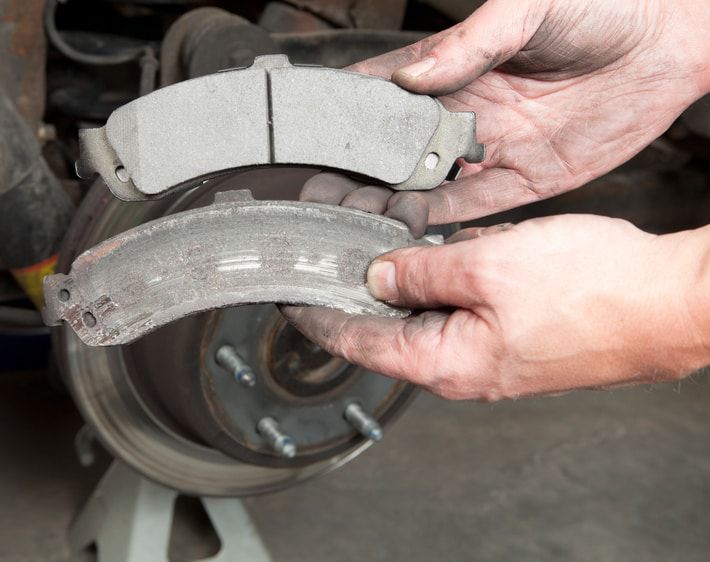
Ferodo’s warning-system guidance describes the progression toward contact between pad backing material and the disc when wear becomes excessive. That changes the repair problem: the rotor surface and associated components may also need assessment.
Worn pads are not automatically the only damaged parts. Ask for the measured condition of both pads at each affected wheel, the rotor findings and any explanation for unequal wear. Replacing friction material without investigating a binding mechanism can leave the cause in place.
Why a glance at one pad is insufficient
The visible outer pad may not represent the inner pad or the other wheel. A remaining patch of material also does not establish acceptable condition across the whole friction surface. Proper access and the vehicle’s inspection method matter.
Do not reach behind a hot wheel or work under a vehicle supported only by a lifting jack to obtain a quick measurement. If you cannot inspect the assembly safely and completely, have a repairer assess it. One-pad wear needs a different explanation from even wear across an axle.
Ask the workshop for an actionable finding
Credit: www.firestonecompleteautocare.com
A useful assessment identifies the affected axle and wheel, the lowest relevant measurement, the applicable service limit, and whether damage or a fault makes immediate repair necessary. Ask whether the vehicle may be driven to a scheduled appointment or needs transport. That judgment must come from the actual condition, not a generic online mileage range.
Keep the distinction between a recommendation made during routine inspection and a vehicle already showing loss of braking or grinding. Both deserve attention, but the latter should not be treated as an ordinary future maintenance reminder.
After repair, verify more than the absence of noise
The repair should include the prescribed assembly and functional checks. A quieter brake is not proof that the pedal, clamping action or parking brake works correctly. Ask what caused the original finding and how completion was verified.
For routine planning, obtain periodic measurements and follow the correct maintenance schedule. Once pads are described as bad or a braking symptom appears, the priority is assessment and correction rather than extracting a predicted number of extra miles.


Automotive reference information. Confirm specifications in the manual for your exact vehicle. Original replacement guides link to their research sources. About us


